 Garden

Affiliate Disclosure
Some links on this page are affiliate links. As an Amazon Associate, we earn from qualifying purchases — at no extra cost to you. We do not buy, test, or physically handle the products we cover; our rankings come from aggregated owner reviews, ratings and expert consensus. Commissions never change our verdicts. How we rank · full disclosure.
The short version: the best carbon monoxide detector for most homes is the Kidde Nighthawk plug-in with a digital display. Every UL-listed alarm on this page will wake you at dangerous concentrations — that is the legal minimum they all meet. What separates them is what happens below that threshold, and the Nighthawk is the one that shows you a live parts-per-million number and remembers the highest reading it has seen. That is how a slowly failing furnace gets caught before it becomes an emergency. If there is no outlet where you need coverage, the sealed ten-year X-Sense is the answer.
Carbon monoxide is colorless and odorless — the CPSC calls it the Invisible Killer — which is the entire reason detection has to be mechanical. This page covers the devices; the wider air-quality picture — particulates, humidity, VOCs — sits in our best air quality monitor ranking, and the air quality hub ties it together. Nothing here is medical advice. If anyone in the home has symptoms and you suspect CO, leave the building and call 911 or your fire department from outside.
Top Picks at a Glance

Our #1 Pick: Kidde Nighthawk Plug-In
The Nighthawk has been the reference plug-in CO alarm in American homes for a long time, and the owner record explains why. It plugs into a standard outlet so there is nothing to mount and nothing to wire. A 9V cell keeps it running through a power cut — which matters, because outages and CO events share a common cause in generators and alternative heating being pressed into service during storms.
The digital display is the reason it ranks first. It refreshes roughly every 15 seconds and shows the current concentration in parts per million, and a peak-level button recalls the highest figure the unit has recorded since it was reset. UL 2034 requires an alarm to stay silent below 30 ppm, so a plain alarm gives you no information at all in the range where a marginal appliance actually operates. A display turns that invisible band into a number.
Consensus Score ██████████░ 9.1 — the longest and most stable owner consensus of any CO alarm in this ranking.
The honest weaknesses: it occupies an outlet, and in older homes with few outlets that is a real cost; the display is not backlit on all versions, so it is hard to read in a dark hallway; the end-of-life chirp is regularly mistaken for a low battery; and the unit is rated for roughly seven years, not ten. None of that changes the recommendation.
Check price on Amazon → (paid link)
The Ranked Field

Best for a hallway or living area outlet where you want a live ppm reading
- Digital display updates the reading every 15 seconds
- 9V battery backup keeps it alive in a power cut
- Peak-level memory shows the highest reading recorded
- 85 dB alarm, UL 2034 listed
Why buy it: the live numeric readout is what turns a yes-or-no alarm into something you can actually act on — including a low-level reading that never trips a standard alarm.
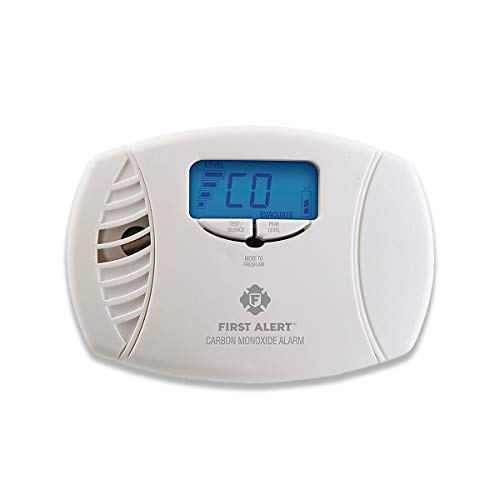
Best for a second or third outlet position at a lower price than the Kidde
- Backlit digital display of current ppm
- Battery backup for outages
- Peak level recall button
- Test and silence in one button
Why buy it: nearly everything the Nighthawk does for less money, from the other major American alarm brand.
Best for a bedroom or ceiling location with no outlet nearby
- Sealed 10-year lithium cell, no battery changes
- LCD shows current CO concentration
- Self-check with a fault warning
- UL 2034 compliant, wall or ceiling mount
Why buy it: a sealed decade-long cell removes the failure mode that kills more alarms than anything else — a dead battery nobody replaced.

Best for a household that wants phone alerts and a voice warning by room
- Detects both smoke and carbon monoxide
- Speaks the hazard and the room aloud
- Phone alerts when nobody is home
- App silence and nightly self-test
Why buy it: the only alarm here that tells you what happened while you were out — the scenario where a CO event does the most damage.
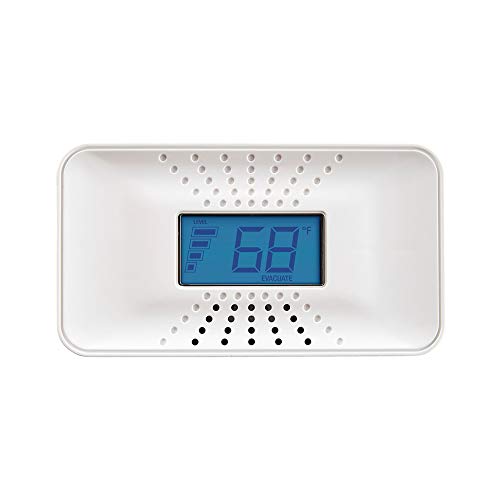
Best for a bedroom wall where you want a mainstream brand and a sealed cell
- Sealed 10-year lithium battery
- Digital display with temperature readout
- End-of-life warning chirp
- Mounts on a wall with no wiring
Why buy it: a sealed ten-year alarm from the brand most American fire departments hand out, with a display that also doubles as a room thermometer.
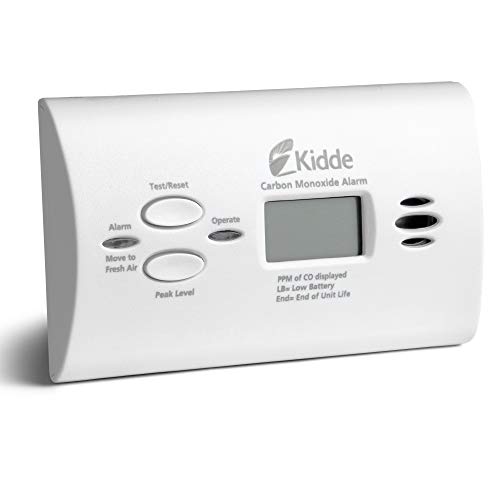
Best for a travel bag, an RV, a rental or a spare bedroom
- Runs on AA cells with no wiring at all
- Test and reset button on the face
- Low-battery indicator
- Small enough to pack
Why buy it: the cheapest credible way to put a UL-listed CO alarm in a hotel room, cabin or camper where you have no idea what the heating is doing.
Quick Comparison
| Product | Best for | Rating | Price | Buy |
|---|---|---|---|---|
| Kidde Nighthawk Plug-In Carbon Monoxide Detector with Digital Display | Best Overall | — | Check (paid link) | |
| First Alert CO615 Dual-Power Plug-In Carbon Monoxide Detector | Best Plug-In Alternative | — | Check (paid link) | |
| X-Sense 10-Year Battery Carbon Monoxide Detector with LCD Display | Best 10-Year Sealed | — | Check (paid link) | |
| Google Nest Protect Smoke and Carbon Monoxide Alarm, Battery | Best Smart Alarm | — | Check (paid link) | |
| First Alert CO710 Carbon Monoxide Detector with 10-Year Battery | Best Battery Wall Unit | — | Check (paid link) | |
| Kidde Battery-Operated Carbon Monoxide Detector with LED Indicators | Best Portable | — | Check (paid link) |
How We Rank
We do not buy, test or physically handle carbon monoxide detectors. We rank them on evidence that scales: star ratings weighted by review volume, the published UL 2034 listing and sensor life for each model, the recurring failure modes that surface in critical reviews, long-term owner reports written years after installation, and expert consensus across established outlets and public-safety guidance as a cross-check. For CO alarms we weight three things harder than usual — whether the unit reports a numeric reading, how it behaves at end of life, and how many false alarms owners report — because a nuisance alarm that gets unplugged is worse than no alarm at all. Prices were current at the time of writing. Full method on how we rank.
The CO Detectors, Reviewed
1. Kidde Nighthawk Plug-In — Best Overall
Covered above. What owners praise: the live reading, the peak-memory button, battery backup, and a track record measured in decades rather than seasons. What owners complain about: it blocks an outlet, the display is dim in a dark hall, the end-of-life chirp is confusing, and the sensor life is shorter than a sealed ten-year alarm. The most consistently recommended CO detector in the American market.
2. First Alert CO615 — Best Plug-In Alternative
First Alert is the other name American fire departments hand out, and the CO615 is its answer to the Nighthawk. Backlit digital display, battery backup, a peak-level recall button and a combined test and silence control. Functionally it is close to level with the Kidde and usually costs a little less. What owners praise: the backlight, which is genuinely better than the Kidde’s display in a dark hallway; the price; and simple operation. What owners complain about: a bulky body that can block the second socket on a duplex outlet, a plug orientation that fights some outlet layouts, and a handful of reports of premature end-of-life chirping. An excellent second or third unit for the rest of the house.
3. X-Sense 10-Year Battery with LCD — Best Sealed Alarm
The single most common reason a CO alarm fails to protect anyone is a dead or removed battery. A sealed lithium cell rated for the full ten-year life of the sensor eliminates that failure mode entirely, and X-Sense pairs it with an LCD that still gives you a concentration reading — unusual at this price. It mounts on a wall or ceiling with two screws, which puts it where an outlet is not. What owners praise: no battery maintenance for a decade, a clear display, low price, and a self-check that reports faults rather than staying silent. What owners complain about: a less established brand than Kidde or First Alert, occasional units arriving with an already-shortened life because they sat in a warehouse, and an alarm tone some owners find less piercing than the mainstream units. Check the manufacture date on arrival.
4. Google Nest Protect — Best Smart Alarm
The Protect is the only device here that solves the away-from-home case. It covers both smoke and CO, announces the hazard and the room in speech rather than only beeping, and sends a phone alert when the house is empty — which is precisely the scenario where a CO event goes unnoticed for hours. It runs a nightly self-test and lets you silence a nuisance alarm from a phone instead of standing on a chair. What owners praise: the spoken warnings, remote alerts, the app silence feature, and interconnection between units so one alarm wakes the whole house. What owners complain about: the price, which is three to four times the alternatives; sensors that expire on a fixed schedule regardless of use; occasional Wi-Fi dropouts; and the fact that a combined unit retires both sensors at once. Right for a connected household, expensive for simple coverage.
5. First Alert CO710 — Best Battery Wall Unit
The CO710 is the mainstream-brand answer to the sealed ten-year alarm. No wiring, no outlet, no battery changes, and a digital display that also shows room temperature — a small feature owners mention more than you would expect, because it makes the unit useful daily rather than only in an emergency. What owners praise: install-and-forget simplicity, the brand’s reputation, and the temperature readout. What owners complain about: a higher price than the X-Sense for similar function, a display that is not backlit, and the same end-of-life chirp confusion that affects the whole category. A safe, boring, correct choice for a bedroom hallway.
6. Kidde Battery-Operated CO Alarm — Best Portable
The simplest device here and the cheapest. It runs on AA cells, has LED status indicators and a test button, and it fits in a bag. That makes it the right answer for the situations where you have no control over the heating system: a rental, a vacation cabin, a hotel room, an RV, a boat. What owners praise: price, portability, and that it needs nothing but batteries. What owners complain about: no numeric display, so you get a yes-or-no answer only; AA cells that need replacing on a schedule you have to remember; and a shorter service life than a sealed unit. Buy several; they cost about as much as a takeaway meal.
Where to Put Them, and How Many
The CPSC recommendation is a CO alarm on every level of the home and outside each separate sleeping area, ideally interconnected and meeting the UL 2034 standard. In a two-story house with bedrooms upstairs, that is a minimum of two: one in the upstairs hall outside the bedrooms and one on the main floor. Add a third for a finished basement, particularly if the furnace or water heater lives there.
Height is the point people over-think. Carbon monoxide has a molecular weight close to that of air and mixes rather than stratifying, so unlike smoke it does not reliably collect at the ceiling. Manufacturers permit ceiling, high wall or outlet height, and the practical answer is to follow the specific manual and pick a spot you will actually see. The rules that matter are the exclusions: at least 15 feet from a furnace, water heater, gas range or fireplace; out of bathrooms, kitchens and garages where humidity and exhaust cause nuisance alarms; and away from windows, exterior doors, supply vents and ceiling fans that dilute the sample.
What the Numbers Mean
| Reading | UL 2034 alarm requirement | What it usually means |
|---|---|---|
| Below 30 ppm | Must not alarm | A display unit will show it; a plain alarm stays silent |
| 70 ppm | Alarm within 60–240 minutes | Something is producing CO continuously — get appliances inspected |
| 150 ppm | Alarm within 10–50 minutes | Ventilate and leave; call the fire department |
| 400 ppm | Alarm within 4–15 minutes | Evacuate immediately, do not investigate |
The takeaway from that table is the first row. A standard alarm is required by the standard to say nothing below 30 ppm, and it must not alarm at that level, precisely so that ordinary cooking and traffic fumes do not trigger it constantly. That design decision is also why a persistent low-level source can run for months undetected on a non-display alarm. If a digital unit shows a steady non-zero reading in a room, treat it as a reason to have the appliances inspected, not as a fault in the detector.
What Owners Actually Complain About
Read the critical reviews across all six devices and five themes repeat. End-of-life chirping is by far the largest, and most of it is user confusion: the chirp that arrives at year seven is the sensor telling you it has expired, not a battery request, and no amount of battery swapping will stop it. False alarms come second, almost always traced to placement too near a gas range, a furnace or a bathroom. Short service life on arrival is third — units bought with two or three years already burned off the sensor clock while sitting in a warehouse. Outlet blocking irritates plug-in owners in older homes. And alarm volume, particularly among owners who wanted a unit audible through a closed bedroom door two floors away. Interconnected alarms solve that last one; a single unit never will.
Where Household CO Actually Comes From
Almost every residential CO event traces back to incomplete combustion in a fuel-burning appliance or an engine. The recurring sources are a cracked heat exchanger in a gas or oil furnace, a blocked or disconnected flue, an unvented space heater, a gas range used for heating, a fireplace with a closed or obstructed damper, a water heater backdrafting because a bathroom exhaust fan has depressurized the house, and — the most lethal of all — a portable generator or a car running in an attached garage. Of the more than 200 accidental non-fire CO deaths the CPSC attributes to consumer products each year, more than 100 involve portable generators. The CDC has repeatedly warned about generator placement during storm outages, and the rule is unambiguous: never operate a generator indoors, in a garage, or within 20 feet of a window or door, even with the garage door open.
An annual inspection of gas appliances by a licensed technician is the single highest-value habit here, and it is the one thing a detector cannot do for you. The detector is the last line, not the first. Codes and inspection requirements vary by state and municipality, so check what your jurisdiction requires. Again, this page describes what devices do and where public-safety guidance points — it is not medical advice, and any suspected exposure is an emergency call, not a research project.
How to Choose Between These Six
One good alarm for the main living area? The Kidde Nighthawk plug-in. Adding two or three more on a budget? The First Alert CO615, or the X-Sense where there is no outlet. Bedroom hallway, want to never touch it again? The X-Sense or the First Alert CO710. Want alerts when the house is empty? The Nest Protect. Rental, cabin, RV or travel? The battery Kidde. For the wider indoor-air picture, an all-in-one monitor from best air quality monitor complements a CO alarm rather than replacing it — almost no consumer monitor is a UL-listed life-safety device. Related reading sits in the air quality hub.
The Verdict
For most homes the Kidde Nighthawk plug-in with a digital display is the detector we would recommend: no installation, battery backup for outages, and a live reading that tells you something in the concentration band where the standard requires every alarm to stay silent. Add sealed ten-year units from X-Sense or First Alert wherever there is no outlet, put one on every level and outside every sleeping area, and get the fuel-burning appliances inspected once a year. That combination is what actually protects a household. Check price on Amazon → (paid link)