 Garden
Affiliate Disclosure
Some links on this page are affiliate links. As an Amazon Associate, we earn from qualifying purchases — at no extra cost to you. We do not buy, test, or physically handle the products we cover; our rankings come from aggregated owner reviews, ratings and expert consensus. Commissions never change our verdicts. How we rank · full disclosure.
The short version: the best soil for a raised garden bed is a blend of roughly one third compost, one third topsoil or garden soil, and one third aeration material such as coarse vermiculite. If you would rather buy it ready made, Coast of Maine Castine Blend is the most complete bagged raised bed mix available, with cured compost, marine calcium from lobster and crab shell, biochar, worm castings and mycorrhizae already in it. Miracle-Gro Performance Organics Raised Bed Mix is the widely stocked alternative, and Espoma Organic the organic-certified one.
Below is the ranked field, the volume maths that decides whether you buy bags or bulk, and the settling problem that catches out almost every first-year raised bed.
Top Picks at a Glance

Our #1 Pick: Coast of Maine Castine Blend
Most bagged raised bed mixes are compost plus peat plus a bit of fertiliser. The Castine Blend is unusual because of what else is in it, and each addition does a specific job.
Lobster and crab shell meal supplies calcium and chitin — calcium is what prevents blossom end rot in tomatoes and peppers, and it is the deficiency that ruins more first-season raised bed harvests than any other. Biochar is a stable form of carbon that holds water and nutrients and provides habitat for soil microbes; it does not break down, so it improves structure permanently rather than for a season. Mycorrhizae are the fungi that colonise plant roots and effectively extend their reach for water and phosphorus, and inoculating a new bed matters because a freshly filled raised bed starts sterile. Worm castings and greensand add biology and trace minerals.
The texture is the other thing owners consistently note: it holds moisture without becoming waterlogged, and it does not crust over on the surface the way peat-heavy mixes do when they dry out.
Consensus Score █████████░ 9.0
The complaints are consistent and mostly about economics. Price per cubic foot is the loudest — this is among the most expensive bagged soil you can buy, and filling a 4 by 8 foot bed with it costs several hundred dollars. Bag size at 1 cubic foot means a lot of bags and a lot of lifting. Availability is regional; it is a Northeast brand and is easier to find in some parts of the country than others. Reviewers occasionally report bags arriving very wet and heavy, which is a shipping artefact rather than a product fault. And it is a complete mix, not a fertiliser — it feeds a bed for the first part of a season and heavy feeders will still want supplementary feeding by midsummer.
Check price on Amazon → (paid link)
Best Raised Bed Soils 2026: The Ranked Field

Best for filling a bed once and growing well in it for years
- Cured compost, sphagnum peat, lobster and crab shell meal
- Includes biochar, worm castings, greensand and mycorrhizae
- Ready to use straight from the bag
- Holds moisture while still draining freely
Why buy it: the most complete bagged raised bed mix on the market — marine-derived calcium and mycorrhizal fungi are the two things almost every other bag leaves out.
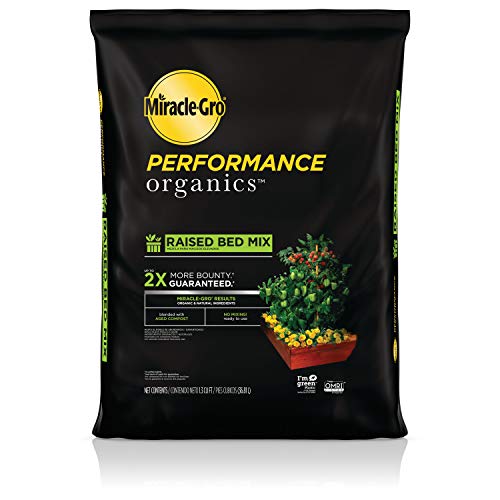
Best for topping up beds without ordering anything
- Aged compost blended for raised bed use
- Feeds for up to two months out of the bag
- OMRI-considered organic and natural inputs
- 1.3 cu ft covers a 2 x 2 ft bed at about 4 in deep
Why buy it: on the shelf at essentially every garden center in the country, which matters when you are two bags short on a Saturday afternoon.

Best for certified-organic vegetable growing
- All natural and organic inputs throughout
- 1.5 cu ft bag — larger than most competitors
- Enhanced with Myco-tone mycorrhizae
- Formulated specifically for raised beds, not containers
Why buy it: a genuinely organic mix in a larger bag, from the brand that has been making organic amendments since long before it was a marketing category.

Best for building your own mix or filling deep containers
- Aged forest products, sphagnum peat, earthworm castings
- Bat guano, crab meal and fish emulsion
- pH adjusted to roughly 6.3 to 6.8
- Light, aerated texture that resists compaction
Why buy it: the most nutrient-dense base on this page and the one experienced growers blend with compost and aeration to build a custom bed mix.

Best for adding organic matter and slow-release nutrition
- Fully composted, weed-seed free
- Roughly 0.5-0.5-0.5 slow release, will not burn roots
- Adds moisture retention to sandy soil and aeration to clay
- Contains beneficial bacteria
Why buy it: the cheapest way to add real organic matter to a bed mix, and fully composted so it does not burn seedlings the way fresh manure will.

Best for stopping a bed mix from compacting into a brick
- Horticultural grade vermiculite, 8 qt bag
- Holds water and nutrients while keeping air space
- 100 percent natural mineral
- Also used for seed starting and propagation
Why buy it: vermiculite is the ingredient that keeps a compost-heavy bed from settling into an airless block by the second season.
Quick Comparison
| Product | Best for | Rating | Price | Buy |
|---|---|---|---|---|
| Coast of Maine Castine Blend Organic and Natural Raised Bed Mix, 1 cu ft | Best Overall | — | Check (paid link) | |
| Miracle-Gro Performance Organics Raised Bed Mix, 1.3 cu ft | Best Widely Available | — | Check (paid link) | |
| Espoma Organic Raised Bed Mix, All Natural Potting Soil for Vegetables and Herbs, 1.5 cu ft | Best Organic | — | Check (paid link) | |
| FoxFarm Ocean Forest Potting Soil, 1.5 cu ft, Light Aerated Texture | Best for Blending | — | Check (paid link) | |
| Black Kow Nitrogen Phosphate Composted Cow Manure for Raised Beds and Potted Plants, 1 cu ft | Best Compost Amendment | — | Check (paid link) | |
| Burpee Organic Horticultural Vermiculite, 8 qt, Natural Soil Additive | Best Aeration Amendment | — | Check (paid link) |

Spec Comparison
| Product | Role | Bag size | Ready to use | Key ingredients |
|---|---|---|---|---|
| Coast of Maine Castine | Complete bed mix | 1 cu ft | Yes | Compost, crab and lobster, biochar, mycorrhizae |
| Miracle-Gro Performance Organics | Complete bed mix | 1.3 cu ft | Yes | Aged compost, natural fertiliser |
| Espoma Organic Raised Bed | Complete bed mix | 1.5 cu ft | Yes | Organic inputs, Myco-tone |
| FoxFarm Ocean Forest | Rich base for blending | 1.5 cu ft | Yes, or blend | Forest products, castings, guano, crab meal |
| Black Kow Manure | Organic matter amendment | 1 cu ft | Blend in | Fully composted cow manure |
| Burpee Vermiculite | Aeration amendment | 8 qt | Blend in | Horticultural vermiculite |
How We Rank
We never buy, mix or grow in the products on this site, and we say so on every ranking page. These rankings are built from aggregated owner reviews, star ratings, review volume, product specifications and horticultural consensus from university extension services and established gardening publications. For raised bed soils we weight four things: what reviews written a full season later say about growth and settling, drainage and structure — whether the mix stays open or compacts — completeness of the nutrition, and cost per cubic foot, since raised beds are bought by volume and the price differences here are very large. Full method on how we rank.
The Soils and Amendments, Reviewed
1. Coast of Maine Castine Blend — Best Overall
Covered above. What owners like: visibly better growth in the first season, excellent texture that holds moisture without waterlogging, and an ingredient list that actually addresses calcium and soil biology. What they complain about: high cost per cubic foot, small bags, regional availability, wet heavy deliveries, and the need for supplementary feeding by midsummer. Check price (paid link).
2. Miracle-Gro Performance Organics Raised Bed Mix — Best Widely Available
The mainstream option, formulated with aged compost specifically for raised bed use rather than containers, and feeding for around two months out of the bag. Its real advantage is that it is on the shelf at essentially every garden center and home improvement store, which matters when a bed turns out to need three more bags than you calculated.
Consensus Score ████████░░ 8.4
Recurring complaints: the mix is peat- and bark-heavy and reviewers describe it settling noticeably within the first season, sometimes by several inches. It dries out faster than the denser blends and can become hydrophobic if allowed to dry completely, shedding water rather than absorbing it. Some bags contain visible wood chunks. And the two-month feed means anything grown past midsummer needs supplementary fertiliser.
3. Espoma Organic Raised Bed Mix — Best Organic
Espoma has been making organic soil amendments for a very long time, and this mix reflects it: all natural and organic inputs, a 1.5 cubic foot bag that is larger than most competitors, and Myco-tone mycorrhizal inoculant included. Formulated for beds rather than pots, so it has more body than a potting mix.
Consensus Score ████████░░ 8.5
Recurring complaints: the texture varies between batches, with some bags noticeably coarser and woodier than others. It is not heavily fertilised, so heavy feeders like tomatoes and squash need supplementary feeding earlier than with a richer mix. Availability is patchier than Miracle-Gro. And, like every bagged bed mix, it is expensive at the volumes a real bed needs.
4. FoxFarm Ocean Forest — Best for Blending
Ocean Forest is the most nutrient-dense product here, built from aged forest products, sphagnum peat, earthworm castings, bat guano, crab meal and fish emulsion, pH adjusted to the 6.3 to 6.8 range most vegetables want. It is technically a potting soil rather than a bed mix, which is exactly why experienced growers use it as a rich base and cut it with compost and aeration material to build their own blend.
Consensus Score █████████░ 9.0
Recurring complaints: it is strong. Reviewers regularly report burning seedlings and delicate transplants planted directly into undiluted Ocean Forest, and the standard advice is to cut it or start seeds elsewhere. It is expensive at bed volume — this is a container product used at bed scale. Fungus gnats are a recurring theme with rich moist mixes generally and this one specifically. And bag-to-bag consistency has drawn criticism as the brand has grown.
5. Black Kow Composted Cow Manure — Best Compost Amendment
Fully composted rather than aged, which is the distinction that matters: Oregon State Extension puts the pile temperature needed to kill weed seeds and many pathogens at 130–135°F, and full composting also stabilises the nitrogen, so it will not burn roots the way fresh or partially rotted manure will. At roughly 0.5-0.5-0.5 it is a soil conditioner rather than a fertiliser, and its job is adding organic matter — moisture retention in sandy soil, aeration in clay, and food for soil biology.
Consensus Score ████████░░ 8.6
Recurring complaints: it smells for the first few days after spreading, which surprises people who expected composted to mean odourless. Bags are heavy and often arrive wet. Some reviewers report clumping that needs breaking up before it blends evenly. And the nutrient content is genuinely low, so anyone expecting it to feed a crop on its own will be disappointed — it conditions soil, it does not fertilise it.
6. Burpee Organic Horticultural Vermiculite — Best Aeration Amendment
Vermiculite is expanded mica, and in a bed mix it does something compost and soil cannot: it creates permanent air space while simultaneously holding water and nutrients in its layered structure. A compost-heavy bed without an aeration component settles and compacts into something close to airless by the second season, and this is what prevents that.
Consensus Score ████████░░ 8.3
Recurring complaints: 8 quarts is a small quantity for bed-scale mixing, and the cost per cubic foot is high. Fine-grade vermiculite is much less effective than coarse for this purpose and grade labeling across brands is inconsistent. It is dusty to handle and a mask is genuinely advisable. And in very wet climates or poorly drained beds, vermiculite holding water can be the wrong choice — perlite, which holds air rather than water, is the better aeration material in those conditions.

What Owners Actually Complain About
Five themes account for most low ratings on raised bed soils. Cost per cubic foot is first and it is the defining issue in this category — filling a single 4 by 8 foot bed with bagged premium mix costs several hundred dollars, and buyers regularly discover that only after doing the maths. Settling is second: beds routinely drop two to four inches in the first season as organic matter decomposes, which is normal and reads as a defect. Wood chunks and inconsistent texture is third, common across all bagged mixes. Fungus gnats is fourth, associated with rich, consistently moist mixes. Burning seedlings is fifth, and it is concentrated entirely in the nutrient-dense products used undiluted.
How to Choose Soil for a Raised Garden Bed
Start with the volume calculation, because it changes the answer. Length times width times depth in feet gives cubic feet; divide by 27 for cubic yards — Oregon State Extension uses the same arithmetic, noting that a cubic yard covers 162 square feet to a depth of 2 inches. A 4 by 8 foot bed at 12 inches deep is 32 cubic feet — around 21 bags at 1.5 cubic feet each. If you are filling one small bed, bagged mix is convenient and reasonable. If you are filling several, or anything deeper than a foot, bulk topsoil and compost delivered by a landscape supplier costs a fraction as much per cubic yard, and the sensible compromise is bulk material for the bulk and a few bags of premium mix for the top three or four inches where seeds germinate.
Then get the blend right. Roughly one third compost for nutrition and biology, one third topsoil or bagged garden soil for mineral content and body, and one third coarse vermiculite, perlite or coarse sand for air space. Oregon State Extension builds raised beds the same way — bulk or native soil with substantial organic matter worked through it, rather than compost on its own. All-compost mixes grow spectacularly in year one and compact by year three. Straight topsoil compacts immediately. Potting mix is far too light and far too expensive at bed volume.
Finally, plan for settling and for annual maintenance. Fill the bed proud, because it will drop two to four inches in the first season. Then top up with an inch or two of compost each spring rather than ever replacing the soil — a raised bed managed that way stays productive indefinitely.
For the full picture, our guides on what to fill a raised bed with, the best soil mix ratio for a raised bed and the cheapest way to fill a raised bed go further on the blend and the economics, and how deep a raised bed should be determines how much of any of it you need.
The Verdict
Coast of Maine Castine Blend is the best bagged raised bed soil you can buy — the most complete ingredient list in the category and the one that addresses calcium and soil biology properly. Use Miracle-Gro Performance Organics when availability matters more than perfection, Espoma Organic for organic growing, and blend FoxFarm Ocean Forest, Black Kow and vermiculite if you would rather build your own mix at a fraction of the bagged cost. Check price on Amazon → (paid link)
More from this hub: Raised Beds & Planters · Best raised garden bed · What to fill a raised bed with · Best vegetables for a raised garden bed · Should you mulch a raised garden bed · How we rank