 Garden

Affiliate Disclosure
Some links on this page are affiliate links. As an Amazon Associate, we earn from qualifying purchases — at no extra cost to you. We do not buy, test, or physically handle the products we cover; our rankings come from aggregated owner reviews, ratings and expert consensus. Commissions never change our verdicts. How we rank · full disclosure.
The short answer: fill a raised bed with roughly 50 percent quality topsoil, 30 percent finished compost and 20 percent aeration material — coarse perlite, pumice, pine bark fines or coir. Do not fill it with bagged potting mix, which is too light and far too expensive at bed volume, and do not fill it with pure compost, which is too rich and settles dramatically. In a deep bed, put logs and coarse organic material in the bottom third and the real mix in the top 12 inches.
The Mix, and What Each Part Does
| Component | Proportion | What it contributes | What happens without it |
|---|---|---|---|
| Topsoil / screened garden soil | 50% | Mineral structure, cation exchange capacity, water and nutrient holding, mass | The bed dries constantly, will not hold nutrients, and settles enormously |
| Finished compost | 30% | Fertility, soil biology, organic matter, aggregate structure | Inert soil; plants stall by midseason and need constant feeding |
| Aeration material | 20% | Pore space, drainage, resistance to compaction | The mix compacts into a dense slab, especially where it contains clay |
The proportions are a target rather than a law. In a wet climate or with heavier topsoil, push the aeration fraction toward 25 or 30 percent. In a hot dry climate, dial it back toward 15 percent and lean on the topsoil to hold water. What should not move much is the compost fraction, because that is where the most common failure lives in both directions: too little and the bed is inert, too much and it settles, stays soggy and can be too rich for seedlings.
Choosing the topsoil
Ask what it actually is. Cheap topsoil at a landscape yard is sometimes construction spoil — compacted subsoil with rubble in it, or material scraped from a site with an unknown herbicide history. What you want is screened topsoil, or better, a pre-blended garden soil or raised bed mix that already has compost in it. Ask whether it is screened, where it came from, and whether the compost component is finished. A supplier who answers those questions confidently is worth paying slightly more for.
Native soil from elsewhere in your own yard can be part of the mix and is free, provided it is not the heavy clay or scraped fill you built the bed to escape. Blending a third of your own soil in also inoculates the bed with local soil biology, which is a genuine if modest benefit.
Choosing the compost
Finished is the operative word. Compost that is still actively breaking down draws nitrogen from its surroundings and can be hot enough to damage roots. Finished compost is dark, crumbly, smells like forest floor, and you cannot identify what went into it.
| Compost type | Notes |
|---|---|
| Your own bin or pile | The best and cheapest, if you have enough volume |
| Municipal leaf or yard-waste compost | Often free or cheap to residents; check for plastic fragments |
| Mushroom compost | Good, but can be salty and alkaline — use as part of the compost fraction, not all of it |
| Aged animal manure compost | Excellent fertility; must be genuinely aged, and carries persistent herbicide risk |
| Worm castings | Superb but expensive; use as a supplement, a few gallons per bed |
| Bagged garden compost | Consistent, convenient, costly at bed volume |
One real hazard is worth naming: persistent broadleaf herbicides such as aminopyralid and clopyralid survive both an animal's digestion and the composting process, and they deform tomatoes, beans, peas and potatoes at very low concentrations. They enter the supply chain through hay and manure. If you are buying manure-based compost from an unknown source, do a bean bioassay first — sow a few bean seeds in a pot of the material alongside a control pot of known-good soil, and watch for cupped, twisted, fern-like growth over two weeks. It costs nothing and saves a season.
Choosing the aeration material
| Material | Pros | Cons |
|---|---|---|
| Coarse perlite | Light, permanent, widely available | Floats to the surface over time; dusty to handle |
| Pumice | Permanent, does not float, holds a little moisture | Heavier and regionally priced |
| Pine bark fines | Cheap in bulk, adds organic matter as it breaks down | Breaks down over 2–3 years and needs replacing |
| Coconut coir | Holds water while keeping structure; good in dry climates | Needs rinsing for salts; compresses over time |
| Coarse sand (builder's, not play) | Cheap, permanent | Only helps in quantity; a small amount in clay makes concrete |
| Rice hulls | Renewable, cheap where available | Break down within a season or two |
| Vermiculite | Holds water and nutrients well | Compresses under load; loses its structure faster than perlite |
Perlite and pumice are the reliable defaults. Pine bark fines are the best value in bulk and have the pleasant property of turning into organic matter as they degrade, provided you accept that you are topping the bed up more often. Avoid the sand shortcut unless you are adding a lot of it — a modest amount of fine sand mixed into clay-heavy soil produces something closer to mortar than to a growing medium.
Deep Beds: Do Not Buy the Whole Volume
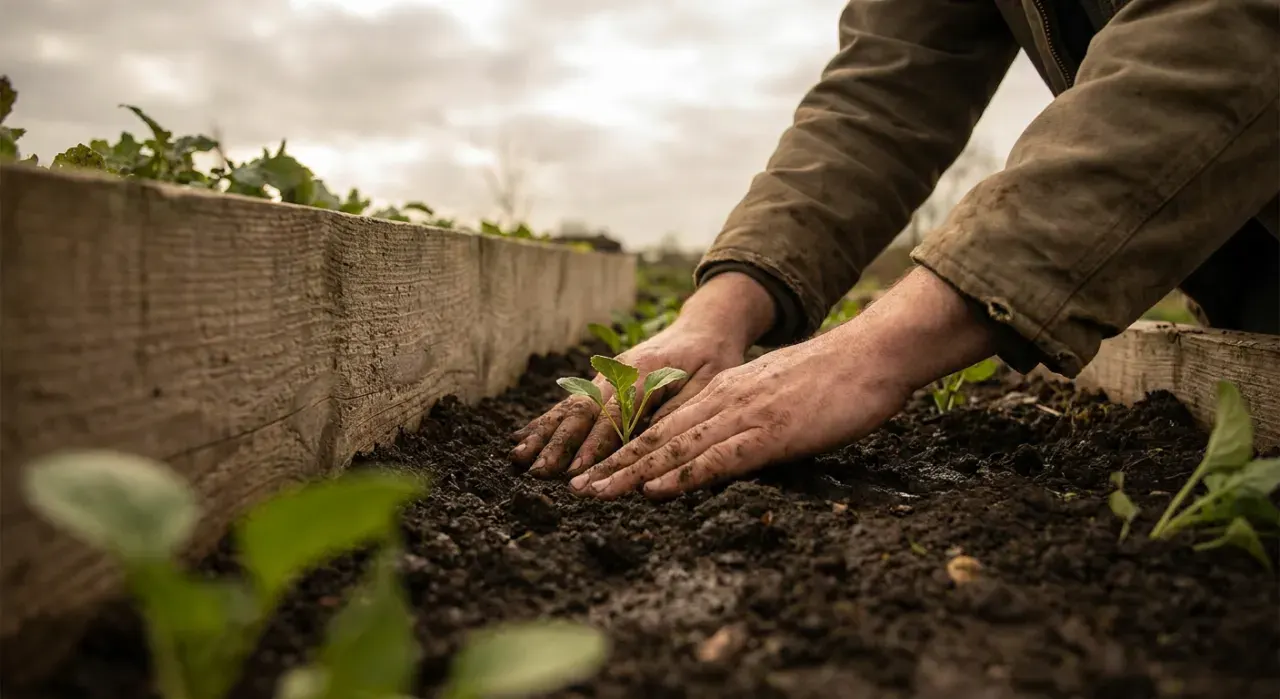
In a bed deeper than about 14 inches, the bottom third is below the root zone of nearly everything you grow, and filling it with purchased mix buys you nothing. Fill it instead with material you already have.
- Plain cardboard on the ground, tape and glossy labels removed, overlapped. It smothers grass and disappears within a season. Never plastic sheeting.
- Logs and thick branches, 6 to 10 inches deep, packed with smaller sticks. Avoid black walnut, which releases juglone, and anything treated or painted.
- Leaves, straw, grass clippings and prunings filling the voids, so soil above does not wash down into air pockets.
- A couple of inches of spent soil or rough compost to seal the organic layer.
- The top 12 inches: the real mix at the ratios above.
The one caveat is nitrogen in year one, since decomposing wood temporarily draws nitrogen from adjacent soil. Keep the woody material in the bottom third and add extra compost or an organic nitrogen source in the first season. From year two the effect reverses. The full costing of this approach against buying the whole volume is in cheapest way to fill a raised bed.
How Much to Buy
Cubic feet = length (ft) × width (ft) × depth (in) ÷ 12. Divide by 27 for cubic yards.
| Bed | Total volume | Topsoil (50%) | Compost (30%) | Aeration (20%) |
|---|---|---|---|---|
| 4 × 4 ft, 12 in | 16 cu ft | 8 cu ft | 4.8 cu ft | 3.2 cu ft |
| 4 × 8 ft, 12 in | 32 cu ft | 16 cu ft | 9.6 cu ft | 6.4 cu ft |
| 4 × 8 ft, 18 in | 48 cu ft | 24 cu ft | 14.4 cu ft | 9.6 cu ft |
| 4 × 12 ft, 12 in | 48 cu ft | 24 cu ft | 14.4 cu ft | 9.6 cu ft |
| Three 4 × 8 ft, 12 in | 96 cu ft (3.6 yd) | 48 cu ft | 28.8 cu ft | 19.2 cu ft |
Order about 10 percent extra. Bulk material settles and compacts, and a yard delivered is rarely a full yard once it is in the bed. A second delivery for the last few cubic feet costs far more than the overage.
Mixing It Properly
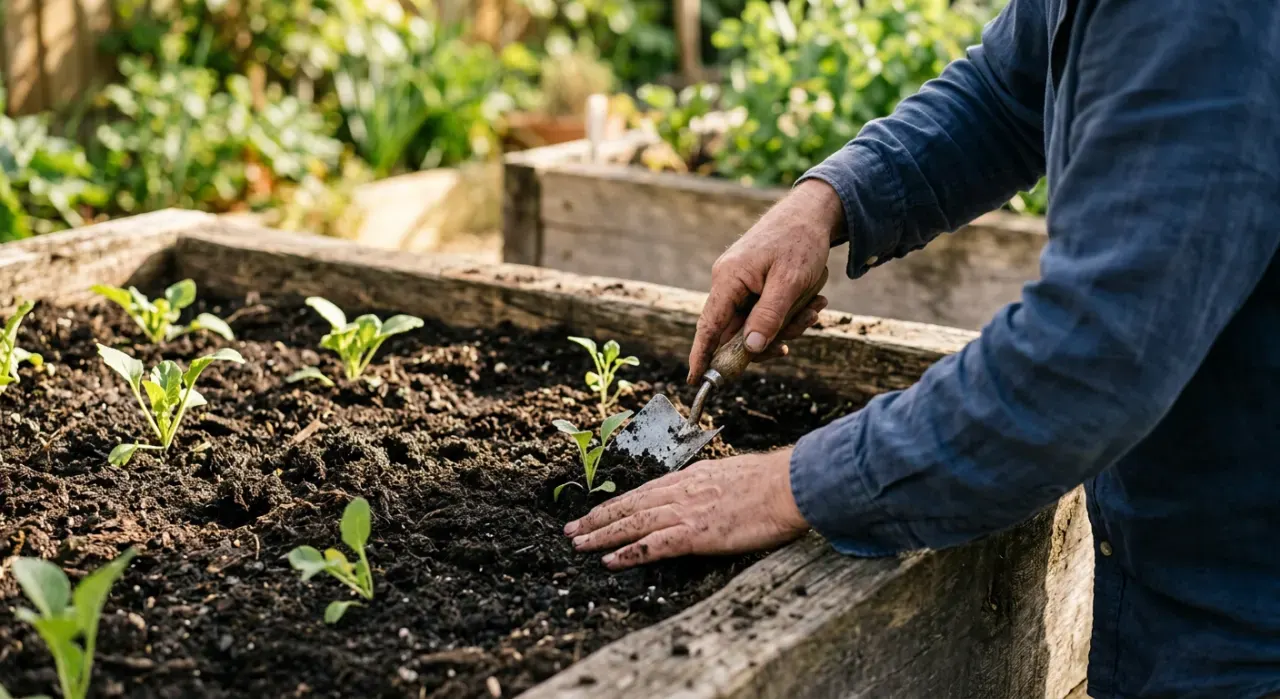
Mix on a tarp or on the driveway rather than layering the components into the bed and hoping. Layered components do not blend on their own — you end up with a compost stratum, a topsoil stratum and a perlite stratum, each behaving differently, and roots hitting an abrupt texture change at every boundary.
The efficient method for a full bed is to build it in courses. Put down a third of each component, turn it over with a fork or a shovel until the color is uniform, then repeat. Wet it lightly as you go — dry perlite is dusty and unpleasant to breathe, and slightly moist material blends far better than bone-dry.
Water the finished bed thoroughly and let it sit for a few days before planting. That settles the mix, closes air pockets, and lets you top up to the right level before seedlings are in the way rather than after.
What Never to Put in a Raised Bed
| Do not use | Why |
|---|---|
| Plastic sheeting as a liner or base | Traps water, drowns roots, turns the bed anaerobic. Landscape fabric is fine; plastic is not. |
| Gravel layer "for drainage" | Creates a perched water table that makes drainage worse, and wastes depth |
| Fresh manure | Burns roots, and carries a food safety concern. Age at least 6 months. |
| Pure compost as the whole fill | Too rich for seedlings, holds too much water, settles dramatically |
| Bagged potting mix as the whole fill | Too light at bed volume, dries constantly, and the cost is punishing |
| Unamended heavy clay | Compacts into a slab; it is what the bed was built to avoid |
| Black walnut wood, leaves or sawdust | Juglone suppresses tomatoes, peppers and several other crops |
| Treated, painted or unknown salvaged lumber | Preservatives and paint of unknown composition |
| Hay instead of straw | Full of grass seed; you will weed it for two years |
| Diseased plant material or seeding weeds | A bed is not a hot compost pile and will not kill either |
| Fine fresh wood chips through the root zone | Tie up nitrogen as they break down; keep them in the base or on paths |
| Coal ash or charcoal briquette ash | Contains contaminants and additives; wood ash only, and sparingly |
Elevated Planters and Containers Are Different
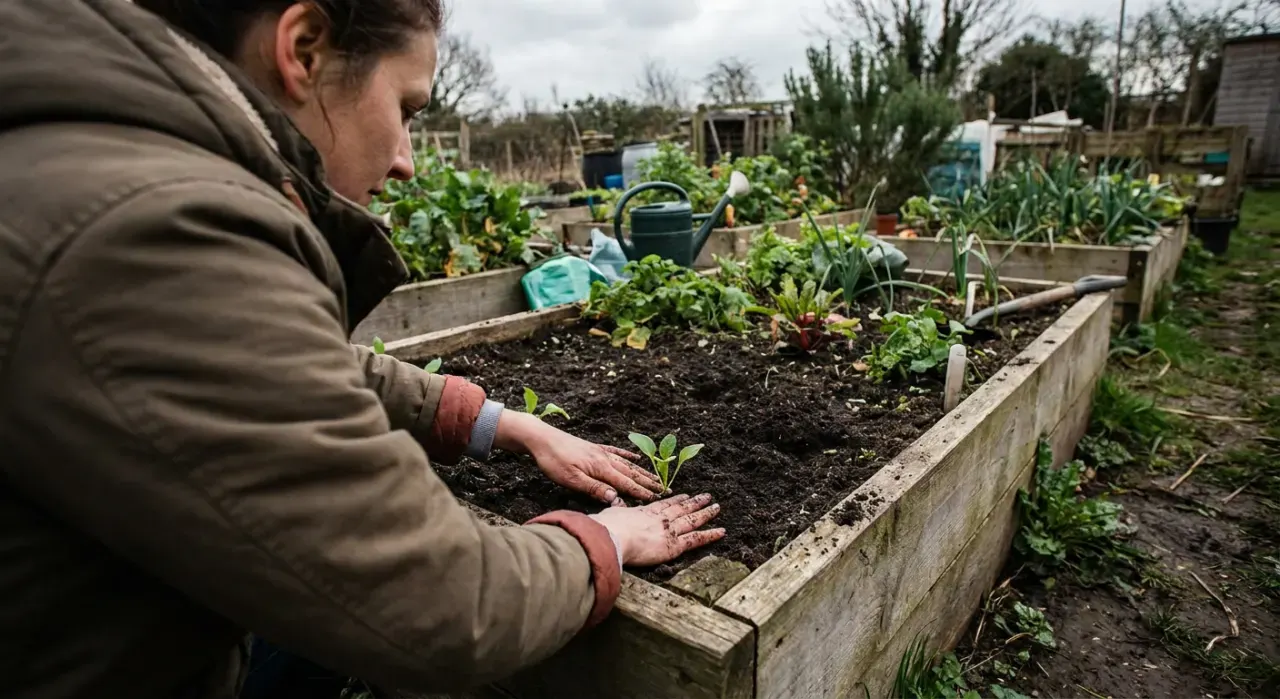
Everything above assumes a bed sitting on or near the ground with real volume. An elevated planter on legs, a windowbox or a deck container is a different problem: the soil volume is small, there is air on every face, and weight is a genuine constraint. Heavy topsoil in a shallow trough compacts and holds water badly.
For those, use a quality bagged potting mix — the product that is wrong for a bed is exactly right here — and blend in about 20 to 25 percent compost for fertility. Check that drainage holes are real and unobstructed, because a blocked elevated planter drowns plants faster than any bed on the ground will. Trough depth and drainage design are the two things that separate good elevated planters from frustrating ones, and they drive the ranking in best elevated planter box.
Keeping the Mix Working
Raised beds run down faster than ground soil. They are warmer and better aerated, which is exactly why they grow well, and it is also why organic matter mineralizes more quickly. A bed filled beautifully in year one and ignored is a disappointing bed by year three.
- Add an inch or two of finished compost each spring, spread on the surface rather than dug in. Worms and water carry it down, and the soil structure stays intact.
- Top up settling with more mix, not with compost alone — otherwise the compost fraction creeps upward year over year.
- Keep it mulched. Two to three inches of straw, shredded leaves or fine bark protects structure, moderates the temperature swings that beds are prone to, and cuts watering meaningfully.
- Test pH every couple of years. Most vegetables want 6.0 to 7.0. Beds heavily amended with pine bark or peat drift acidic; those with mushroom compost or wood ash drift alkaline.
- Do not turn the whole bed over each spring. Beds are not compacted and do not need it; digging destroys fungal networks and brings weed seed to the surface. Compost on top is the better move.
- Sow a cover crop over winter where the season allows — crimson clover, field peas or winter rye. It protects the surface, adds organic matter and, in the legumes, fixes nitrogen.
- Rotate crops between beds. Easier in a bed system than in the ground, and it interrupts pest and disease cycles. Layout that makes rotation straightforward is covered in raised bed spacing and layout.
The other half of long-term success is what the bed is made of, since the frame outlives several rounds of soil amendment — the material comparison across metal, cedar and composite is in best raised garden bed, and the metal-specific detail on panel gauge and corner strength is in best metal raised beds.
We never buy, test or physically handle the products we rank. Recommendations come from aggregated owner reviews, star ratings, review volume and expert consensus — see how we rank.
More from this hub: Raised Beds & Planters · How deep should a raised bed be · Cheapest way to fill a bed · Are galvanized beds safe · How we rank