 Garden

Affiliate Disclosure
Some links on this page are affiliate links. As an Amazon Associate, we earn from qualifying purchases — at no extra cost to you. We do not buy, test, or physically handle the products we cover; our rankings come from aggregated owner reviews, ratings and expert consensus. Commissions never change our verdicts. How we rank · full disclosure.
The short version: after weighing six popular raised beds on owner star ratings, review volume, material specifications and the complaints that recur after a season or two of weather, our #1 pick is the Vego Garden 17-inch metal bed. It is deep enough for root crops, coated for a 20-year life rather than a five-year one, and its panels reconfigure into nine layouts so a single kit fits almost any yard.
Growing food rather than flowers, and growing it seriously? Then depth outranks everything else on the list, because it is the one specification you cannot change once the bed is built and full — and the Vego Garden 32-inch Extra Tall is the bed that removes the limit, with roughly 2.7 feet of root run for full-length carrots, parsnips, daikon and a real potato crop.
Working to a budget? The Land Guard 8 x 4 foot bed delivers 32 square feet of growing area for around $90, which is the best value in the category. Before you order soil, read what to fill a raised bed with — filling a bed badly costs more than buying the wrong bed. For the wider picture, start at the raised beds and planters hub.
Top Picks at a Glance

Our #1 Pick: Vego Garden 17 in. Metal Raised Bed
Two things separate this from the wave of cheap galvanized kits that followed it. The first is depth: at 17 inches, it holds enough soil for carrots, parsnips and potatoes, which the common 12-inch beds simply cannot support, and it gives tomatoes a root run that survives a hot week without daily watering. The second is the coating — aluzinc rather than plain galvanizing, with a manufacturer service expectation of 20 years, and rolled safety edges on every panel so assembly does not cost you a cut hand.
Consensus Score █████████░ 9.0 — from 1,662 owner ratings averaging 4.6 stars
The modularity is more useful in practice than it sounds. The same set of panels builds a standard 8 x 2 foot row bed, a 4 x 4 square, or an L-shape that follows a fence line, so you are not committing to a footprint before you have lived with the garden for a season. Owners consistently report assembly taking around an hour with two people and the finished bed feeling notably more rigid than budget alternatives.
Check price on Amazon → (paid link)
Best Raised Garden Beds 2026: The Ranked Field

Best for a serious vegetable bed you will still be using in 2046
- 17 in. deep — enough for carrots and potatoes
- Aluzinc-coated steel, 20-year expected life
- Reconfigures into 9 shapes, including 8 x 2 ft
- Rolled safety edges on every panel
Why buy it: the depth, the coating and the corner strength that the cheaper metal kits all compromise on.

Best for carrots, parsnips, potatoes and anything that grows straight down
- 32 in. tall — roughly 2.7 ft of root run
- Double-walled aluzinc-coated steel
- Reconfigures into 9 shapes including 2 x 8 ft
- Open bottom, rolled safety edges on every panel
Why buy it: depth is the one specification you cannot add after the bed is full, and this removes the limit entirely.
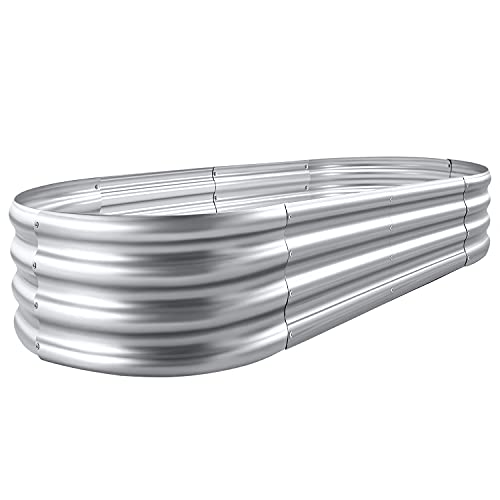
Best for the most growing area per dollar
- 32 sq ft of growing area
- Galvanized steel, open bottom
- Bolt-together assembly in about an hour
- Includes gloves and a bed liner
Why buy it: roughly half the price per square foot of a premium metal bed, with the same 12 in. working depth.

Best for front yards and anywhere the bed has to look good
- Untreated North American cedar
- Dovetail joints — no tools needed
- Stackable to double the depth
- Made in the USA
Why buy it: assembles in fifteen minutes without hardware and looks better every season it weathers.
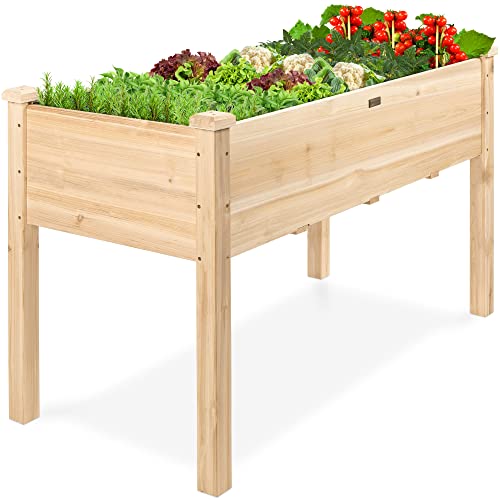
Best for decks, patios and gardening without kneeling
- Waist-height 30 in. stand
- Fir wood frame with bed liner
- 200 lb capacity, ~8 in. soil depth
- Lower shelf for tools and pots
Why buy it: brings the whole garden to standing height, which is the difference between gardening and not.

Best for balconies and anyone who cannot water every day
- Built-in water reservoir with level gauge
- Drainage plug for wet spells
- Weather-resistant resin, no rot
- Assembles in under 30 minutes
Why buy it: the reservoir buys you three to five days between waterings in high summer.
Best for renters, first-timers and testing a spot before you commit
- 100 gallons of soil volume
- 300g thickened nonwoven fabric
- Air-prunes roots for denser growth
- Folds flat for winter storage
Why buy it: a full growing bed for the price of two bags of compost, movable and storable.
Quick Comparison
| Product | Best for | Rating | Price | Buy |
|---|---|---|---|---|
| Vego Garden 17 in. Tall 9-in-1 Metal Raised Bed | Best Overall | — | Check (paid link) | |
| Vego Garden 32 in. Extra Tall Modular Raised Bed Kit | Best for Root Crops | — | Check (paid link) | |
| Land Guard 8 x 4 x 1 ft Galvanized Raised Bed | Best Value Metal | — | Check (paid link) | |
| Greenes Fence Original Cedar Raised Bed, 4 x 4 x 10.5 in. | Best Cedar Bed | — | Check (paid link) | |
| Best Choice Products 48 x 24 x 30 in. Elevated Planter | Best Elevated Bed | — | Check (paid link) | |
| Keter Easy Grow 31.7 Gallon Elevated Garden Bed | Best Self-Watering | — | Check (paid link) | |
| VIVOSUN 100 Gallon Fabric Raised Bed Grow Bag | Best Budget Starter | — | Check (paid link) |
How We Rank
We do not buy, build or physically handle these beds. We rank them by aggregating star ratings and review volume across thousands of verified owner reviews, weighting recent reviews above launch-window ones, checking published dimensions, steel gauge, coating type and timber species against manufacturer specifications, and reading the one- and two-star reviews closely for the failures that only appear after a winter or two outdoors.
Four factors set the order. Usable depth, because depth decides what you can actually grow. Expected lifespan, drawn from coating and material specifications and corroborated by multi-season owner reports on rust, rot and warping. Owner satisfaction, weighted by review count so a 4.6 across 1,662 owner ratings outranks a 4.9 across 40. And value per square foot of growing area rather than lowest sticker price. Prices were checked at time of writing and move with the season. Full method: how we rank.
The Beds, Reviewed
1. Vego Garden 17 in. 9-in-1 — Best Overall
Covered above. Consensus Score █████████░ 9.0 — from 1,662 owner ratings. Strengths: 17-inch depth, aluzinc coating rated for two decades, rolled safety edges, reconfigurable panels, and a rigid finished structure. Recurring complaints: price — it costs roughly double the budget metal kits; the panel bolts are fiddly and several reviewers recommend leaving them loose until every panel is placed; and the amount of soil a 17-inch bed swallows surprises people, so budget for the fill before you order.
2. Vego Garden 32 in. Extra Tall — Best for Root Crops
Almost every raised bed sold in America is between 8 and 12 inches deep, and that is a decision made for shipping costs rather than for plants. Eight inches grows salad. It does not grow a full-length carrot, a decent parsnip, a daikon or a worthwhile crop of potatoes, and it puts tomatoes and squash on a moisture knife-edge every August because there is so little soil volume to buffer them. This bed answers that with roughly 2.7 feet of root run, enough that potatoes can be earthed up properly inside the bed rather than in a separate bag, and it is comfortable to work at standing height.
Consensus Score █████████░ 9.1 — one of the highest-rated raised bed systems in the category
Construction is double-walled aluzinc-coated steel, the same coating family as the 17-inch bed above and expected to last two decades outdoors, with the same nine-configuration modularity and the same rolled safety edges. The long 2 x 8 ft layout suits vegetable rows better than a square does.
Recurring complaints: price leads, and the soil bill on top of it surprises people badly — a bed this deep swallows an enormous volume of fill. Assembly is long, with many small bolts and panels that need two people to align. Owners in hot southern states report the metal walls warming the soil at the perimeter in high summer, which mulching along the inside edge largely fixes. And a minority report panels arriving dented in shipping.
3. Land Guard 8 x 4 x 1 ft — Best Value Metal
The volume play, and the reason metal beds went mainstream. Thirty-two square feet of growing area at 12 inches deep for around $90 is roughly half the price per square foot of the premium kits, and the galvanized steel still comfortably outlasts any wooden bed at the same price. Owners consistently report assembly taking about an hour, and the kit ships with gloves and a liner rather than making them extras.
Consensus Score ████████░░ 8.8 — from 12,774 owner ratings averaging 4.6 stars
Recurring complaints: the steel is thinner than premium beds and panels can bow outward under wet soil on a long run — the usual fix owners describe is a cross-brace or a stake at the midpoint of the 8-foot sides. Sharp edges on some panels are mentioned often enough to take the gloves seriously, and a minority report surface rust at drilled bolt holes after two winters.
4. Greenes Fence Original Cedar 4 x 4 — Best Cedar Bed
The bed that made dovetail assembly standard. Boards slide into routed corner posts with no tools, no screws and no swearing, and the whole thing goes together in about fifteen minutes. Untreated North American cedar means no chemicals near food crops — Oregon State Extension names cedar and redwood as the more expensive but long-lasting, safe framing choice for edible beds — and the kit stacks — buy two and you have a 21-inch-deep bed. For a front yard or anywhere the bed is part of the view, nothing here looks better.
Consensus Score ████████░░ 8.5 — from 1,568 owner ratings averaging 4.5 stars
Recurring complaints: lifespan is the honest one — expect seven to twelve years before the ground-contact boards soften, against 20+ for metal. Reviewers also report board thickness varying between production runs, and warping in very hot dry climates. The dovetail joints loosen slightly as the wood dries, which most owners solve with a single corner screw.
5. Best Choice Products Elevated Planter — Best Elevated Bed
Waist height changes who can garden. At 30 inches tall this removes kneeling entirely, which is why it is the standard recommendation for gardeners with back, knee or mobility limitations, and it works on a deck or patio where there is no soil at all. The lower shelf is more useful than it looks — pots, gloves and a watering can stop living on the ground.
Consensus Score ████████░░ 8.2 — from 11,226 owner ratings averaging 4.5 stars
Recurring complaints: soil depth. The trough holds only around eight inches, which is fine for greens, herbs and bush beans but not for anything deep-rooted, and a lot of one-star reviews come from people who planted full-size tomatoes. The fir wood needs sealing on the outside faces to last, the supplied liner tears easily, and reviewers note it dries out fast in summer heat. See best elevated planter box for alternatives.
6. Keter Easy Grow — Best Self-Watering
A resin elevated bed with a water reservoir in the base and a level gauge on the side. Fill the reservoir and the soil wicks moisture up as it needs it, which owners report buying three to five days between waterings in high summer — the difference between a balcony garden that survives a vacation and one that does not. It will not rot, will not rust, and assembles in under half an hour.
Consensus Score ████████░░ 8.4 — from 3,512 owner ratings averaging 4.5 stars
Recurring complaints: capacity — 31.7 gallons is a container garden, not a vegetable plot, and expectations need to match. Several reviewers describe the legs as the weak point under a full soil load, and the resin can fade or become brittle after several seasons in intense sun. A few report the reservoir gauge sticking. More options in best self-watering planters.
7. VIVOSUN 100 Gallon Fabric Bed — Best Budget Starter
A hundred gallons of soil volume for about $25, in a fabric bed you can put anywhere and fold away in November. It is the cheapest credible way to start growing, and the fabric does something rigid beds cannot: it air-prunes roots at the wall, which produces a denser, more fibrous root system instead of a pot-bound spiral. Ideal for renters, for testing whether a sunny corner really is sunny, and for potatoes.
Consensus Score ████████░░ 8.0 — from 1,179 owner ratings averaging 4.5 stars
Recurring complaints: it dries out faster than any rigid bed here, which in July can mean daily watering. The fabric degrades in UV over three to five seasons, the handles tear if you try to move it full, and it slumps into a rounder shape as soil settles. Judged as a $25 seasonal bed, satisfaction is high. Ranked against peers in best grow bags.
How to Choose a Raised Bed
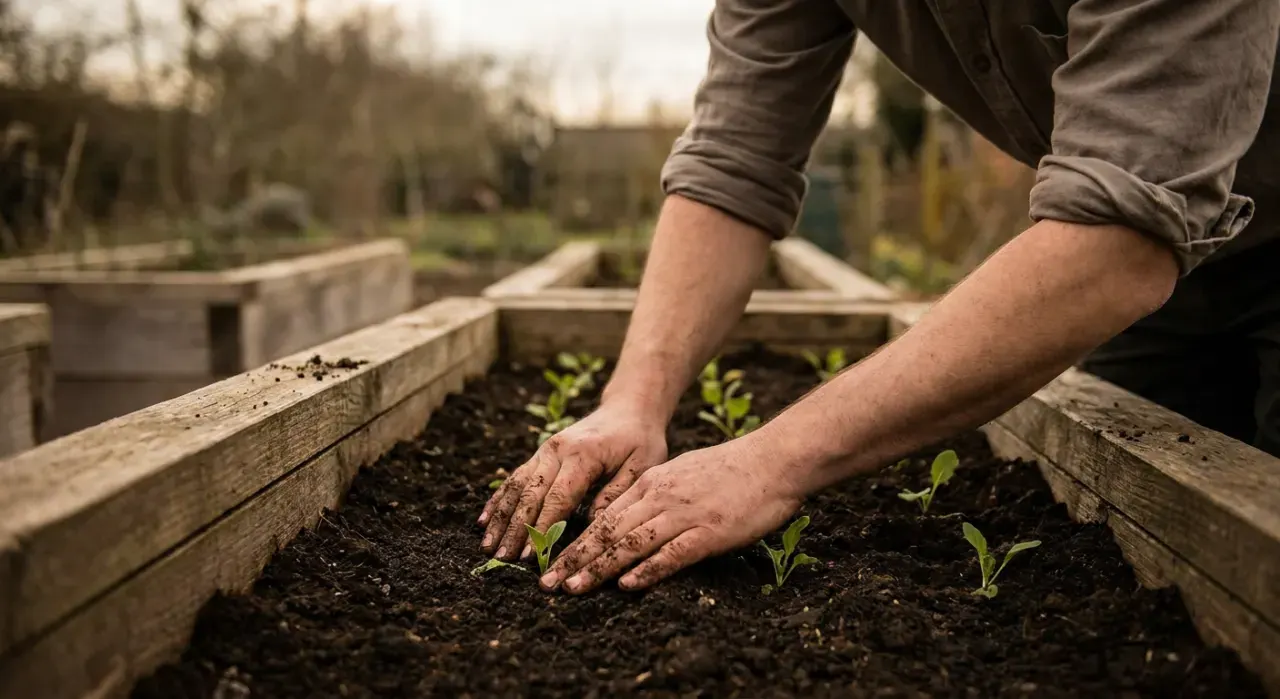
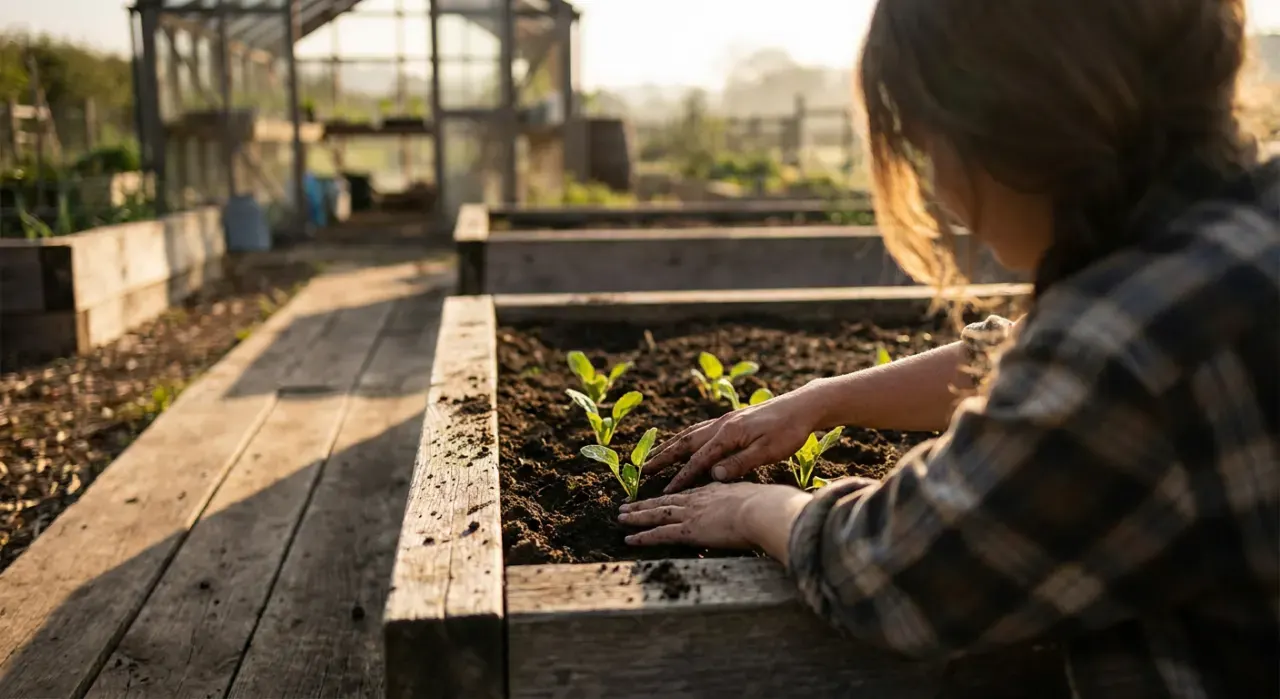
Answer three questions and the choice narrows to one or two. What are you growing? Salad, herbs and bush crops are happy in eight inches, so an elevated or fabric bed works. Tomatoes, squash and beans want 12. Carrots, parsnips and potatoes want 16 to 18, which rules out most elevated planters immediately.
Where is it going? On open soil, an open-bottomed metal or cedar bed is ideal because roots can reach down. On a deck, patio or concrete, you need a bed with a proper base and real drainage, and depth becomes critical. On a rented balcony, fabric or a self-watering resin planter is the practical answer.
How long do you want it to last? Metal is 20 years, cedar is seven to twelve, pine is three to five, fabric is three to five. Then set your budget per square foot rather than per bed — an $90 bed covering 32 square feet is far better value than a $75 bed covering 16.
Do the soil arithmetic before you order anything, because on a deep bed it usually costs more than the frame. Length times width times depth in feet gives cubic feet; divide by 27 for cubic yards. An 8 x 4 ft bed at 2 ft deep needs 64 cubic feet — around 2.4 cubic yards, or roughly 32 retail bags. A bulk delivery from a landscape supplier is a fraction of the bagged price, and filling the bottom third with logs, branches, cardboard and fall leaves removes a large slice of the first-season cost. That material breaks down over a few years, so plan to top up.
Be deliberate about materials near food, but not anxious about them. Untreated cedar and redwood are inert and need no thought at all. Modern galvanized and aluzinc steel is widely used for food gardens, and Oregon State Extension lists a metal trough among its standard raised bed variations while directing its material warnings at preservative-treated and reclaimed wood. Zinc is a plant micronutrient rather than a lead-type contaminant, release into soil is slow, and it is largely confined to the few inches nearest the wall. What to avoid is reclaimed material of unknown origin: creosoted railroad ties — EPA restricts creosote to certified applicators treating outdoor wood such as railroad ties and utility poles, and creosote products are not sold to homeowners — older CCA-treated lumber, and coated stock nobody can identify.
Finally, size the footprint for reach rather than for area. A bed wider than about four feet cannot be worked from both sides without stepping in — Oregon State Extension gives a maximum width of 4 feet as a good choice for adult gardeners — and stepping in compacts the soil you paid to build. Leave two to three feet between beds for a wheelbarrow, and orient long beds so tall crops such as pole beans and staked tomatoes sit on the north side where they will not shade everything behind them.
What Owners Actually Complain About
Read enough negative reviews across every brand here and five themes repeat. Soil cost shock is the biggest — buyers order a deep bed, then discover it needs one to two cubic yards of fill. Panel bowing on long metal beds is second; wet soil pushes hard on an unbraced 8-foot span, and the fix is a mid-span brace or stake. Sharp edges during assembly appear in metal-bed reviews constantly, which is exactly why the better kits now roll their edges and include gloves.
Drying out is the universal raised-bed complaint, and it is inherent to the format — raised soil drains faster, so beds need more frequent watering than in-ground rows, especially fabric and elevated ones. A drip line laid along the bed fixes it permanently, and the drip irrigation setup guide covers the parts. Finally, settling catches out first-timers: expect three to four inches of drop in the first season and plan to top up with compost every spring.
The Verdict
For a bed you will still be growing in two decades from now, the Vego Garden 17-inch is the one to buy — the depth and the coating are what separate a lasting bed from a disposable one. If the point of the bed is food and you want to grow all of it — full-length carrots, parsnips, a real potato crop — go to the Vego Garden 32-inch instead, because depth is unfixable later. For maximum growing area on a budget, the Land Guard 8 x 4. For looks, Greenes cedar. For no kneeling, the Best Choice elevated planter. To start this weekend for $25, the VIVOSUN fabric bed.
Check price on Amazon → (paid link)
Next: get the fill right in what to fill a raised bed with, settle the depth question in how deep should a raised bed be, plan what goes in it at the vegetable growing hub, or make your own soil amendment via the composting and soil hub.