 Garden
Affiliate Disclosure
Some links on this page are affiliate links. As an Amazon Associate, we earn from qualifying purchases — at no extra cost to you. We do not buy, test, or physically handle the products we cover; our rankings come from aggregated owner reviews, ratings and expert consensus. Commissions never change our verdicts. How we rank · full disclosure.
Short version: pruning goes wrong for two reasons, and neither of them is technique. People cut at the wrong time of year, which removes the flower buds the plant made months ago, and people use a tool beyond its rated capacity, which ruins both the plant and the tool. Get timing and tool choice right and the actual cutting is straightforward. This hub covers both, plus the specific trimmers, loppers and saws the owner-review record supports.
We never buy, cut with, or physically handle the tools we rank. Everything here is drawn from aggregated owner reviews, star ratings, review volume and expert consensus — the method is on how we rank.
What Pruning Is Actually For
Four reasons cover almost every cut worth making. Health — removing the three D’s: dead, damaged and diseased wood, plus branches crossing and rubbing each other into wounds. Shape — keeping a hedge or shrub in the form and size you want, rather than the size it wants. Flowering and fruiting — many shrubs bloom harder when older wood is thinned out and light reaches the center. Safety — clearing branches over paths, driveways and roofs before weather brings them down.
What pruning is not for is reducing a plant that is simply too big for its spot. Cutting a fifteen-foot shrub down to six feet every year produces a dense mass of weak, upright regrowth and a plant that looks worse each season. The honest answer there is replacement with something the right size, and it is the advice most experienced gardeners eventually give. Our pruning mistakes guide covers the habits that shorten plant life.
Timing: The Rule That Saves Your Flowers
One question sorts almost every ornamental shrub: does it flower on old wood or new wood? Spring bloomers — lilac, forsythia, azalea, weigela, mophead hydrangea, most viburnums — form their buds during the previous summer. Prune them in late winter and you cut off the entire show. The window for those is the few weeks straight after flowering finishes. Summer bloomers — panicle and smooth hydrangeas, butterfly bush, crape myrtle, most roses — flower on wood grown in the same season, so they are pruned during dormancy in late winter or early spring.
Deciduous trees are generally best pruned in late dormancy, when structure is visible and disease pressure is low, with the notable exceptions of maples and birches which bleed sap heavily if cut in late winter — those are better cut in summer. Evergreen hedges follow their own rhythm: the main shaping cut after the spring flush has hardened, with a lighter cut later. The complete year is laid out in our when to prune calendar.
One timing rule overrides the rest: dead, damaged and diseased wood comes out whenever you notice it, in any season.
Matching the Tool to the Branch
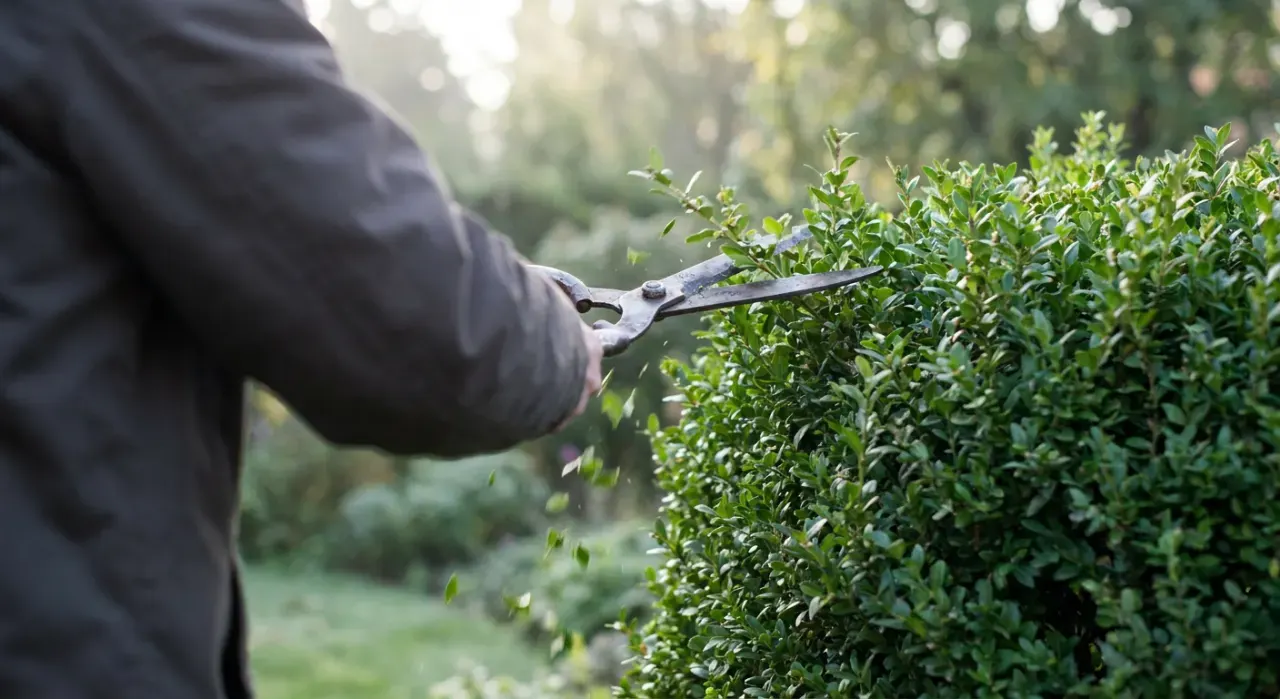
Every cutting tool has a diameter it is built for, and exceeding it is how tools break and plants get torn. The ladder is straightforward. Bypass pruners handle green stems to roughly half an inch. Loppers take you to about an inch and a half, with compound-action models managing a little more. Pruning saws cover anything from about an inch upward and are far safer than forcing loppers. Hedge trimmers are for soft leafy growth between about 3/8 and 3/4 of an inch — they are shaping tools, not cutting tools, and pushing them into thicker wood is the single most common cause of failure in owner reviews. Pole saws extend the reach for high branches, though the practical safety ceiling is lower than the advertised reach suggests.
Bypass versus anvil matters too. Bypass blades pass each other like scissors and leave a clean cut on living wood, which is what you want for anything you expect to regrow. Anvil blades crush the stem against a flat plate — fine for dead wood, damaging on green. If you buy one pair, buy bypass. The ranked options across each category are in best hedge trimmers, best loppers and best pole saws.
Hedges: Shape, Frequency and the Batter Rule
A hedge that goes thin and bare at the bottom is almost always a hedge cut with vertical sides. The fix is batter — tapering the hedge so it is wider at the base than the top, typically by a few inches per side. That lets light reach the lower growth, which keeps it dense, and it sheds snow instead of splaying under it. Almost every professionally maintained formal hedge is cut this way, and almost no home hedge is.
Frequency does the rest. Cutting little and often keeps growth tight and the cuts small; letting a hedge run for two seasons and then cutting it back hard leaves you looking at bare interior wood, which regrows on some species and never regrows on others. That distinction is critical: yew, privet, beech, hornbeam and hawthorn break from old wood; Leyland cypress, thuja, juniper and most conifers do not. Cut a conifer back into brown wood and that face stays brown permanently. Anyone facing an overgrown hedge should read renovating an overgrown hedge before starting, and how to trim a hedge straight for the string-line method that keeps the top level.
Where to Make the Cut
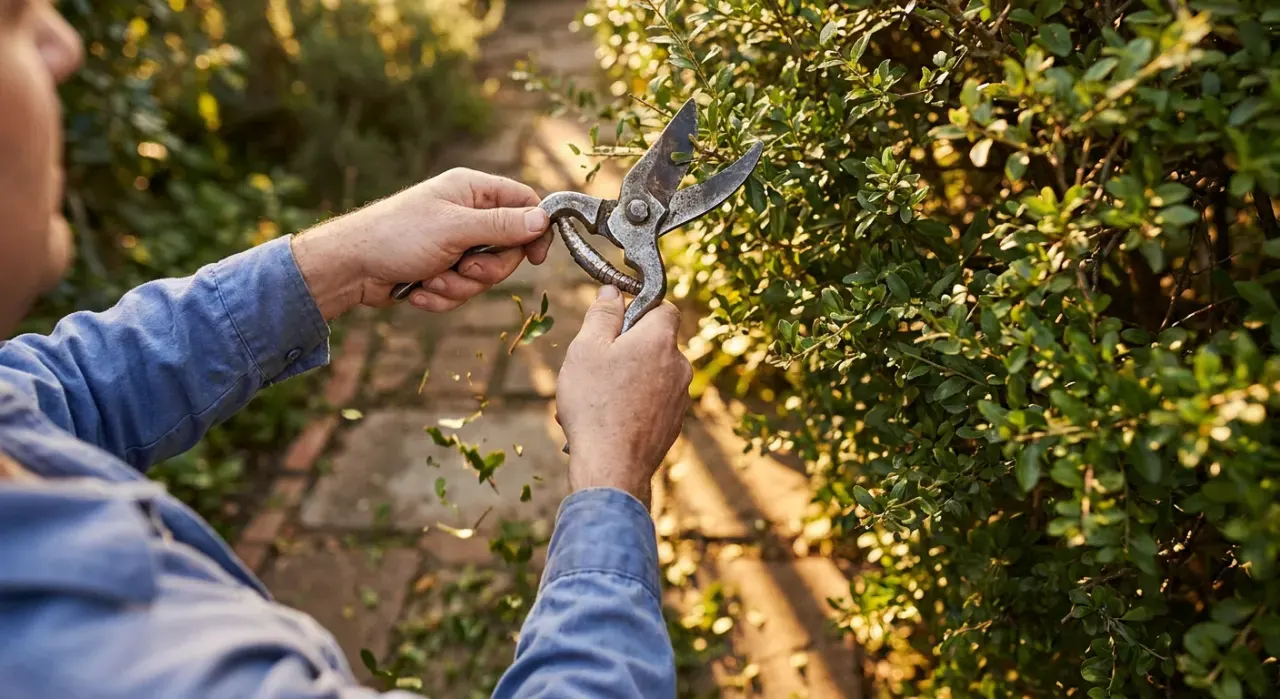
Two cut types cover everything. A thinning cut removes a branch entirely back to its point of origin, opening the plant up without stimulating a flush of regrowth — this is the cut experienced pruners use most. A heading cut shortens a branch back to a bud, which stimulates dense growth just below the cut, and is what hedge trimming effectively does across a whole surface.
On a branch, the cut goes just outside the branch collar — the slightly swollen ring where the branch meets the trunk. Cutting flush with the trunk removes the tissue the tree uses to seal the wound; leaving a long stub gives decay a foothold. And on anything heavier than an inch or two, use the three-cut method: an undercut a foot out, a top cut just beyond it to drop the weight, then the final cut at the collar. Skipping that is how bark strips down the trunk. Full detail lives in how to prune shrubs properly.
Safety and Blade Care
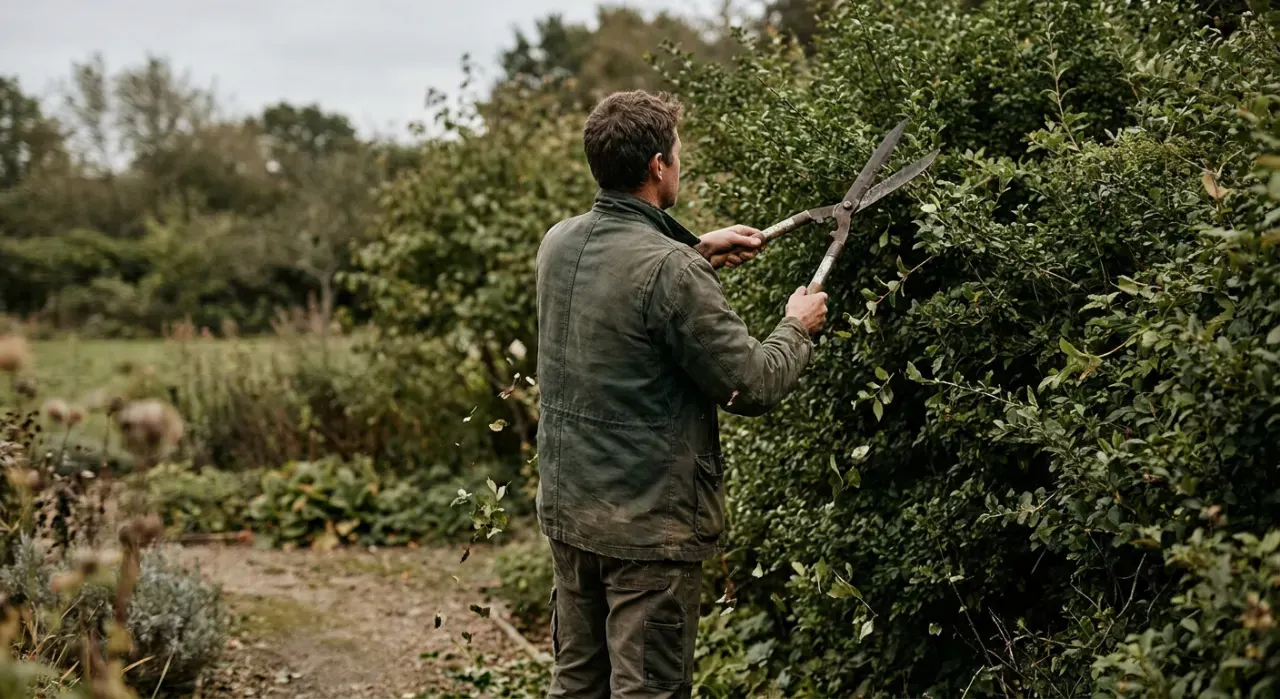
Hedge trimmers and pole saws cause a meaningful share of home-yard injuries every year, and the pattern is consistent: cutting above shoulder height, working from a ladder with a powered tool, and reaching sideways off balance. The CPSC guidance most manufacturers echo is simple — keep both hands on the tool, keep the cut below shoulder height, and never operate a powered trimmer from a ladder. Eye protection and gloves are not optional with hedge work; flying twig fragments are the most common minor injury reported.
Blade care is ten minutes that changes how a trimmer performs. Sap builds into a sticky film that makes blades drag and heat up, so wipe them with resin solvent and a light oil after each session. Teeth can be touched up with a flat file, and a dull trimmer tears leaves into brown-edged shreds rather than cutting them cleanly — which is why a hedge looks scorched a week after a bad trim. Our blade care guide covers the routine, and the same principles apply to the hand tools in our garden hand tools hub.
Where to Start
If you are not sure when to cut something, start with the pruning calendar — timing prevents more damage than technique does. If the tool is the problem, the ranked field is in best hedge trimmers, with corded vs cordless covering the decision most buyers get stuck on. And if you have inherited a hedge that has run away, read renovating an overgrown hedge before you cut anything, because on conifers the mistake cannot be undone. The full map of this hub is below.