 Garden
Affiliate Disclosure
Some links on this page are affiliate links. As an Amazon Associate, we earn from qualifying purchases — at no extra cost to you. We do not buy, test, or physically handle the products we cover; our rankings come from aggregated owner reviews, ratings and expert consensus. Commissions never change our verdicts. How we rank · full disclosure.
Short version: decor is the last five percent of a garden, and it is where most yards go wrong — not because people buy bad objects, but because they buy too many, too small, and place them everywhere at once. This hub covers the decorative layer: fountains and water features, birdbaths, statuary, arbors and planters. It also covers the practical side nobody warns you about — pump sizing, algae, and the winter routine that stops a $400 fountain becoming rubble in January.
We do not buy or physically handle anything we rank. Recommendations are built from aggregated owner reviews, star ratings, review volume and expert consensus, which is set out on how we rank.
Three Rules Before You Buy Anything
Go bigger than feels comfortable. Ornament shrinks outdoors. A statue or urn that looks substantial in a store is swallowed by a yard, which is why the most common regret in review threads is that a piece arrived smaller than expected. Measure the space, then choose something at the upper end of what will fit.
One focal point per view. Stand where you actually look at the garden from — usually a kitchen window or a patio chair — and give that view a single strong object. Multiple competing ornaments in one sight line cancel each other out and read as clutter, no matter how nice each individual piece is.
Repeat, do not collect. Three identical planters along a wall look designed. Three different planters look like leftovers. Repetition is the cheapest way to make a yard feel resolved, and it works with pots, lanterns, obelisks and edging alike.
Water Features: What You Are Really Signing Up For
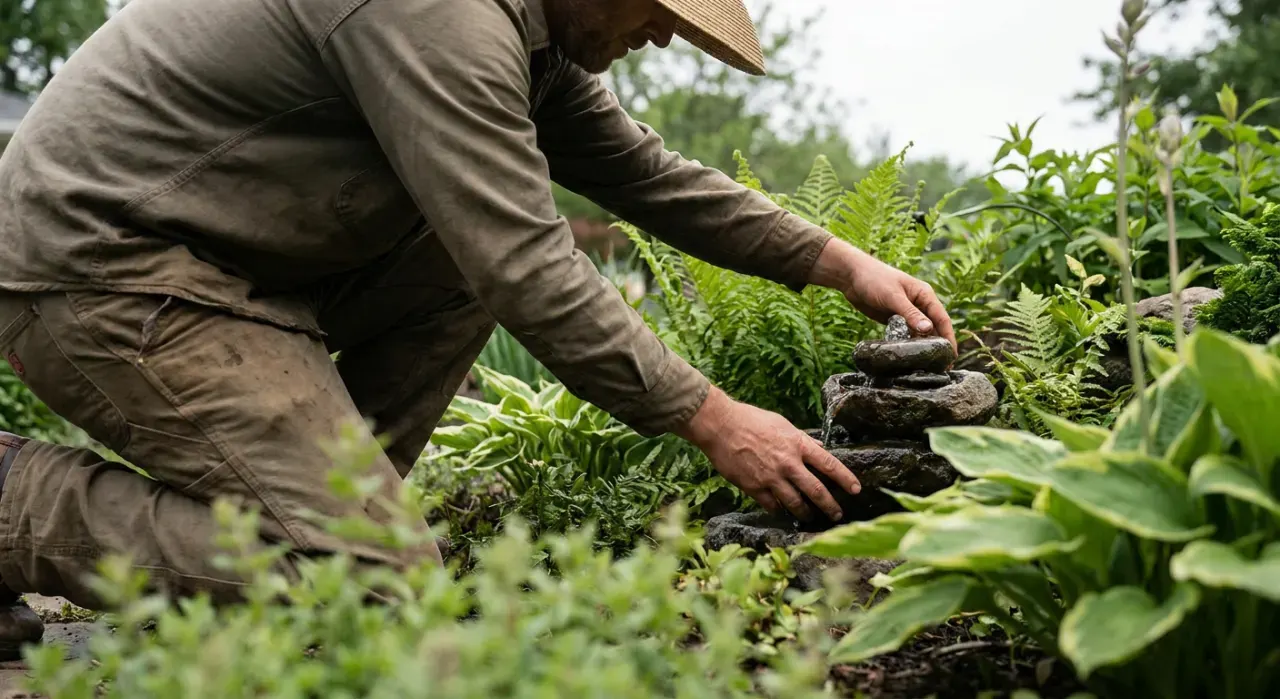
A fountain does something nothing else in the garden does — it adds sound, and moving water masks traffic and neighbors surprisingly well. It also creates a wildlife draw; birds will use a shallow, moving water source far more readily than a still one.
Be clear-eyed about the commitment, though. A fountain is a small appliance that lives outdoors. It needs topping up in summer heat, cleaning every few weeks so it does not go green, a pump that will eventually need replacing, and draining and storing before the first hard freeze. Read the low-star reviews on any fountain and the same three themes dominate: it arrived chipped, the pump failed within a year, or it cracked over winter. Two of those three are within your control.
Choose the format by where it will live. A tabletop fountain suits a patio table or a deck rail and runs on a tiny pump. A tiered floor fountain is the classic garden focal point and needs a level, solid base — pavers, not soil. A wall fountain is the small-yard answer, taking almost no footprint. And a solar-pumped bowl or birdbath is the cheapest entry of all: a floating solar pump turns any watertight vessel you already own into a water feature for around twenty dollars. The ranked field is in best outdoor fountain, with the solar-only route in best solar fountain pump.
Pumps, Sizing and Noise
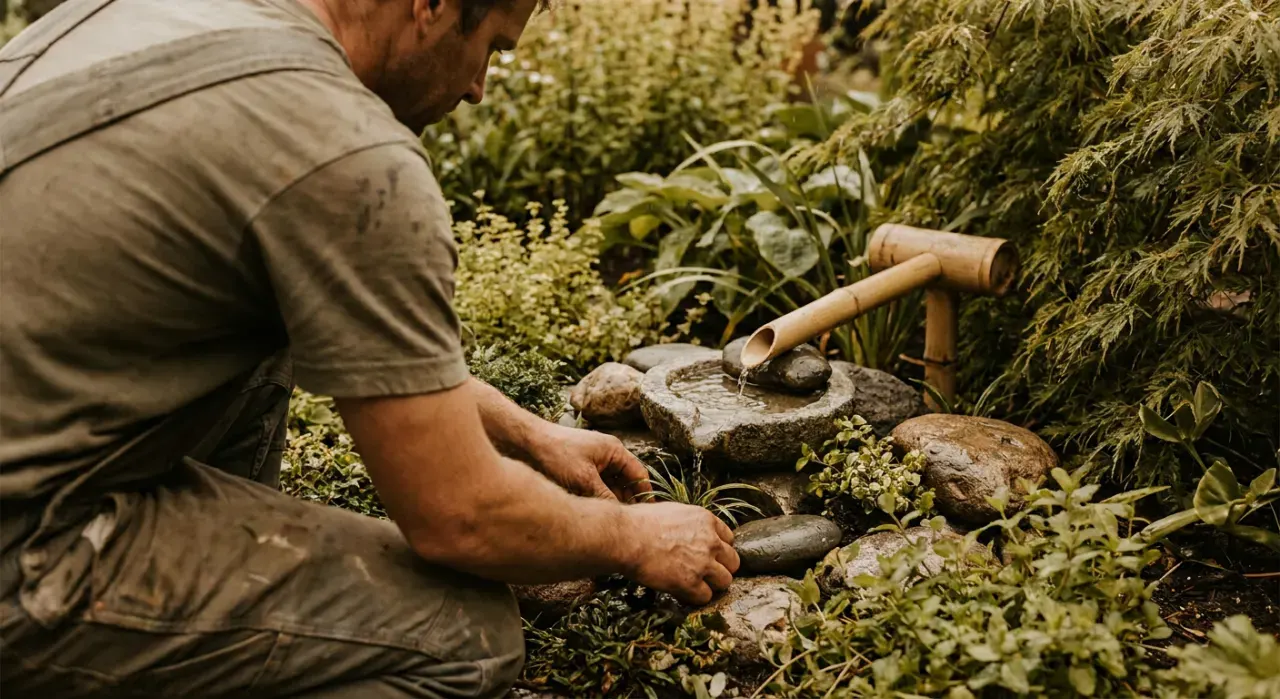
The single most common disappointment with a fountain is a weak flow, and it is almost always a pump-matching problem. Pumps are rated in gallons per hour at a stated head height, and output falls as the lift increases — a pump advertised at 200 GPH may deliver less than half that when pushing water up three feet of tubing. Buy for the height you need, then use the pump’s flow adjuster to dial it back rather than buying too small and hoping.
Noise is the flip side. A fountain that trickles is soothing; one that splashes hard is irritating from a chair ten feet away, and a pump running slightly dry hums audibly. Lower the flow, raise the water level so the pump is well submerged, and adjust the drop height so water lands in water rather than on stone. The full numbers are in fountain pump sizing.
Algae, Water Quality and Wildlife
Every outdoor water feature goes green eventually. Algae needs light, warmth and nutrients, so the fix is mechanical before it is chemical: site the fountain where it gets afternoon shade, skim leaves and pollen out, and empty and scrub the basin every few weeks through summer. If you use a treatment, it must be one labeled safe for birds and wildlife — pool chemicals are not, and a garden fountain is a drinking source whether you intended it to be or not.
The mosquito question comes up constantly and the answer is reassuring: mosquitoes need still water. A running pump keeps the surface moving enough to prevent laying. The risk is in saucers, catch trays and a fountain switched off for a fortnight in July. More detail in stopping algae in a fountain.
Winterizing — the Step That Saves the Feature
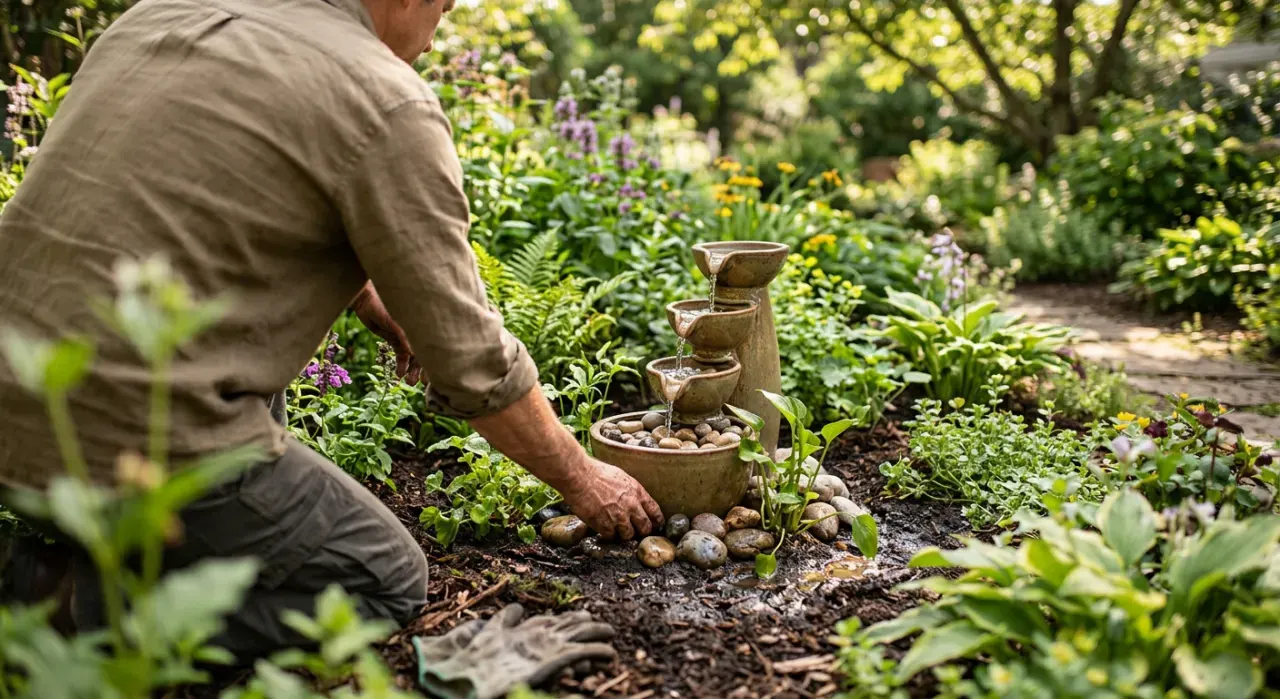
If your winter drops below freezing, a fountain left full will crack. Water expands as it freezes and cast stone, resin and ceramic all split along the same lines. The routine takes twenty minutes each fall: drain every bowl and tier completely, pull the pump and store it indoors submerged in a bucket of water so the seals stay wet, dry the interior, and either cover the feature with a breathable cover or move it into a garage. Small tabletop pieces are easiest simply brought inside. Full walkthrough in how to winterize a fountain.
Arbors, Obelisks and Structure
Decor is not only objects — vertical structure does more for a garden than any ornament. An arbor over a path frames a view and gives a climbing rose or clematis somewhere to go. An obelisk in a bed adds height in the second year of a planting scheme, long before the shrubs get there. The practical points are stability and material: anything over about six feet tall needs anchoring properly, because wind on a mature vine turns an arbor into a sail. Cedar weathers to gray and lasts well untreated; powder-coated steel lasts longer but heats up in direct sun; vinyl is maintenance-free and looks it. Ranked options in best garden arbor and trellis.
Statuary and Placement
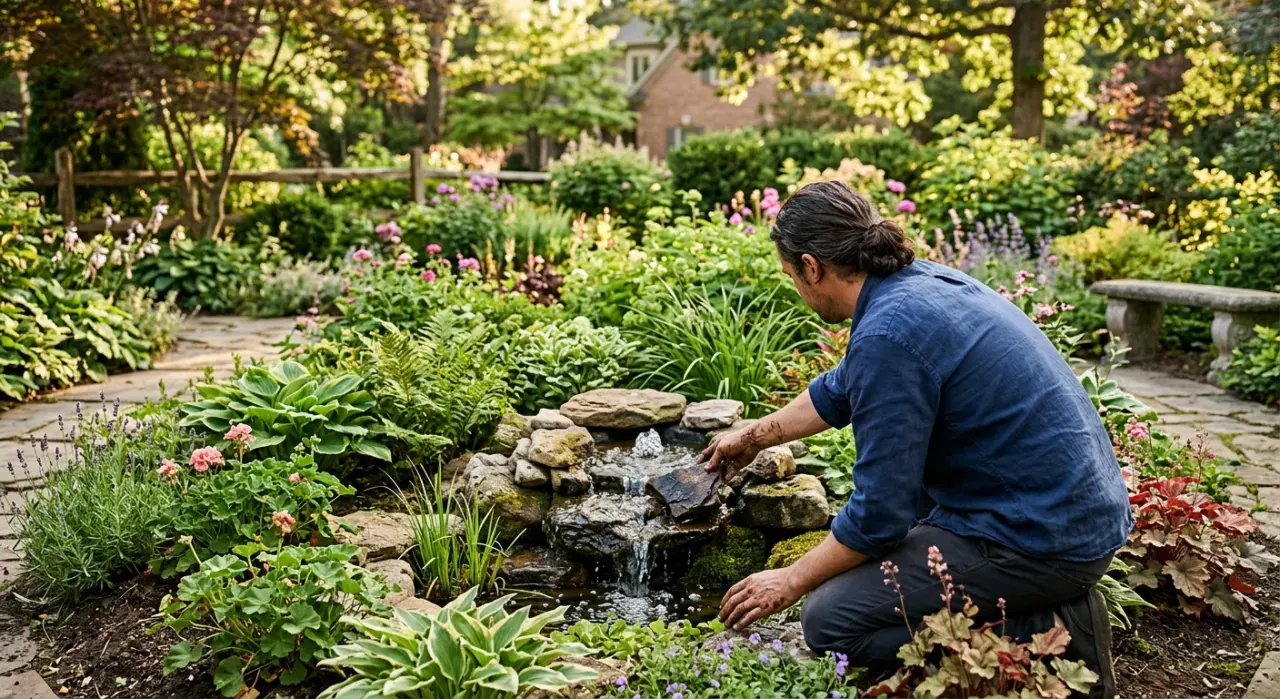
Placement decides whether an ornament looks intentional or accidental. The reliable positions are at the end of a sight line, tucked into a planting so it is half-revealed, or at a change of direction in a path. What rarely works is the middle of a lawn. Material matters for weathering: cast stone develops moss and patina and reads as permanent but is heavy and freeze-vulnerable if it holds water; resin is light and cheap and can look convincing but chalks in UV over several seasons; metal ages gracefully if it is designed to. More in choosing garden statuary.
Where to Start
If you want the biggest change for the money, add sound. Start with a solar pump in a bowl you already own, or go straight to a proper fountain from the ranked field in best outdoor fountain. Then think about the view you look at most and give it one strong focal point. Lighting that focal point at night doubles its value — see the garden lighting hub — and the beds around it look twice as good with a clean edge, covered in landscaping and hardscaping. The topical map below links every part of the subject.