 Garden

Affiliate Disclosure
Some links on this page are affiliate links. As an Amazon Associate, we earn from qualifying purchases — at no extra cost to you. We do not buy, test, or physically handle the products we cover; our rankings come from aggregated owner reviews, ratings and expert consensus. Commissions never change our verdicts. How we rank · full disclosure.
Space stepping stones about 24 inches from center to center — the natural stride of an average adult — which leaves roughly 4 to 6 inches of open gap between stone edges depending on stone size. The center-to-center figure is what matters, because your stride has to land comfortably on each stone. The reliable way to get it right is to walk the route at a relaxed pace and mark where each foot falls, then set a stone at each mark. Set the stones level and flush with the ground so they walk smoothly and do not catch a toe or a mower.
What is the right spacing?
Start from the stride, then adjust for who uses the path. These are center-to-center distances.
| Situation | Spacing (center to center) |
|---|---|
| Average adult, level ground | ~24 inches |
| Shorter strides / mixed ages | 20–22 inches |
| Long-legged walkers | Up to ~26 inches |
| Slope / incline | 18–22 inches (shorter stride) |
| Curve | Even spacing along the walking line |
With typical 12-to-18-inch stones, a 24-inch center spacing leaves about 4 to 6 inches of gap between edges — close enough to step naturally, far enough to read as separate stones with plant or gravel between them. When in doubt, err on the closer side: a slightly short stride is comfortable, a stretched one is not.
How do I measure it for my path?
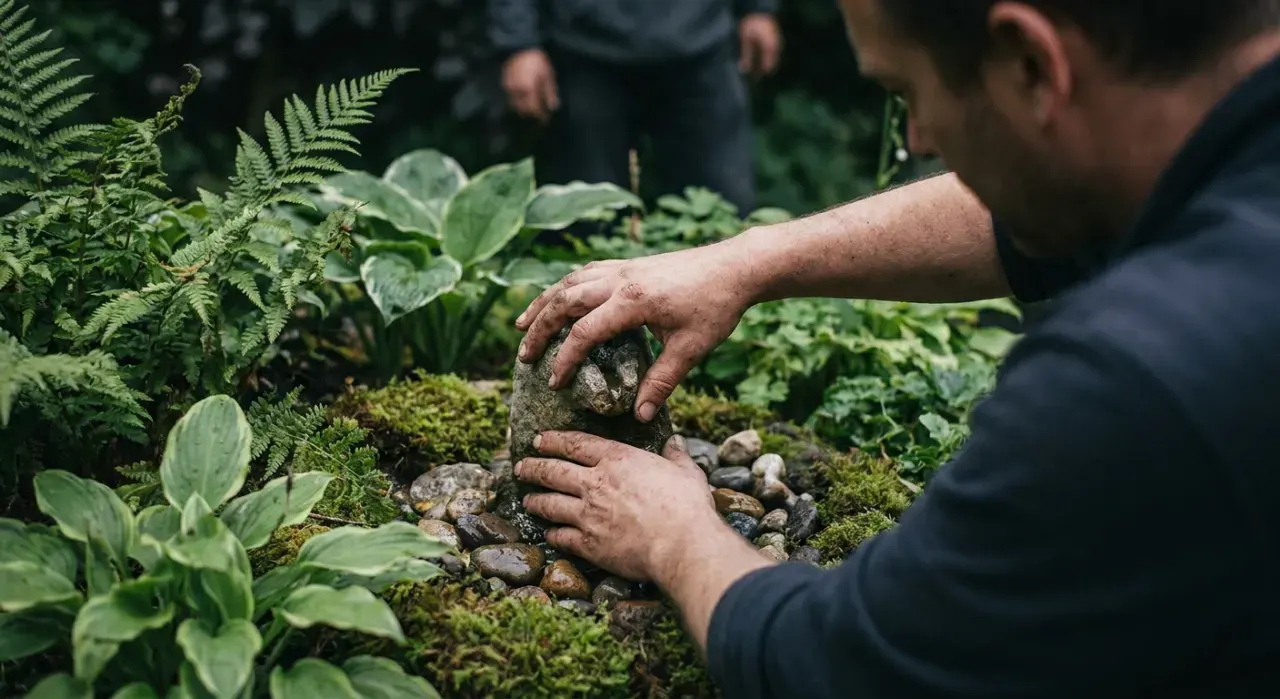
Walk it, do not just calculate it. Stride naturally across the route at a relaxed, everyday pace — not an exaggerated step — and mark where each foot lands, either with a helper watching or by noting your own footfalls. Those marks are exactly where the center of each stone should sit, fitted to the people who will actually use the path. Measure between the marks to confirm; for most adults it lands near 24 inches. Then, before setting anything permanently, lay the stones loosely at the marks and walk the path again, checking that every step lands centered and relaxed with no reaching or shuffling. This walk-test is worth more than any formula because it tailors the path to real strides.
Does slope or a curve change it?
Yes. On an incline your stride naturally shortens, so bring the spacing in to roughly 18 to 22 inches on center so steps stay comfortable climbing and safe descending — and on genuinely steep ground, switch from stepping stones to proper steps for safety. On a curve, lay the stones along the line people actually walk, which cuts the corner rather than following the geometric center, and keep the spacing even along that walking line. The consistent goal across flat, sloped and curved paths is the same: a natural stride should land centered on each stone without a stretch or a stumble. For laying out paths and features in a small space, see decorating a small yard.
How do I set them level?
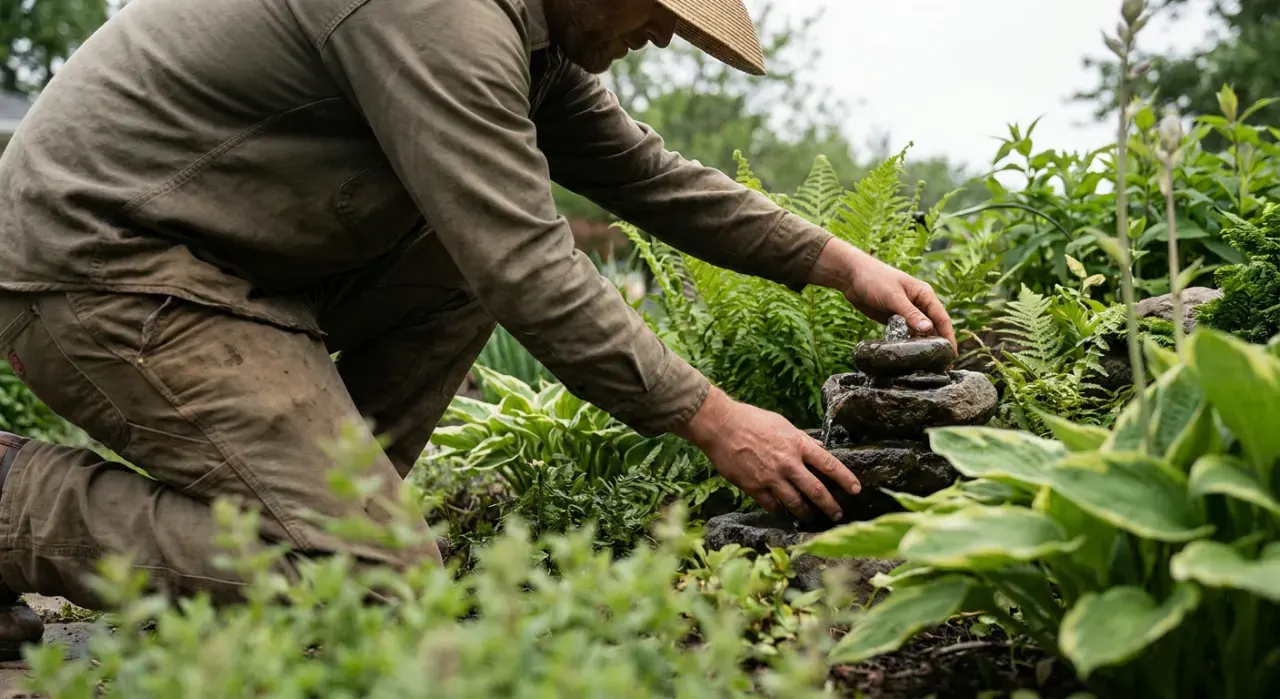
Bed each stone on a stable base and seat it flush. Dig out the footprint of each stone, clear loose soil, and set the stone on a couple of inches of compacted sand or gravel, then level it so the top sits flush with — or just slightly below — the surrounding grade. Flush matters most in a lawn: a stone standing proud catches the mower and stubs toes, while a flush stone lets you walk and mow straight over it. Check every stone is level and does not rock, since a wobbling stone is both a trip hazard and one that works loose over time, and firm sand or soil around the edges to hold it. In a planting bed or gravel, a stone can sit a touch higher, but level and stable still applies. Even, well-set stones are what make a stepping-stone path both safe and good-looking for years. Path lighting alongside is covered in installing path lighting.
We never buy, test or physically handle the products we rank. Recommendations come from aggregated owner reviews, star ratings, review volume and expert consensus — see how we rank.
More from this hub: Garden Decor · Decorating a small yard · Choosing garden statuary · Best outdoor fountains · How we rank