 Garden
Affiliate Disclosure
Some links on this page are affiliate links. As an Amazon Associate, we earn from qualifying purchases — at no extra cost to you. We do not buy, test, or physically handle the products we cover; our rankings come from aggregated owner reviews, ratings and expert consensus. Commissions never change our verdicts. How we rank · full disclosure.
Short version: a good lawn is 80% routine and 20% equipment. Mow high and often enough that you never scalp it, feed it twice a year at the right times, water deeply rather than daily, and overseed thin spots in fall. Do that with a mower you do not dread using and the lawn takes care of most of the rest. This hub maps every part of that routine and links to the specific gear owner reviews actually back up.
We do not buy, test or physically handle any of the products we rank. Every recommendation on this site comes from aggregated owner reviews, star ratings, review volume and expert consensus — the method is spelled out in full on how we rank.
The Lawn Routine That Does the Heavy Lifting
Almost every struggling lawn we see described in owner forums is failing on the same four fundamentals, and none of them cost money. Mowing height comes first: most people cut far too short, which exposes soil to sun, invites crabgrass and forces the grass to spend its energy rebuilding leaf instead of root. Mowing frequency is second — the one-third rule means you mow when growth demands it, not when Saturday arrives. Watering depth is third: an inch a week delivered in one or two long soaks drives roots down, while ten minutes every evening trains them to sit in the top half-inch of soil where they cook in July. Feeding timing is fourth, and it is the one most people get backwards — the fall feed matters more than the spring one for cool-season grass.
Get those four right and a mediocre lawn improves visibly within a single season, no new products required. Get them wrong and no fertilizer, seed or mower will rescue it. Start with how often to mow and mowing height by grass type.
Know Your Grass Before You Buy Anything
American lawns split into two families, and they want opposite treatment. Cool-season grasses — tall fescue, Kentucky bluegrass, perennial ryegrass — dominate the North, green up early, go semi-dormant in summer heat and do their best growing in fall. They are cut tall, seeded in early fall and fed heaviest in September. Warm-season grasses — Bermuda, zoysia, St. Augustine, centipede — run the South, sleep brown all winter, explode in June heat and are cut short. They are established from sod, plugs or sprigs far more often than seed, and fed through the summer.
The transition zone across the middle of the country is genuinely difficult, which is why tall fescue blends dominate there: they tolerate both the heat and the winter better than anything else that stays green year-round. Identifying which family you are working with decides your mowing height, your seeding calendar, your fertilizer timing and which weed killers are safe over the top. If you are not sure, our best grass seed guide breaks down the common blends by region and sun exposure.
Choosing a Mower Without Overbuying
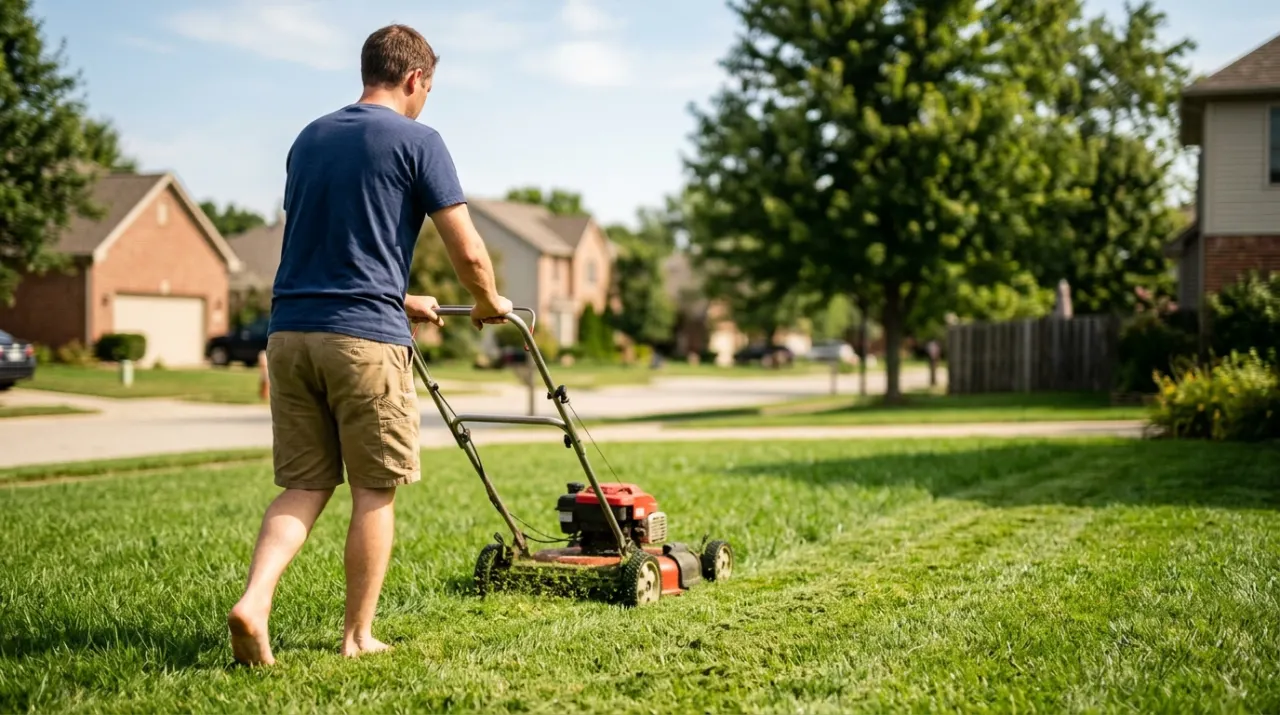
Mower shopping goes wrong in one direction almost every time: people buy far more machine than their yard needs. Yard size is the honest starting point. Under about 1/8 acre, a compact 14- to 16-inch battery or corded mower is faster to use, easier to store and cheaper to keep running. Between 1/8 and 1/3 acre, a 20- or 21-inch battery push mower with a spare pack covers it comfortably. Above a third of an acre, or on slopes, self-propelled drive stops being a luxury — owner reviews of larger yards are full of people who bought push mowers and regretted it by June.
Battery has become the default for good reason. Owners consistently report they mow more often because starting is instant and the noise does not annoy anybody, and the maintenance list drops to sharpening the blade. Gas still wins on tall, wet, seed-heavy growth and on long runtimes without a battery swap, and it remains the cheaper way to buy a wide self-propelled deck. The full head-to-head is in gas vs battery mowers, and the ranked field is in best lawn mowers.
Whatever you buy, two things matter more than brand: a sharp blade and the right cutting height. Reviewers repeatedly mention that a mower they called weak got dramatically better after a $12 blade — dull steel tears grass, browns the tips and doubles the load on the motor.
Feeding, Seeding and Fixing Thin Spots
Fertilizer is not a rescue product; it is a schedule. Cool-season lawns get their most valuable feed in early fall, when top growth slows but roots keep working — that application is what makes the following June look good. A lighter spring feed wakes the lawn up. Warm-season lawns flip it: feed once growth is truly underway in late spring, then again mid-season. Feeding a dormant or drought-stressed lawn wastes product and risks burning it.
Thin lawns rarely need to be torn out. Overseeding — dropping fresh seed into the existing turf after mowing low and raking or core-aerating to expose soil — thickens a patchy lawn for a fraction of the cost of resodding. Early fall is the window for cool-season grass, because soil is warm, nights are cool and weed pressure is falling. The method, seed rates and the two weeks of light daily watering that make or break it are in how to overseed a lawn.
If your lawn feels spongy underfoot, the issue may be thatch rather than soil compaction, and the two need different machines. Dethatching vs aerating sorts out which one your lawn actually needs before you rent anything.
Watering: Deeper, Less Often
The target most extension services agree on is roughly one inch of water per week including rainfall, delivered in one or two soakings rather than daily sips. Put a straight-sided can on the lawn while a sprinkler runs and time how long it takes to collect an inch — that is your number, and it is usually longer than people guess. Water early in the morning so blades dry before evening, which cuts disease pressure sharply.
A lawn that has been watered deeply all season handles a heat wave far better than one trained on shallow daily watering, because its roots are down where the moisture lasts. Full detail, including how to read a lawn that is telling you it is thirsty, is in how much to water a lawn.
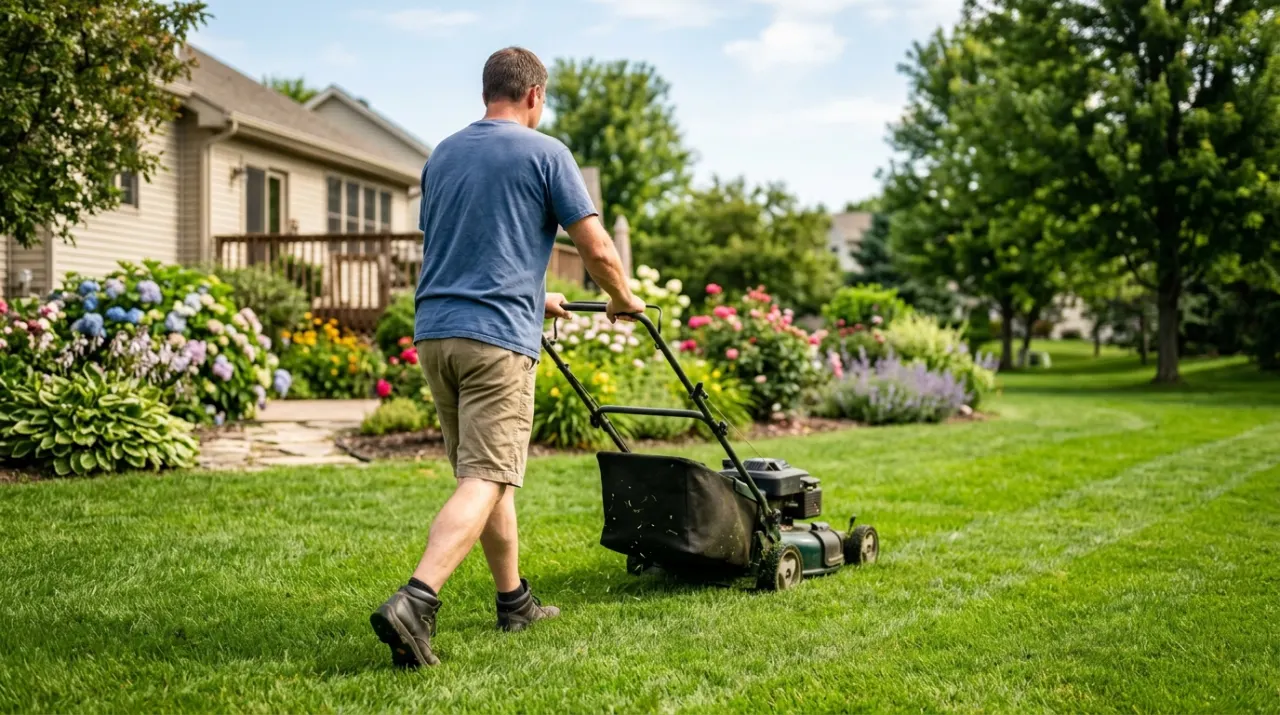
Weeds Are a Symptom, Not the Problem
Crabgrass, dandelions and clover move into lawns that are cut too short, watered too shallowly or thin from compaction — they are opportunists, not invaders. Thickening the turf is the durable fix, and herbicide is the shortcut you use while the turf catches up. If weeds are already established, our pest and weed control hub covers what works on lawns specifically, and the best weed killer rankings separate the lawn-safe selective products from the total vegetation killers that will leave you with bare dirt.
Where to Start
If your lawn is thin and you own a mower you are happy with, start with overseeding this fall and fix your mowing height today — both are free. If the mower is the weak link, the ranked field is in best lawn mowers, with self-propelled options in best self-propelled mowers. And if you want the whole year mapped out in advance, the month-by-month lawn calendar is the page to bookmark. Everything else in this hub hangs off the topical map below.