 Garden
Affiliate Disclosure
Some links on this page are affiliate links. As an Amazon Associate, we earn from qualifying purchases — at no extra cost to you. We do not buy, test, or physically handle the products we cover; our rankings come from aggregated owner reviews, ratings and expert consensus. Commissions never change our verdicts. How we rank · full disclosure.
The short answer: the best grass seed for sandy soil in the North and transition zone is Pennington Kentucky 31 tall fescue, because its roots reach three to four feet — well below the dry sandy topsoil where other cool-season grasses are stuck. In Florida and along the Gulf Coast, Argentine Bahiagrass is the grass that actually evolved on coastal sand and treats low fertility as normal. For a denser sunny southern lawn, Bermuda spreads by runners and colonises loose sand better than seed density alone can.
We do not buy, plant, or physically handle any seed. These rankings come from aggregated owner reviews, star ratings, review volume and expert consensus — see how we rank. For the wider field see best grass seed, and for full-sun conditions, best grass seed for full sun.
Top Picks at a Glance
Why Sandy Soil Kills Lawns
Understanding the mechanism tells you what to buy, so it is worth 90 seconds.
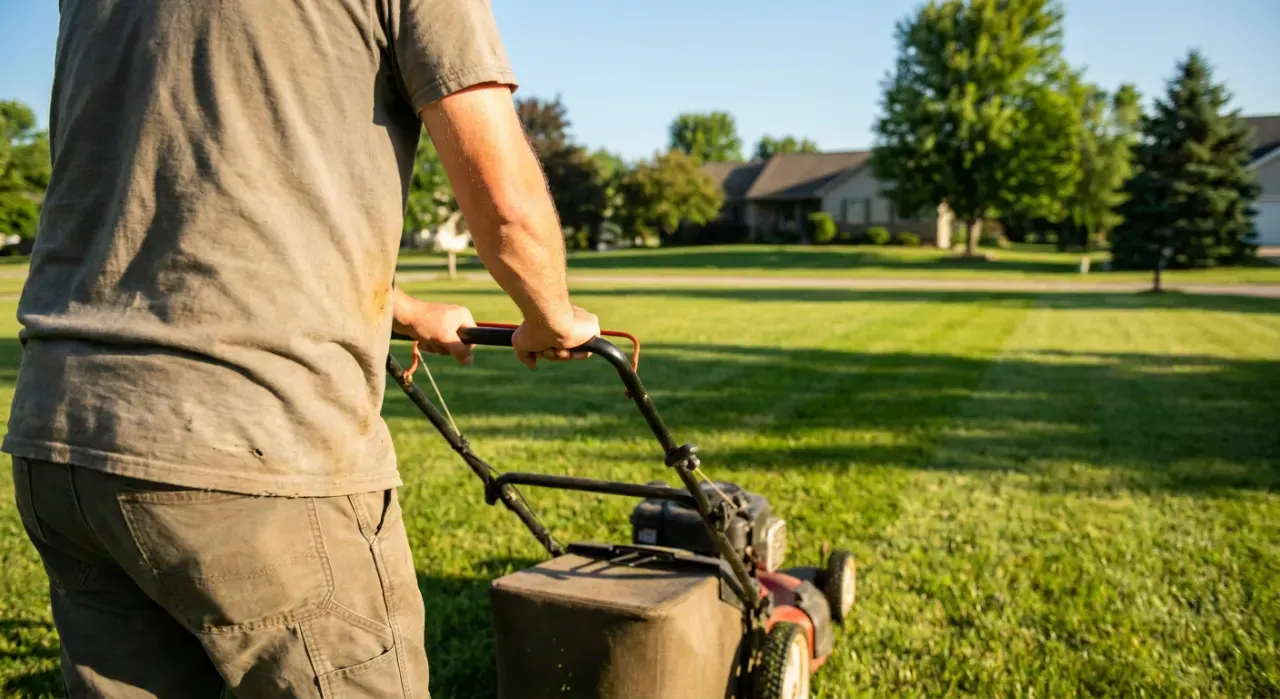
Sand particles are large — up to 25 times the diameter of silt and vastly larger than clay — so the gaps between them are large too. Water runs straight through those gaps rather than being held by capillary action. A sandy soil holds roughly half an inch of plant-available water per foot of depth, against well over an inch for a good loam. That means a lawn on sand is dry two days after rain while the neighbor on clay is fine for a week.
The second problem is chemical. Sand has very low cation exchange capacity, which is the soil's ability to hold nutrient ions where roots can reach them. Fertilizer applied to sand leaches downward with the next rain, so the grass gets a brief surge and then nothing, and the nitrogen ends up below the root zone.
Both problems have the same solution in seed choice: pick a grass that roots deep enough to get below the dry, nutrient-poor top layer. That is why tall fescue and Bahiagrass dominate this list, and why Kentucky bluegrass — rooting six to twelve inches — is a poor choice on sand no matter how good it looks elsewhere.
Our #1 Pick: Pennington Kentucky 31 Tall Fescue
Tall fescue is the answer to sandy soil in the cool-season half of the country — Penn State Extension calls it the most heat- and drought-tolerant of the cool-season turfgrasses — and Kentucky 31 is the most cost-effective way to get it. The reason is root depth: three to four feet, against six to twelve inches for Kentucky bluegrass and a similar shallow range for perennial ryegrass. On sand, that difference is not incremental — it decides whether the lawn survives August.
Kentucky 31 was the variety that made low-maintenance lawns achievable for ordinary homeowners, and it earned that reputation on exactly this kind of difficult ground. It thrives on four to eight hours of sun, germinates in 8 to 21 days, tolerates low fertility, and survives conditions that finer grasses do not. The Penkoted seed treatment improves establishment on the loose, fast-drying seedbed that sand provides.
At 25 lb it also covers a genuinely large area, which matters because sandy sites are often the ones that need reseeding across a big footprint rather than in patches.
The complaints are honest and mostly about appearance. Kentucky 31 is coarse. It has a wide blade and a clumping habit, and it looks like a pasture grass rather than a manicured lawn — buyers who wanted a fine turf are consistently disappointed. It does not blend well with turf-type fescues, so overseeding a fine lawn with K31 produces visible patches of coarse texture. Colour is medium rather than dark. And a species-level limitation: tall fescue is a bunch grass, so bare spots on sand stay bare until you reseed them. If appearance matters, spend up to a turf-type blend like Black Beauty Ultra and accept a higher price per pound.
Consensus Score ████████░░░░ 8.3
Check price on Amazon → (paid link)
The Ranked Field

Best for sandy northern and transition-zone lawns that need deep roots
- Roots reach 3 to 4 feet — well below the dry sandy topsoil
- Thrives on 4 to 8 hours of sun
- Penkoted seed treatment aids establishment
- 25 lb covers a large area
Why buy it: sandy soil dries out in the top foot, and tall fescue is the only common cool-season grass that roots below that layer.

Best for Florida and Gulf Coast sand where nothing else holds
- Bred for sandy soils along the Southern Coastal Plain
- Extremely deep rooting and drought tolerant
- Finer texture and darker color than Pensacola Bahia
- Tolerates low fertility soil
Why buy it: Bahiagrass evolved on Gulf Coast sand — it is the one grass that treats poor sandy soil as normal rather than as stress.

Best for patching or overseeding an existing Bahia lawn
- Penkoted seed treatment for better germination
- Resealable pail keeps seed viable longer
- Argentine variety for finer texture
- Handles low-fertility sandy ground
Why buy it: the resealable pail matters more than it sounds, because grass seed left open in a humid garage loses viability fast.

Best for sunny southern sand where you want a dense playable lawn
- Seed, fertilizer and soil improver in one bag
- WaterSmart coating holds moisture at the seed
- High drought and heat tolerance
- Spreads by runners to fill bare sand
Why buy it: Bermuda spreads by stolons and rhizomes, which is how it colonises loose sand that seed alone would blow off.

Best for sandy northern lawns where appearance matters as much as survival
- Turf-type tall fescue with bluegrass and perennial rye
- Deep rooting to around 4 feet
- Waxy leaf coating reduces moisture loss
- Naturally dark green
Why buy it: the waxy leaf cuticle reduces water loss from the plant, which compounds with deep roots on soil that drains too fast.
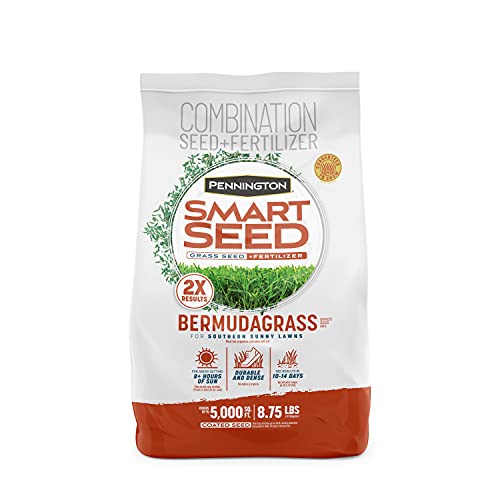
Best for large sandy southern lawns with limited irrigation
- Uses up to 30% less water once established
- Improved cold tolerance over common Bermuda
- Fertilizer included in the mix
- Heat, drought and traffic tolerant
Why buy it: sandy soil holds almost no water, so a grass bred to need 30% less is doing exactly the right job.
Quick Comparison
| Product | Best for | Rating | Price | Buy |
|---|---|---|---|---|
| Pennington Kentucky 31 Tall Fescue Grass Seed (25 lb) | Best Overall | — | Check (paid link) | |
| Pennington Argentine Bahiagrass Grass Seed | Best for the Deep South | — | Check (paid link) | |
| Pennington Penkoted Argentine Bahiagrass Pail (5 lb) | Best Bahia Value | — | Check (paid link) | |
| Scotts Turf Builder Grass Seed Bermudagrass (4 lb) | Best Warm-Season Choice | — | Check (paid link) | |
| Jonathan Green Black Beauty Ultra Grass Seed (7 lb) | Best Premium Blend | — | Check (paid link) | |
| Pennington Smart Seed Bermudagrass Mix (8.75 lb) | Best Water-Saving Southern Pick | — | Check (paid link) |
Which Grass for Which Sandy Region
| Region | Best species | Why |
|---|---|---|
| Northeast and Upper Midwest sand | Turf-type tall fescue | Deep roots, cold hardy, moderate water need |
| Transition zone sand | Tall fescue, or Bermuda in full sun | Fescue for shade tolerance, Bermuda for heat |
| Mid-Atlantic coastal sand | Tall fescue blend | Handles salt spray and drainage better than bluegrass |
| Florida and Gulf Coast | Bahiagrass | Evolved on coastal sand; tolerates low fertility |
| Deep South sunny sand | Bermuda | Spreads by runners, extreme heat and drought tolerance |
| Southwest desert sand | Bermuda | The only realistic option in that heat and rainfall |
The species that does not belong on sand anywhere is Kentucky bluegrass. It is shallow-rooted and thirsty, and on fast-draining ground it goes dormant and brown at the first dry week.
The Seeds, Reviewed
1. Pennington Kentucky 31 (25 lb) — Best Overall
Covered above. Owners praise: survival on poor ground, price per pound, deep rooting, drought tolerance, and reliable germination. Owners complain about: coarse wide blade, clumping habit, poor blending with fine turf, medium color, and bare spots that do not self-repair.
2. Pennington Argentine Bahiagrass — Best for the Deep South
Bahiagrass is native to South America and naturalised across the Southern Coastal Plain, and it is genuinely adapted to sand rather than merely tolerant of it. It roots extremely deep, survives on low fertility that would starve other lawn grasses, and needs less irrigation than anything else that will grow in Florida. The Argentine variety has a finer texture and darker color than the older Pensacola type. Owners praise: survival where nothing else held, minimal watering and feeding, and toughness under traffic. Owners complain about: a coarse open texture compared with St. Augustine, prolific tall seed heads that need frequent mowing in summer, slow germination taking up to 28 days, and a lighter green color.
3. Pennington Penkoted Argentine Bahiagrass Pail (5 lb) — Best Bahia Value
The same Argentine Bahia in a resealable pail, which is a genuinely useful detail. Grass seed loses viability in humid storage — a real problem in Florida garages — and a sealed container keeps a partly used bag usable next season. Penkoted treatment improves germination on the loose sandy seedbeds this seed is usually sown into. Owners praise: the resealable pail, germination for a Bahia product, and the right quantity for patching. Owners complain about: price per pound above bagged seed, the same slow germination as all Bahia, and the coarse texture that is inherent to the species.
4. Scotts Turf Builder Bermudagrass (4 lb) — Best Warm-Season Choice
Bermuda has one characteristic that matters enormously on sand: it spreads by both stolons above ground and rhizomes below, so it colonises loose ground rather than relying on seed density. That is exactly what a sandy site needs, because seed on loose sand blows, washes and buries unevenly. The WaterSmart coating holds moisture at the seed through germination, and starter fertilizer is included. Owners praise: spread into bare sand, drought tolerance once established, the all-in-one bag, and density in full sun. Owners complain about: coating weight reducing seed per pound, needing 90 days to fill in, complete failure in shade, and invasiveness into beds.
5. Jonathan Green Black Beauty Ultra (7 lb) — Best Premium Blend
The upgrade for a sandy northern lawn where you want it to look good as well as survive. Turf-type tall fescue gives the deep roots, the Kentucky bluegrass fraction repairs damage that fescue leaves as gaps, and the varieties carry a waxy leaf cuticle that reduces transpiration — a physiological trait that compounds usefully with deep roots on fast-draining ground. Owners praise: dark color, summer color retention, density, and clean seed analysis. Owners complain about: price per pound, slower establishment than rye-heavy mixes, and a bluegrass fraction that contributes nothing until year two.
6. Pennington Smart Seed Bermudagrass Mix — Best Water-Saving Southern Pick
The right combination of traits for a large sandy southern lawn: Bermuda's spreading habit to colonise loose ground, Smart Seed selection for up to 30 percent less water once established, and improved cold tolerance for the transition zone where common Bermuda thins over winter. Fertilizer is included. Owners praise: reduced irrigation, winter survival further north than expected, density once established, and bag size suited to a real lawn. Owners complain about: price, slow initial germination, and results that vary sharply with seedbed preparation on sand.
What Owners Actually Complain About
Sandy-soil seeding produces a distinct set of failures. Seed washing or blowing away is the most specific — loose sand does not hold seed, and a heavy watering or a windy afternoon can move an entire sowing. Raking lightly and using a thin straw or compost topdress prevents it. Drying out during germination is second and is far more punishing on sand than on clay, because the surface can go from wet to bone dry in a few hours. Rapid yellowing after fertilizing is third: nitrogen leaches through sand within a couple of rain events, so the green-up fades fast and owners blame the product rather than the soil. Thin coverage that never fills in is fourth, usually a bunch grass on sand with no spreading species in the mix. And species mismatch is fifth — bluegrass on sand is the single most common wrong choice in this category.
How to Establish a Lawn on Sandy Soil
Seed choice is half the job. These five steps are the other half.
- Topdress with compost before seeding. A quarter to half an inch of good compost raked into the surface changes water and nutrient retention more than any product you can spray on. Repeat annually.
- Rake seed in and cover lightly. Loose sand will not hold seed on the surface. A thin straw mulch or compost layer keeps it in place and holds moisture.
- Water little and often. Three or four short waterings a day during germination, because sand cannot store a single big soaking.
- Use slow-release fertilizer. Fast-release nitrogen leaches straight past the roots — see best organic lawn fertilizer for products that release as microbes break them down.
- Mulch your clippings. Returning clippings adds organic matter and roughly a quarter of the annual nitrogen need, which matters more on sand than anywhere else.
Once established, water three times a week rather than once, mow high — Penn State Extension recommends 2 inches or above for most lawns — to shade the soil and reduce evaporation, and keep adding organic matter every year. Sandy soil is improved rather than fixed, and the improvement compounds.
How We Rank Grass Seed
We never buy or physically handle the products on this site. We read the owner-review record at scale, weighting four things. Root depth and drought tolerance of the species, checked against published extension data rather than packaging claims. Germination on difficult seedbeds as owners describe it, since sand is among the hardest. Performance at 12 months rather than at eight weeks, because the summer after seeding is the real test on fast-draining soil. And seed analysis quality, including weed seed and inert content. Prices and star ratings move; the complaint pattern does not.
The Verdict
Pennington Kentucky 31 tall fescue is the seed the owner-review record supports most strongly for sandy soil in the North and transition zone, purely on root depth. In Florida and along the Gulf, Argentine Bahiagrass is the species that belongs there. For a sunny southern lawn you want to look dense rather than merely survive, Bermuda is the answer, and northern owners who want appearance as well as survival should pay up for Black Beauty Ultra.
Next: improve the soil itself with our composting and soil hub, water correctly with how much to water a lawn, or feed without leaching using the best organic lawn fertilizer.