 Garden
Affiliate Disclosure
Some links on this page are affiliate links. As an Amazon Associate, we earn from qualifying purchases — at no extra cost to you. We do not buy, test, or physically handle the products we cover; our rankings come from aggregated owner reviews, ratings and expert consensus. Commissions never change our verdicts. How we rank · full disclosure.
Short version: most gardens are watered too often, too shallowly and at the wrong time of day. Fixing that costs nothing. Getting the equipment right — one good hose, the correct sprinkler for your shape of lawn, drip line in the beds and a $30 timer on the faucet — turns watering from a daily chore into something that happens while you are asleep. This hub covers the gear, the schedules and the plumbing behind all of it.
We never buy or physically handle the products we rank. Recommendations come from aggregated owner reviews, star ratings, review volume and expert consensus — see how we rank. Shopping for the basics right now? Start with the best garden hose rankings.
How Much Water a Garden Actually Needs
The number that governs everything is one inch per week, rainfall included. That is roughly 62 gallons per 100 square feet, and it applies to established lawns and most vegetable gardens alike. What matters at least as much as the volume is the delivery: one long soak that wets the soil six to eight inches down builds deep roots, while a daily five-minute sprinkle keeps roots shallow and makes plants far more vulnerable the first time you skip a day.
Conditions change the math. Sandy soil drains fast and may want two half-inch waterings. Clay holds water for days and punishes overwatering. Containers can need water twice daily in July regardless of what the lawn is doing. Temperatures above 90°F roughly double demand for fruiting vegetables. The cheapest measuring tool is a tuna can set on the lawn while the sprinkler runs — when it holds an inch, you are done. More in how much to water a garden.
Hoses: The Part Everyone Under-Buys
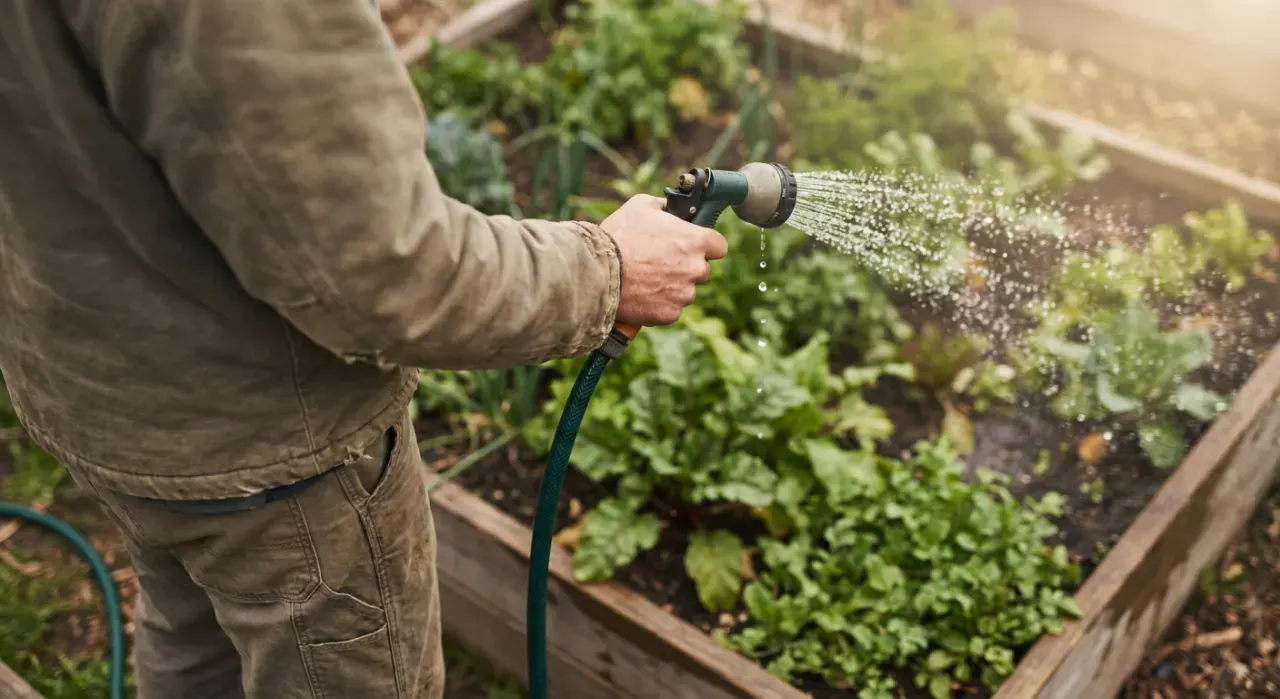
A cheap vinyl hose is a false economy and it is the single most common regret in this category. It kinks the moment you pull it around a corner, it cracks after two summers in the sun, and its couplings deform the first time you overtighten them. The consensus among long-term owners is that hybrid polymer, rubber and polyurethane hoses are worth the extra $30 because they stay flexible in cold weather, resist kinking under pressure, and use crush-resistant metal fittings.
Three specifications decide the buy. Inner diameter: 5/8 inch for almost everyone, 3/4 inch for long runs or thirsty sprinklers. Burst pressure: 350 PSI is adequate, 500 PSI is the mark of a hose that will survive being left pressurized. Couplings: solid brass or crush-proof aluminum, never stamped plated steel. Length is the quiet variable — buy the shortest hose that reaches, because every 50 feet costs measurable pressure at the nozzle. Details in garden hose sizes explained, and the picks are in best garden hose.
Sprinklers: Match the Pattern to the Lawn
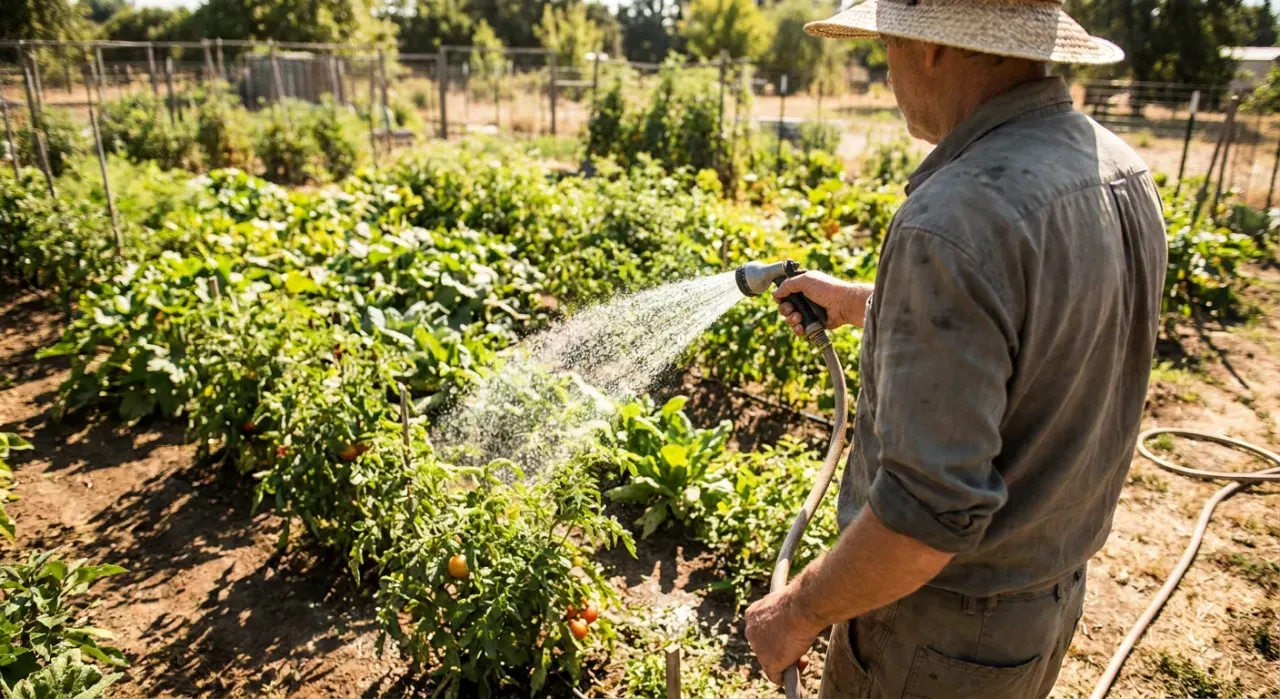
Oscillating sprinklers throw a rectangular fan and are the right answer for rectangular lawns, which is most of them. They are cheap, adjustable and gentle enough for seed. Impact sprinklers — the ticking brass ones on a spike or sled — throw a long circular or partial arc, handle low pressure well, and are the choice for large open areas. Turret and stationary sprinklers cover small odd-shaped patches cheaply. Traveling sprinklers follow the hose across big lawns, which is either brilliant or a novelty depending on how flat your yard is.
Whatever the type, the two things owners complain about are uneven coverage and plastic mechanisms seizing after a season outdoors. Metal internals cost more and last years longer. Place sprinklers so the spray patterns overlap by about 30 percent — nearly all patchy lawns are a coverage problem, not a watering-duration problem. Our ranked picks are in best lawn sprinkler.
Drip Irrigation and Soaker Hose
Drip is the biggest upgrade available to anyone with vegetable beds or borders. Water goes exactly where roots are, at a rate the soil can absorb, with 20 to 50 percent less waste than overhead watering. Foliage stays dry, which cuts fungal disease dramatically on tomatoes, squash and roses. And because it runs at low flow, a single faucet can water far more area than a sprinkler can.
A basic system is a pressure regulator, a filter, a length of half-inch mainline tubing, quarter-inch spaghetti line to individual plants or inline-emitter tubing along a row, and a timer. Nothing needs glue and nothing needs a plumber. Soaker hose is the simpler cousin — porous rubber that weeps along its whole length, cheap and excellent for dense rows, though it clogs with mineral deposits over a few seasons and gives you no control over individual plants. The comparison is in drip vs soaker hose, and the build is walked through in how to set up drip irrigation.
Timers: The $30 That Saves a Garden
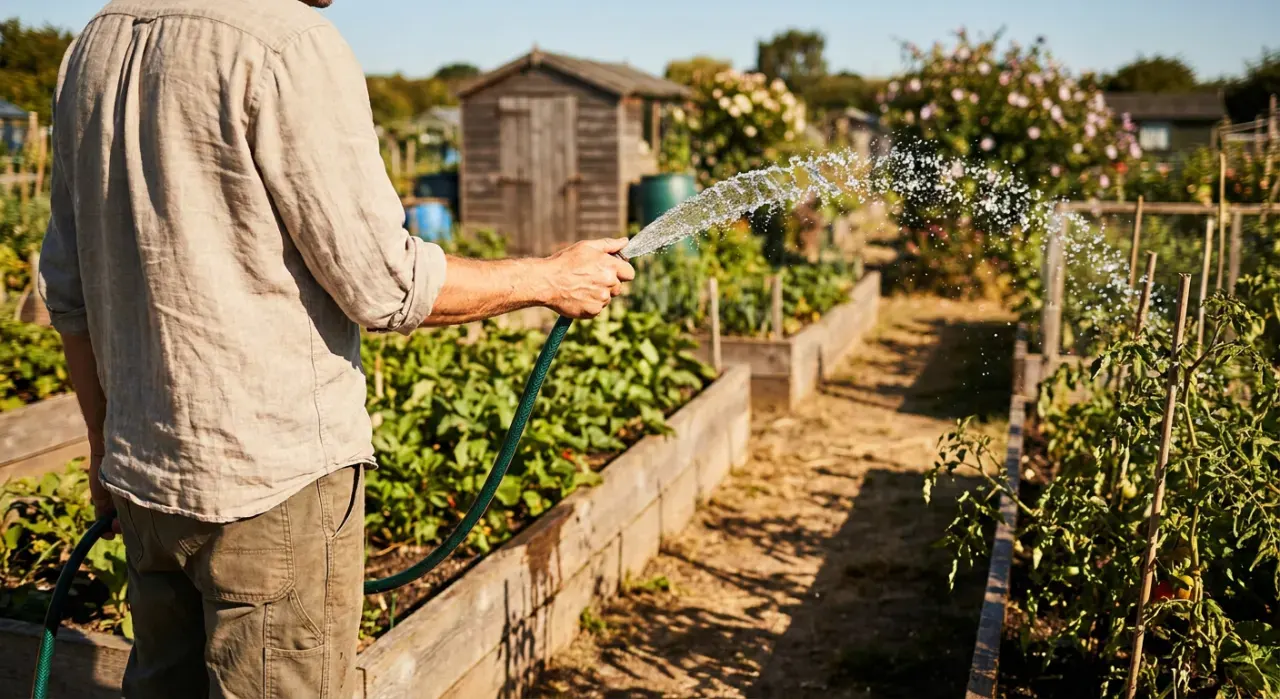
A battery faucet timer is the cheapest insurance a garden can have. It waters on schedule during a heatwave, keeps a vegetable bed alive across a vacation, and enforces the early-morning watering window that most people never manage manually. Dual-outlet models run a drip zone and a sprinkler zone on separate schedules from one faucet.
Owner reviews point to the same two failure modes. Batteries die mid-season — replace them every spring as routine rather than waiting for a failure that costs you a bed of seedlings. And grit in municipal water jams the valve open or shut, which a cheap inline filter washer almost entirely prevents. Bring timers indoors before the first hard freeze; a frozen valve body is unrepairable. Picks in best hose timer.
Timing, Evaporation and Disease
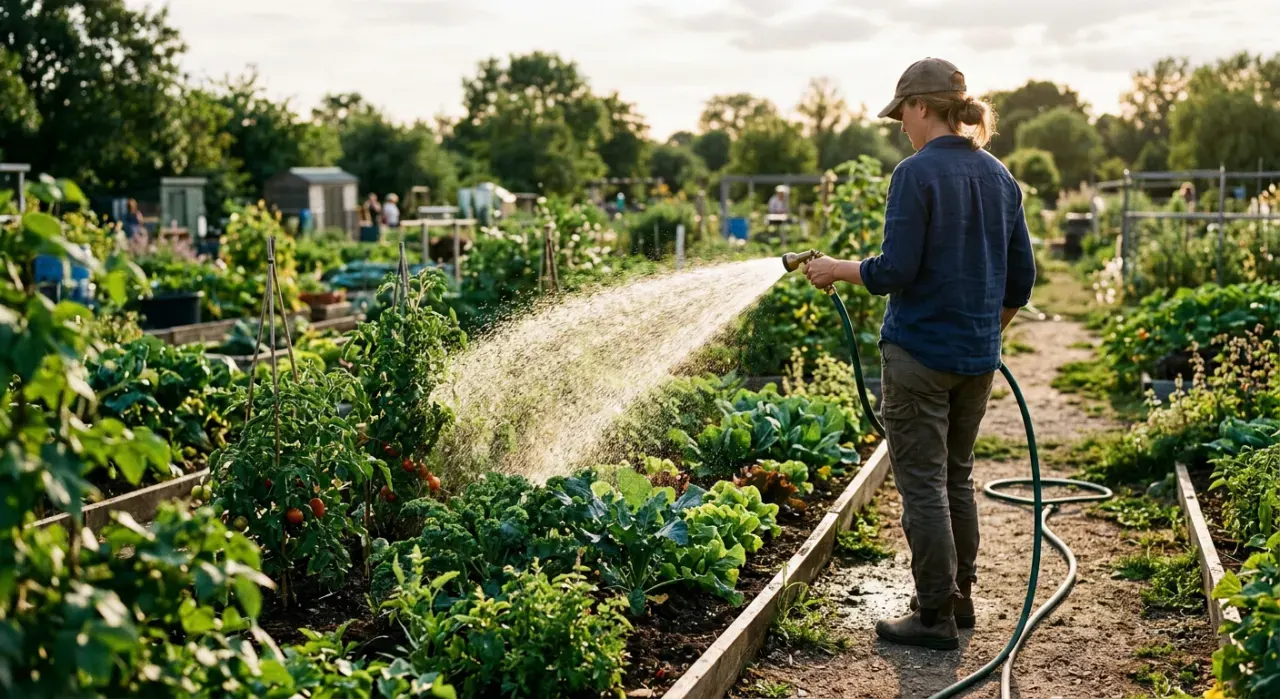
Water between 5am and 9am. Soil absorbs it before the day heats up, foliage dries fast in morning sun, and municipal pressure is usually at its best. Evening watering works but leaves foliage damp all night, which is how powdery mildew and blight take hold. The old warning that midday droplets scorch leaves is a myth, but a large share of midday water evaporates before it reaches roots, so it is simply wasteful.
Mulch is the other half of the equation. Two to three inches of shredded leaves, bark or straw on a bed can cut evaporation losses by half and moderates soil temperature at the same time. The single most effective watering upgrade for many gardens is not equipment at all — it is mulch. See best time of day to water, and the composting and soil hub for what to mulch with.
Storage, Winterizing and Hose Life
Hoses rarely die of use; they die of storage. Left coiled in full sun, vinyl goes brittle in two seasons. Left full of water through a freeze, any hose can split. A wall-mount or cart reel in a shaded spot solves both, and it takes the strain off the couplings that would otherwise be the first thing to leak. Drain hoses before winter, disconnect them from outdoor faucets so the sillcock does not freeze, and store timers, nozzles and drip filters indoors.
Drip systems need a short fall routine: flush the mainline, open the end caps, remove and clean the filter screen, and store the pressure regulator and timer inside. It is twenty minutes that buys years. Reel options are ranked in best hose reel.
Where to Start
If you are building a watering setup from scratch, the order that gives the fastest payoff is: a good hose, a faucet timer, drip line in the beds, then a sprinkler for the lawn. Start with the best garden hose rankings, then read how much to water a garden so the new gear is set to a schedule that actually helps. The topical map below links everything else.