 Garden

Affiliate Disclosure
Some links on this page are affiliate links. As an Amazon Associate, we earn from qualifying purchases — at no extra cost to you. We do not buy, test, or physically handle the products we cover; our rankings come from aggregated owner reviews, ratings and expert consensus. Commissions never change our verdicts. How we rank · full disclosure.
The short answer: water a newly planted tree 2 to 3 times a week for the first few weeks, then taper to about once a week through the rest of the first growing season, giving roughly 1 to 2 gallons per inch of trunk diameter at each watering — applied slowly and deeply to the root ball. A new tree has no established roots yet, so it depends on you to keep the root ball consistently moist, but not soggy. Water deeply and check the soil before each watering rather than following a rigid schedule.
Both under-watering and overwatering kill young trees, so aim for consistently moist. We do not test on plantings; our irrigation rankings come from aggregated owner reviews and expert consensus, described in how we rank. The full watering picture is at the watering and irrigation hub.
What is the first-year watering schedule?
Watering frequency steps down as roots grow out into the surrounding soil. This schedule, drawn from university extension guidance, suits most trees in average weather; water more in heat and less when rain does the job.
| Period | Frequency |
|---|---|
| First 1 to 2 weeks | Daily or every other day |
| Weeks 3 to 12 | 2 to 3 times per week |
| Rest of first year | Weekly, more in drought |
| Second and third year | Weekly to biweekly in dry spells |
Hot, dry, windy weather and fast-draining sandy soil call for more frequent watering; cool weather and clay soil that holds moisture call for less. Always let the soil guide you.
How much water and how deep?
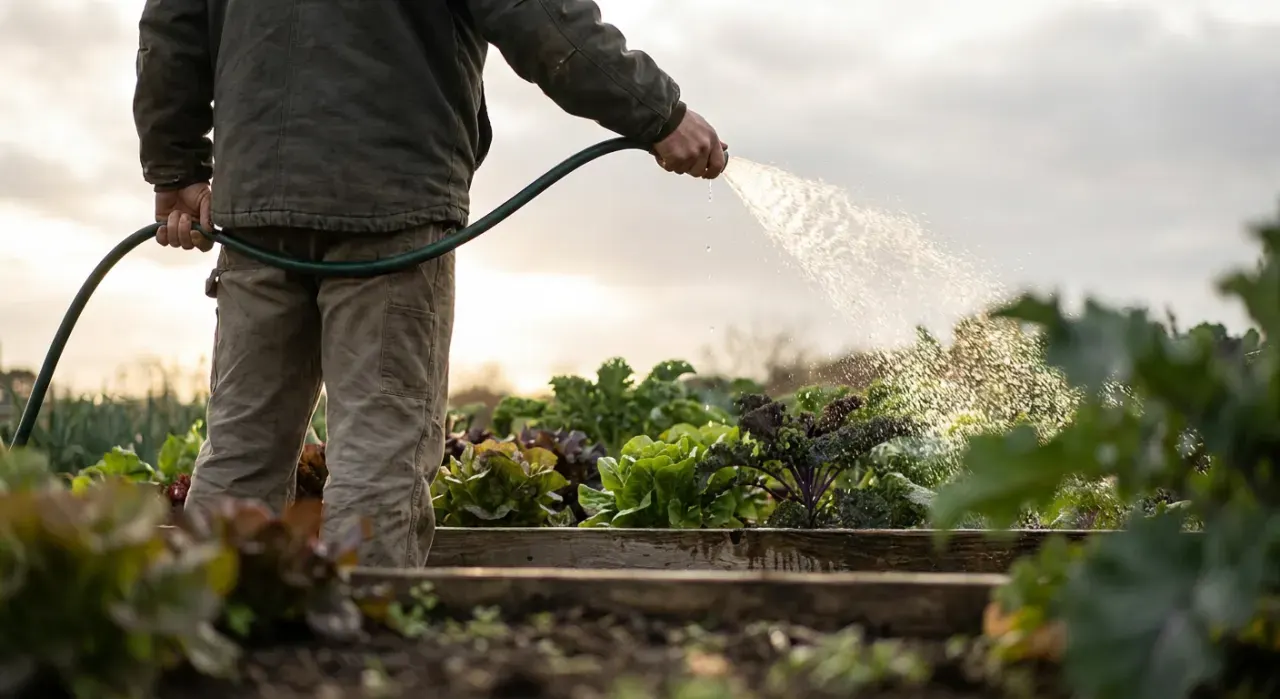
Volume matters as much as frequency. The widely cited rule is 1 to 2 gallons per inch of trunk diameter each watering: a small sapling takes about 5 gallons, while a 2-inch-caliper tree may need 10 to 20 gallons. Apply it slowly so it soaks into the root ball rather than running off — a slow hose trickle, a bucket with a few small holes, or a slow-release tree watering bag all deliver a deep soak over time. Deep, infrequent watering encourages roots to grow down and out, the same principle that makes lawns more drought-tough, covered in how much to water a garden.
How do you know if a new tree needs water?
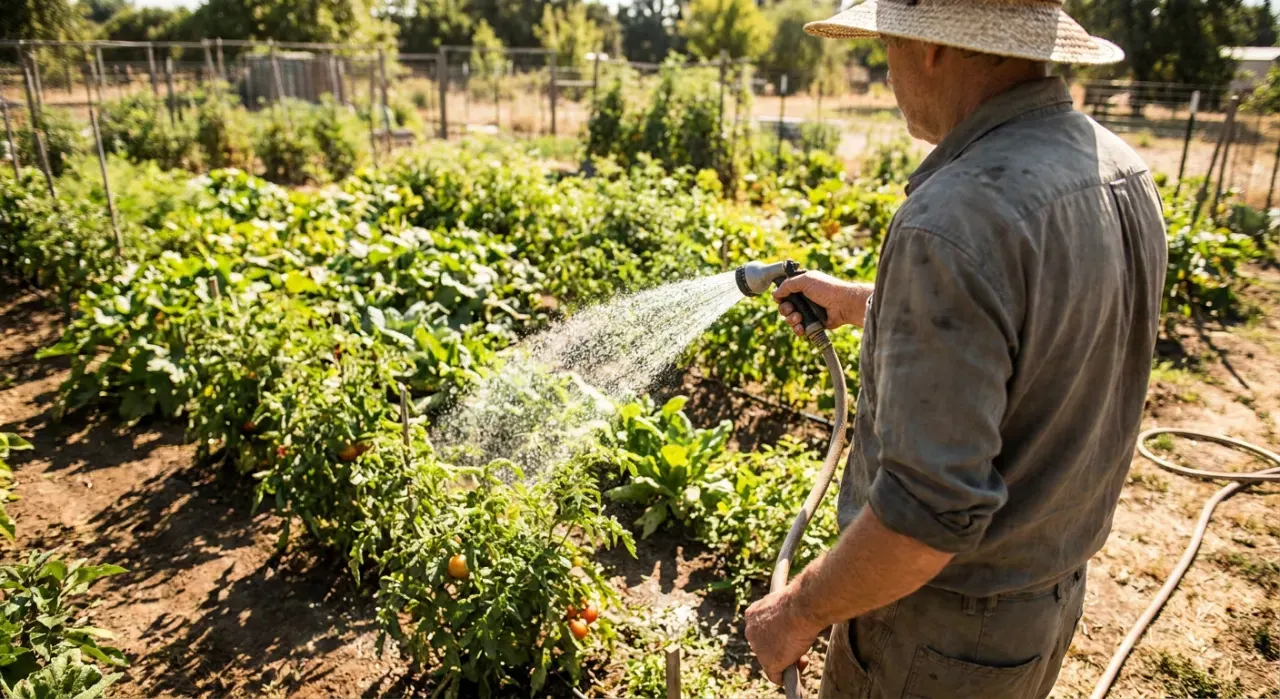
Check the soil instead of guessing. Dig or push a finger 2 to 4 inches into the ground near the edge of the root ball: if it is dry at that depth, water; if it is still moist, wait. The top inch can look dry while the root ball stays damp, so surface appearance alone is misleading. Consistently soggy soil is as dangerous as dry soil — waterlogged roots suffocate and rot, a leading cause of new-tree death. Aim for soil that is moist like a wrung-out sponge, letting the top inch or two begin to dry between waterings.
What else helps a new tree survive?
- Mulch the root zone. A 2- to 4-inch layer of mulch over the root area conserves moisture, moderates soil temperature and suppresses competing grass — but keep it a few inches back from the trunk, never piled against it.
- Water early in the day so foliage dries and less is lost to evaporation, the same timing logic as the best time of day to water.
- Skip fertilizer at planting; focus on water and root establishment the first season.
- Consider a drip line or soaker ring for hands-off deep watering — see how to set up drip irrigation.
Give a new tree deep, consistent water through its first year and check the soil before each watering, and you will carry it through the critical establishment period. Related questions: soaker hose water use per hour, do soaker hoses need a regulator?, and gear in best hose timers.