 Garden
Affiliate Disclosure
Some links on this page are affiliate links. As an Amazon Associate, we earn from qualifying purchases — at no extra cost to you. We do not buy, test, or physically handle the products we cover; our rankings come from aggregated owner reviews, ratings and expert consensus. Commissions never change our verdicts. How we rank · full disclosure.
Short version: the vacuum aisle has never been more confusing, and most of the confusion is manufactured. Strip away the air-watt claims and there are really four decisions to make — corded or cordless, bagged or bagless, what your floors need, and how much filtration you actually require. This hub walks through each one, then points you at the ranked guides where we name specific machines based on aggregated owner ratings rather than marketing copy.
A quick note on how we work: we do not buy, test or physically handle any of these machines. Our rankings come from aggregated owner reviews, star ratings, review volume and expert consensus across the major review outlets. That is a deliberate choice, and you can read the full method on how we rank. Ready for specific models? Start with the best vacuum cleaner rankings.
The Four Types of Vacuum, Honestly Compared
Upright vacuums remain the workhorse of the American home. They pair a motorized brushroll with a big motor and a large dust cup, which is exactly what wall-to-wall carpet wants. The modern versions add a lift-away canister, so the same machine handles stairs, upholstery and ceiling corners. They are heavier than a stick vacuum and you are tethered to an outlet, but they cost less per year of service than anything else and owners consistently report the longest lifespans in this category.
Cordless stick vacuums have taken over the mid-market for good reason. They weigh a fraction of an upright, they convert to a handheld for the car and the couch, and the good ones now genuinely deep-clean carpet. The catch is runtime and cost: expect a real-world 12 to 20 minutes on the high setting, and expect the battery to be the part that eventually ends the machine. For an apartment or a home under roughly 1,200 square feet, they are usually the better daily driver.
Robot vacuums do a different job. They are not deep cleaners; they are dust and pet-hair maintenance that runs while you are at work. Reviewers who describe theirs as life-changing almost always have relatively clear floors and run it every day. Reviewers who describe theirs as a disappointment expected it to replace a full-size vacuum. Both are describing the same machine accurately.
Canister vacuums are the quiet expert pick, especially bagged German and Japanese models. They separate the motor from the floorhead, which makes them lighter to steer and much quieter, and a sealed bagged system is the most allergy-friendly design you can buy. They cost more up front and you buy bags forever, but owner reviews on this category read differently from every other — people talk in decades.
Match the Vacuum to Your Floors
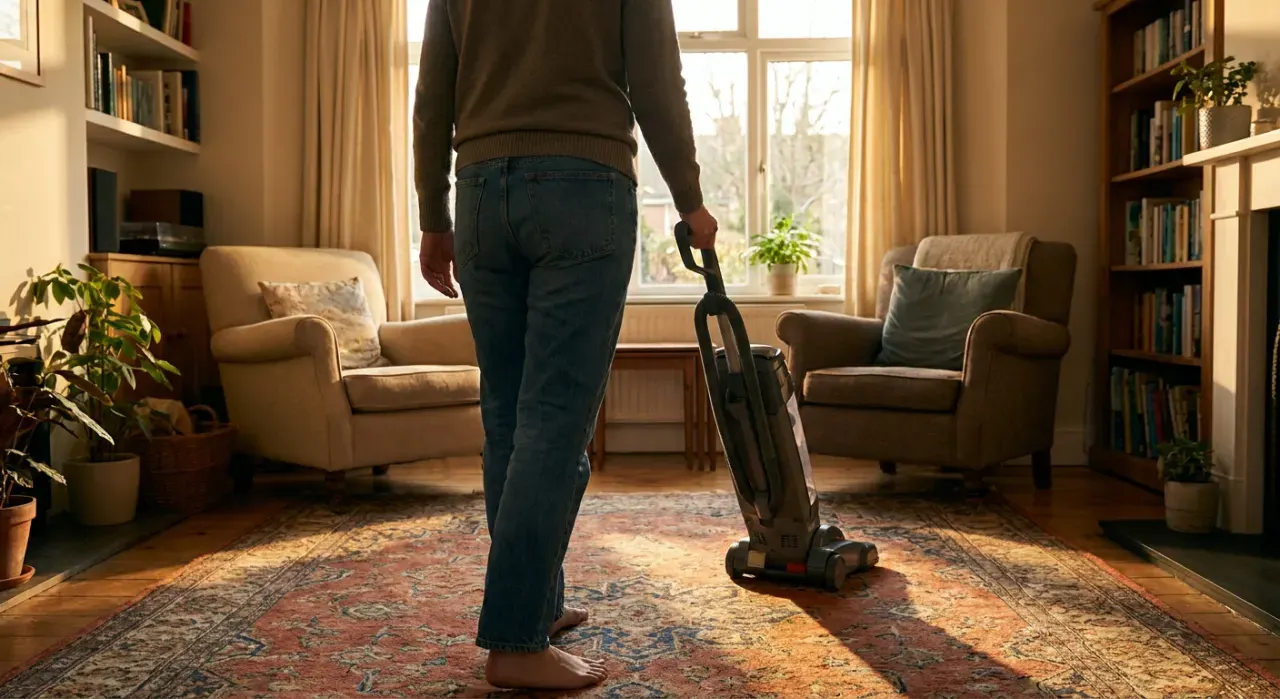
This is where most bad purchases happen. Deep pile and shag carpet needs an aggressive, height-adjustable brushroll and strong airflow; a low-profile stick vacuum will glide over the top of it and pull nothing. Low-pile and area rugs are forgiving and almost anything will do a competent job. Hardwood, luxury vinyl plank and tile want the opposite of carpet: a soft roller or a brushroll you can switch off, because a stiff nylon brush spinning on a hard floor scatters crumbs across the room instead of collecting them and can scuff a soft finish over time.
If your home is mixed — and most are — look for either brushroll shutoff or an automatic floor-type sensor, and read the hard-floor complaints in reviews specifically. That detail is covered in depth in our best vacuum for hardwood floors guide.
Filtration, Sealing and Allergies
A HEPA filter alone means very little. What matters is whether the whole airpath is sealed, so that every cubic foot of air the motor pulls in must exit through the filter rather than leaking around it. Manufacturers describe this as a complete seal, whole-machine filtration or a sealed system, and it is the single feature allergy sufferers should refuse to compromise on. Bagged machines add a second advantage: emptying a bagless bin releases a visible puff of the fine dust you just spent an hour collecting, while a sealed bag goes straight to the trash.
Filters also need cleaning, and this is the maintenance step almost everyone skips. A clogged foam or pleated filter chokes airflow, the motor works harder and hotter, and the owner concludes the vacuum has died. Our vacuum filter cleaning guide is a five-minute read that will likely add years to whatever you own.
Pet Hair Is Its Own Category
Pet hair does two things that ordinary dust does not: it wraps around the brushroll until the motor bogs down, and it carries dander that keeps allergy symptoms going long after the visible hair is gone. The machines that pet owners rate highest share three traits — an anti-tangle or self-cleaning brushroll, a sealed HEPA system, and a mini motorized tool for furniture and car seats. Suction matters less here than the hair-management design. The specific models are ranked in best vacuum for pet hair.
What You Get at Each Price
Under $150, expect a competent corded upright or a basic robot. Build quality is plastic and the filtration is usually unsealed, but for a small home on low-pile carpet these clean perfectly well and the value is genuinely good. Between $150 and $350 sits the sweet spot for most households: lift-away uprights with sealed HEPA, capable cordless sticks from the major brands, and robots with real mapping. Above $400 you are buying either premium cordless engineering, a bagged canister built to run for fifteen years, or a self-emptying robot dock. Spending more does not linearly buy more cleaning — it buys convenience, filtration quality and longevity.
Whatever your budget, the running costs matter more than people expect. Bags, filters and replacement batteries add up, and a $600 cordless whose battery is not user-replaceable can be a worse ten-year buy than a $200 upright. That arithmetic is laid out in corded vs cordless.
The Mistakes That Cost People Money
Four errors show up again and again in one-star reviews. Buying on suction numbers alone — the spec that sells vacuums correlates poorly with how clean the carpet actually is. Buying a cordless for a large carpeted home — the battery will not cover the square footage and you will resent it by the second month. Ignoring the dust cup size — a 0.3-quart bin on a house with two dogs means emptying it three times per clean. Skipping filter maintenance — the reason an enormous share of "it stopped working after a year" reviews exist. Avoid those four and almost any reputable machine will serve you well.
The Specs Worth Reading and the Ones to Ignore
Vacuum listings are dense with numbers, and only about half of them predict anything. Air watts is the most useful single suction figure because it accounts for both airflow and vacuum pressure, but it is meaningless without a sealed airpath — a leaky machine with a big number underperforms a tight one with a small number. Amps tells you how much electricity the motor draws, not how much dirt it lifts; a 12-amp vacuum is not automatically better than a 10-amp one. Pascals appears mostly on cordless and robot listings and measures sealed suction with the airway blocked, which is not how vacuuming works — it is the number to be most skeptical of.
The specs that genuinely change daily life are less glamorous. Dust cup capacity in quarts or liters decides how often you interrupt a clean, and anything under about 0.7 quarts will feel small in a pet household. Weight determines whether the machine gets carried upstairs or lives in a closet. Cord length decides how many times you replug per room — 25 feet is common and 30 feet is noticeably better. Brushroll type tells you whether pet hair will wrap. And for cordless, the runtime on the highest setting with the motorized head attached is the only figure that reflects real use; the advertised headline number is almost always the low setting with a non-motorized tool fitted.
Warranty length is a decent proxy for a manufacturer’s own confidence. Five years on a full-size machine signals a different build than one year, and in owner reviews the correlation between long warranties and long service lives holds up better than any suction claim.
Making Any Vacuum Last Longer
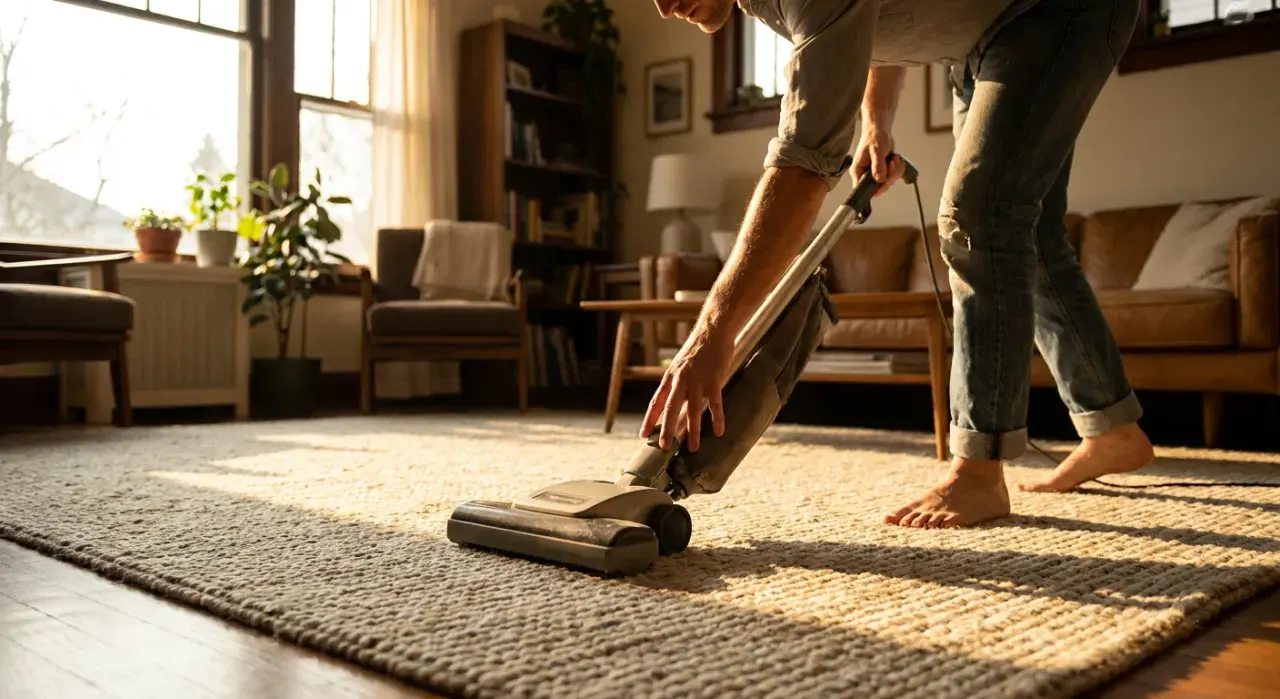
Vacuums rarely die of old age — they suffocate. Four habits account for almost all the difference between a machine that lasts four years and the same machine lasting ten. Empty the bin at around two-thirds full rather than waiting for it to pack solid, because a full cup chokes airflow and the motor runs hotter. Wash or replace filters on schedule, and let washed filters dry completely for 24 hours before refitting; a damp filter is the fastest route to a burnt motor and a permanent smell. Cut hair off the brushroll monthly with scissors or a seam ripper, and check the roller ends where hair binds the bearings. Check the hose and airways for clogs whenever suction drops suddenly, since a sock or a bottle cap in the neck presents exactly like a dying motor.
For bagged machines, change the bag before it is completely full for the same airflow reason, and for cordless, avoid storing the battery at zero charge over a long summer. None of this takes more than a few minutes a month, and it is the single cheapest way to protect whatever you spend. The full calendar is in vacuum maintenance schedule.
Where to Start
If you want one recommendation and no further reading, go to the best vacuum cleaner rankings and take the top pick. If you know your format already, jump to cordless, robot or budget picks. And once the machine arrives, spend five minutes on the maintenance schedule — it is the cheapest upgrade you will ever make. The topical map below links every part of floor care as it publishes.