 Garden

Affiliate Disclosure
Some links on this page are affiliate links. As an Amazon Associate, we earn from qualifying purchases — at no extra cost to you. We do not buy, test, or physically handle the products we cover; our rankings come from aggregated owner reviews, ratings and expert consensus. Commissions never change our verdicts. How we rank · full disclosure.
The verdict: the Roomba j7 exists to solve one problem, and it solves it better than anything else at the price — it sees a cord, a sock or a pet accident and goes around it. If you have a dog, a puppy or children, that single capability is worth more than suction figures. Its sub-4-star rating is earned by the software rather than the hardware: map loss after updates, docking failures and app frustration recur across the record. Excellent robot, uneven ownership experience.
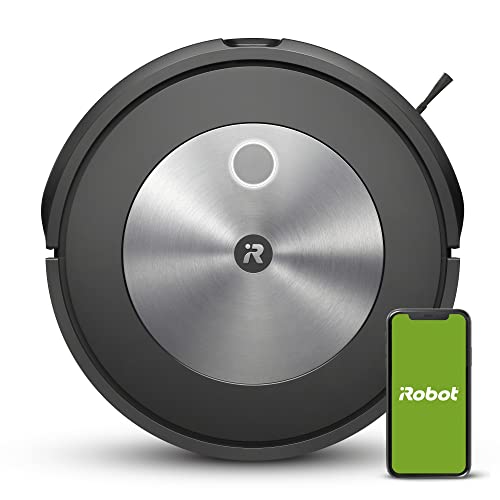
Best for a home with pets or children where the floor is never completely clear
- Forward-facing camera identifies and avoids cords, socks and pet waste
- Dual rubber brushes that resist hair tangling
- Smart mapping with named rooms and keep-out zones
- Backed by iRobot on pet waste avoidance
Why buy it: it is the model built specifically so a robot vacuum never spreads a pet accident across your floor, which is the failure that ends most robot ownership.
What Owners Consistently Praise
Obstacle avoidance changes how you live with a robot. Owners describe stopping the pre-clean tidy-up ritual entirely: shoes, charging cables, dog toys and children’s things stay where they are and the robot works around them. Every other robot asks you to clear the floor first, which quietly defeats the purpose of automation.
The pet waste avoidance is the reason people choose it. Anyone who has come home to a robot having smeared an accident across three rooms does not need this explained. The j7 is the mainstream answer, and reports of it correctly identifying and steering around waste are the strongest single theme in its positive reviews.
Rubber brushes handle hair well. The twin rubber rollers flex rather than grip, so long hair is far less likely to wind into a solid band than on bristle designs. Pet households notice the difference in how often they need to cut hair free.
Mapping and room control. Named rooms, keep-out zones and scheduled per-room cleans work well when the map is stable, and owners rate the day-to-day control highly.
What Owners Actually Complain About
Maps disappear. The most damaging complaint. Owners report losing a fully trained map after a firmware or app update and having to run mapping passes again, sometimes more than once. When the map is the feature you paid for, losing it feels like losing the product.
Docking and charging failures. Reports of the robot failing to find its base, dying partway home, or the dock not charging reliably appear consistently. A robot stranded in a doorway is worse than no robot.
App experience and upsells. A steady stream of reviews complains about interface changes, notifications promoting other products and services, and features feeling less useful after updates than at purchase. This is a large part of why the rating sits where it does.
Battery decline. Shorter runs and mid-clean shutdowns are reported by owners in the one-to-two-year range. Replacement batteries are available; a robot that no longer finishes a floor in one pass is still a real downgrade.
The bin is small and it does not self-empty. The standard j7 needs emptying every one to three runs. Fine if you expected it, a daily chore if you did not.
It is slower than robots that just drive. Recognising and routing around obstacles takes time, and owners report longer cleans and occasional over-cautious behavior, where it avoids something harmless and leaves that patch uncleaned.
Edges and corners. As with every round robot, dust builds along baseboards and in corners over time. The side brush helps and does not eliminate it, and owners still run a stick vacuum round the edges periodically.
Support experiences vary. Reviews describing slow or unsatisfying warranty resolution appear often enough to be a pattern rather than noise.
Who It Suits — and Who Should Buy Something Else
Buy it if your floors are rarely clear, you have a pet with occasional accidents, or you have children who leave things out. That is the household this machine was designed for, and no cheaper robot handles it.
Buy something else if you want weeks of hands-off operation — choose a self-emptying model instead, and see our robot vacuum rankings for the current field. If your floors are always clear and your budget is tight, a simpler bump-navigation robot such as the eufy RoboVac 11S does the same cleaning for far less money. If you would rather no camera operated in your home, a lidar-navigating robot is the alternative. And if your carpet is deep pile, read do robot vacuums work on thick carpet before spending, because no robot deep-cleans the way an upright does.
Specifications
| Type | Mapping robot vacuum with camera obstacle avoidance |
|---|---|
| Obstacle handling | Identifies and avoids cords, socks, pet waste |
| Brushes | Dual rubber rollers, tangle resistant |
| Self-empty | No — standard charging dock on this model |
| Mapping | Named rooms, keep-out zones, scheduling |
| Carpet | Handles low and medium pile; not a deep-clean machine |
| Consumables | Filters, side brush, rubber rollers, battery |
| Owner rating | See the verified figure on the card above |
How We Rank
We do not buy, test or physically handle robot vacuums. We build a verdict from the owner-review record: the weighted star average, recurring failure themes in critical reviews, and long-term reports from owners writing six months to two years in. We do not explain away a rating below the category average — here it points at a specific and repeated pattern of software and reliability problems sitting on top of genuinely good hardware, and buyers deserve to weigh both. Full method on how we rank.
The Bottom Line
The Roomba j7 is the robot to buy when the floor is never clear. Nothing else at this price sees a cord or an accident and routes around it, and for a household with pets that capability decides whether a robot vacuum is an asset or a disaster. Go in aware of the rest: you will empty the bin, you may have to rebuild a map after an update, and the app is not universally loved. If the obstacle problem is not yours, cheaper or self-emptying robots offer more per dollar — start at our robot rankings or the vacuums and floor care hub. Check price on Amazon → (paid link)