 Garden
Affiliate Disclosure
Some links on this page are affiliate links. As an Amazon Associate, we earn from qualifying purchases — at no extra cost to you. We do not buy, test, or physically handle the products we cover; our rankings come from aggregated owner reviews, ratings and expert consensus. Commissions never change our verdicts. How we rank · full disclosure.
The short version: after weighing the most-reviewed robot vacuums in the US market on owner ratings, navigation reports and the complaints that repeat across thousands of reviews, our #1 pick is the Roborock Q5 Max+. It gets the three things right that decide whether a robot stays in service — it maps the house instead of guessing, its roller does not spool up with hair, and the dock empties it so you are not opening a bin every day. That combination is what turns a novelty into an appliance.
A robot is one format among four, and this page assumes you have already decided you want one. If you have not, the best vacuum cleaner rankings compare robots against uprights, canisters and cordless sticks on the same terms, and the vacuums and floor care hub explains what each format is genuinely for. Most households end up owning a robot and a real vacuum — often a cordless stick for the parts a robot cannot reach.
Top Picks at a Glance
Our #1 Pick: Roborock Q5 Max+
What separates this from the shelf full of cheaper robots is that it knows where it is. PreciSense LiDAR builds an accurate floor plan on the first run, so it cleans in tidy overlapping rows, finishes a room before moving on, and returns to the dock by the shortest route rather than wandering. Once the map exists you can send it to a single room, draw no-go zones around a dog bowl or a nest of cables, and save separate maps for different floors of the house.
The DuoRoller brush is the second reason it wins. Robots live and die by hair management, and a conventional bristle roller in a house with long hair or a shedding dog becomes a solid rope within a fortnight. The anti-tangle design keeps that from happening, and the self-empty dock takes care of the other daily chore — the bin. Between the two, the interval at which you actually have to think about the machine stretches from every day to every few weeks.
Consensus Score █████████░░ 8.8 — a strong weighted average across a broad and still-growing owner review pool.
Honest limitations: the dock is bulky and needs clear space either side, the self-empty cycle is genuinely loud for the few seconds it runs, and it uses bags, so there is a small ongoing cost. Obstacle handling is good rather than exceptional — it navigates around furniture beautifully but it will still swallow a charging cable if you leave one on the floor. If your floors are never fully clear, the Roomba j7 below is the safer machine.
Check price on Amazon → (paid link)
The Ranked Field

Best for the most reliable daily robot for a normal American house
- PreciSense LiDAR mapping with no-go zones
- 5,500 Pa suction with a DuoRoller anti-tangle brush
- Self-empty dock holds weeks of debris
- Multi-level maps and app scheduling
Why buy it: it maps properly, empties itself, and the anti-tangle roller means you are not cutting hair off it every Sunday.

Best for carpet-heavy homes that want a bagless self-emptying base
- Matrix Clean grid pattern makes multiple passes
- 360-degree LiDAR home mapping
- Bagless HEPA self-empty base — no bags to buy
- Recharges and resumes where it left off
Why buy it: the only self-emptying base here that does not commit you to buying dust bags forever.

Best for hard floors, low-pile carpet and a strict budget
- 2.85 inches tall — clears most couches and beds
- BoostIQ raises suction on carpet automatically
- Around 100 minutes per charge, self-docking
- Remote control, no app or Wi-Fi needed
Why buy it: it does the one job robots are genuinely good at, for a quarter of flagship money, and there is very little on it to break.
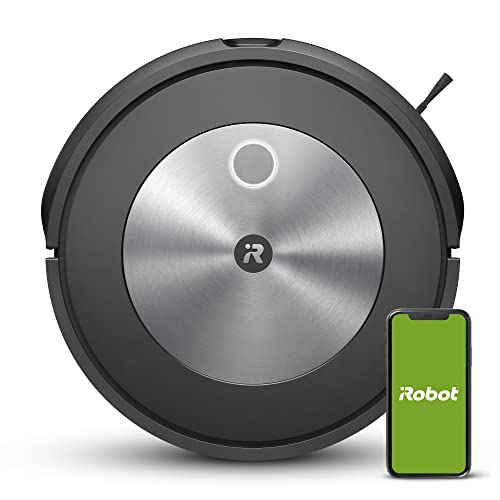
Best for homes with pets, cords and floors that are never fully clear
- PrecisionVision camera identifies and steers around objects
- Pet waste avoidance guarantee from iRobot
- Smart Mapping with room-by-room commands
- Dual rubber rollers instead of bristles
Why buy it: the obstacle camera is the only system owners describe as genuinely trustworthy on a lived-in floor.

Best for open-plan hard floor where mopping is the real chore
- Mop pad retracts fully onto the lid over carpet
- Vacuums and mops in one run without swapping parts
- Self-emptying Clean Base for weeks of debris
- Obstacle avoidance carried over from the j7
Why buy it: the retracting mop arm is the only design that reliably keeps a wet pad off your rugs.
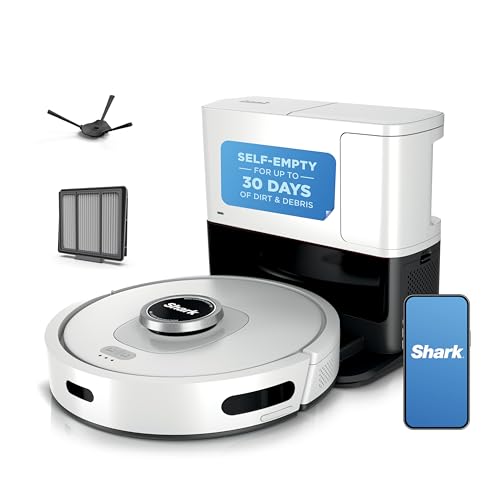
Best for households that would rather touch the dock once every two months
- Extra-large base rated for around 60 days of debris
- Matrix grid cleaning for repeated passes
- LiDAR navigation with room targeting
- Self-cleaning brushroll for pet hair
Why buy it: the largest hands-off interval on this page, which is the whole point of buying a robot in the first place.
Quick Comparison
| Product | Best for | Rating | Price | Buy |
|---|---|---|---|---|
| Roborock Q5 Max+ with Self-Empty Dock | Best Overall | — | Check (paid link) | |
| Shark AI Ultra Robot AV2501S | Best Self-Empty Value | — | Check (paid link) | |
| eufy BoostIQ RoboVac 11S Slim | Best Budget | — | Check (paid link) | |
| iRobot Roomba j7 (7150) | Best Obstacle Avoidance | — | Check (paid link) | |
| iRobot Roomba Combo j7+ Self-Emptying | Best Vacuum-and-Mop | — | Check (paid link) | |
| Shark Matrix Self-Empty Robot AV2511AE | Best XL Base | — | Check (paid link) |
Specs Side by Side
| Model | Navigation | Self-empty base | Mops? | Height |
|---|---|---|---|---|
| Roborock Q5 Max+ | LiDAR mapping | Yes, bagged | No | ~3.8 in |
| Shark AI Ultra AV2501S | LiDAR mapping | Yes, bagless | No | ~3.5 in |
| eufy RoboVac 11S Slim | Random bounce | No | No | 2.85 in |
| Roomba j7 (7150) | Camera + smart map | No | No | ~3.4 in |
| Roomba Combo j7+ | Camera + smart map | Yes, bagged | Yes, retracting pad | ~3.4 in |
| Shark Matrix AV2511AE | LiDAR mapping | Yes, XL bagless | No | ~3.5 in |
How We Rank
We do not buy, test or physically handle robot vacuums. We rank them by reading what owners report over months rather than days, which suits this category unusually well — the failure modes that matter are dock errors, navigation regressions after firmware updates and wheel or brush wear, none of which appear in a first week. Four inputs decide the order. Star rating weighted by review volume. The pattern in critical reviews, where we separate genuine reliability problems from setup frustration. Long-term reports from owners at the one- and two-year marks, which is where budget robots and premium ones diverge sharply. And expert consensus across established outlets as a cross-check. Prices in this category move more than any other on the site and were checked at the time of writing. The full method is on how we rank.
The Six, Reviewed
1. Roborock Q5 Max+ — Best Overall
Covered above. What owners praise: mapping that is accurate on the first run, the anti-tangle roller, strong carpet pickup for a robot, and a dock that just works. What owners complain about: dock size, the noise of the empty cycle, ongoing bag cost, and obstacle avoidance that is good but not camera-grade.
2. Shark AI Ultra AV2501S — Best Self-Empty Value
The value case here is simple: a bagless self-emptying base, so the only running cost is a filter now and then. Matrix Clean lays a grid over an area and makes several passes rather than one, which owners with carpet notice. What owners praise: no bags, genuinely good carpet agitation, and the room-targeting in the app. What owners complain about: the base is large and loud, emptying the bagless bin is dustier than pulling a sealed bag, and the app has a learning curve. A strong choice if the bag cost is what puts you off self-emptying.
3. eufy BoostIQ RoboVac 11S Slim — Best Budget
Years after launch this is still the honest budget answer. There is no mapping and no app; it bounces semi-randomly until the battery runs down and then finds its dock. On hard floors and low-pile carpet in a modest home that produces a perfectly clean floor, and there is almost nothing on it to fail. What owners praise: reliability, quietness, the 2.85-inch height that clears furniture other robots cannot, and the price. What owners complain about: no scheduling from a phone, a small bin, and a habit of eating cords and rug tassels. It is also the budget robot in our best budget vacuum rankings.
4. iRobot Roomba j7 (7150) — Best Obstacle Avoidance
The one to buy if your floors are realistically never clear. The forward-facing camera recognizes cables, socks, shoes and pet waste and steers around them, and iRobot backs the pet waste claim with a replacement guarantee — a promise no other brand makes. The dual rubber rollers are also better than bristles at handling hair. What owners praise: obstacle avoidance that is genuinely trustworthy, clean room-by-room commands, and hair handling. What owners complain about: no self-empty base at this price point, a small bin as a result, and app changes over the years that some long-term owners resent.
5. iRobot Roomba Combo j7+ — Best Vacuum-and-Mop
The mopping robot that solves the problem all the others fudge. Instead of parking a damp pad somewhere or asking you to remove it, the arm lifts the entire mop pad up onto the lid of the robot when it detects carpet. That means one run can vacuum the rugs and mop the tile without you touching it. What owners praise: the retracting pad, obstacle avoidance carried over from the j7, and the self-emptying base. What owners complain about: the price above all, a small water tank that limits how much floor it can mop per fill, and mopping that lifts light dirt rather than scrubbing anything set.
6. Shark Matrix AV2511AE — Best XL Base
If the appeal of a robot is not thinking about it, this has the longest hands-off interval on the page. The extra-large bagless base is rated for roughly two months of debris, and the self-cleaning brushroll means the robot itself needs less attention too. What owners praise: the interval between empties, no bag cost, and the grid cleaning pattern. What owners complain about: a very large dock footprint, a loud empty cycle, and navigation that is competent rather than class-leading.
What Owners Actually Complain About
Robot reviews are more polarized than any other vacuum category, and five complaints account for most of the negative ones. Getting stuck is first: rug tassels, thresholds, cables, and the underside of a couch that is one quarter-inch too low. Small bins are second, and they are the main argument for a self-emptying dock in a pet household. Cliff and dirt sensors needing cleaning is third — an enormous share of "it started behaving erratically" reports are solved by wiping the sensor windows with a dry cloth. Dock connection failures are fourth, usually caused by placing the dock where the robot cannot approach it in a straight line. And app and firmware changes are fifth, a genuine long-term frustration on every connected model.
The most common disappointment is not a fault at all: owners expecting deep carpet cleaning. A robot removes the surface layer of dust and hair reliably and does almost nothing to soil embedded in pile. EPA advises vacuuming carpets and furniture every week in a home with asthma, and using a vacuum with a HEPA filter on carpet and fabric. Treat that as the specification rather than the failure and the machine looks very good.
How to Choose Between These Six
Decide what the robot is actually for. Whole-house daily maintenance with pets and mixed floors? The Roborock Q5 Max+. Want self-emptying with no bag costs? The Shark AI Ultra, or the Matrix if you want the biggest base. Tight budget, hard floors, small home? The eufy 11S, with no regrets. Floors that always have something on them — kids, cables, a puppy? The Roomba j7 and its camera. Mostly hard floor where mopping is the job you hate? The Roomba Combo j7+. And if your home is mostly deep carpet, buy an upright from our main rankings instead and add a robot later.
What Separates a Good Robot From a Frustrating One
Five specifications predict satisfaction better than suction figures do. Navigation type is first: LiDAR or camera mapping produces methodical row-by-row coverage, while random-bounce models take three times as long and miss areas, which is acceptable at $160 and not at $400. Brushroll design is second and matters as much here as on a stick vacuum — rubber or anti-tangle rollers keep working in a house with hair, bristles do not. Height is third and nobody checks it until the robot cannot fit under the couch it was bought to clean beneath; measure your lowest clearance before you buy.
Bin and dock capacity is fourth, and it directly sets how often the machine interrupts you. Obstacle handling is fifth, and it is worth being clear-eyed: LiDAR maps walls and furniture, but only a camera-based system reliably sees a sock on the floor. Pascal ratings are the least useful number in the category — they measure sealed suction with the airway blocked, and a robot with half the pascals and a better brushroll will leave cleaner carpet.
Getting the Most From Whichever One You Buy
Almost every difference between a beloved robot and an abandoned one comes down to setup. Run the first mapping pass with the floor unusually clear so the machine builds a clean map, then set no-go zones around the places it will inevitably get trapped. Put the dock against a wall with two or three feet of clear space either side and nothing reflective directly opposite, which is the fix for most docking failures. Tuck cables and lift rug tassels once, properly, and the single largest cause of stalled runs disappears.
Then maintain it on a schedule. Wipe the cliff sensors and the charging contacts monthly, clear the side brush and main roller of hair, wash the filter on the manufacturer schedule, and check the front caster wheel — hair binds around its axle and it is the most common cause of a robot suddenly dragging or leaving marks. Ten minutes a month is the difference between three years of service and one. Our maintenance schedule covers the whole calendar.
The Verdict
For the best combination of mapping, hair management and hands-off running, the Roborock Q5 Max+ is the robot we would recommend to most households. Worth knowing before you build a schedule around a marketing claim: EPA has issued no official carpet-cleaning frequency recommendation, and points consumers to manufacturer guidance and industry standards instead. Choose the iRobot Roomba j7 instead if your floors are genuinely cluttered and obstacle avoidance is the feature you are paying for, or the eufy RoboVac 11S if you want the core benefit for a quarter of the money. Check price on Amazon → (paid link)