 Garden
Affiliate Disclosure
Some links on this page are affiliate links. As an Amazon Associate, we earn from qualifying purchases — at no extra cost to you. We do not buy, test, or physically handle the products we cover; our rankings come from aggregated owner reviews, ratings and expert consensus. Commissions never change our verdicts. How we rank · full disclosure.
Short version: houseplants are not fussy, they are just living in the wrong conditions. Almost every indoor plant failure traces back to light that is dimmer than it looks and water applied on a schedule instead of on demand. Fix those two and the rest — potting mix, repotting, pests, humidity — becomes routine maintenance.
We do not buy, test or physically handle any of the products we rank on this site. Rankings come from aggregated owner reviews, star ratings, review volume and horticultural consensus. The method is set out on how we rank.
Light Is the Whole Story
Human eyes are terrible light meters. They adjust so smoothly that a corner ten feet from a window feels "bright" while delivering a tiny fraction of the light at the glass. Plants do not grade on a curve. The practical consequence is that most houseplants sold as low-light are not thriving in low light — they are surviving it, slowly declining, and dropping a leaf every few weeks until they are a bare stem in a pot of permanently wet soil.
The quickest honest check is the shadow test: hold your hand a foot above the pot on a bright day. Sharp shadow, direct light. Soft-edged shadow, bright indirect — the sweet spot for most tropicals. Faint blur, medium. No shadow, low. Then remember that light falls off with the square of distance, so moving a plant three feet back from a window can cut its light by three quarters. Our how much light do houseplants need guide turns this into room-by-room placement advice.
When a room simply cannot supply enough, a grow light does. This is the one piece of gear that reliably transforms results indoors, and modern LED strips and bulbs are cheap, cool-running and no longer aggressively purple. Our ranked best grow lights for indoor plants covers the field, including which fixtures owners keep and which end up in a drawer.
Watering by Feel, Not by Friday
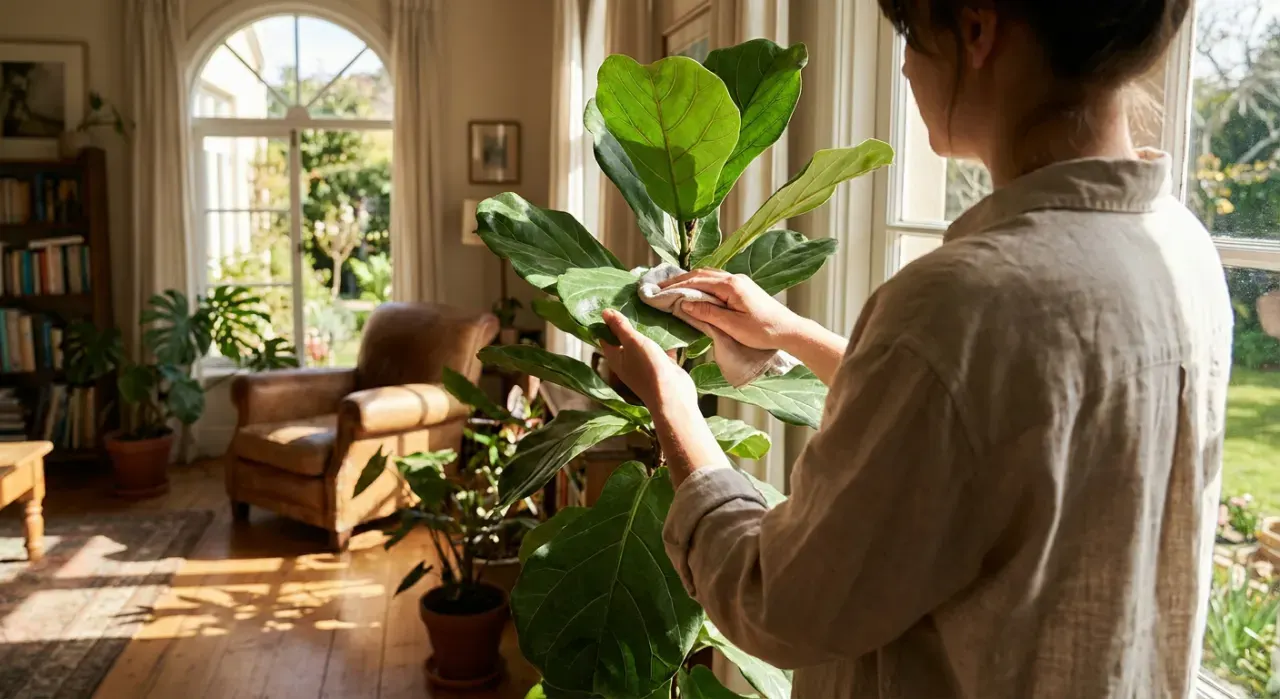
The instruction "water once a week" has probably killed more houseplants than any pest. Water use depends on light, temperature, humidity, pot size, pot material and season — the same pothos might want water every five days in July and every three weeks in January. A schedule ignores all of that.
Two reliable habits replace it. First, the finger test: push two inches into the mix, and water only if it is dry at that depth. Second, and better once you have the knack, lift the pot — a dry pot is startlingly lighter than a wet one, and after a few weeks you can judge a plant without touching the soil. When you do water, water thoroughly until it runs from the drainage hole, then tip out whatever collects in the saucer. Little sips wet only the top of the root ball and leave the bottom permanently dry.
Drainage holes are non-negotiable. A decorative pot with no hole is a reservoir, and roots sitting in standing water suffocate long before they rot. Use it as a cachepot with a plastic nursery pot inside. The full decision tree is in how often to water houseplants, and if you would rather the pot managed it for you, best self-watering planters covers the reservoir designs owners rate highest.
Mix, Pots and Repotting
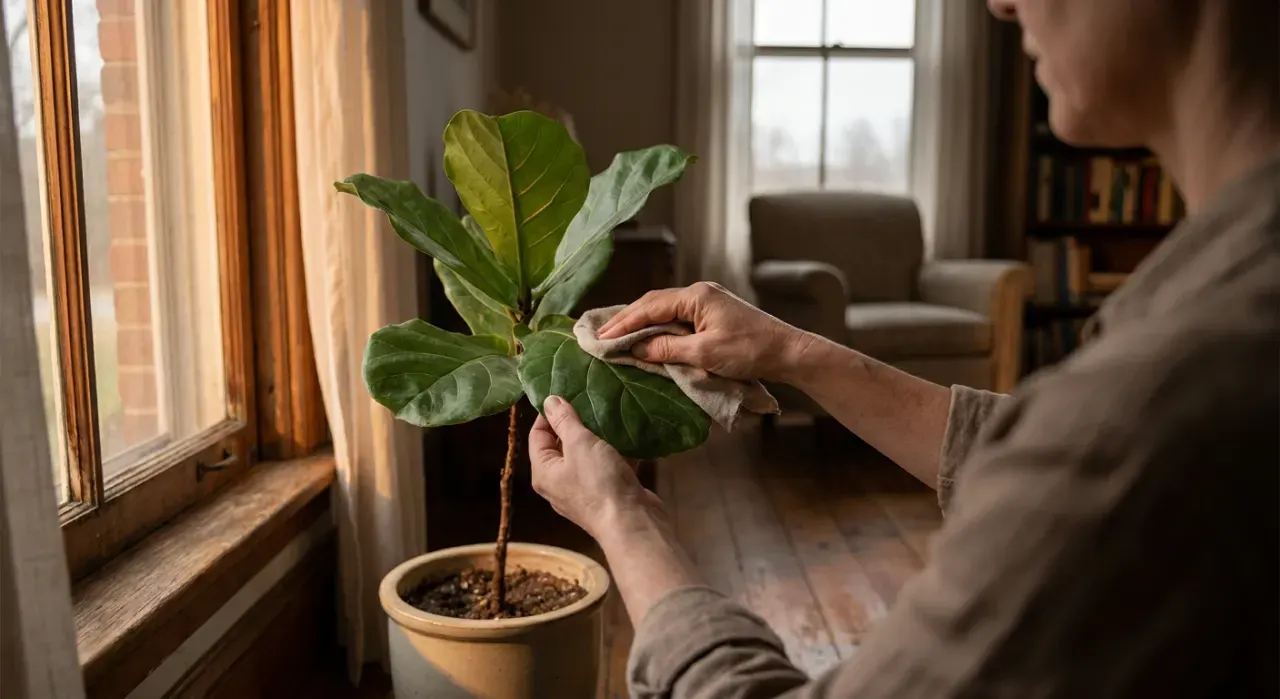
Most bagged potting soil is too dense for indoor use. It was formulated for outdoor containers that dry in the sun and wind; indoors, that same mix stays saturated for a week. The usual fix is to open it up — perlite, bark, pumice or coarse coir — so water drains fast and air gets to the roots between waterings. Aroids such as monstera and philodendron are noticeably happier in a chunky bark-heavy blend; succulents want grit; ferns want the opposite, a mix that holds moisture. We compare the bagged options in best potting mix for houseplants.
Repotting is done less often than people think. A plant wants a bigger pot when roots circle the bottom, water runs straight through, or growth has stalled in good light — not annually out of habit. Go up one size only: a small root ball in a huge pot sits in a mass of wet, unrooted mix, which is precisely the rot scenario you are trying to avoid. Step-by-step method is in how to repot a houseplant.
Reading the Symptoms
Indoor plants have a small vocabulary and use the same word for several problems, which is why diagnosis feels harder than it is. Yellow leaves most often mean overwatering, but they also appear with too little light, nutrient shortage or plain old age on the lowest leaves — the pattern tells you which, and yellow leaves on houseplants walks through it. Crispy brown tips usually mean dry air, inconsistent watering or salt buildup from fertilizer. Long, stretched growth with wide gaps between leaves is always light. Sudden wilting in damp soil is root rot, not thirst — and the instinct to water it again is what finishes the plant off.
Pests are the other half. Fungus gnats are the most common indoor nuisance and are a symptom of permanently damp topsoil rather than a plague in their own right; drying the surface between waterings breaks the cycle faster than any spray, as getting rid of fungus gnats explains. Spider mites, mealybugs and scale need earlier intervention and a proper wipe-down, and they spread fastest in dry winter air.
Humidity, Honestly
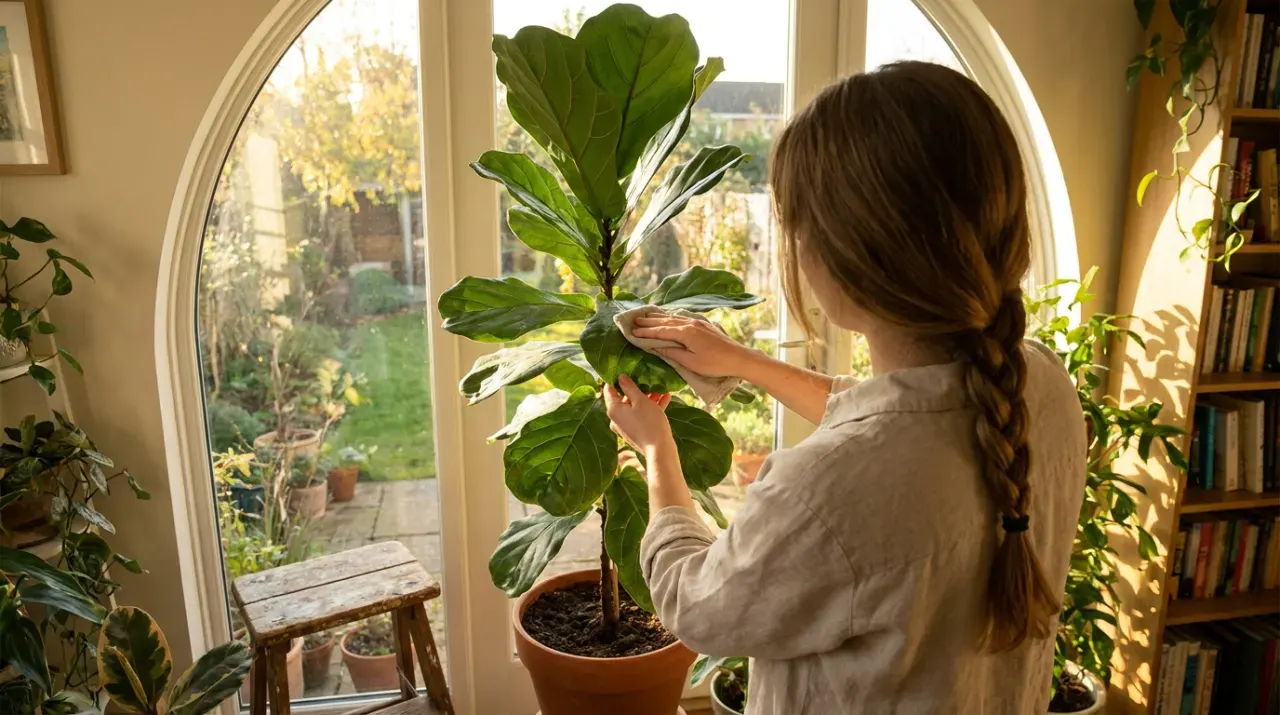
Tropical foliage plants evolved in 60 to 80 percent humidity; a heated American home in February can sit under 30. That gap is real, and it is why calatheas crisp and why alocasias sulk each winter. What is less real is the belief that misting fixes it — a spray raises humidity around the leaf for a few minutes and then it is gone. Grouping plants together, using a pebble tray directly beneath the pot, or running a small humidifier in the room are the three approaches that measurably move the needle, and we compare the last two in humidifier vs pebble tray.
If chasing humidity sounds like too much work, the better answer is to choose differently. Pothos, ZZ plants, snake plants, cast iron plants, hoyas and most philodendrons are genuinely relaxed about dry indoor air. The realistic list is in low-light houseplants that survive.
Feeding and the Seasonal Rhythm
Indoor plants have seasons even though your living room does not. From roughly March to September, longer days and stronger light push most houseplants into active growth, and that is when they want water more often and food at all. From October to February the same plants slow dramatically — some stop entirely — and continuing a summer routine into winter is one of the quieter ways people kill things. Less light means less water used, which means soil that stays wet for far longer, which means rot.
Feeding follows the same rhythm. A diluted balanced liquid fertilizer every two to four waterings through the growing season covers almost every common houseplant; nothing at all from late autumn through midwinter. Half strength is safer than full, because the most common fertilizer problem indoors is not deficiency but accumulation — mineral salts building up in the mix, showing as a white crust on the soil surface or pot rim and as crispy brown leaf tips. Flushing a pot thoroughly with plain water two or three times a year clears it.
Growth habits change too. Winter growth on a plant with insufficient light is usually stretched and pale, and it is better to accept a dormant, static plant than to push it. If you want genuine winter growth, that is exactly the job a grow light does — it removes the seasonal light dip entirely, which is why owners who add one so often report their collections looking the same in January as in June.
Where to Start
If a plant is struggling right now, start with light, then watering — in that order, because watering advice only makes sense once the light is settled. If your rooms are simply dim, a grow light is the fix, and our ranked grow light guide is the place to spend twenty minutes before you spend money. The topical map below links every part of indoor plant care.