 Garden
Affiliate Disclosure
Some links on this page are affiliate links. As an Amazon Associate, we earn from qualifying purchases — at no extra cost to you. We do not buy, test, or physically handle the products we cover; our rankings come from aggregated owner reviews, ratings and expert consensus. Commissions never change our verdicts. How we rank · full disclosure.
The short answer: an anthurium wants bright, indirect light, watering when the top inch of its chunky, airy mix dries out, high humidity (60 to 80 percent), and warm temperatures. Feed with a diluted high-phosphorus fertilizer in spring and summer and it will produce its glossy heart-shaped "flowers" — actually colorful spathes — almost year round. Its main dislikes are direct sun, soggy soil, cold drafts and dry air, all of which are easy to avoid once you know them.
Anthuriums (often Anthurium andraeanum) are prized for blooming continuously indoors, which few houseplants do. Give them tropical conditions — warm, humid, bright but not scorching — and they reward you constantly. Our guidance reflects grower consensus, not first-hand testing; see how we rank. Note: all parts are toxic if chewed, covered below.
Light for an anthurium
Light drives blooming, so get this right first. Anthuriums want bright, indirect light — plenty of brightness without direct sun burning the leaves and spathes. An east window, or a few feet back from a south or west one, is ideal. In too little light the plant survives but stops flowering, producing only leaves; in direct sun the foliage scorches and the color fades. If your home is dim, a grow light restores blooming reliably — see our grow light picks and our guide to how much light houseplants need.
Watering an anthurium
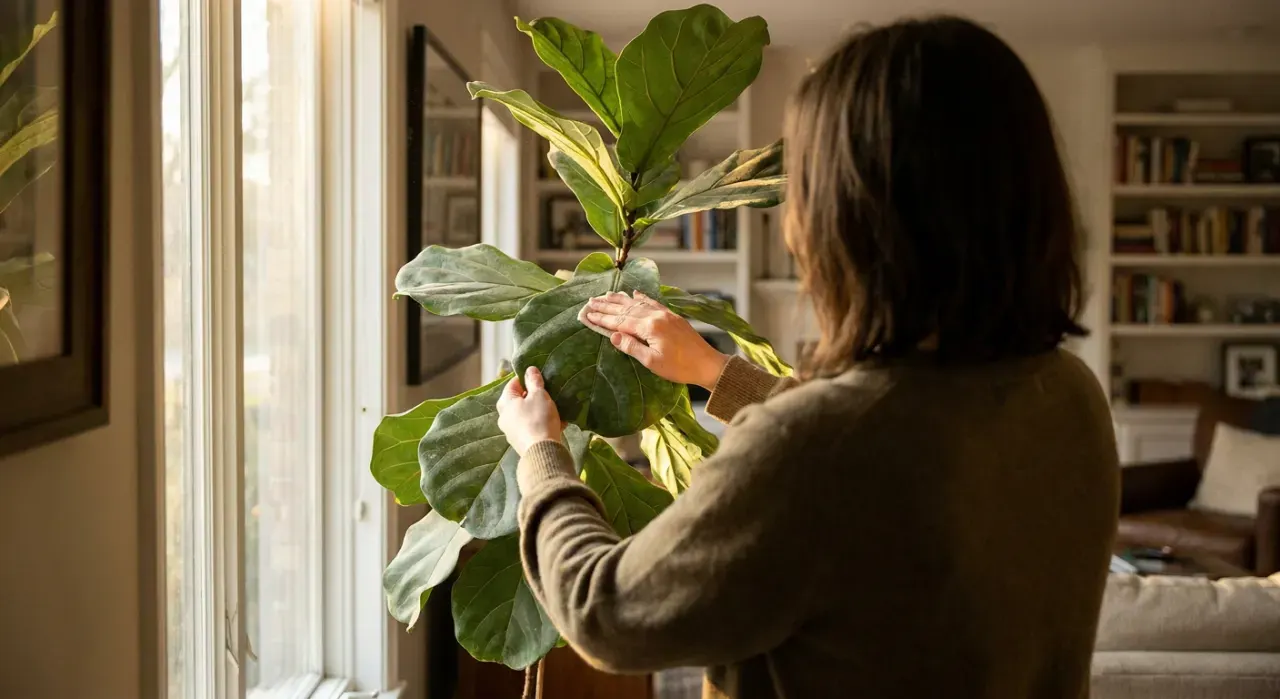
Water when the top inch of the mix is dry — typically once a week in summer and less in winter. Anthuriums like even moisture but hate sitting wet, a balance made easy by using a chunky, fast-draining medium.
- Water thoroughly until it runs from the drainage holes, then empty the saucer. Never leave the pot in standing water.
- Let the top inch dry between waterings; the roots need air as well as moisture.
- Ease off in winter as growth slows.
- Use room-temperature water, and in hard-water areas consider filtered water to avoid tip browning.
Yellowing lower leaves and mushy stems point to overwatering; brown crispy tips point to underwatering or dry air. Our guide to how often to water houseplants covers judging moisture by feel.
Humidity and temperature
This is where most anthuriums struggle indoors. As tropicals they want 60 to 80 percent humidity, well above the 30 to 40 percent of a typical heated home in winter. In dry air, leaf edges and tips turn brown and growth slows. Raise humidity by grouping plants, using a pebble tray, or running a humidifier — our humidifier vs pebble tray comparison weighs the options. Well-lit bathrooms and kitchens often suit anthuriums because of their naturally higher moisture. Keep temperatures between 65 and 80 F and away from cold drafts, air conditioning vents and heat sources; anthuriums suffer below about 55 F.
Soil and potting mix
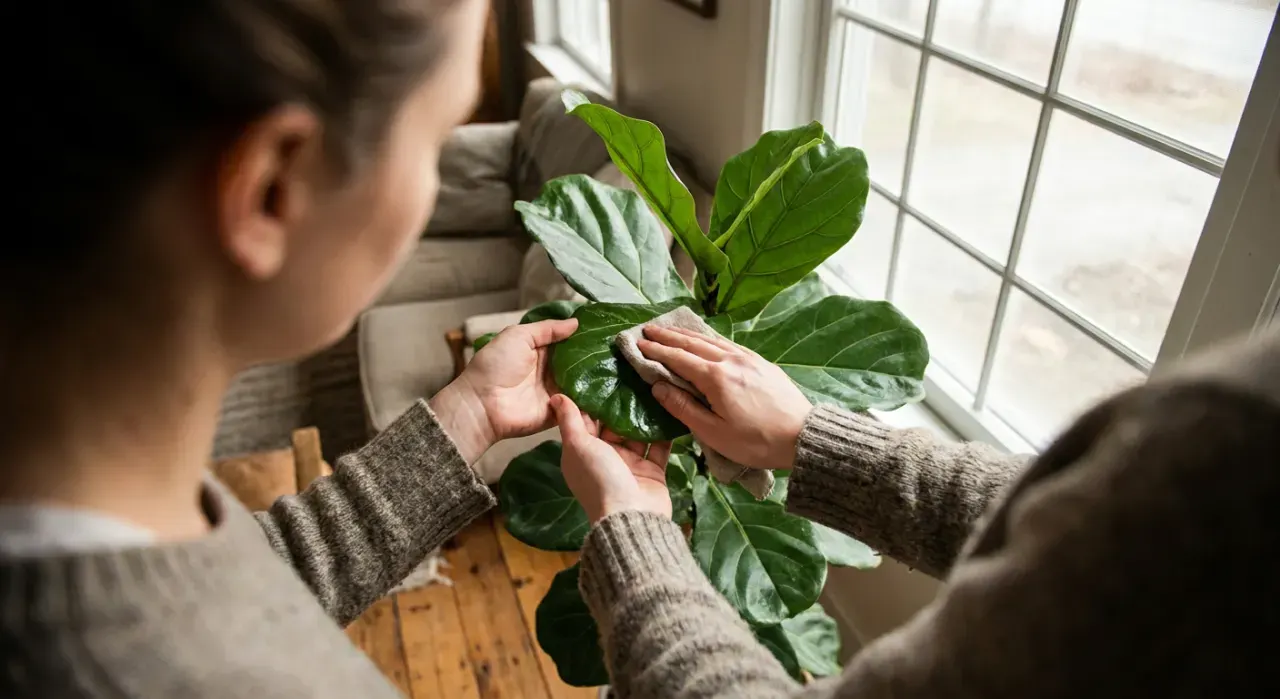
Anthurium roots, like orchid roots, need air — so plain potting soil is too dense and holds too much water. Use a chunky, airy mix: many growers blend orchid bark, perlite and peat or coir in roughly equal parts, which drains fast while holding some moisture. This open structure is the biggest single factor in avoiding the root rot anthuriums are prone to. If you buy one potted in dense soil, plan to repot it into a better mix. Repot every two to three years, moving up just one pot size — an oversized pot holds excess wet mix and invites rot. See how to repot a houseplant.
Feeding for constant blooms
To keep an anthurium flowering, feed it during the growing season. Use a fertilizer higher in phosphorus (the middle number), diluted to a quarter or half strength, roughly every two to four weeks in spring and summer, then stop in fall and winter. Phosphorus supports bloom production, while too much nitrogen pushes leaves at the expense of flowers. Over-fertilizing burns the roots and browns leaf tips, so err toward dilute and infrequent. Our indoor plant fertilizer picks cover suitable formulas.
Keeping the flowers coming
A healthy anthurium can bloom nearly year round, but each spathe eventually fades. To maximize the display:
- Prioritize light. Insufficient light is the top reason for no blooms — brighten the spot before changing anything else.
- Feed with phosphorus through the growing season.
- Deadhead spent spathes. Cut old, faded flower stems back to the base with a clean blade, which redirects energy into new blooms and keeps the plant tidy.
- Maintain humidity and warmth so the plant never stalls.
Remember the colorful heart-shaped part is a spathe, a modified leaf, and the true flowers are the tiny structures on the finger-like spadix. The spathe holds its color for weeks, which is why anthuriums seem to bloom for months.
Common types of anthurium
The anthuriums sold as houseplants fall into two broad groups, and knowing which you have shapes your expectations:
| Group | Examples | Grown for |
|---|---|---|
| Flowering | A. andraeanum, A. scherzerianum | The glossy red, pink or white spathes |
| Foliage | A. clarinervium, A. crystallinum | Large velvety leaves with pale veining |
The flowering types are the familiar supermarket plants prized for near year-round color, and everything in this guide about light, phosphorus feeding and deadheading applies to them. The foliage types are collector plants grown for dramatic leaves rather than blooms; they want the same warmth and high humidity but even chunkier, airier mix and slightly less emphasis on phosphorus. If your plant is a foliage anthurium, do not worry about a lack of flowers — that is simply not what it is for. Either way, the airy mix, steady warmth and high humidity are the constants that keep an anthurium healthy.
Anthurium care troubleshooting
| Symptom | Likely cause | Fix |
|---|---|---|
| No flowers, only leaves | Too little light or low phosphorus | Brighter indirect light; high-phosphorus feed |
| Brown, crispy leaf tips/edges | Low humidity or hard water | Raise humidity; use filtered water |
| Yellowing lower leaves | Overwatering | Let the top inch dry; check for rot |
| Faded, scorched leaves | Direct sun | Move out of direct rays |
| Slow or stalled growth | Cold, dry air, or dense soil | Warmth, humidity, airy mix |
| Mushy stems | Root rot | Repot in airy mix; water less |
Toxicity and safety
Anthuriums are toxic to cats, dogs and people if chewed or eaten. Every part contains insoluble calcium oxalate crystals, which cause intense mouth and throat irritation, drooling and difficulty swallowing on contact. Serious harm is uncommon because the immediate pain deters further chewing, but it is genuinely unpleasant, so keep the plant out of reach of pets and small children, and wash your hands after cutting stems, since the sap can irritate skin. For a wider list of plants to keep away from cats, see houseplants toxic to cats.
Give an anthurium tropical warmth, humidity and bright indirect light, and it becomes one of the most rewarding flowering houseplants there is. For related care, browse the houseplants hub.