 Garden
Affiliate Disclosure
Some links on this page are affiliate links. As an Amazon Associate, we earn from qualifying purchases — at no extra cost to you. We do not buy, test, or physically handle the products we cover; our rankings come from aggregated owner reviews, ratings and expert consensus. Commissions never change our verdicts. How we rank · full disclosure.
The short version: after weighing six popular grow lights on aggregated owner ratings, review volume and the complaints that repeat across listings, our #1 pick is the Barrina T5 2 ft 4-Pack. Four linkable full-spectrum strips light an entire shelf evenly from a single outlet, they run on white rather than purple light so you can live with them in a room, and they hold roughly 4.6 stars across 6,200-plus ratings. Below is the ranked field, the recurring gripes, and a comparison table.
Light is the fix for almost every indoor plant problem — stretched stems, stalled growth, winter leaf drop. If you are not sure whether your room is the issue, read how much light do houseplants need first, then come back.
Top Picks at a Glance
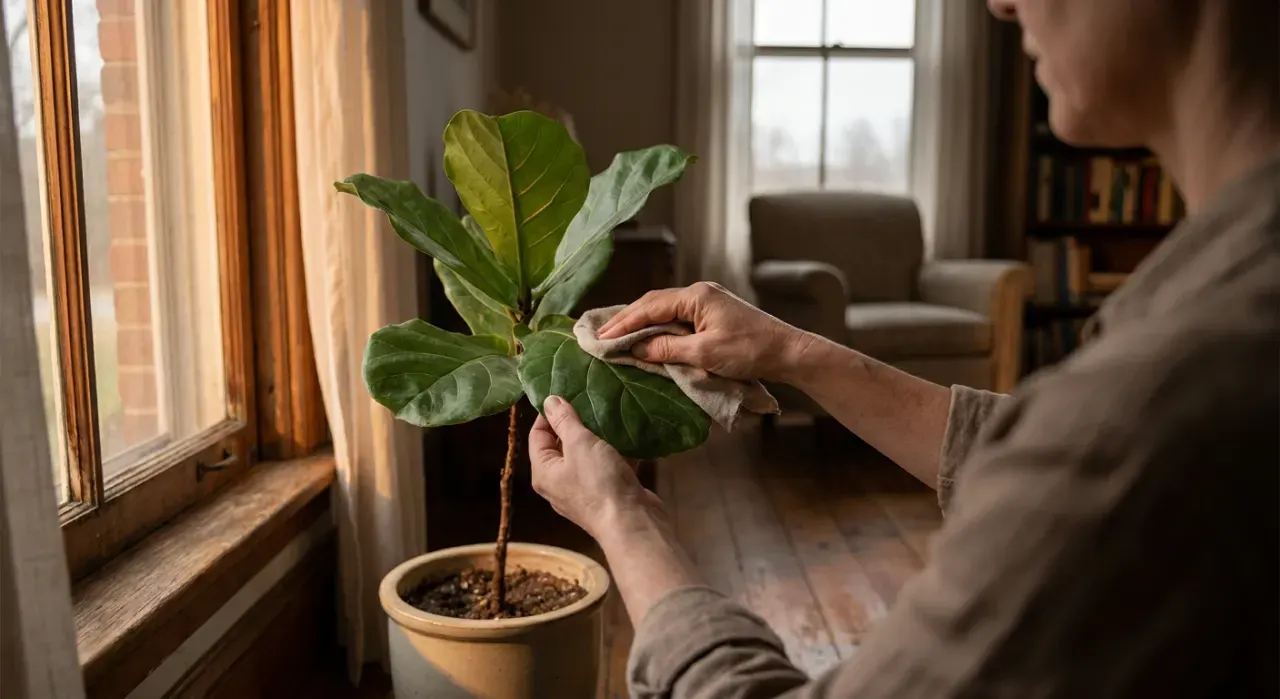
Our #1 Pick: Barrina T5 2 ft Grow Lights, 4-Pack
The Barrina T5 strips win on a quality that is easy to overlook when you are comparing wattages: distribution. A single bright fixture creates one well-lit plant and a ring of mediocre ones. Illinois Extension's foot-candle guidance makes the same point from the other direction: light level falls away sharply with distance from the source. Four linkable 2 ft strips let you run light the length of a shelf, spaced so every pot sits under the same intensity — which is exactly what a collection of houseplants needs.
Across more than 6,908 owner ratings the consensus is unusually consistent. Owners describe stalled plants pushing growth within two to four weeks, seedlings staying compact instead of stretching, and — repeatedly — relief that the light is white rather than the migraine-inducing blurple of cheaper red-and-blue fixtures. That matters practically as well as aesthetically: under white light you can still see when a leaf is yellowing or a mealybug has arrived.
Installation is the other reason it keeps winning. The strips ship with adhesive pads, clips and screws, link end to end so four fixtures run off one plug, and draw only 40W in total — no ballast, no driver box, no fan. Owners routinely mount them under a bookshelf or inside an IKEA cabinet in twenty minutes.
Consensus Score ███████████░ 9.0 — from 6,908 owner ratings.
The trade-off is raw output. These are gentle strips, not a canopy-penetrating panel; hang them 6 to 12 inches above the foliage or the effect fades fast. For high-light plants or a serious propagation setup, jump to the Spider Farmer SF1000 at #4.
Check price on Amazon → (paid link)
Best Grow Lights 2026: The Ranked Field

Best for shelves, plant stands and anywhere you want even coverage
- 4 × 10W linkable 2 ft strips
- Full-spectrum, pinkish-white output
- Plug and play — no ballast or driver
- Adhesive, screw or clip mounting
Why buy it: the most usable light per dollar in the category — link four strips across a shelf and every plant gets the same light instead of one bright hot spot.
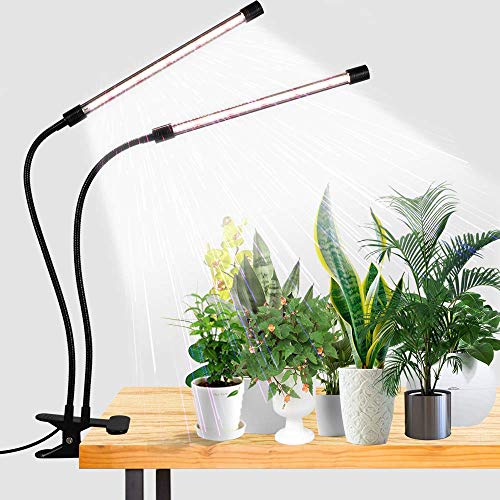
Best for a single plant, a desk or a windowsill top-up
- Clip-on gooseneck, 6000K white light
- 5 brightness levels
- Auto 4/8/12-hour timer
- Looks like a desk lamp, not a grow rig
Why buy it: the cheapest way to rescue one struggling plant — and the white output means you can run it in a living room without the purple glow.

Best for existing lamps, sconces and track fittings
- Standard E26 screw base
- 15W drawing roughly 200W-equivalent output
- Optical lens concentrates light downward
- Ceramic heat sink, runs cool
Why buy it: it turns a lamp you already own into a grow light, which is the least intrusive upgrade available.

Best for serious growers, big specimens and propagation setups
- Dimmable 100W full-spectrum panel
- High PPFD with deep canopy penetration
- Covers roughly a 2 ft × 2 ft footprint
- Passive cooling — no fan noise
Why buy it: far more usable light than anything else here, dimmable so you can dial it back, and silent because there is no fan.
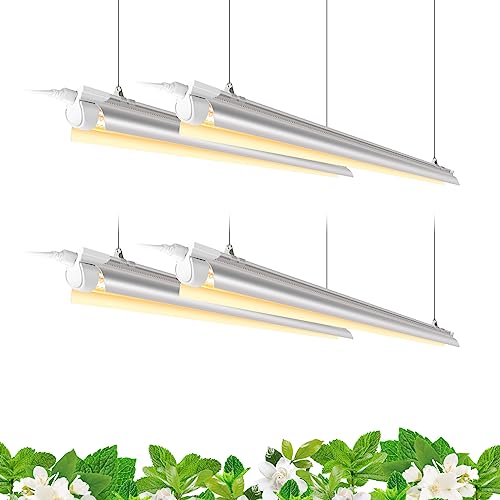
Best for wide racks, seed trays and plant walls
- 4 × 42W 4 ft full-spectrum strips
- Links end to end from one outlet
- Reflector housing directs light down
- Covers a full baker’s-rack shelf
Why buy it: the cheapest way to light a whole rack evenly rather than lighting one plant brilliantly and its neighbors badly.
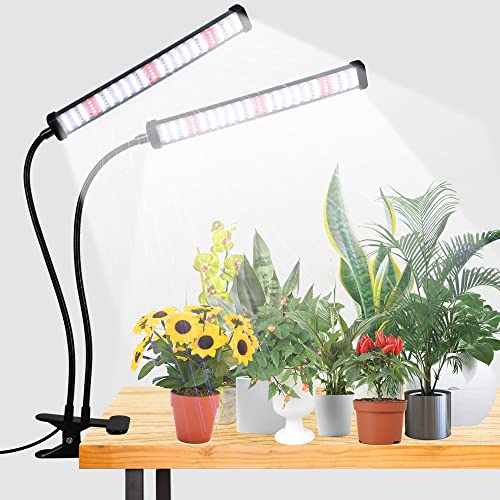
Best for starting seeds and propagating cuttings indoors
- 6000K bright white, 100W equivalent draw
- Bendable gooseneck arms
- Auto 4/8/12-hour timer
- Weighted clip base for tray edges
Why buy it: bright, adjustable and cheap enough to put over a seed tray without building a whole light shelf.
Quick Comparison
| Product | Best for | Rating | Price | Buy |
|---|---|---|---|---|
| Barrina T5 Grow Lights, 2 ft 40W, 4-Pack | Best Overall | — | Check (paid link) | |
| GooingTop LED Grow Light, 6000K Clip Lamp | Best Value | — | Check (paid link) | |
| SANSI 15W Full-Spectrum Grow Light Bulb | Best Screw-In Bulb | — | Check (paid link) | |
| Spider Farmer SF1000 100W LED Grow Light | Best Premium | — | Check (paid link) | |
| Barrina 4 ft T8 Grow Light Strips, 168W, 4-Pack | Best Whole-Shelf Coverage | — | Check (paid link) | |
| GooingTop 100W Gooseneck Desktop Grow Light | Best for Seedlings & Desks | — | Check (paid link) |
The Numbers Side by Side
| Light | Type | Power | Light color | Timer | Best hang height |
|---|---|---|---|---|---|
| Barrina T5 2 ft 4-Pack | Linkable strip | 40W total | Full-spectrum white | No (add a plug timer) | 6–12 in |
| GooingTop Clip Lamp | Clip gooseneck | ~10W | 6000K white + red | Yes, 4/8/12 h | 6–12 in |
| SANSI 15W Bulb | E26 screw-in bulb | 15W | Full-spectrum white | No | 12–18 in |
| Spider Farmer SF1000 | LED panel | 100W, dimmable | Full-spectrum white | No | 18–24 in |
| Barrina 4 ft T8 4-Pack | Linkable strip | 168W total | Full-spectrum white | No | 8–16 in |
| GooingTop 100W Desktop | Clip gooseneck | ~24W draw | 6000K white | Yes, 4/8/12 h | 8–16 in |
How We Rank
We do not buy, test or physically handle these fixtures, and we would rather say so than dress up a spec sheet as experience. What we do is read the category the way an unusually patient shopper would: aggregate star ratings and review volume for each listing, then work through the critical reviews, because durability and honesty problems only surface there. A light rated 4.5 across 6,908 owner ratings tells you far more than a 4.9 across 80.
Four factors carry the weight. Usable light where plants actually sit — not headline wattage, but whether owners report real growth at a realistic hanging height. Coverage — does it light a shelf or a single pot? Livability — white versus purple output, fan noise, and whether the fixture looks acceptable in a living room, because a light you hide in a closet does nothing. And reliability, judged from failure reports after six to twenty-four months. Prices were checked at the time of writing and shift constantly. Full method: how we rank.
What Owners Actually Complain About
No fixture in this category is free of recurring gripes, and four themes dominate the critical reviews.
Adhesive mounting that lets go. The most repeated complaint about both Barrina strips: the double-sided pads hold fine on clean, smooth surfaces and release on textured wood, painted shelving or in humid rooms. Owners who used the supplied screws or clips instead almost never report the problem.
Overstated wattage. Across the whole category — GooingTop and SANSI listings included — reviewers point out that "100W" or "200W equivalent" describes marketing equivalence, not draw. The lights still work; the numbers just are not comparable between brands. Judge by owner-reported growth and by hanging distance instead.
Timers that reset after a power blip. A steady trickle of GooingTop reviews mention the auto-timer losing its cycle after an outage, meaning the light comes on at a new hour until you reset it. Mildly annoying rather than a fault, but worth knowing if you travel.
Light spill and glare. The Spider Farmer SF1000 draws praise for output and criticism for brightness — at 100W in a living space it is genuinely uncomfortable to look at. Owners solve it by dimming it, positioning it away from seating, or running it while they are out. Several also note the driver box makes it awkward to hang low over a shelf.
How to Choose a Grow Light
Start with the shape of the problem, not the specs. One sad plant? A clip lamp is all you need, and the GooingTop is the consensus favorite. A shelf or plant stand? Linkable strips beat a single panel every time, because even coverage matters more than peak intensity. A whole rack or a seed-starting station? Step up to 4 ft strips. Big specimens, high-light plants or propagation? A dimmable panel like the SF1000 is the only option here with the output to matter at 2 feet of distance. Want it invisible? A screw-in bulb in an existing lamp is the least intrusive answer.
Then buy a plug-in timer if the fixture does not include one — twelve to fourteen hours a day, every day, is what produces the visible change, and nobody keeps that up manually. Finally, get the height right: intensity falls off sharply with distance, and a strip mounted on the ceiling is decoration. Six to twelve inches for strips, eighteen to twenty-four for a panel.
What Separates a Good Grow Light From a Cheap One
Grow light marketing is unusually noisy, and most of the numbers on the box are close to meaningless. Start instead from what the plant needs — Illinois Extension puts low-light houseplants at roughly 75 foot-candles, medium at 150 and bright at 300, and recommends 14 to 16 hours of supplemental light with no more than 16. Four things actually matter.
Intensity at working distance, not headline wattage. The figure that matters is how much usable light lands on a leaf at the height you will realistically hang the fixture — measured properly as PPFD, but rarely published honestly. Wattage claims like "200W equivalent" are marketing equivalences, not draw, and they are not comparable between brands. This is why the ranking above leans so heavily on what owners report about actual plant response rather than on spec sheets.
Coverage shape. A single point source lights one plant brilliantly and its neighbors badly, because intensity falls off with the square of distance from the source. A linear strip spreads that same output across three feet of shelf. For a houseplant collection — many plants, none of them demanding — even coverage beats peak intensity every time, and it is the main reason linkable strips dominate this category rather than panels.
Spectrum you can live with. Plants photosynthesize efficiently under red and blue diodes, which is why cheap fixtures glow purple. But purple light makes a room unpleasant, and more practically it makes it very hard to see a yellowing leaf, a spider mite web or the early edge of a fungal spot. Full-spectrum white LEDs grow plants just as well and let you keep an eye on them. Every pick above is a white-light fixture deliberately.
Mounting and control. The unglamorous half. A light you cannot mount at the right height, or that has to be switched by hand every morning, gets used for three weeks and abandoned. Look for linkable fixtures, multiple mounting options and either a built-in timer or a fixture cheap enough to pair with a plug timer. Owners who automate the schedule are the ones still reporting results a year later.
What does not matter much: fancy app control, colored "bloom modes", and inflated coverage-area claims. Buy for intensity at distance, even coverage, white light and a timer.
Mistakes That Waste a Good Light
Five habits account for most disappointment. Hanging it too far away — the single biggest one; halving the distance roughly quadruples the light reaching the leaf. Running it 24 hours — plants need a dark period, and continuous light stresses them without speeding growth. Forgetting to water more — a plant under proper light grows faster and drinks noticeably more, so old watering habits leave it dry; check the soil weekly using the method in how often to water houseplants. Buying purple — cheap red-and-blue fixtures work, but you will hate looking at them and you will miss early pest damage. And expecting a light to fix a rotting plant — if the soil has been soaking for weeks, sort the drainage and the root ball first; light will not rescue roots that have already gone.
The Verdict
For most people the Barrina T5 4-Pack is the right buy: cheap, white, linkable, and the fixture owner reviews back most consistently for actual plant response. Spend less and the GooingTop clip lamp rescues a single plant beautifully. Spend more and the Spider Farmer SF1000 is the only light here with real output for demanding plants. Whatever you pick, mount it close, put it on a timer, and expect to water more often once the plants start growing.
Next: check your rooms against how much light do houseplants need, fix the drainage side with best potting mix for houseplants, or head back to the houseplants hub for the full map.
Check the current price of our top pick on Amazon → (paid link)