 Garden
Affiliate Disclosure
Some links on this page are affiliate links. As an Amazon Associate, we earn from qualifying purchases — at no extra cost to you. We do not buy, test, or physically handle the products we cover; our rankings come from aggregated owner reviews, ratings and expert consensus. Commissions never change our verdicts. How we rank · full disclosure.
The short answer: water a monstera every 1 to 2 weeks in spring and summer and every 2 to 3 weeks in fall and winter, but let the plant, not the calendar, decide — water only when the top 2 inches of soil feel dry. When you do water, soak it thoroughly until water runs out the drainage holes, then empty the saucer so the roots never sit in standing water. Monsteras like the top of the soil to dry between drinks but not the whole root ball. Overwatering, which rots the roots and yellows the leaves, is far more dangerous than the occasional missed watering.
The single most useful habit is the finger test: it removes the guesswork and adapts automatically to your home and the season. This guide reflects horticultural consensus and the patterns owners report, not first-hand growing on our part; see how we rank. For a broader primer, how often to water houseplants covers the same logic across species.
The finger test beats any monstera watering schedule
No watering schedule can be right year-round, because how fast a monstera uses water depends on light, temperature, humidity, pot size, and the time of year. The finger test sidesteps all of that. Push a finger about 2 inches into the soil: if it comes out dry, it is time to water; if it still feels moist, wait and check again in a few days.
Surface soil dries out long before the root zone does, so judging by the top layer alone leads to overwatering. Two inches down is where it counts. A moisture meter gives the same information if you prefer a reading, and lifting the pot works too — a pot that feels light is dry, while a heavy one still holds water. Whatever you use, check before you water rather than watering on autopilot.
How to water a monstera, not just when
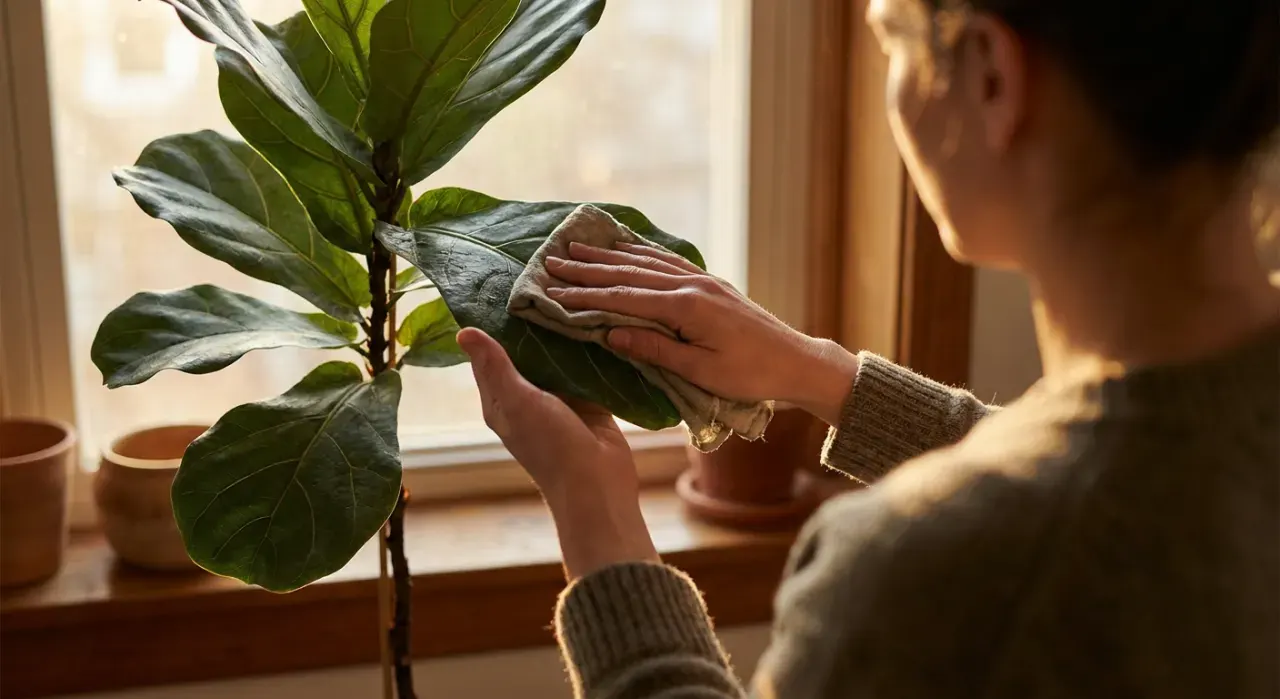
When it is time, water deeply rather than in little sips. Pour water evenly over the whole surface until it flows out the drainage holes, which wets the entire root ball and flushes out accumulated salts. Then let the pot drain completely and tip out any water that collects in the saucer.
Shallow, frequent splashes are a common mistake: they wet only the top layer, so the deep roots stay dry while the surface stays perpetually damp, which invites fungus gnats and rot. Deep, thorough watering followed by a proper dry-down is the rhythm monsteras want. Room-temperature water is gentler than cold, and if your tap water is heavily chlorinated, letting it sit out overnight helps.
Watering a monstera by season
A monstera's thirst swings with the seasons, and adjusting for that is the biggest single improvement most people can make. In the bright, warm months it grows actively and drinks quickly; in the short, cool days of winter it slows down and needs far less.
| Season | Typical frequency | Why |
|---|---|---|
| Spring | Every 7 to 10 days | Active growth resumes, water use climbs |
| Summer | Every 5 to 10 days | Peak growth, heat, and light |
| Fall | Every 10 to 14 days | Growth slows as light drops |
| Winter | Every 14 to 21 days | Semi-dormant, low light, minimal use |
The winter figures are where most overwatering happens. A schedule that was correct in July will drown the plant in January, because the soil stays wet far longer in cool, dim conditions. Always confirm with the finger test, and expect to water noticeably less in winter.
What changes how often you water a monstera
Two identical monsteras in different homes can need very different watering. The main variables:
- Light. More bright, indirect light means faster growth and faster drying, so a monstera in a bright spot drinks more often than one in shade. See how much light do houseplants need.
- Pot type and size. Terra cotta dries faster than plastic or glazed ceramic. A large pot holds more water and dries slower than a small one.
- Soil mix. A chunky, airy aroid mix drains fast and needs more frequent watering than a dense mix — but the dense mix is the one that rots roots.
- Temperature and humidity. Warm, dry rooms dry the soil faster; cool or humid rooms slow it down.
- Plant size. A large, mature monstera with a full root system uses water faster than a small one.
Signs of overwatering
Overwatering is the leading cause of monstera trouble, and it is worth recognizing early. The classic signs are yellowing leaves, usually starting low on the plant, dark brown spots often ringed with yellow, a soft or mushy stem base, damp soil that stays wet for many days, and a musty smell. Left unchecked, the roots rot and the plant declines.
If you suspect it, stop watering and let the soil dry out. If the plant does not recover, unpot it and check the roots: healthy roots are firm and white or tan, while rotted ones are brown, black, soft, and foul-smelling. Trim away the rot with clean scissors and repot into fresh, well-draining mix in a pot with drainage. Our ranked mixes are in best potting mix for houseplants, and the recovery process is in how do you save an overwatered plant.
Signs of underwatering
Underwatering is easier to fix but still worth reading correctly, so you do not mistake it for overwatering and react the wrong way. A thirsty monstera has dry soil that pulls away from the pot edges, limp or drooping leaves, curling foliage, and crispy brown leaf edges rather than the soft yellowing of overwatering. The pot feels notably light.
The remedy is a thorough watering, and if the soil has gone so dry it repels water and runs straight through, bottom-water the plant by setting the pot in a basin of water for 20 to 30 minutes so the root ball rehydrates fully. Then return to the finger-test routine. An occasional underwatering is far less harmful than chronic overwatering, so if you must err, err on the dry side.
Quick troubleshooting
| Symptom | Soil state | Meaning and fix |
|---|---|---|
| Yellow leaves, soft stem | Wet, musty | Overwatering; dry out, check roots, repot if rotted |
| Yellow leaves, crispy edges | Dry, pulling from pot | Underwatering; soak thoroughly, bottom-water if needed |
| Brown spots with yellow halos | Wet | Root rot starting; ease off water immediately |
| Brown crispy leaf tips | Dry, low humidity | Water more consistently; raise humidity |
| Drooping but soil moist | Wet | Roots stressed; stop watering, improve drainage |
| Small flies around the pot | Chronically wet surface | Let the top dry between waterings; see the fungus gnat guide |
Master the finger test and adjust for the seasons and your monstera will rarely give you watering trouble. For the closely related question answered in more depth, see how often should you water a monstera, and if gnats appear, how to get rid of fungus gnats covers the fix. Everything else is at the houseplants and indoor greenery hub.