 Garden

Affiliate Disclosure
Some links on this page are affiliate links. As an Amazon Associate, we earn from qualifying purchases — at no extra cost to you. We do not buy, test, or physically handle the products we cover; our rankings come from aggregated owner reviews, ratings and expert consensus. Commissions never change our verdicts. How we rank · full disclosure.
The short answer: the XLUX soil moisture meter is the plant moisture meter to buy for most people, because it does the one job that prevents the number-one killer of houseplants — overwatering — and it has been the battery-free benchmark since 2015. Buy the Dr.meter as an equally simple alternative, the instant-read two-pack to keep one meter indoors and one out, and the long-probe XLUX for deep pots and raised beds.
A plant moisture meter has one job, and it is a valuable one: telling you whether the soil at the root zone is dry, moist or wet, so you stop overwatering out of anxiety and stop underwatering out of forgetfulness. It is not a precision instrument — the scale is relative and readings shift with soil type — but as a dry-moist-wet indicator it is reliable, cheap and battery-free. This page ranks six on accuracy for that job, probe quality and reach. None of it is plant-health advice for a plant that is already struggling.
What Actually Matters in a Moisture Meter
Four things decide whether a meter is worth keeping in the pot cupboard:
- Reliable dry-moist-wet reading. The scale is relative, not calibrated, so what matters is that it clearly distinguishes dry from wet at the root zone. That is all it needs to do to prevent overwatering.
- Probe material and design. An anti-rust stainless probe lasts; a bare steel one corrodes. A single probe damages roots less than a twin-probe design pushed in repeatedly.
- Reach. A standard probe samples the top few inches; a long probe reaches the root zone in deep pots and raised beds. Match it to your containers.
- Battery-free simplicity. Nothing to charge, leak or replace. Every meter here runs without a battery, which is the durable, low-fuss design.
The Moisture Meters at a Glance
Our #1 Pick: XLUX Soil Moisture Meter
The XLUX wins because it is the meter that defined the category and still leads it — a simple, durable tool that answers the single most useful question in houseplant care.
What it does better than the others. It is trusted, and that is not a small thing for a $9 tool. On the market since 2015, it has accumulated one of the largest and steadiest review bases of any garden gadget, which is the closest a research site gets to proof that a design works. It is battery-free, so there is nothing to charge or replace; its 304 stainless-steel probe resists the rust that eats cheaper meters; and its large dial reads instantly and clearly, so you push it into the root zone, wait a moment, and know whether to water. The single-probe design also damages roots less than the twin-probe testers.
Consensus Score █████████░ 9.0 — the deepest and longest-standing owner consensus in the category.
Where it is weak. Like every meter here, its scale is relative rather than a calibrated percentage, so read it as dry-moist-wet, not as a precise figure. The standard probe only reaches a few inches, so deep pots and raised beds want the long-probe version. And it measures moisture only — if you also want a rough light and pH reading, the SONKIR 3-in-1 covers that, albeit less precisely.
Check price on Amazon → (paid link)
The Moisture Meters, Ranked
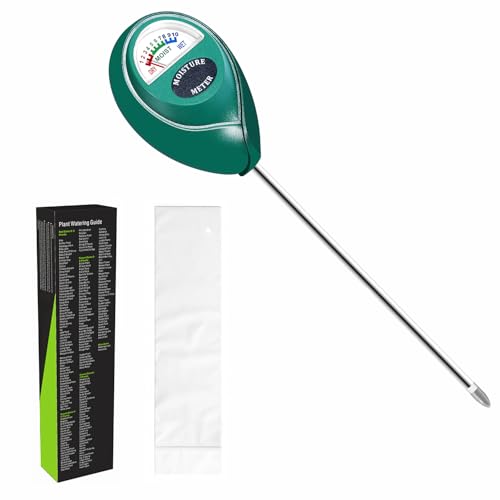
Best for the single most-trusted way to stop guessing whether a houseplant needs water
- Battery-free — nothing to charge or replace
- Anti-rust 304 stainless-steel single probe
- Clear, large dial that reads instantly
- On the market since 2015 with a huge review base
Why buy it: Overwatering kills more houseplants than anything else, and a probe reading of the root zone settles the question in seconds. Battery-free and stainless-probed, the XLUX is the category benchmark since 2015.
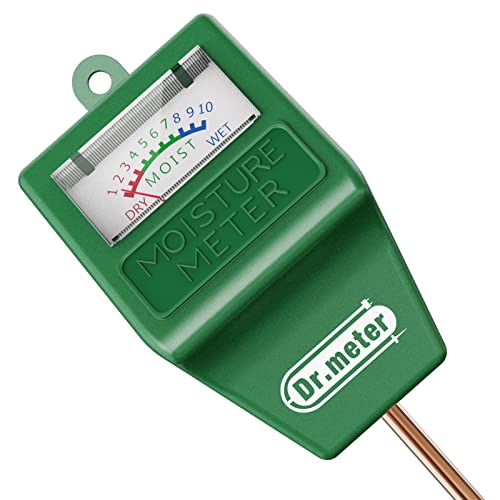
Best for a reliable single-probe meter for houseplants, garden beds and the greenhouse
- Battery-free hygrometer probe
- Reads moisture at the root zone, not the surface
- Works indoors, in the garden and under glass
- Long-standing model with a deep review base
Why buy it: A close alternative to the XLUX with the same battery-free simplicity and a long track record. If the XLUX is out of stock or you want a second unit for the garden, this is the safe equivalent.

Best for leaving one meter by the houseplants and one out in the garden or greenhouse
- Two meters for barely more than one
- No battery required, instant root-zone read
- Easy-to-read moisture scale
- Amazon’s Choice with a solid rating
Why buy it: Two meters for roughly the price of one means you keep a dedicated unit indoors and another outside, so you never carry soil between pots on the probe. The cheapest per-meter option here.

Best for a gardener who also wants a rough light and pH reading from one probe
- Reads soil moisture, light level and pH
- Battery-free twin-probe design
- Toggle switch between the three modes
- Suits garden, lawn, farm and potted plants
Why buy it: The versatile pick: one tool for moisture, a rough light reading and an indicative pH. Treat the light and pH as ballpark rather than lab-grade, but for a gardener juggling beds and pots it earns its keep.

Best for the lowest price for a straightforward houseplant moisture check
- Battery-free instant moisture check
- Single probe sized for pots and beds
- Simple dial with no settings to learn
- Large review base for a budget meter
Why buy it: A no-frills single-probe meter at the lowest single-unit price here. It does the one job — telling you whether the root zone is wet, moist or dry — without a battery or a manual to read.

Best for deep pots, raised beds and large planters a short probe cannot reach
- Longer stem reaches deep root zones
- Battery-free with an anti-rust 304 stainless probe
- Same instant-read dial as the standard XLUX
- Single-probe design that limits root damage
Why buy it: The XLUX built for depth: a longer stem reaches the root zone in tall pots, raised beds and large planters where a standard probe only samples the top few inches. Same trusted mechanism, extended reach.
Quick Comparison
| Product | Best for | Rating | Price | Buy |
|---|---|---|---|---|
| XLUX Soil Moisture Meter | Best Overall — XLUX Soil Moisture Meter | — | Check (paid link) | |
| Dr.meter Soil Moisture Meter | Best Trusted Runner-Up — Dr.meter | — | Check (paid link) | |
| 2-Pack Soil Moisture Meter | Best Two-Pack — Instant-Read Pair | — | Check (paid link) | |
| SONKIR MS02 3-in-1 Soil Tester | Best 3-in-1 — SONKIR MS02 | — | Check (paid link) | |
| Gouevn Soil Moisture Meter | Best Budget Single — Gouevn | — | Check (paid link) | |
| XLUX Long-Probe Soil Moisture Meter | Best Long Probe — XLUX Long-Probe | — | Check (paid link) |
How to Choose Between Them
Start with what you want to measure. If it is only moisture — which is what stops overwatering — the XLUX, Dr.meter or Gouevn single-probe meters are all you need. If you also want a rough light and pH reading for garden beds, the SONKIR 3-in-1 does three jobs from one probe, as long as you accept the light and pH numbers as ballpark rather than lab-grade.
Then think about how many and how deep. One meter shared across a collection is fine; a two-pack lets you keep one indoors and one outside so you never carry wet soil between them on the probe. For deep pots, large planters or raised beds, the long-probe XLUX reaches the root zone that a standard meter only guesses at.
Finally, use it well. Push the probe to root depth, not the surface; check a couple of spots; and wipe it clean and dry afterward to prevent rust and to avoid carrying pathogens between plants. A moisture meter pairs naturally with a self-watering pot for hands-off watering, and with a plant mister for the leaves — the soil reading tells you what the plant actually needs.
How We Rank Moisture Meters
We do not buy, probe or physically handle these meters. Our ranking is built from the consensus of people who own them. We read aggregated star ratings across the full review base rather than a flattering handful, and we weight long-tail reviews — those written months in — more heavily, because a meter’s real test is whether the probe resists corrosion and the needle keeps reading true after a season of use. We check published specifications directly: probe material, single or twin probe, probe length, what the meter measures and whether it needs a battery. We are candid that all of these are relative-scale indicators rather than calibrated instruments. Prices were current at the time of writing. Full method on how we rank.
Which One Is Right for You
The trusted default for houseplants? XLUX. An equally simple alternative? Dr.meter. One meter indoors and one out? The instant-read two-pack. Moisture plus rough light and pH? SONKIR MS02 3-in-1. The cheapest single unit? Gouevn. Deep pots and raised beds? The long-probe XLUX. Read every meter as dry-moist-wet, probe to root depth, and wipe it clean between plants.
The Verdict
The XLUX soil moisture meter is the one we would tell a friend to buy: battery-free, stainless-probed, trusted since 2015, and pointed squarely at the mistake that kills most houseplants. Choose the Dr.meter as an equal alternative, the two-pack to cover indoors and out, the SONKIR 3-in-1 for rough light and pH too, and the long-probe XLUX for deep containers. Pair the reading with the right pot from our best self-watering pots guide, and dig into the wider houseplants hub and full resource library for the rest of watering done right. Check the current XLUX price on Amazon → (paid link)