 Garden

Affiliate Disclosure
Some links on this page are affiliate links. As an Amazon Associate, we earn from qualifying purchases — at no extra cost to you. We do not buy, test, or physically handle the products we cover; our rankings come from aggregated owner reviews, ratings and expert consensus. Commissions never change our verdicts. How we rank · full disclosure.
The short answer: for most climbing houseplants, buy the Craft911 bendable moss pole — it is firm enough to hold a heavy plant upright yet shapeable so you can curve it to follow the growth. Choose a stackable 16in coir set if you want to add height as the plant climbs, or the Soupiar aluminum-core pole for a humid spot where rust is a worry.
A moss pole is the difference between a climbing plant that sprawls across the floor and one that stands up as a statement. Monstera, pothos and philodendron are all natural climbers, and given something to grip they grow taller, fuller and — for monstera especially — with the big, split leaves people buy them for. The differences between poles come down to grip, height, sturdiness and how easily they extend, and this page ranks them on exactly that.
Moss Poles at a Glance
Our #1 Pick: The Craft911 Bendable Moss Pole
The Craft911 bendable pole wins here because it solves the problem rigid poles create. A straight, stiff stake can only support a plant that grows straight up, and real climbers rarely do — they lean, curve and change direction. A bendable pole follows the plant instead of forcing it, which is why it earns the top spot.
What it does better than the others. It is firm and shapeable at the same time. The internal core holds whatever curve or arch you set, so you can guide a leaning monstera back upright or train a pothos around a corner, and it stays put. Yet it is sturdy enough that a top-heavy plant does not drag it over — the single most common complaint about cheap poles, that they buckle or flop under a mature plant, is the thing this one is built to avoid.
At 29 inches it suits a maturing plant well, and the two-pack means a second climber is already covered. It is also cheap, which matters because most growers end up needing more than one.
Consensus Score ████████░░ 8.8 — the moss pole most often praised for staying firm under a heavy plant while still bending to shape.
Where it is weak. At a fixed 29 inches it is not a stacking system, so a very large plant will eventually outgrow it — for that, a stackable coir set is the better long-term buy. And like any coir pole, it grips best when kept lightly damp.
Check price on Amazon → (paid link)
The Moss Poles, Ranked

Best for most climbing houseplants that need a firm, shapeable support
- Bendable core holds a curve or an arch, not just a straight line
- 29 inches tall, suiting a maturing plant
- Two poles per pack for a second plant
- Sturdy enough to stop a heavy plant flopping
Why buy it: A bendable pole does what a rigid one cannot — you can shape it to follow the plant, so it supports the growth rather than fighting it.
Best for a fast climber you will keep extending as it grows
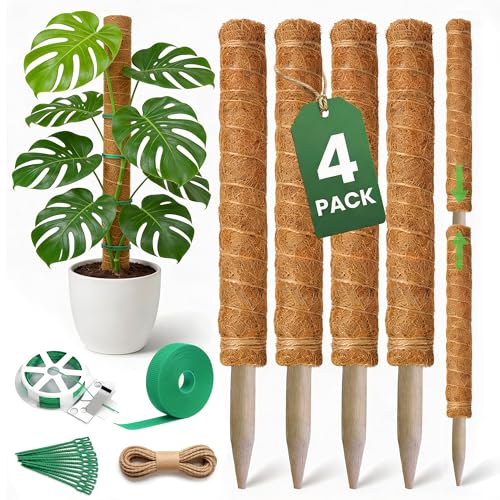
- Four 16in sections stack up to 48 inches total
- Coco coir surface for aerial roots to grip
- Add height in stages rather than repotting
- Includes ties and accessories to attach growth
Why buy it: Instead of buying a taller pole every few months, you stack another section on top — the tidy answer for a plant that keeps climbing.

Best for a large, established climber that needs real height
- Builds to 47.5 inches from four 16in sections
- Coco coir totem for aerial-root attachment
- Suited to monstera, pothos and philodendron
- Multiple sections for staged height
Why buy it: When a plant has outgrown short stakes, this gives it nearly four feet of coir to climb, enough for a genuinely large specimen.

Best for two climbers needing a shapeable coir pole on a budget
- Bendable core for curving to the plant
- 28 inches tall per pole
- Coco coir surface for aerial roots
- Two poles for the price of one branded single
Why buy it: The same shapeable, coir-covered support as pricier poles, in a two-pack that keeps the cost per plant low.

Best for the lowest-cost way to support a small climbing plant
- Two 15in totems combine to 30 inches
- Includes 65 feet of twist tie to secure growth
- Coir surface for roots to grab
- Lowest price on this page
Why buy it: A no-frills coir totem with a generous roll of ties, for growers who just need to get a young plant climbing without spending.

Best for a humid spot or a heavy plant where a rust-proof core matters
- Rust-free aluminum core resists moisture
- Bendable to shape around the plant
- 28 inches tall with jute rope included
- Sturdy enough to train a top-heavy climber
Why buy it: The aluminum core means it will not rust in the constant damp a moss pole lives in, and it stays firm under a heavy, top-heavy plant.
Quick Comparison
| Product | Best for | Rating | Price | Buy |
|---|---|---|---|---|
| Craft911 29in Moss Pole, Bendable Plant Support Stakes for Climbing Plants (2-Pack) | Best Overall — Craft911 Bendable | — | Check (paid link) | |
| 16in Moss Pole, Stackable up to 48in, Coco Coir Pole Sticks & Accessories (4-Pack) | Best Stackable — 16in Coir Set | — | Check (paid link) | |
| Fabulas 47.5in Moss Pole, Coco Coir Sticks for Climbing Potted Plants (4 x 16in Packs) | Best Tall Coir — Fabulas 47.5in | — | Check (paid link) | |
| K-Brands 28in Bendable Moss Pole, Coco Coir Pole Sticks & Trellis for Climbing Plants (2-Pack) | Best Value Bendable — K-Brands 28in | — | Check (paid link) | |
| JOYSEUS 30in Coir Totem Moss Pole with 65ft Garden Twist Tie (2 x 15in) | Best Budget Totem — JOYSEUS 30in | — | Check (paid link) | |
| Soupiar 28in Bendable Moss Pole, Rust-Free Aluminum Core with Jute Rope (2-Pack) | Best Rust-Free Core — Soupiar Aluminum | — | Check (paid link) |
How to Choose a Moss Pole
Four questions cover it:
- Straight climber or a leaning one? A bendable pole shapes to a plant that curves; a rigid coir totem is fine for one that grows straight up.
- How big will it get? For a plant that keeps climbing, a stackable set lets you add height without repotting. For a large established plant, start tall.
- How humid is the spot? A rust-free aluminum core, like the Soupiar, resists the constant damp a moss pole lives in.
- How many plants? Multi-packs bring the cost per pole right down, and most collections need more than one.
Whatever you pick, set it firmly to the base of the pot, tie the stem loosely at intervals, and keep the surface lightly damp to help aerial roots grip. More on training and staking climbers is in the houseplants hub.

How We Researched These
We do not buy, test or physically handle moss poles. We read the record owners and manufacturers leave. Star ratings are read across the whole review base, because a pole praised in early photos but later reported to buckle or shed coir is not a safe buy. We weight the reports that matter for a support — whether it stayed firm under a mature plant, whether aerial roots actually gripped, and how easily it extended — over first-impression reviews. Published height and material claims are checked against what long-term owners describe. Prices were current at the time of writing. Full method on how we rank.
Related Houseplant Guides
If your climber is specifically a monstera, the best moss pole for monstera guide narrows the field to poles sized and built for that plant. Repotting a climber onto its pole is also a good moment to refresh its soil — see best potting mix for indoor plants — and everything else lives in the houseplants hub.
The Verdict
For most climbing houseplants, the Craft911 bendable moss pole is the one we would recommend first: firm under a heavy plant, yet shapeable enough to follow real growth. Extend as the plant climbs with a stackable 16in coir set, go tall for a big specimen with the Fabulas 47.5in, and choose the Soupiar aluminum-core pole for a humid spot. Check the current Craft911 price on Amazon → (paid link)