 Garden
Affiliate Disclosure
Some links on this page are affiliate links. As an Amazon Associate, we earn from qualifying purchases — at no extra cost to you. We do not buy, test, or physically handle the products we cover; our rankings come from aggregated owner reviews, ratings and expert consensus. Commissions never change our verdicts. How we rank · full disclosure.
The short answer: a fiddle leaf fig needs bright light (including some direct morning sun), consistent watering when the top 2 inches of soil dry out, warmth and stability with no cold drafts or sudden moves, and well-draining soil in a pot with drainage. The single biggest secret is consistency: these plants hate change and punish it with dropped leaves and brown spots. Pick one bright, stable spot, keep watering even, and resist the urge to fuss.
Fiddle leaf figs (Ficus lyrata) are dramatic statement plants with large, violin-shaped leaves, and they have earned a reputation for being temperamental. They are not truly difficult, but they are unforgiving of neglect and inconsistency in a way that easier plants are not. Our guidance reflects horticultural consensus rather than first-hand lab testing, as explained in how we rank.
Light: the make-or-break factor
More than anything else, a fiddle leaf fig needs strong light, and most struggling plants are simply too dim.
- Give it bright light, ideally a few hours of gentle direct morning sun plus bright indirect light the rest of the day. An east or south-facing window is usually best.
- Acclimate gradually to any direct sun. Harsh, unaccustomed afternoon sun through glass can scorch the leaves, so introduce brighter light over a couple of weeks.
- Rotate the plant a quarter turn every week or two so it grows evenly rather than leaning.
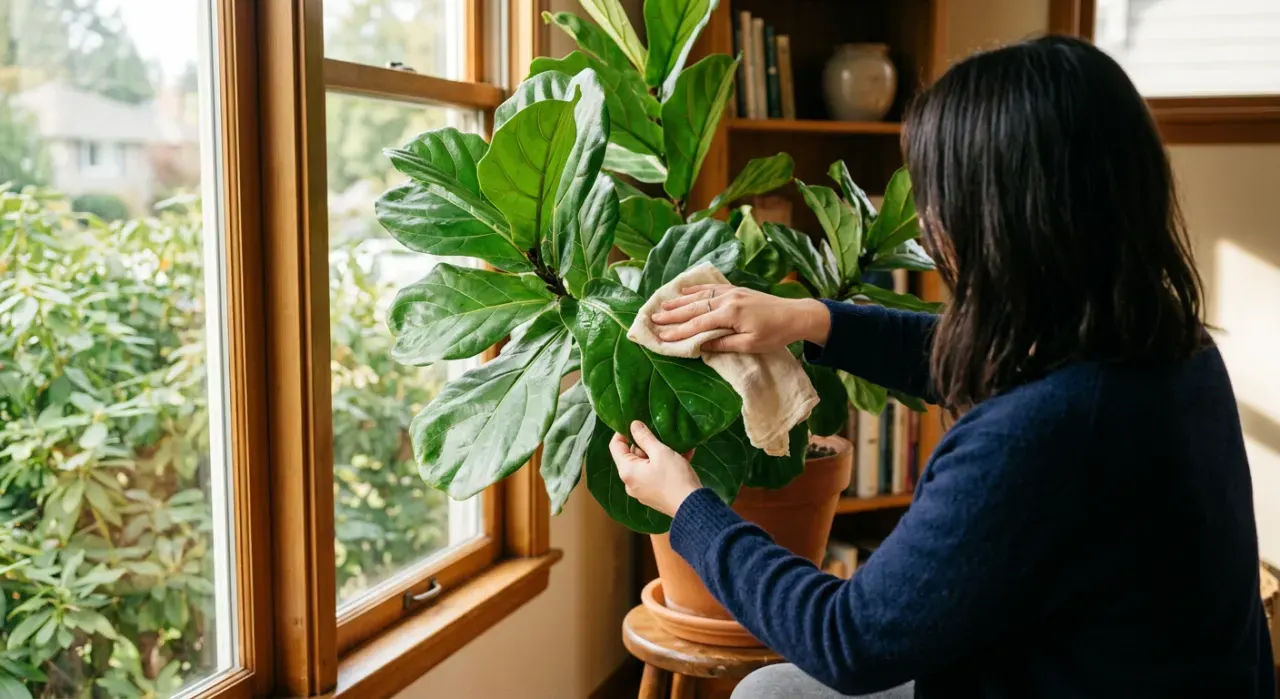
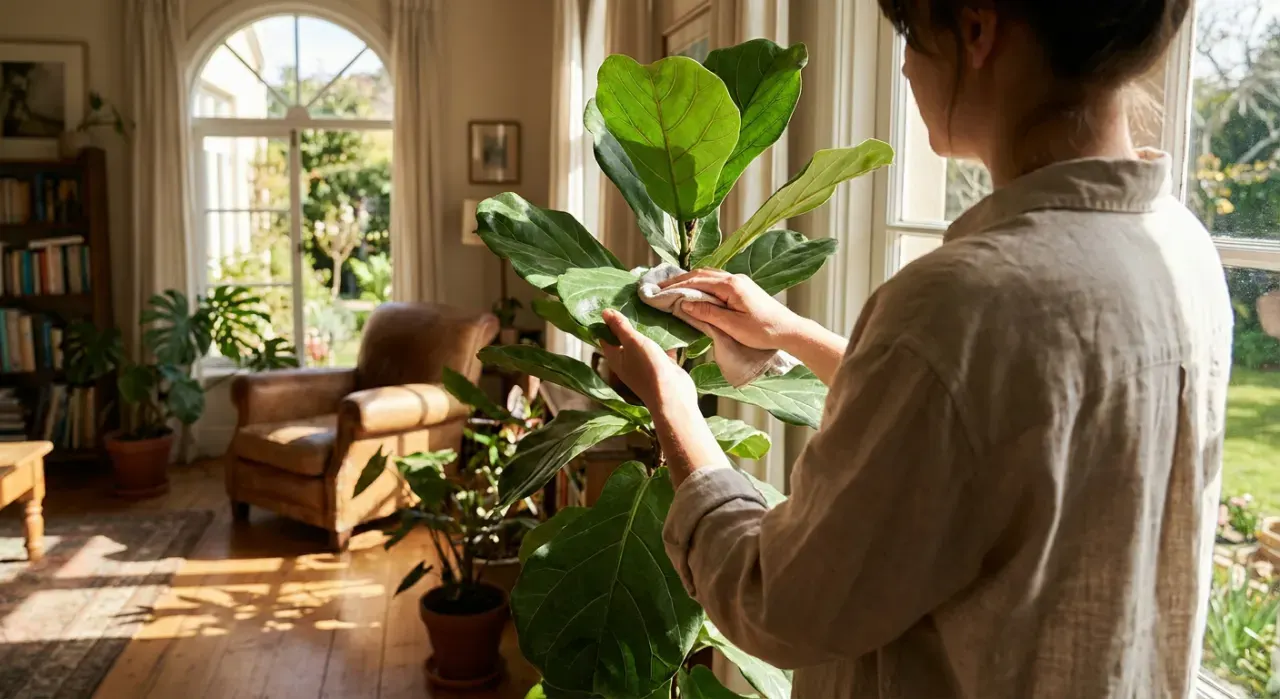
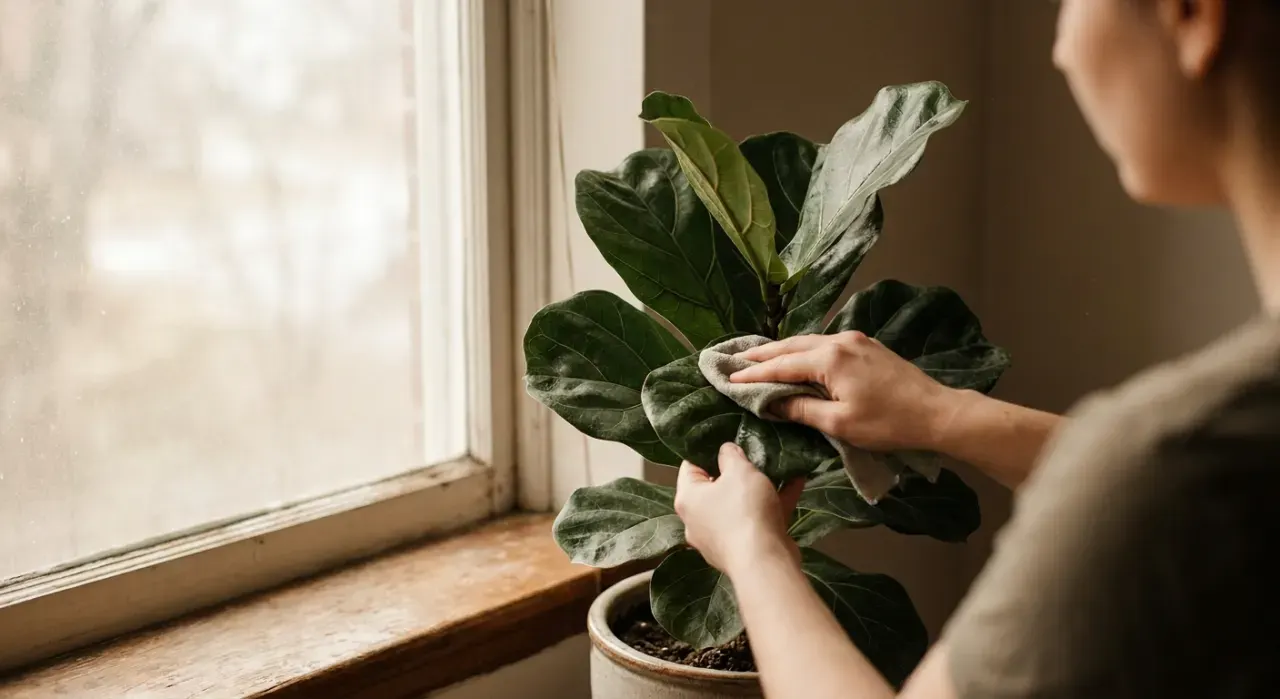
- Dust the leaves regularly. The big leaves collect dust that blocks light; wipe them with a damp cloth to keep them working.
In a dim room, no amount of careful watering will keep a fiddle leaf fig looking good. A strong grow light genuinely helps; see options in best grow lights for indoor plants.
Watering a fiddle leaf fig for consistency
Even watering, neither drought nor flood, is what these plants want.
- Water when the top 2 inches of soil are dry, usually every 7 to 10 days, always checking by feel first.
- Water thoroughly until it drains from the bottom, wetting the whole root ball, then empty the saucer.
- Avoid extremes. Letting it dry to a crisp and then flooding it is a leading cause of brown spots and leaf drop.
- Ease off in winter, when growth slows and the soil stays wet longer.
Detailed timing is in how often to water a fiddle leaf fig.
Soil and pots for a fiddle leaf fig
Good drainage protects the roots from the rot these plants are prone to.
- Use a well-draining mix, such as a quality houseplant or indoor tree mix with added perlite or bark for aeration.
- Choose a pot with a drainage hole, sized just a little larger than the root ball. Over-potting holds too much wet soil.
- Repot every 1 to 2 years in spring, or top-dress a very large plant by replacing the top few inches of soil when moving it is impractical.
See suitable blends in our best potting mix for houseplants roundup.
Temperature, humidity, and stability
Fiddle leaf figs want steady, warm conditions and hate abrupt change.
- Temperature: keep them between 60 and 75 F. Avoid cold drafts, drafty doors, and hot or cold vents, all of which trigger leaf drop.
- Humidity: they prefer 40 to 60 percent. A humidifier or pebble tray helps in dry winter homes far more than misting does.
- Stability above all: once the plant is happy in a bright spot, leave it there. Moving it, even a few feet, often causes a round of leaf drop while it readjusts.
Feeding a fiddle leaf fig for growth
These fast growers benefit from regular feeding in the growing season.
- Feed every 2 to 4 weeks in spring and summer with a balanced houseplant fertilizer, or a formula slightly higher in nitrogen to support the big leaves.
- Stop feeding in fall and winter, when growth slows.
- Do not overfeed. Too much fertilizer burns the roots and browns the leaf edges; flush the pot occasionally with plain water.
Gentle balanced options are in our best indoor plant fertilizer picks.
Encouraging new leaves and branching
Once a fiddle leaf fig is stable and growing, you can shape it into a fuller, tree-like plant.
- Feed the growth engine: the fastest route to new leaves is plenty of light, consistent watering, and regular feeding through spring and summer. A plant that only maintains its existing leaves is usually short on one of these.
- Prune to branch: a fiddle leaf fig naturally grows as a single stem unless prompted. Cutting off the top few inches of the main stem forces it to send out side branches below the cut, turning a bare pole into a branching tree. Do this in spring, and expect the plant to sulk briefly before pushing new growth.
- Notching is a gentler alternative: making a small cut about a third of the way into the stem just above a node can trigger a branch at that point without removing the top.
- Wobble for strength: a fiddle leaf fig grown indoors with no wind develops a weak trunk. Gently flexing the trunk by hand for a minute a few times a week, or staking it only loosely, encourages it to thicken and stand on its own.
Repotting and root health
Because rot is the fiddle leaf fig's biggest threat, healthy roots and the right repotting rhythm matter.
- Repot every 1 to 2 years in spring, moving up just one pot size. A pot far larger than the root ball holds excess wet soil and invites rot.
- Check the roots when you repot: healthy roots are firm and pale, while brown, mushy, or foul-smelling roots signal rot that should be trimmed away before replanting in fresh mix.
- Top-dress instead for very large plants that are impractical to lift: scrape off the top few inches of old soil each spring and replace it with fresh mix to renew nutrients.
- Use a pot with drainage every time, and never let the plant stand in a saucer of water after watering.
Diagnosing brown spots and drop
The most common complaints have distinct causes worth learning to read.
| Symptom | Likely cause | Fix |
|---|---|---|
| Dark brown or black spots from the center, soft leaves | Overwatering, root rot | Let the soil dry, check and trim roots, repot in fresh mix |
| Tan, crispy spots at the edges | Underwatering, dry air, or sunburn | Water more consistently, raise humidity, shield from harsh direct sun |
| Dropping leaves | Stress from a move, draft, or watering change | Settle in one bright, stable spot; keep watering even; be patient |
| Leggy, bare lower stem | Too little light | Move to brighter light; notch or prune to encourage branching |
| No new growth | Low light or dormancy | Increase light; expect slower growth in winter |
A fiddle leaf fig is genuinely rewarding once it settles, growing into a tall, sculptural centerpiece that anchors a room. The whole game is bright light plus consistency, so choose the spot carefully and then leave it be. For fine-tuning the watering that trips most people up, see how often to water a fiddle leaf fig, and to multiply it, how to propagate a fiddle leaf fig. Everything else is at the houseplants and indoor greenery hub.