 Garden
Affiliate Disclosure
Some links on this page are affiliate links. As an Amazon Associate, we earn from qualifying purchases — at no extra cost to you. We do not buy, test, or physically handle the products we cover; our rankings come from aggregated owner reviews, ratings and expert consensus. Commissions never change our verdicts. How we rank · full disclosure.
To care for a rubber plant, give it bright indirect light, water only when the top inch or two of soil has dried out, keep it warm and away from drafts, and wipe its glossy leaves clean every few weeks. The rubber plant (Ficus elastica) is a striking, low-fuss houseplant that can grow from a tabletop specimen into a small indoor tree. Its reputation for dropping leaves scares off some beginners, but that drop is almost always a response to overwatering or sudden change — fix those, and it is one of the more resilient large-leaved plants you can grow.
This guide covers light, watering, soil, feeding, cleaning, common problems and the milky sap. Our advice reflects the consensus of experienced growers and extension resources rather than first-hand trials; see how we rank.
Light for a Rubber Plant
Rubber plants want bright, indirect light. The sweet spot is near an east or west window with gentle morning or late sun, or a few feet back from a bright south window out of the harsh midday beam. They tolerate medium light but respond with slower, leggier growth and duller leaves.
The colored varieties are hungrier for light. Burgundy (Ficus elastica 'Burgundy') keeps its deep near-black tones best in strong indirect light, and the variegated 'Tineke' and 'Ruby' need plenty of bright light to hold their cream, pink and green patterns — in dim conditions the variegation fades toward plain green. Rotate the plant a quarter turn weekly so it grows evenly instead of leaning toward the window. For reading light levels in your home, see how much light do houseplants need.
Watering a Rubber Plant
Overwatering is the leading cause of rubber plant trouble, so the rule is simple: water when the top inch or two of soil is dry, then water thoroughly and let it drain.
- Check first. Push a finger into the soil; if the top inch or two is still damp, wait.
- Water deeply. Pour until water runs from the drainage holes, wetting the whole root ball.
- Drain completely. Empty the saucer — never let the pot stand in water.
In practice this means roughly weekly in spring and summer and every 10 to 14 days in winter, but always driven by the soil, not the schedule. Cut back clearly in the cool, low-light months when the plant uses far less water. Yellowing lower leaves that drop usually mean too much water; see yellow leaves on houseplants and, if you have gone too far, how do you save an overwatered plant.
Soil and potting
Use a well-draining potting mix — a standard houseplant mix with extra perlite works well, keeping roots aerated so they never sit in water. Always plant in a pot with drainage holes. Rubber plants like to be a little snug and do not need frequent repotting; move up one pot size every couple of years, or when roots circle the pot or push out the drainage holes, ideally in spring. Fresh mix every couple of years refreshes nutrients even if you keep the same pot. The general method is in how to repot a houseplant, and mix options in best potting mix for houseplants.
Temperature and humidity
Rubber plants are comfortable in normal home temperatures of about 60 to 80 F and dislike cold. Keep them away from cold drafts, single-pane windows in winter, and the blast of heating and air-conditioning vents — sudden temperature swings are a classic trigger for leaf drop. They tolerate average household humidity but appreciate a bit more; the occasional leaf wipe or a nearby humidifier keeps the foliage looking its best in dry winter air.
Feeding a Rubber Plant
Feed during the growing season, spring through summer, with a balanced liquid houseplant fertilizer at about half strength every few weeks, and stop in fall and winter when growth slows. Rubber plants are not heavy feeders, and over-fertilizing does more harm than under-feeding, showing up as leaf-tip burn or salt crust on the soil. If you see crust, flush the pot with plain water. Options are covered in best indoor plant fertilizer.
Cleaning and pruning
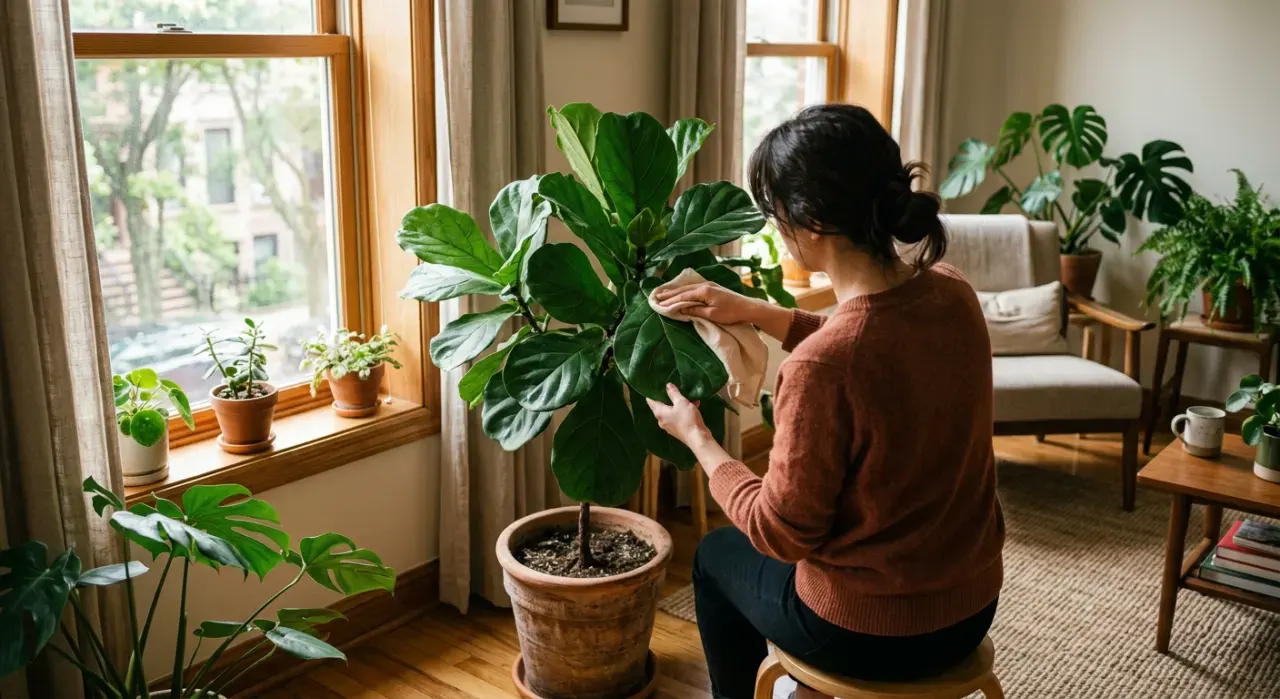
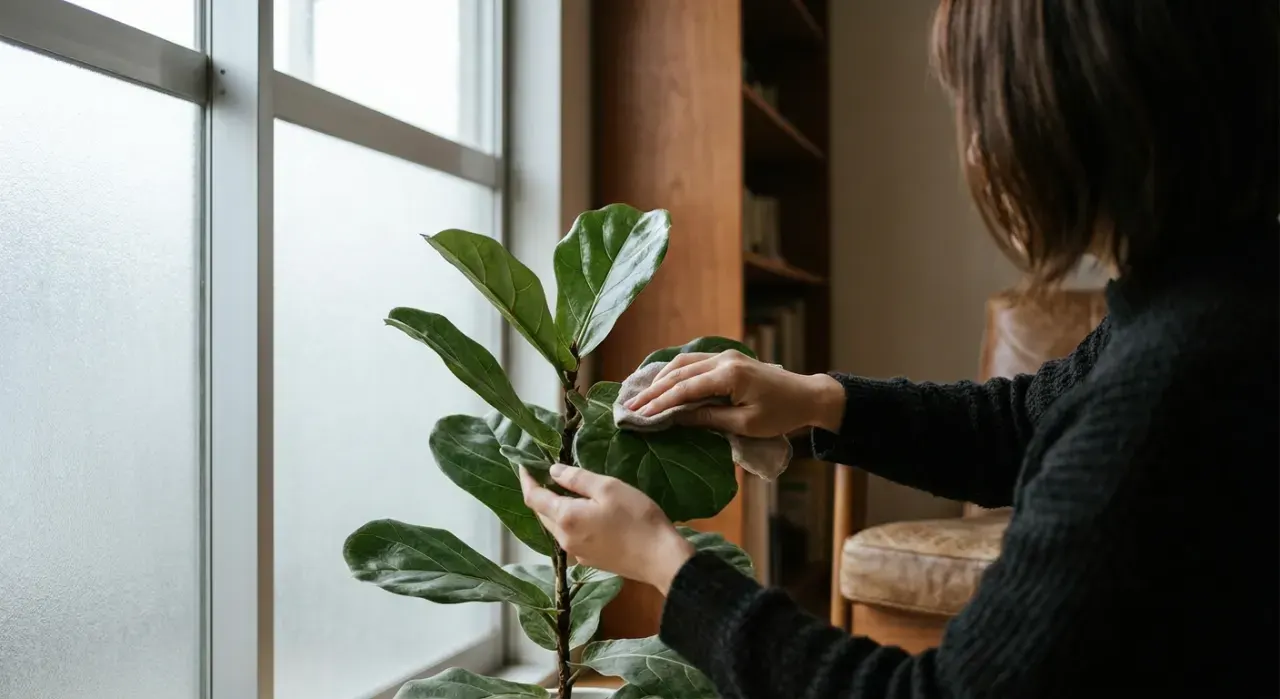
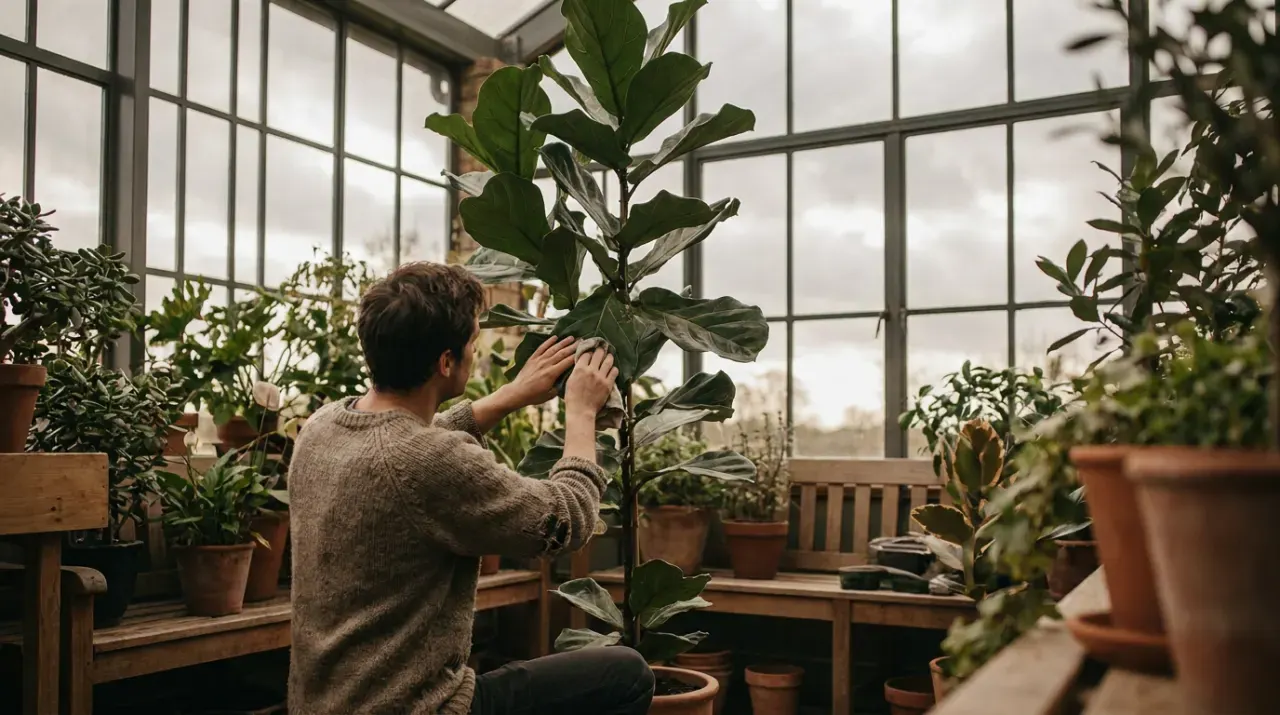
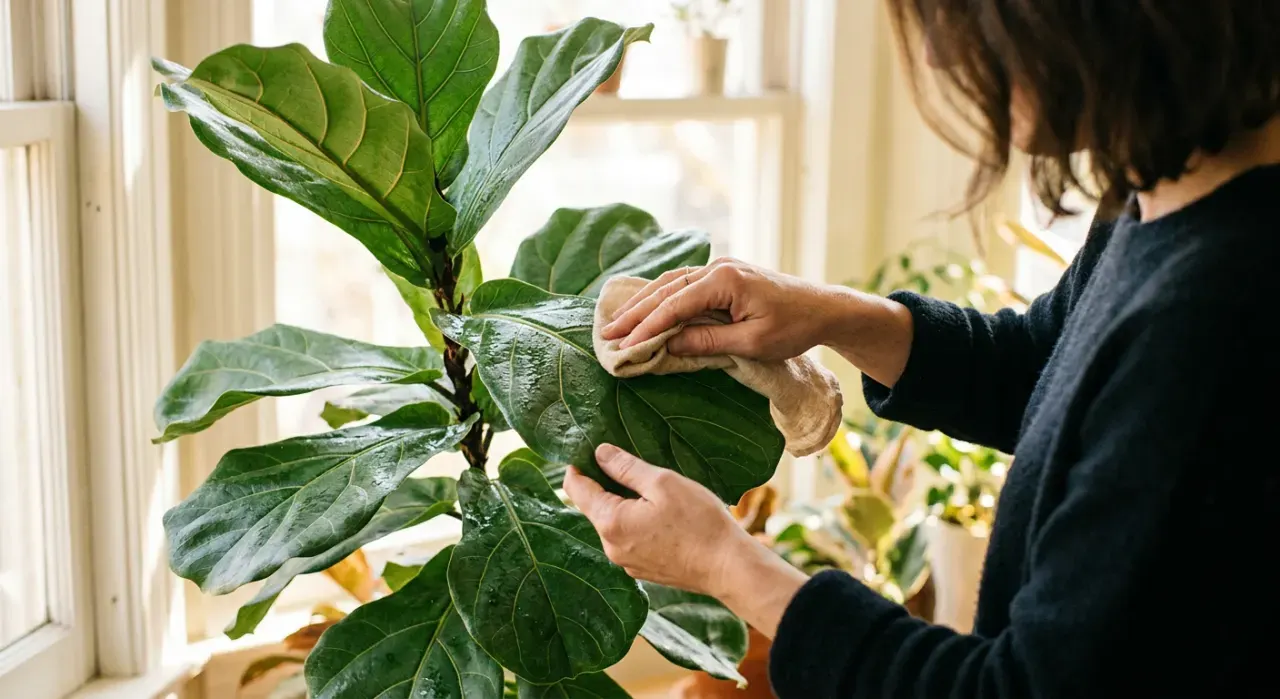
Those big, glossy leaves are the plant's signature, and they collect dust that dulls the shine and blocks light. Wipe both sides of each leaf with a soft, damp cloth every few weeks, which keeps them photosynthesizing efficiently and lets you catch pests early. Skip leaf-shine sprays, which can clog the pores.
Prune to control height, encourage branching, or remove damaged growth. Cutting the top prompts the plant to branch below the cut, turning a single tall stem into a fuller shape — the milky sap will weep, so wear gloves and blot the cut. Full technique is in how to prune a rubber plant, and the trimmings can become new plants via how to propagate a rubber plant.
The sap and pet safety
Any cut on a rubber plant releases a milky white latex that can irritate skin and, in people with latex sensitivities, trigger a reaction. The plant is also mildly toxic to pets and people if eaten, causing mouth and stomach irritation. It is a perfectly good houseplant to keep — just wear gloves when pruning, wash up afterward, and keep it away from pets and small children who might chew the leaves. For the wider picture, see which common houseplants are toxic to cats.
Pests to watch for
Rubber plants are fairly pest-resistant, but their big leaves can host a few common houseplant pests, and the leaf-wiping habit is your first line of defense because it lets you catch them early. The usual suspects:
- Scale — small, brown, immobile bumps along stems and leaf undersides, often with a sticky residue (honeydew). Scrape them off and treat with insecticidal soap or dab with rubbing alcohol on a cotton swab.
- Spider mites — tiny specks with fine webbing, thriving in dry air and causing stippled, dull leaves. Rinse the plant, raise humidity, and treat with insecticidal soap or neem oil.
- Mealybugs — white, cottony clusters in leaf joints. Wipe off with an alcohol-dipped swab and repeat weekly until gone.
Isolate an infested plant from your others, treat persistently over several weeks since one round rarely gets every generation, and keep humidity reasonable to discourage mites. A clean, well-lit, properly watered rubber plant is far less likely to attract pests in the first place.
Encouraging the shape you want
Left alone, a rubber plant grows as a single upright stem, gradually shedding lower leaves and turning into a tall, bare-legged tree. Whether that suits you is a matter of taste, but if you want a fuller, bushier plant, you shape it deliberately. Topping the main stem — cutting the growing tip above a node — forces the plant to branch below the cut, and repeating this on the new branches builds density over a couple of seasons.
Good light is the other half of the equation: a plant grown in bright indirect light produces sturdy, well-spaced leaves and holds its lower foliage longer, while one in dim light stretches, drops leaves and looks leggy no matter how you prune it. Rotating the pot a quarter turn each week keeps growth balanced instead of leaning. If your plant has already gone tall and bare, you can cut it back hard in spring to rejuvenate it and root the removed top as a new plant. The full method is in how to prune a rubber plant, and propagation of the trimmings in how to propagate a rubber plant.
Common problems and fixes
| Symptom | Likely cause | Fix |
|---|---|---|
| Dropping leaves | Overwatering, drafts, or a move/change | Let the top inch dry; stabilize light and temperature; expect some drop after a move |
| Yellowing lower leaves | Overwatering | Water less; check drainage |
| Brown leaf edges | Dry air, underwatering, or fertilizer salts | Raise humidity, water more consistently, flush salts |
| Leggy, sparse growth | Too little light | Move to brighter indirect light; prune to encourage branching |
| Fading variegation | Not enough light for a colored variety | Give brighter indirect light |
| Small bumps or webbing on leaves | Scale or spider mites | Wipe off, treat with insecticidal soap or neem |
Get the light and the watering right and a rubber plant is a long-lived, sculptural presence that can eventually reach the ceiling.
If you are choosing among the varieties, it is worth knowing they are not all equally easy. The plain green Ficus elastica 'Robusta' is the most forgiving and tolerates lower light and occasional neglect, making it the best pick for a first rubber plant. The dark, dramatic 'Burgundy' is nearly as tough but needs strong indirect light to keep its deep coloring. The variegated 'Tineke' and 'Ruby', with their cream, pink and green marbling, are the most demanding — the variegated portions of the leaf have less chlorophyll, so these plants need more light to thrive and fade toward green in dim spots, and they are a little fussier about consistent watering. Whichever you grow, the fundamentals are the same: bright indirect light, water only when the top inch or two of soil dries, warmth away from drafts, and clean leaves. A rubber plant given those conditions rewards you for years, slowly growing from a tabletop accent into a genuine indoor tree, and pruning lets you keep it at whatever size and shape suits your space. Everything else is at the houseplants and indoor greenery hub.