 Garden

Affiliate Disclosure
Some links on this page are affiliate links. As an Amazon Associate, we earn from qualifying purchases — at no extra cost to you. We do not buy, test, or physically handle the products we cover; our rankings come from aggregated owner reviews, ratings and expert consensus. Commissions never change our verdicts. How we rank · full disclosure.
The short answer: six plants genuinely tolerate a dim room — ZZ plant, snake plant, cast iron plant, pothos, heartleaf philodendron and aglaonema — with parlor palm, peace lily, spider plant and Boston fern close behind. Everything else marketed as low-light is really a medium-light plant that declines slowly enough that nobody blames the label. And the watering rules change completely in a dark room, which is what actually kills most of them.
Low light in horticultural terms means roughly 50 to 250 foot-candles — an interior wall, a north-facing hallway, several feet back from any window. It is far dimmer than it looks, because human eyes compensate beautifully and plants do not. Before you buy from this list, it is worth confirming what you are actually working with using how much light do houseplants need, because plenty of spots people describe as dark measure out as perfectly good medium light.
We never buy or physically handle the products mentioned here; recommendations come from aggregated owner reviews and horticultural consensus, described in how we rank. The wider care picture is at the houseplants and indoor greenery hub.
Tier 1: The Genuinely Tough Six
ZZ plant (Zamioculcas zamiifolia). The undisputed champion. Thick underground rhizomes store water and energy, so it tolerates both deep shade and a month of forgetfulness, and its waxy dark leaves stay glossy in conditions that make everything else pale. In low light it grows very slowly — expect one or two new stems a year rather than a flush — but it holds its looks indefinitely. Water every three to four weeks in dim conditions, and if you are unsure, wait. The commonest ZZ failure by far is overwatering. Toxic to pets if chewed.
Snake plant (Dracaena trifasciata, sansevieria). Nearly as tough, and architecturally more interesting. It runs a form of photosynthesis adapted to arid conditions that lets it open its pores at night, which is part of why it is so drought-hardy. Upright varieties handle dim light better than the low rosette types, and the heavily variegated cultivars lose their yellow margins in deep shade — plain green ones stay truer. Water every three to four weeks in low light, less in winter, and always into mix that has dried completely. Mildly toxic to pets.
Cast iron plant (Aspidistra elatior). Named for exactly this. It was the Victorian parlor plant precisely because it survived gas lamps, cold rooms and neglect, and nothing has improved on it since. Deep green strap leaves, extremely slow growth, and genuine tolerance of light levels that would flatten anything else. It is also completely pet-safe, which puts it at the top of the list for households with cats. The trade-off is price and pace: they are relatively expensive because they take years to grow to a saleable size.
Pothos (Epipremnum aureum). The most forgiving trailing plant there is, and the one that adapts fastest to a bad spot. In low light it keeps growing where most plants stall, though the vines stretch, the leaves come smaller and any variegation fades toward plain green. Golden and jade pothos handle dim conditions best; marble queen, neon and snow queen need noticeably more light to hold their coloring. Water when the top two inches are dry, which in a dark room may be every two to three weeks. Toxic to pets.
Heartleaf philodendron (Philodendron hederaceum). Pothos's closest rival and, in genuinely dim conditions, arguably better — it stretches less severely and holds leaf size longer. Soft matte heart-shaped leaves, endlessly propagable from cuttings, and it takes hard pruning without complaint. Same care as pothos. Toxic to pets.
Chinese evergreen (Aglaonema). The most decorative plant on this list. The dark green and silver-marked cultivars — silver bay, maria, emerald beauty — hold up well in low light; the pink and red cultivars that have become popular need considerably more and will fade and stall in a dark corner. Slow, upright, tidy, and tolerant of dry air and irregular watering. Toxic to pets.
Tier 2: Good With Caveats
| Plant | Handles low light | The catch | Pet safe |
|---|---|---|---|
| Parlor palm (Chamaedorea elegans) | Yes | Prone to spider mites in dry air; wants steady moisture | Yes |
| Peace lily (Spathiphyllum) | Survives, rarely flowers | No blooms below medium light; wilts dramatically when thirsty | No |
| Spider plant (Chlorophytum) | Yes | Fewer pups; brown tips from fluoride in tap water | Yes |
| Boston fern (Nephrolepis) | Yes, in shade | Wants 50%+ humidity and mix that never dries out | Yes |
| Dracaena (marginata, janet craig, lisa) | Yes | Sensitive to fluoride and salts; slow in dim rooms | No |
| Philodendron birkin, brasil | Partly | Variegation fades to plain green without decent light | No |
| Ponytail palm (Beaucarnea) | Tolerates | Prefers bright; almost impossible to overwater it into rot slowly | Yes |
| Lucky bamboo (Dracaena sanderiana) | Yes | Grown in water; needs distilled or filtered, changed monthly | No |
Plants Sold as Low-Light That Are Not
This is where money gets wasted, because these plants take months to fail and by then nobody connects the outcome to the label on the pot.
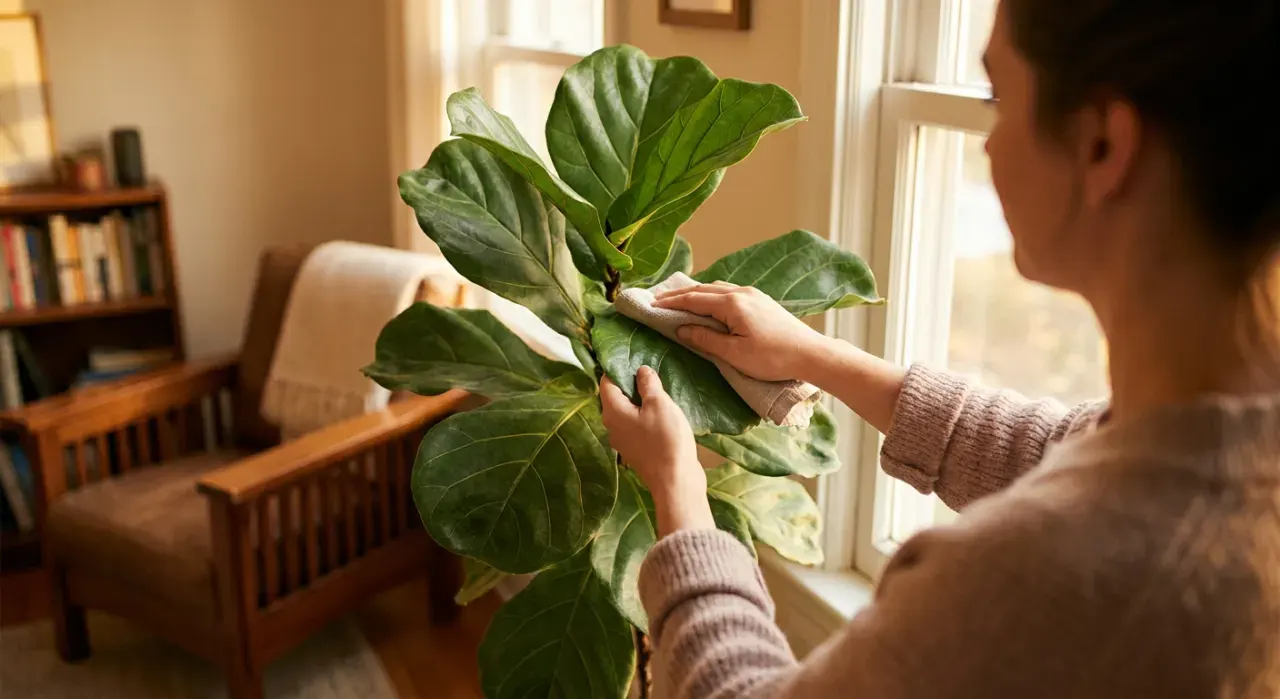
- Fiddle leaf fig. Wants the brightest indirect light in your house and often some direct sun. In a dim room it drops leaves from the bottom up until it is a bare stick.
- Monstera deliciosa. It grows in low light but the new leaves come small and without the characteristic splits, which is the entire reason people buy it. Fenestration is a light-driven trait.
- Calathea and maranta. Marketed relentlessly as low light. They want medium to bright indirect plus 55 percent humidity, and they are unforgiving of tap water — a genuinely demanding group dressed up as beginner plants.
- Succulents and cacti. The most predictable failure of all. They stretch into pale, deformed towers within weeks of being placed away from a window, and they never recover their original form.
- Alocasia. Wants bright indirect light and high humidity, and goes dormant or collapses without them.
- Anything with heavy white or pink variegation. Variegated tissue contains little or no chlorophyll, so the plant is working with less photosynthetic surface than a plain green one. Variegated plants need more light, not less, and in dim conditions they either revert or decline.
Low-Light Care Is Different Care
This section matters more than the plant list. Most low-light plants are not killed by the darkness — they are killed by being cared for as though they were in a bright window.
Water far less. Light drives transpiration, so a dim plant drinks slowly and its mix stays wet for a long time. That wet, airless mix is where root rot begins. Check two inches down with a finger and wait for genuine dryness; in a dark room that can be three to four weeks for a ZZ plant. The full method, including the weight test that makes this easy, is in how often to water houseplants.
Use a fast-draining mix and a snug pot. Both shorten the time roots sit in water. Adding a generous handful of perlite or bark to a standard bagged soil is the cheapest insurance a low-light plant can have; the bagged options are compared in best potting mix for houseplants. Terracotta helps for the same reason. And go up one pot size at a time, never more — the reasoning is in how to repot a houseplant.
Feed rarely. A plant that is barely photosynthesizing cannot use much fertilizer, and the surplus accumulates as mineral salts in the mix. Quarter to half strength, two or three times across the whole growing season, and nothing at all from October to March.
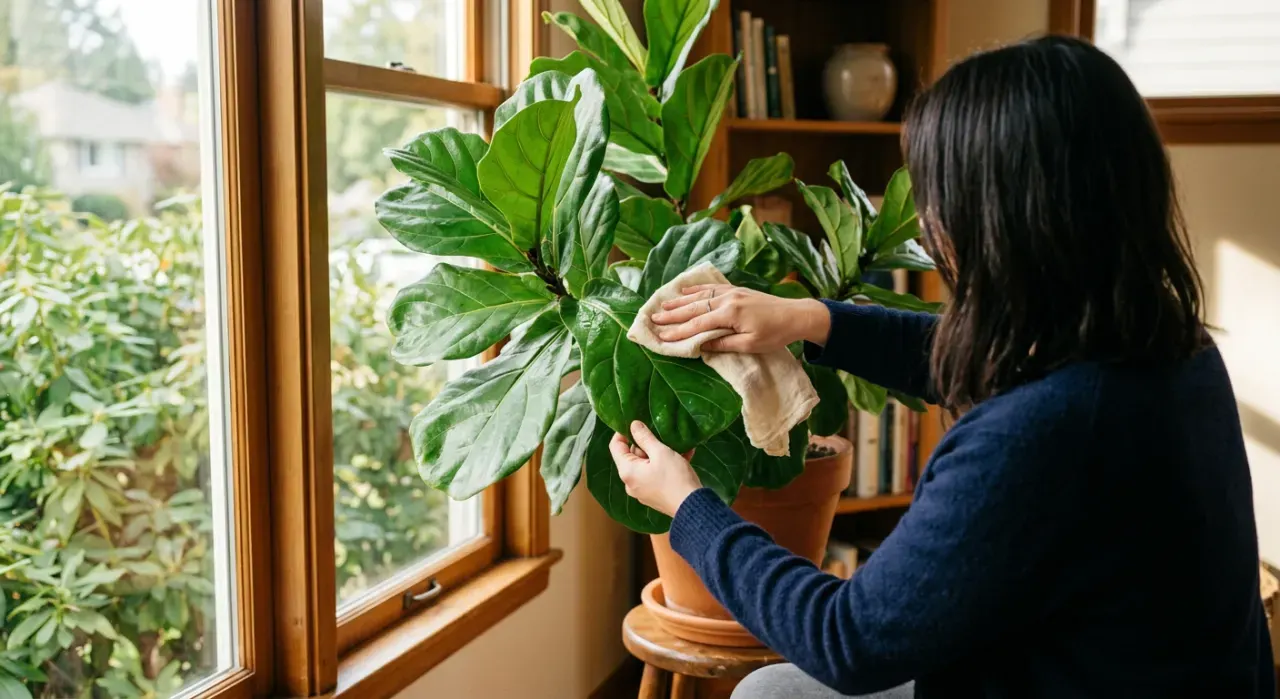
Keep the leaves clean. Dust on a leaf is a light filter, and in a room where light is already the limiting factor that is a real loss. Wipe broad-leaved plants with a damp cloth every month or two.
Rotate a quarter turn each watering, because indoor light is strongly directional and unrotated plants lean permanently.
Expect slowness and do not fight it. A ZZ plant in a hallway putting out two stems a year is succeeding. Fertilizer, a bigger pot and more water will not speed it up; only light does that.
The Alternative: Bring the Light
Everything above is a list of compromises, and there is a way out of the compromise entirely. A modest LED grow light on a $10 mechanical timer turns a windowless bathroom, a north hallway or an office interior into a solid medium-light location for the price of one mid-size plant, and it removes the seasonal winter dip that flattens indoor collections every January.
The rules are simple: mount it 6 to 18 inches above the foliage, run it 12 to 14 hours a day, and accept that a bright fixture on the ceiling is a room light rather than a grow light because intensity falls away sharply with distance. Clip lamps suit a single plant, strips suit a shelf, and panels suit a whole cabinet. Our ranked field, with the recurring complaints owners raise about each format, is at best grow lights for indoor plants.
One last diagnostic. If a plant in a dim spot is yellowing rather than stretching, light may not be the whole story — the pattern of which leaves go yellow tells you whether you are looking at a light problem, a water problem or something else. Work through yellow leaves on houseplants before you move anything.