 Garden

Affiliate Disclosure
Some links on this page are affiliate links. As an Amazon Associate, we earn from qualifying purchases — at no extra cost to you. We do not buy, test, or physically handle the products we cover; our rankings come from aggregated owner reviews, ratings and expert consensus. Commissions never change our verdicts. How we rank · full disclosure.
Pothos leaves curl when the plant is under water stress, and the usual causes are underwatering (dry soil, limp or crispy curling), heat and direct sun (curl with bleached patches near hot glass), low humidity (crispy edges in very dry air), and root rot from overwatering (curling on soggy soil, with soft yellow leaves). Pests and fertilizer salt buildup can also curl foliage. Because underwatering and overwatering produce almost identical curling, feel the soil first — that single check tells you which way to correct, and pothos is more often harmed by too much water than too little.
We do not test or physically handle the plants and products we cover; our advice draws on horticultural extension research and the aggregated experience in thousands of owner reviews, as explained in how we rank. The prevention routine is in how to care for pothos.
Feel the Soil, Then Read the Curling Pothos Leaves
Push a finger into the top inch or two of soil and look at where the curling and any browning sit.
| Soil | Leaves | Likely cause |
|---|---|---|
| Dry, pulling from the pot | Curling, limp or crispy edges | Underwatering |
| Dry, near hot glass or vent | Curl with bleached or scorched patches | Heat / direct sun |
| Normal, air very dry | Curl with crispy edges | Low humidity |
| Constantly wet | Curling with soft yellow leaves | Overwatering / root rot |
| Any | Fine stippling, webbing underneath | Spider mites |
Note the pattern too: uniform curling across the plant points to watering or humidity, curling only on the window side points to light and heat, and curling with fine webbing points to pests.
Underwatering Curls Pothos Leaves
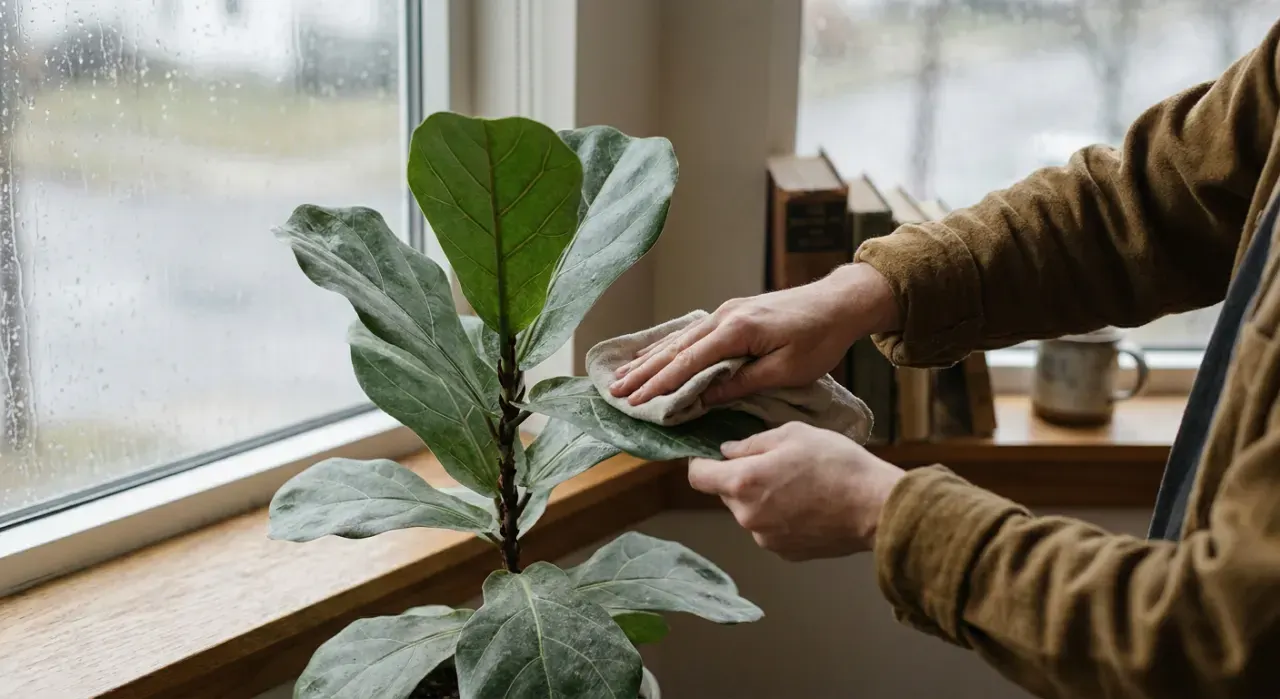
A thirsty pothos curls and droops, and the soil will be dry well below the surface. Pothos is dramatic but forgiving here — a thorough watering usually revives it within hours. Water until it runs from the drainage hole, drain completely, and going forward water when the top inch or two of soil is dry, typically every 7 to 10 days depending on light and pot size. If the soil has gone hydrophobic and water runs straight through, bottom-water by standing the pot in a tray for 20 to 30 minutes. See how often to water pothos for the full rhythm.
Heat and direct sun
Pothos wants bright, indirect light. Direct sun, especially through hot summer glass, curls leaves and bleaches or scorches the exposed patches as the plant tries to limit water loss. Move it a few feet back from bright windows or filter the light with a sheer curtain. Avoid the opposite extreme too — deep shade causes leggy growth and fades the variegation — so aim for bright indirect light, and keep the plant away from heating vents and radiators that dry and warm the leaves.
Low humidity
Pothos tolerates ordinary household humidity better than many tropicals, so dry air is a less common cause here. But in a heated winter home where humidity drops below 30 percent, leaves can curl and crisp at the edges. If watering and light are already right and the air is clearly dry, a small humidifier or grouping plants together will help. Do not overdo it — pothos dislikes soggy, stagnant conditions more than it dislikes slightly dry air, so good airflow matters as much as humidity.
Root rot from overwatering
Curling on constantly wet soil, with leaves also yellowing and going soft, points to root rot. Overwatered roots suffocate and rot, then cannot absorb water, so the plant wilts and curls despite the wet mix — the same trap that fools many owners into watering more. Slide the plant out: healthy roots are firm and white, rotted roots are brown, mushy, and sour-smelling. Trim the rot back to firm tissue, repot into fresh, well-draining mix in a pot with a drainage hole, and water sparingly until it recovers. Our guide to saving an overwatered plant covers the full recovery.
Pests and salt buildup
Spider mites cause fine stippling and faint webbing on leaf undersides and can distort and curl leaves; they thrive in dry air. Rinse the foliage and treat with insecticidal soap every 5 to 7 days for three cycles. Separately, frequent fertilizing without flushing lets mineral salts accumulate in the soil, which scorches leaf edges and can contribute to curling. If you feed often, flush the pot with plain water two or three times each season, and only fertilize during active growth in spring and summer at the label rate or weaker.
Preventing curled pothos leaves
- Water when the top inch or two is dry, then soak and drain fully.
- Bright, indirect light — never harsh direct sun, never deep shade.
- Well-draining mix and a drainage hole to avoid soggy roots.
- Keep the plant away from vents and radiators, and raise humidity only if the air is clearly dry.
- Flush the soil occasionally and feed lightly in the growing season.
For related pothos issues, see why is my pothos wilting and why is my pothos turning yellow. The shared causes across your collection are in yellow leaves on houseplants, and everything else is at the houseplants and indoor greenery hub.