 Garden


Affiliate Disclosure
Some links on this page are affiliate links. As an Amazon Associate, we earn from qualifying purchases — at no extra cost to you. We do not buy, test, or physically handle the products we cover; our rankings come from aggregated owner reviews, ratings and expert consensus. Commissions never change our verdicts. How we rank · full disclosure.
The short answer: vacuum pet zones and high-traffic carpet every one to two days, the rest of the house twice a week, and upholstery and pet bedding weekly. If anyone in the house has a pet allergy or asthma, move carpeted rooms to daily and use a sealed-system HEPA machine — with a leaky vacuum, more frequent passes make the air worse rather than better, because the allergen ends up airborne instead of in the bin.
We do not buy or physically handle the machines we rank; recommendations come from aggregated owner reviews and expert consensus, described in how we rank. Model picks are in best vacuum for pet hair.
What is the schedule by surface?
Frequency should follow where the animal spends its time, not the floor plan. Pet hair distributes very unevenly: sleeping spots, feeding areas, the route to the door and the sofa account for the large majority of it, and a targeted daily pass over those areas beats a full-house clean twice a week.
| Area | One pet | Two or more | Allergy household |
|---|---|---|---|
| Pet sleeping and feeding areas | Daily | Daily | Daily |
| High-traffic carpet and runners | Every 1 – 2 days | Daily | Daily |
| Hard floors, main rooms | 2 – 3× weekly | Daily | Daily |
| Bedrooms | Weekly | 2× weekly | Every 1 – 2 days |
| Upholstery and pet-approved furniture | Weekly | 2× weekly | 2 – 3× weekly |
| Stairs | Weekly | 2× weekly | 2× weekly |
| Under furniture, edges, baseboards | Monthly | 2× monthly | Weekly |
| Carpet deep clean | Every 6 – 12 months | Every 6 months | Every 6 months |
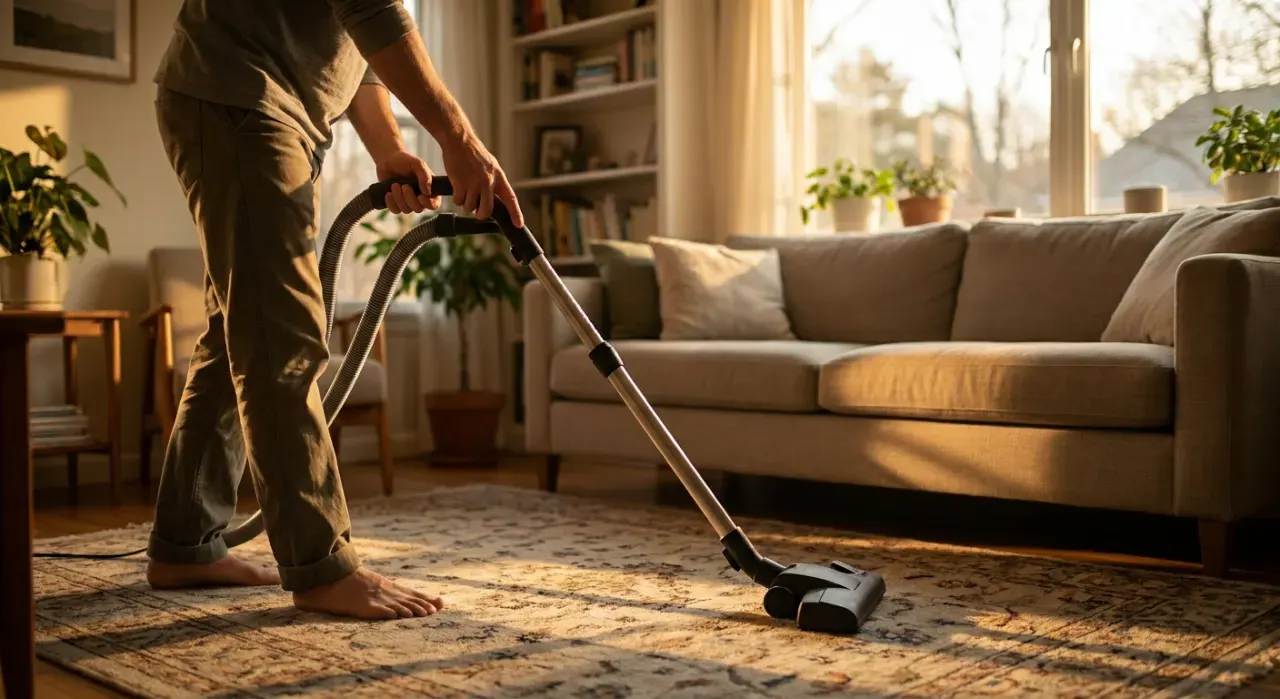
Why does the machine matter more than the frequency?
Because the allergenic particles are small and they stay up. Cat allergen — the protein Fel d 1, shed in saliva and skin — travels on particles small enough to remain airborne for hours rather than settling out in minutes like most dust. Dog allergens behave similarly, if somewhat less persistently. A vacuum that leaks around a bin seal or exhausts through a mediocre filter takes settled allergen off the floor and puts a share of it back into the breathing zone, which is the specific reason allergy sufferers so often feel worse right after cleaning.
The practical guidance from allergy and asthma organizations is consistent: use a vacuum with a genuinely sealed system and a HEPA filter, have someone without the allergy do the vacuuming where that is possible, wear an N95 if it is not, and leave the room for around 20 minutes afterward. Note that "HEPA filter" and "sealed HEPA system" are not the same claim — a good filter on a leaky body simply lets unfiltered air escape at the joints.
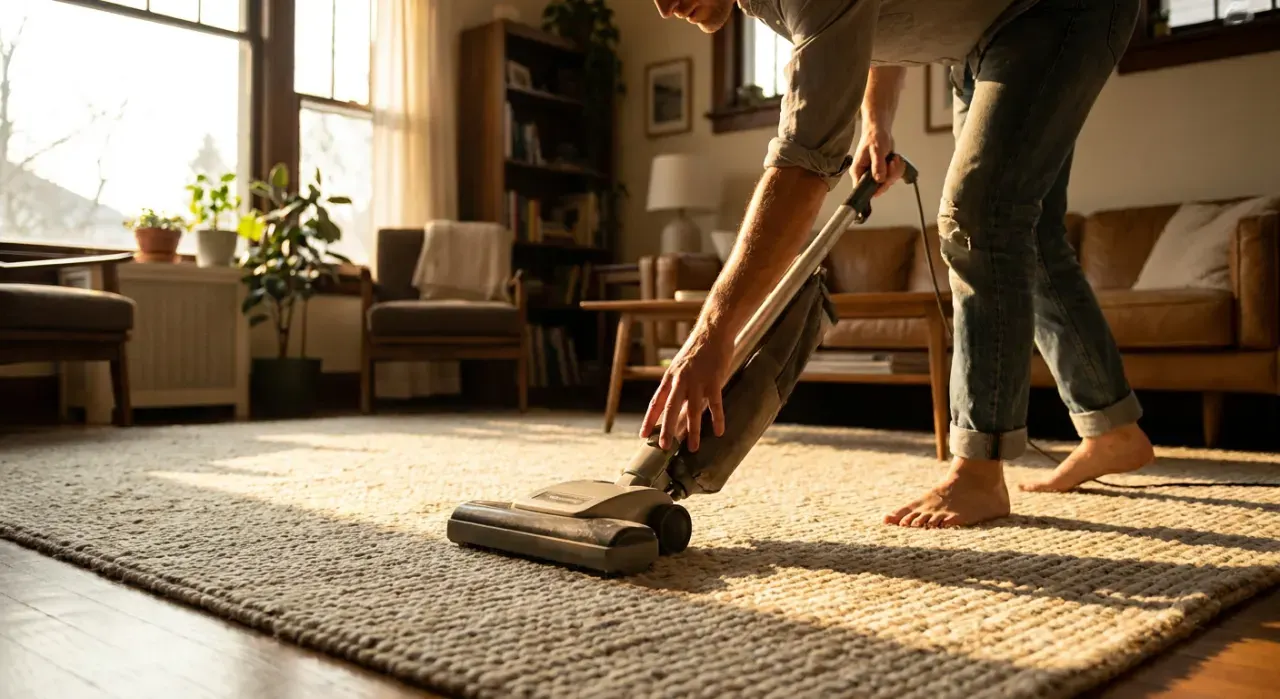
What technique actually removes more hair?
Slow, overlapping passes. Hair works its way down into carpet pile and wraps around individual fibers, and a single fast pass recovers a fraction of what three slow ones do. Two or three passes over the same strip, in perpendicular directions, is the difference people notice most.
- Cross-hatch. Go over each area once north-south and once east-west; hair lies directionally and the second pass lifts what the first laid flat.
- Set the brush height to the carpet. Too low stalls the roller and burnishes the pile; too high and the bristles never touch. Most owners never touch this adjustment.
- Rubber squeegee or a pumice stone for embedded hair on low-pile carpet and stairs — it pulls up what a brushroll cannot, before you vacuum.
- Do upholstery with the crevice and brush tools, not the floorhead; the seams hold more hair than the cushions.
- Wash pet bedding weekly at the hottest temperature the fabric allows. It holds more allergen than the entire floor of the room it sits in.
- Brush the animal outdoors two to three times a week. It removes hair before it lands and is the single highest-leverage thing on this list.

What does a pet household do to the vacuum itself?
It shortens everything. Hair winds tightly around the brushroll and packs into the end caps, which drags the roller and stretches belts — expect to replace a flat belt every 3 to 6 months rather than every 6 to 12, per how often should you replace a vacuum belt. Filters load faster with fine dander, so wash pre-motor filters monthly and replace post-motor HEPA filters at the shorter interval in how often should you replace a HEPA vacuum filter.
Two habits prevent most failures: cut hair off the roller weekly with a seam ripper, and empty a bagless bin at the MAX line rather than when it looks full. Skipping either produces the restricted airflow behind both the pulsing described in why does my cordless vacuum keep cutting out and the burning smells in why does my vacuum smell like burning. For daily coverage between deep passes a robot vacuum earns its place in pet homes more than almost anywhere else.