 Garden

Affiliate Disclosure
Some links on this page are affiliate links. As an Amazon Associate, we earn from qualifying purchases — at no extra cost to you. We do not buy, test, or physically handle the products we cover; our rankings come from aggregated owner reviews, ratings and expert consensus. Commissions never change our verdicts. How we rank · full disclosure.
Yes, up to a point: most robot vacuums climb obstacles of 0.6 to 0.8 inches, which covers low-pile and medium-pile rugs and standard door thresholds. Premium models publish figures around 0.8 to 0.9 inches, and a few with articulated or lifting chassis manage more. Where they fail is high-pile and shag rugs over about an inch, where the drive wheels sink and the brush roll bogs down; rugs with fringe or tassels, which wrap the brush; and lightweight mats with no backing, which the robot pushes into a heap rather than cleaning.
What are the real climbing limits?
Manufacturers publish a maximum obstacle height, and it is a reasonable guide provided you read it as an obstacle figure rather than a carpet figure. Climbing onto a rug requires the front caster to ride up a firm edge; climbing into deep pile requires the drive wheels to keep traction in something soft, which is a harder problem.
| Surface | Typical height | Result |
|---|---|---|
| Flat-weave or low-pile rug | Under 0.25 in | Crosses easily, cleans well |
| Standard cut-pile area rug | 0.25–0.5 in | Crosses; most models boost suction |
| Plush or medium-pile rug | 0.5–0.8 in | Usually crosses; cleaning is surface only |
| Thick or high-pile rug | 0.8–1.2 in | Marginal — many models stall at the edge |
| Shag rug | Over 1.2 in | Avoid; expect it to beach itself |
| Interior door threshold | 0.5–0.75 in | Crosses on most models |
| Transition strip, tile to carpet | 0.25–0.5 in | Crosses easily |
A robot that stalls at a rug edge is usually approaching it at the wrong angle rather than lacking the capability. Robots hit thresholds best head-on and struggle when they meet an edge diagonally, which is why the same rug is sometimes crossed and sometimes refused.
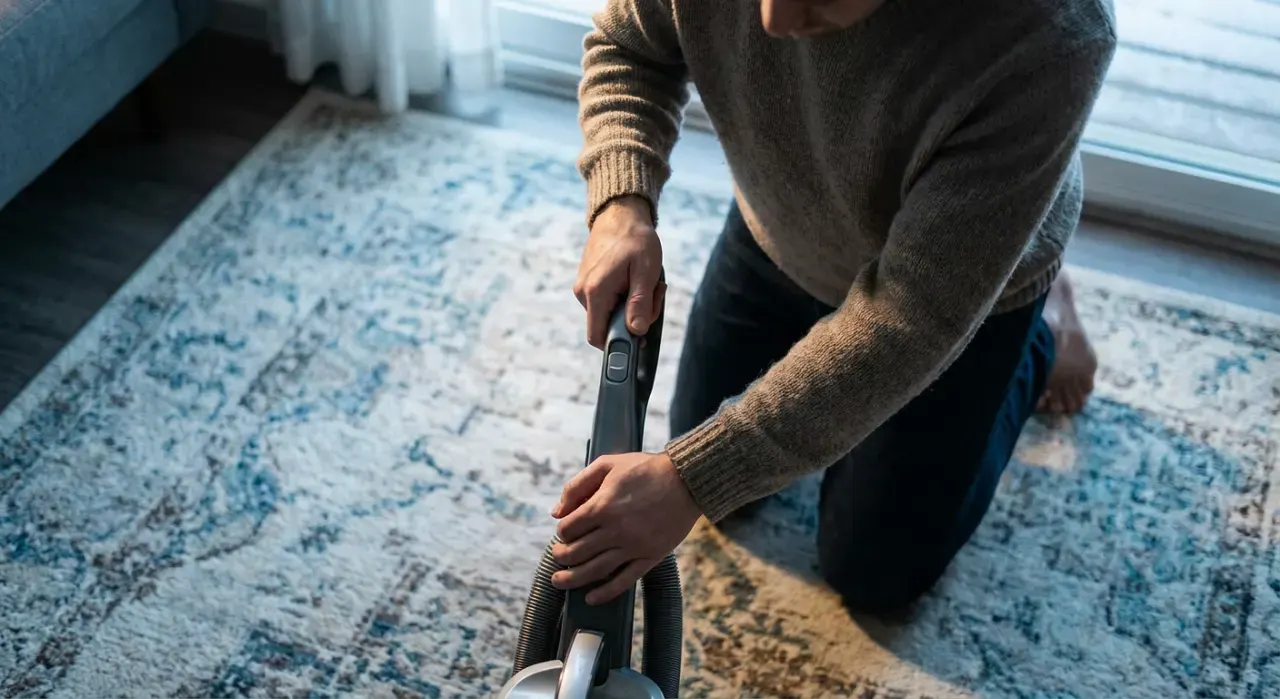
What goes wrong on rugs, and what fixes it?
- The rug slides or bunches. Add a rubber rug pad or non-slip underlay. This is the most common complaint and the easiest fix.
- Fringe gets eaten. Tuck it under the rug or draw a no-go zone. Tassels wrap around a brush roll fast and can tear.
- The robot avoids a dark rug. The cliff sensors read black as a drop — the mechanism is explained in do robot vacuums fall down stairs. Use the carpet setting or clean the sensors.
- It gets stuck halfway on. The pile is beyond its climbing height. Use a no-go zone rather than resetting it daily.
- A wet mop pad on carpet. Check whether your model lifts the pad; if it does not, zone the carpeted rooms out of mopping runs.
- Poor cleaning on the rug it does reach. Expected. A robot maintains a rug surface; it does not deep clean one.
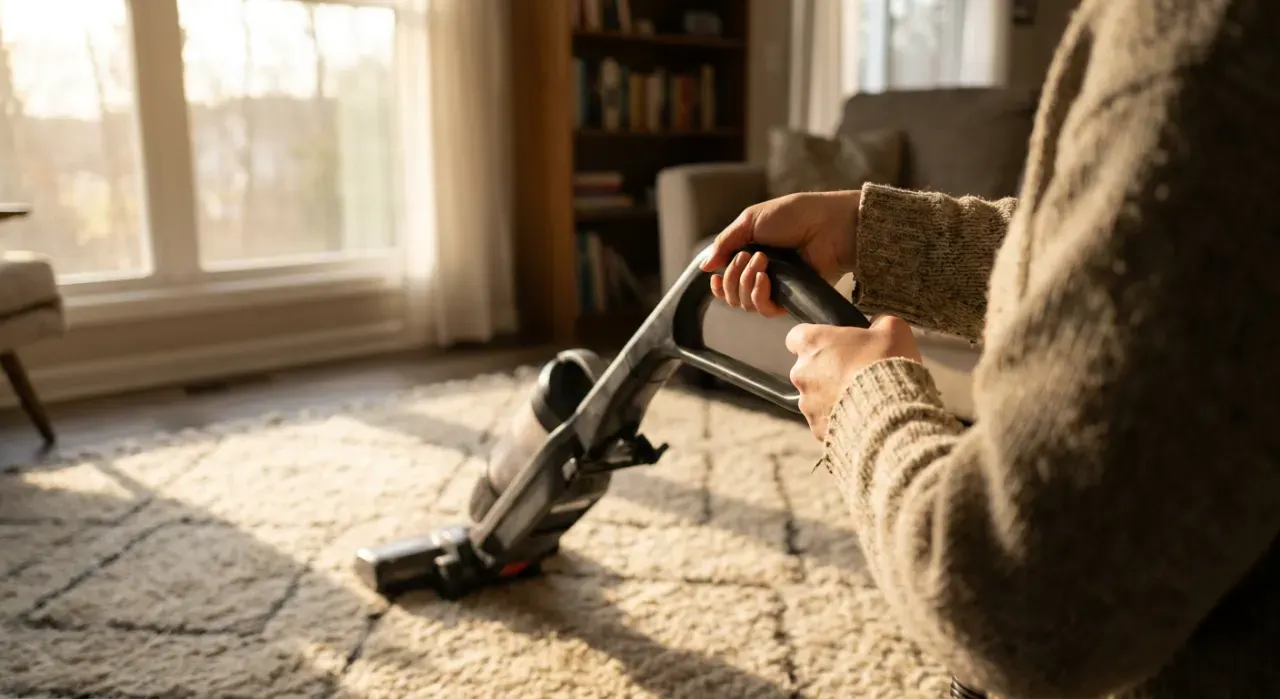
Which robots handle rugs best?
Look for three specifications rather than a headline suction number. A published obstacle-climbing height of 0.8 inches or more, which tells you what it can get onto. A carpet-detection and boost function, which raises suction when the wheels sense pile. And a rubber or hybrid brush roll rather than pure bristles, which resists hair wrap and is kinder to loop pile.
For homes with genuinely deep carpet, the more specific guidance is in do robot vacuums work on thick carpet and the shortlist is in best robot vacuum for high-pile carpet. Owners consistently pair a robot for daily maintenance with an upright or cordless stick for the weekly pass — the reasoning is set out in robot vacuum vs regular vacuum, and the overall shortlist is in our robot vacuum picks.
We never buy, test or physically handle the products we rank. Every recommendation comes from aggregated owner reviews, star ratings, review volume and published expert consensus — see how we rank.
More from this hub: Vacuums & Floor Care · How to clean a robot vacuum · Best vacuum for deep pile carpet · Best vacuum cleaner · How we rank