 Garden

Affiliate Disclosure
Some links on this page are affiliate links. As an Amazon Associate, we earn from qualifying purchases — at no extra cost to you. We do not buy, test, or physically handle the products we cover; our rankings come from aggregated owner reviews, ratings and expert consensus. Commissions never change our verdicts. How we rank · full disclosure.
The short answer: only if the filter is explicitly labeled washable — and most true HEPA filters are not. HEPA media is a fine mat of randomly oriented glass or synthetic fibers, rated to capture 99.97 percent of particles at 0.3 micron, the most-penetrating particle size used in the US DOE test standard. Water swells and displaces those fibers and strips the electrostatic charge on electret media. A washed non-washable filter comes out looking spotless and passes far more dust than it did before. When in doubt, brush it off, vacuum it gently, and replace it on schedule.
We do not buy or physically handle the machines we write about; product rankings come from aggregated owner reviews and expert consensus, described in how we rank. The category overview is at the vacuums and floor care hub.
Which filters in my vacuum can be washed?
Most vacuums contain two or three filters doing different jobs, and they do not share the same rules. The pre-motor filter protects the motor and is often foam or felt, which tolerates water. The post-motor filter is the one that determines what goes back into your room, and on a sealed-system machine that is the HEPA cartridge.
| Filter | Typical material | Washable? | Care |
|---|---|---|---|
| Pre-motor, foam sleeve | Open-cell foam | Usually yes | Cold water, no soap, dry 24 h |
| Pre-motor, felt disc | Non-woven felt | Usually yes | Rinse until water runs clear, dry 24 h |
| Post-motor pleated HEPA cartridge | Glass-fiber or synthetic media | Usually no | Brush or gently vacuum, then replace |
| Marked "washable lifetime" HEPA | Synthetic pleated media | Yes, as specified | Cold water only, dry 24 h, still replace at 12 months |
| Cyclone shroud mesh | Fine plastic screen | Yes | Brush dry, or rinse and dry fully |
| Bagged upright secondary filter | Paper or fiber panel | No | Replace with the bag schedule |
| Charcoal / carbon layer | Activated carbon on media | No | Washing exhausts it; replace |
Why does washing damage HEPA media?
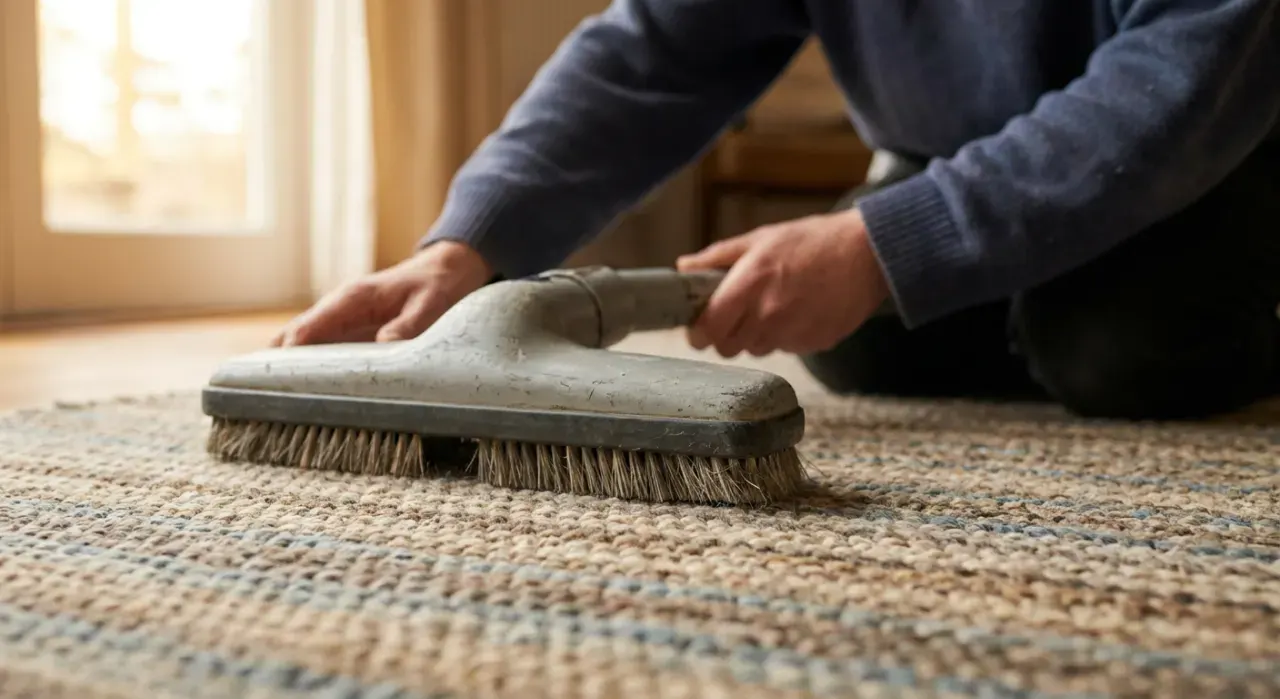
Because the performance comes from the geometry of the fiber mat, and water rearranges it. HEPA filtration is not a sieve — particles are captured by interception, impaction and diffusion as air weaves through a dense, randomly laid three-dimensional web. The 99.97 percent figure applies at 0.3 micron precisely because that size is the hardest to capture by any of those mechanisms, which is why it is used as the test point. Wet the mat and the fibers clump and shift as it dries, opening low-resistance channels that let air through with much less contact.
On synthetic electret media, there is a second and larger problem: a substantial share of the capture comes from a permanent electrostatic charge applied during manufacture. Water, and especially water with detergent, neutralizes it. The filter still traps large debris, so suction feels normal and the pleats look bright — while the fine particle capture that was the entire point has quietly gone.
How do I wash the ones that are washable?
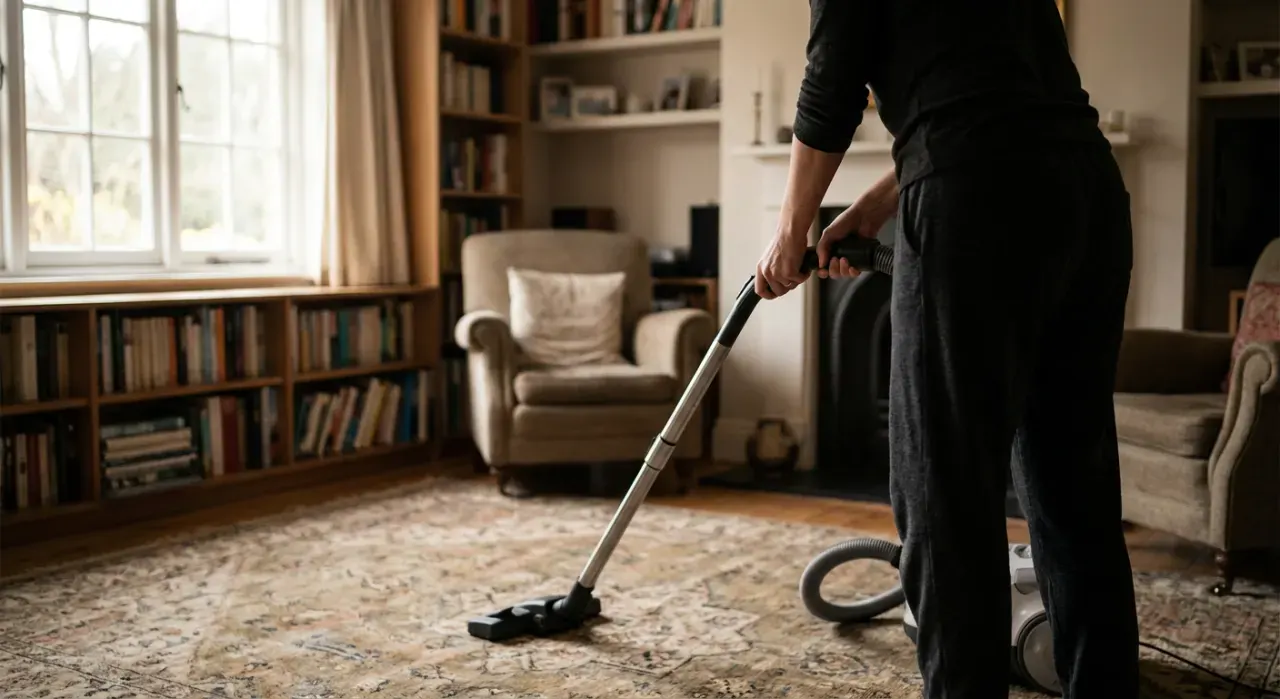
- Tap the loose dust out over a trash can first. Washing a heavily loaded filter turns the dust to mud that sets in the media.
- Cold water only, no detergent unless the manual specifically permits it. Soap residue is itself a restriction and it holds moisture.
- Rinse from the clean side toward the dirty side so debris is pushed back out the way it came in, and keep going until the water runs clear.
- Squeeze foam gently, do not wring or twist. Twisting tears the cell structure and the filter never seals properly again.
- Air dry 24 hours minimum, 48 in a humid house, standing on end where air reaches both faces. No dryer, hair dryer, oven or radiator — heat warps both media and frame.
- Confirm it is bone dry before reinstalling. A damp filter restricts airflow, can trip the motor’s thermal protection, and turns musty fast.
A useful habit is to buy a second set of filters so one can dry while the other is in the machine — it removes the temptation to reinstall a filter early, which is where most of the trouble starts.
If I cannot wash it, when does it get replaced?
Six to twelve months for a non-washable post-motor HEPA filter in a normal household, three to six months with pets or an allergy sufferer in the house. Washable filters still have a replacement interval, typically around twelve months, and the most common mistake owners make is reading "washable" as "permanent" — the media wears and loads irreversibly whether or not you rinse it. Full intervals by filter position are in how often should you replace a HEPA vacuum filter.
A clogged or damp filter is also the leading cause of the two most common vacuum complaints: a machine that pulses and shuts down, covered in why does my cordless vacuum keep cutting out, and the hot-plastic smell of an overheating motor in why does my vacuum smell like burning. Filter discipline is also the largest single factor in how long a machine survives — see how many years should a vacuum cleaner last — and matters most in the sealed HEPA machines recommended in best vacuum for pet hair.