 Garden
Affiliate Disclosure
Some links on this page are affiliate links. As an Amazon Associate, we earn from qualifying purchases — at no extra cost to you. We do not buy, test, or physically handle the products we cover; our rankings come from aggregated owner reviews, ratings and expert consensus. Commissions never change our verdicts. How we rank · full disclosure.
The short answer: buy eufy. Robot vacuums are not really judged by suction, they are judged by what the brushes, filters and battery cost over five years and whether the app still works — and eufy has the cheapest widely stocked consumables in the category plus a record of keeping older machines running. Buy roborock instead if navigation and mopping are the priority, and iRobot if you want parts you can pick up in a physical store.
This page answers which brand. It does not answer which robot. Every entry below names one representative machine to anchor the company and nothing more — for the model-by-model ranking, go to best robot vacuum, which is where the actual buying decision gets made. Then narrow by job with best robot vacuum mop combo, best robot vacuum for hardwood floors or best robot vacuum for high pile carpet.
Why Brand Is a Different Question From Model
A robot vacuum is the only floor-care product that can stop being the thing you bought without anything breaking. It is a connected appliance: scheduling, mapping, no-go zones, app control and voice integration all depend on the manufacturer keeping servers running and an app in the stores. That makes brand choice a bet on a company rather than a comparison of pascals, and it is what this page ranks on:
- Consumable cost and availability. Weighted hardest. Brushes, filters, side brushes, mop pads, dust bags and eventually a battery, over five years, routinely add up to more than the robot cost. Whether third-party versions exist is what keeps that number honest.
- App and cloud longevity. The risk unique to this category. A discontinued cloud service can remove features from working hardware, so a company that keeps older models supported is worth paying for.
- Warranty terms as published, including the exclusions — which almost always rule out the wear items that actually fail.
- Support reputation and whether there is a service operation behind the brand, or just an app and a storefront.
- Breadth of range. Does the brand cover 150 dollars through 1,500 under one app, or one price point?
- Ownership and financial stability, because in this category a company in trouble is a features risk, not just a warranty risk.
The Brands at a Glance
Our #1 Brand: eufy
eufy is the smart-home brand of Anker Innovations, and it wins here on unglamorous arithmetic rather than on any single specification.
What it does better than the others. Consumables. eufy replacement brushes, filters, side brushes and mop pads are the cheapest widely stocked in the category, they are sold both by eufy and by a healthy third-party market, and they stay listed. Over five years that gap compounds into real money, and it is the difference between a household that changes filters on schedule and one that quietly stops. The range is wide too, from a basic slim robot at around 150 dollars up to a full self-washing dock model, all under one app, so upgrading does not mean starting again.
The second thing eufy does well is less obvious: a good part of its back catalog is not app-dependent. The older RoboVac machines run from a remote and a button, which means they are largely immune to the cloud risk that hangs over every connected robot. Owners are still reporting them working years later, and in a category where a server decision can remove features from healthy hardware, that is a real property rather than a limitation.
Consensus Score ████████░░ 8.7 — one of the largest and most stable owner-review bases in the category, and unusually consistent across price points.
Where it is weak. Navigation on the mid-range models is a step behind roborock, and the cheapest machines have no mapping at all, so multi-room homes are not their strength. Published warranty terms sit around a year, in line with the category but shorter than the American brands offer on some floor care. Obstacle avoidance is not class-leading. Support is remote rather than a service network. And there is a brand-level caveat worth knowing: in 2022 Anker acknowledged that some eufy security cameras did not behave exactly as its marketing had described, and it issued corrections and documentation changes. That was a camera matter rather than a vacuum one, but it is a reasonable thing to weigh when buying any connected device from a brand.
Check price on Amazon → (paid link)
The Brands, Ranked

Best for the lowest five-year cost of ownership without giving up modern features
- Anker brand, with the cheapest widely stocked consumables in the category
- Range runs from roughly 150 dollars to 800 under one app
- Brushes, filters and mop pads sold by eufy and by third parties
- Older RoboVac models have stayed usable for years, many without needing an app at all
Why buy it: eufy has the best consumable economics of any robot brand and a track record of keeping older machines working, which is what actually decides the five-year bill.

Best for navigation and mopping done properly, and an app that keeps getting updates
- The deepest lidar navigation and mapping stack in the category
- First-party and third-party consumables both easy to find
- Owners report app support continuing on machines several generations old
- Dock consumables add mop pads and dust bags to the running cost
Why buy it: roborock treats the app and the maps as a product rather than an afterthought, and it has kept older machines working long after rivals moved on.

Best for buying consumables off a shelf in a physical store for years to come
- American company that created the category in 2002
- Brushes, filters and bags stocked in general retail, not only online
- Parts remain available for Roomba generations long discontinued
- Company has publicly disclosed financial pressure, which is a cloud-service risk
Why buy it: iRobot has the only genuinely retail parts network in robot vacuums, which is the strongest possible answer to the question of what happens in year four.

Best for big-box availability, US phone support and a bagless base with no bags to buy
- SharkNinja has the widest physical retail presence of any brand here
- Bagless self-empty base removes one recurring consumable entirely
- Filters and brush rolls stocked in general retail
- Navigation and app maturity trail the specialists
Why buy it: Shark is the brand you can buy a replacement filter for on a Sunday afternoon, and its bagless base quietly deletes the dust-bag line from the running cost.

Best for hot mop washing and edge coverage at a price the premium names charge more for
- Heated mop washing and drying in the dock
- Extending mop arm for edges and corners
- Consumables mostly first-party, with a thinner third-party market
- Younger brand with a shorter US support history
Why buy it: dreame ships features the established names charge a premium for, which makes it the value play at the top of the market rather than the bottom.
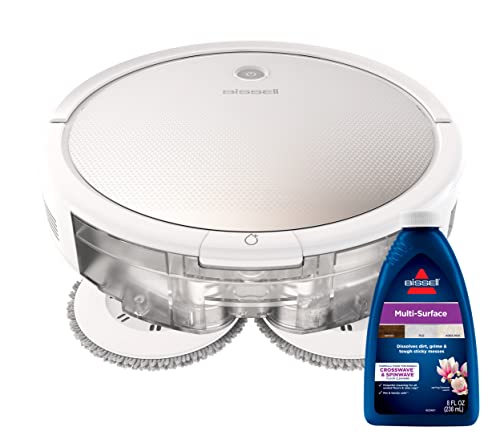
Best for buyers who want an American company with a service department behind the machine
- Family-owned American company trading since 1876
- Established US parts, service and phone-support operation
- Consumables sold direct and in general retail
- The weakest navigation and app of the brands here
Why buy it: Bissell brings a real US service organization to a category where most brands exist only as an app and a marketplace storefront.
Quick Comparison
| Product | Best for | Rating | Price | Buy |
|---|---|---|---|---|
| eufy X10 Pro Omni Robot Vacuum and Mop, Dual Mops with 12mm Auto-Lift, 8,000 Pa Suction, Carpet Detection, AI Obstacle Avoidance | Best Brand Overall — eufy | — | Check (paid link) | |
| roborock Q Revo Robot Vacuum and Mop, Auto-Drying, Auto Mop Washing, Dual Spinning Mops, Auto Mop Lifting, Self-Refilling, Self-Emptying | Best Premium Brand — roborock | — | Check (paid link) | |
| iRobot Roomba j9+ Self-Emptying Robot Vacuum, Powerful Suction, Identifies and Avoids Obstacles, Self-Empties for 60 Days | Best Parts Longevity Brand — iRobot | — | Check (paid link) | |
| Shark AV2501AE AI Robot Vacuum with XL HEPA Self-Empty Base, Bagless, 60-Day Capacity, LIDAR Navigation | Best Value Brand — Shark | — | Check (paid link) | |
| dreame L10s Pro Ultra Heat Robot Vacuum and Mop, Hot Mop Washing, MopExtend Edge Cleaning, 7,000Pa Suction | Best Feature-Rich Challenger — dreame | — | Check (paid link) | |
| Bissell SpinWave Pet Robot, 2-in-1 Wet Mop and Dry Robot Vacuum, WiFi Connected with Structured Navigation | Best US Support Brand — Bissell | — | Check (paid link) |
The Number That Decides It: Five Years of Consumables
This is the section the marketing never leads with. A robot vacuum is not a one-off purchase, it is a subscription paid in parts. Below is what you buy again, on what cycle, and what happens when the part that is not really a consumable finally goes.
| What you buy again | Typical replacement cycle | Sets needed over five years | Brand-level difference |
|---|---|---|---|
| Main brush roll | 6 to 12 months | 5 to 10 | Third-party versions exist for eufy, roborock, iRobot and Shark; thinner elsewhere |
| Filter | 2 to 3 months | 20 or more | The biggest single line, and where cheap third-party supply matters most |
| Side brushes | 3 to 6 months | 10 to 20 | Cheap everywhere, but proprietary shapes limit substitution |
| Mop pads | 3 to 6 months on mopping models | 10 to 20 | Washable on most brands, which cuts the count sharply |
| Dock dust bags | 4 to 8 weeks on bagged docks | 30 or more | Bagless self-empty bases, such as Shark uses, delete this line entirely |
| Battery | 2 to 4 years | 1 to 2 | The decisive one: user-replaceable on some brands, a service job on others |
What happens when a key part fails. A worn brush or a clogged filter is trivial — you buy one, provided it is still listed. A failed battery is the real fork in the road: on brands that sell a user-replaceable pack the robot carries on for another few years, and on brands that do not, a healthy machine becomes scrap because a service repair approaches the price of a new robot. And a discontinued cloud service is the failure mode with no repair at all, which is why app longevity sits alongside parts in this ranking. Running-cost arithmetic is broken down further in how much a robot vacuum costs, and the maintenance that stretches these intervals is in how to clean a robot vacuum.
How We Rank Brands
We do not buy or physically run these machines. On a brand page we weight different evidence from a product roundup. Star ratings are read across a brand catalog rather than at its flagship, because a company with one excellent robot and five poor ones is not a safe brand. Published consumable prices and replacement intervals are checked directly, along with whether a third-party market exists. Warranty documents are read for their exclusions. App and firmware support history — whether machines several generations old still work in the current app — carries heavy weight, because it is the only visible proxy for how long the product will keep being the product. Long-tail owner reports written two and three years in count for more than launch-window reviews. Prices move constantly and were checked at the time of writing. Full method on how we rank.

The Brands, Assessed
1. eufy — Best Brand Overall
Covered above. Who it is for: almost any household that wants a robot to still be worth running in year four. What it does better: the cheapest widely stocked consumables in the category, an unusually wide range under one app, and a back catalog that mostly does not depend on the cloud. Where it is weak: mid-range navigation trails the specialists, the cheapest models do not map at all, obstacle avoidance is not class-leading, support is remote, and the 2022 eufy camera disclosure is a fair thing to weigh when buying any connected device from a brand.
2. roborock — Best Premium Brand
Who it is for: a multi-room home with hard floors where mopping is a real requirement rather than a feature bullet. roborock builds the deepest navigation and mapping stack in the category: lidar that maps reliably in the dark, multi-floor maps, granular no-go zones, and mopping systems that lift the pads over carpet and wash and dry them in the dock. It also has the best app-support record here, with owners reporting machines several generations old still fully functional in the current app, which is exactly the property this category needs and rarely gets.
Consumables: a strong position. First-party parts stay listed and a healthy third-party market exists, though the self-washing docks add mop pads and dust bags to the bill. What it does better: navigation, mapping, mopping, app quality, and long-running support for older hardware. Where it is weak: the top of the range is expensive, and the price gap over eufy for comparable cleaning is real. Everything meaningful runs through the app and an account, which some buyers dislike on principle and others on data-handling grounds, since this is a Chinese-headquartered company and the maps of your home are the data in question. The dock is bulky. And with so many similarly named Q, S and Qrevo variants, buyers regularly order a trim without the feature they wanted.
3. iRobot — Best Parts Longevity Brand
Who it is for: anyone who values being able to walk into a store and buy a brush roll. iRobot invented this category in 2002 and still has the only genuinely retail consumables network in it: filters, brushes and bags sit on shelves in general retail rather than existing only as an online listing, and parts remain available for Roomba generations long discontinued. Its obstacle avoidance for cords and pet waste is also the feature the brand is most consistently praised for.
Consumables: the most available, though not the cheapest. Third-party alternatives are plentiful because the installed base is enormous. What it does better: parts you can buy in person, the longest catalog history, obstacle recognition, and a genuine US support organization. Where it is weak: and this needs stating plainly rather than avoided. iRobot has been through significant turbulence — the proposed Amazon acquisition was abandoned in early 2024, and the company has since disclosed serious financial pressure in its own public filings. That is a matter of record rather than speculation, and for a product whose features depend on a company keeping servers running, it is a risk a buyer should weigh. Beyond that, recent model ratings sit noticeably below the brand historic average, pricing is high against the specialists for comparable features, and the newer combo models draw complaints about mopping performance. Buy iRobot for the parts network with clear eyes about the cloud.
4. Shark — Best Value Brand
Who it is for: a buyer who wants the machine, the filters and a phone number all available in the same country, this week. SharkNinja has the widest physical retail presence of any brand here, so replacement filters and brush rolls are a drive away rather than a delivery, and its US phone support is genuinely reachable. Its bagless self-empty base is a quietly significant design decision, because it removes dust bags from the running cost entirely — on a bagged dock those bags are one of the largest recurring lines.
Consumables: good availability, mid pricing, and no bags at all on the bagless docks. What it does better: retail availability, support you can reach, self-emptying without a bag subscription, and strong performance on carpet for the money. Where it is weak: navigation and mapping trail roborock, and the app is the least polished of the major brands. Owners report the robot getting stuck more often than the specialists. The self-empty base is loud. Model naming across the AV, RV and PowerDetect lines is confusing, and big-box-exclusive variants make matching parts harder than it should be. And published warranty on the robots is around a year, shorter than the multi-year cover Shark advertises on much of its upright range.
5. dreame — Best Feature-Rich Challenger
Who it is for: someone who wants a hot-water mop wash, an extending mop arm for edges and very high suction, without paying the top-tier price for them. dreame emerged from the Xiaomi ecosystem and competes by shipping features early, and the specifications are real rather than decorative.
Consumables: the weaker axis. Parts are mostly first-party with a thinner third-party market than the established brands, which means less price pressure and more dependence on the company continuing to list them. What it does better: feature density per dollar, heated mop washing and drying, edge coverage, and strong raw cleaning numbers. Where it is weak: the shortest US track record of any brand here, so there is little evidence about how long app support will last — which in this category is the thing that matters most. Support is remote and reported as slower than the American brands. Model naming across the L, X and D lines is genuinely hard to follow. Docks are large. And the feature-first approach brings occasional firmware roughness that the more conservative brands avoid.
6. Bissell — Best US Support Brand
Who it is for: a buyer who wants an American company with a service department rather than a brand that exists as an app and a marketplace storefront. Bissell has been family-owned since 1876, runs one of the longest-standing floor-care parts and service operations in the country, and its robots are built around wet mopping, which suits a household with hard floors and pets.
Consumables: sold direct and in general retail, sensibly priced and easy to find, which is what a real service organization gets you. What it does better: support you can telephone, a company with a long-term reputation to protect, wet mopping integrated properly, and pet-focused design. Where it is weak: this is the lowest-rated brand on the page and the reasons are consistent. Navigation is structured rather than lidar-mapped, so coverage is less methodical and the robot gets lost more often than the specialists. The app is the least capable here. Owners report water-system and pad problems on the mopping models. And the robot range is narrow next to Bissell own upright and carpet-cleaner catalogs, so it is a floor-care company that also makes robots rather than a robotics company. Buy it for the support model, not the specification sheet.
The brands just outside this list
Ecovacs is the significant absence and it is purely a catalog matter: it is a serious competitor to roborock on navigation and docking, but has no verified representative model in our data at the time of writing. Wyze, Tikom, ILIFE and the other marketplace brands are ones to be careful with rather than avoid outright — a cheap non-mapping robot is a perfectly rational purchase for a small apartment, but check that replacement brushes and filters are actually listed before you buy, because that single check separates a two-year appliance from a five-year one. Samsung and LG both build capable robots that sit outside our verified catalog; their brand-level advantage is a service network, and their disadvantage is consumables that are harder to source than the specialists. For the model-level picture, go to best robot vacuum.
What Owners Complain About, Whatever the Badge
Read the critical reviews across all six brands and five themes repeat regardless of name. Getting stuck leads, and it is almost always the same short list of causes: cords, rug tassels, sock-height thresholds and dark floor transitions that the cliff sensors misread. Hair wrap on the brush roll is second and is a maintenance problem rather than a defect, though the anti-tangle designs genuinely help. Battery decline is third and arrives around years two to four, which is exactly when the brand difference on replaceable packs starts to matter. App and connectivity frustration is fourth — dropped Wi-Fi, lost maps after a firmware update, accounts that need re-linking. And expectation drift is fifth: owners who expected a robot to replace a vacuum rather than reduce how often they need one. Worth knowing before you build a schedule around a marketing claim: EPA has issued no official carpet-cleaning frequency recommendation, and points consumers to manufacturer guidance and industry standards instead. That comparison is settled honestly in robot vacuum vs regular vacuum.
How to Choose Between These Brands
Lowest five-year cost? eufy. Multi-room home with real mopping? roborock. Want parts from a physical store? iRobot, weighing the company financial position against the strength of that parts network. Want support you can telephone and filters at the local big-box? Shark, or Bissell if you want the older service organization. Want the newest features for the money? dreame, accepting the shortest support history.
Whichever brand you land on, do two things before you pay. Price a year of consumables for the specific model rather than the brand, because that number varies more within a brand than between brands. And check whether the battery is user-replaceable, because that single fact decides whether year four is a 40-dollar part or a new robot. Then pick the actual machine at best robot vacuum. Everything else lives in the vacuums and floor care hub.
The Verdict
eufy is the robot vacuum brand we would tell a friend to buy: the cheapest widely stocked consumables in the category, the widest range under one app, and a back catalog that mostly keeps working whatever happens to a server. EPA advises vacuuming carpets and furniture every week in a home with asthma, and using a vacuum with a HEPA filter on carpet and fabric. Choose roborock for navigation, mopping and the best app-support record, iRobot for parts you can buy in person, Shark for retail availability and a bagless base, dreame for features per dollar, and Bissell for an American service organization. Then choose the model in best robot vacuum. Check the current eufy price on Amazon → (paid link)
More from this hub: Vacuums & Floor Care · Best robot vacuum · Best robot vacuum mop combo · How to clean a robot vacuum · How much does a robot vacuum cost · How we rank