 Garden
Affiliate Disclosure
Some links on this page are affiliate links. As an Amazon Associate, we earn from qualifying purchases — at no extra cost to you. We do not buy, test, or physically handle the products we cover; our rankings come from aggregated owner reviews, ratings and expert consensus. Commissions never change our verdicts. How we rank · full disclosure.
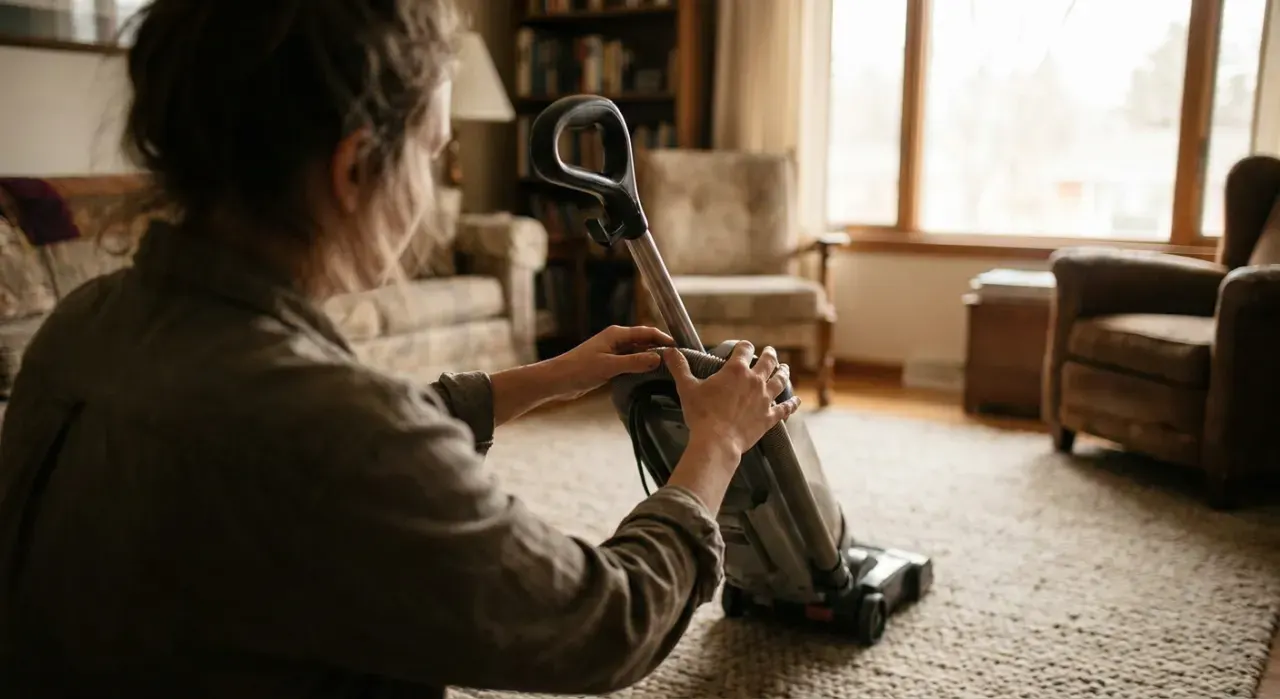
Unclogging a vacuum hose is a quick, beginner-level fix, usually five minutes and no cost, that restores the suction a blockage stole. There is no risk beyond avoiding sharp tools that could puncture the hose, and no permit or pro is needed. The whole job is finding which section is blocked and pushing the clog out with a broom handle or flushing it with water, then letting a washed hose fully dry before reattaching. Stop vacuuming as soon as suction drops, so the motor is not left straining against the blockage and overheating.
Step-by-step: clearing the hose
- Turn off and unplug the vacuum. Kill the power before handling the hose, and empty the bin or change the bag, since a full bin mimics and worsens a clog.
- Locate the blockage. Detach the hose and cover one end with your hand while the vacuum runs on the port; weak pull means the clog is in the hose, strong pull means it is in the head or wand instead.
- Find where in the hose. Drop a coin or small ball through the straightened hose. If it falls out the far end, the hose is clear; if it stops, that is your clog location.
- Push it out. Feed a broom handle, long dowel, or a plumber's drain snake gently through the hose to push the clog out, working from the wider end. Do not use anything sharp that could pierce the hose.
- Check the head and wand too. Clear the floor head, brush roll and wand, common secondary clog spots, so you are not left with reduced suction after clearing the hose.
- Flush and deodorize (optional). If the hose is a simple air hose with no wiring, run warm soapy water or a vinegar solution through it to clear residue and smell.
- Dry completely. Hang the hose to air-dry a full 24 hours. Never reattach a damp hose; moisture can reach and damage the motor.
- Reassemble and test. Refit the dry hose, plug in, and confirm suction is back to full at the nozzle.
Tools and materials
You need a broom handle or long dowel (a plumber's drain snake works too), a coin or small ball to locate the clog, and optionally warm water, dish soap or vinegar for a flush. Nothing else. A clogged hose is a maintenance nuisance, but a vacuum that clogs constantly or has lost suction for good may be past its prime; our vacuum cleaner roundup covers the models owners rate for reliable airflow. If tangled hoses and pet-hair clogs are your recurring headache, a pet-hair vacuum is built to pass more hair, and a cordless stick vacuum has a shorter, simpler air path with fewer places to clog.
Mistakes to avoid
- Running the vacuum against the clog. It overheats the motor. Stop as soon as suction drops and clear the blockage.
- Using a sharp tool. A screwdriver or wire punctures the hose. Use a smooth broom handle or dowel.
- Reattaching a wet hose. Moisture can damage the motor and breeds odor. Air-dry a washed hose fully first.
- Washing a powered hose. Hoses with electrical connectors for powered heads should not be submerged. Check before rinsing.
- Ignoring a full bin. An over-full bag or bin mimics a clog and causes new ones. Empty it before troubleshooting.
We never buy, test or physically handle the products we rank. Recommendations come from aggregated owner reviews, star ratings, review volume and expert consensus — see how we rank.
More from this hub: Vacuums & Floor Care · Cleaning a vacuum filter · Replacing a vacuum belt · Best vacuum cleaners · How we rank