 Garden


Affiliate Disclosure
Some links on this page are affiliate links. As an Amazon Associate, we earn from qualifying purchases — at no extra cost to you. We do not buy, test, or physically handle the products we cover; our rankings come from aggregated owner reviews, ratings and expert consensus. Commissions never change our verdicts. How we rank · full disclosure.
How often you should vacuum carpet depends on your household: vacuum high-traffic areas two to three times a week, do the whole carpet once a week as a baseline, and step up to daily if you have shedding pets, allergy sufferers, or young children. A single universal number does not fit every home. The right schedule is driven by how much foot traffic, hair, and fine dust your carpet actually collects, and by who in the house is most affected by what settles into the pile.
We do not test or physically handle the products we cover; our guidance draws on manufacturer guidance and the aggregated experience in thousands of owner reviews, as explained in how we rank.
The baseline: once a week for everyone
Even in a quiet, pet-free, allergy-free home, carpet should be vacuumed at least once a week. Carpet acts like a filter, trapping dust, grit, skin cells, and fibers that sift down out of the air and off your shoes. Left in place, that grit is abrasive: every footstep grinds it against the carpet fibers, cutting and dulling them, which is what actually wears carpet out over the years. Weekly vacuuming removes the abrasive load before it can do that damage, so it protects the carpet as much as it cleans it.
Think of the weekly whole-house pass as your floor. From there you add more frequency in specific rooms and along specific paths based on the factors below. Almost no household lands exactly on "once a week everywhere" once you account for how unevenly dirt arrives.
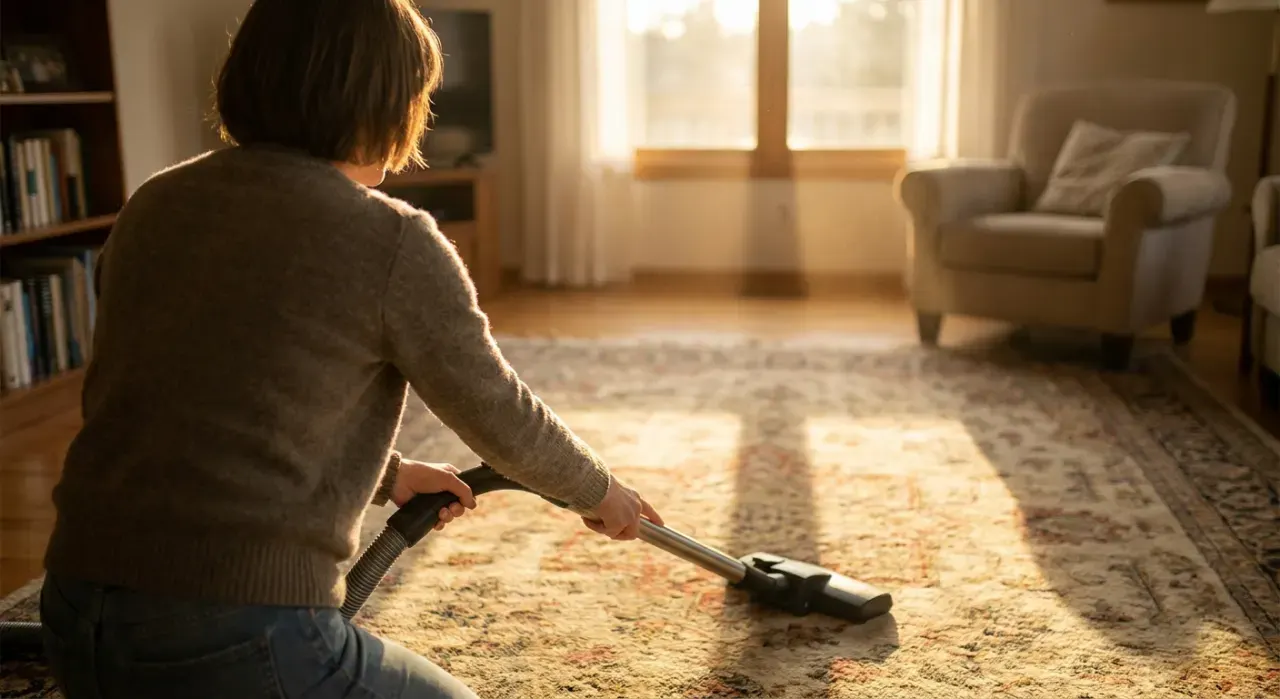
How often to vacuum by household type
The table below is a practical starting schedule. Treat it as a guide to adjust once you see how quickly your own carpet shows dirt, hair, or crumbs.
| Household | High-traffic areas | Whole carpeted area |
|---|---|---|
| Single person or couple, no pets | Twice a week | Once a week |
| Family with children | Every day or every other day | Twice a week |
| One shedding pet | Daily | Twice a week |
| Multiple pets | Daily, sometimes twice | Two to three times a week |
| Allergy or asthma sufferer | Daily in bedrooms and living areas | Three times a week, HEPA vacuum |
| Low-use rooms (guest room, formal areas) | N/A | Every one to two weeks |
Pets: the biggest reason to vacuum more
Shedding pets change the math completely. Hair and dander are constantly released, and they work down into the pile where they mat together and become hard to remove. Dander also feeds dust mites and is a common allergen even for people who are not allergic to the animal itself. If you have a dog or cat that sheds, plan on daily vacuuming of the rooms they spend time in, and a full-house pass two to three times a week.
A few things make pet-hair vacuuming more effective:
- Use a brush roll designed for hair — a tangle-resistant or anti-hair-wrap roller pulls embedded hair up instead of skating over it.
- Do a cross pass — go over the area a second time at a right angle, because hair lodges along the lean of the pile and one direction misses it.
- Empty often — pet hair clogs bins and filters fast, and a choked machine loses the suction that lifts hair from deep in the carpet.
If you are shopping for a machine that handles fur well, the Vacuums & Floor Care hub compares options by how owners rate them on hair pickup.
Allergies, asthma, and fine dust
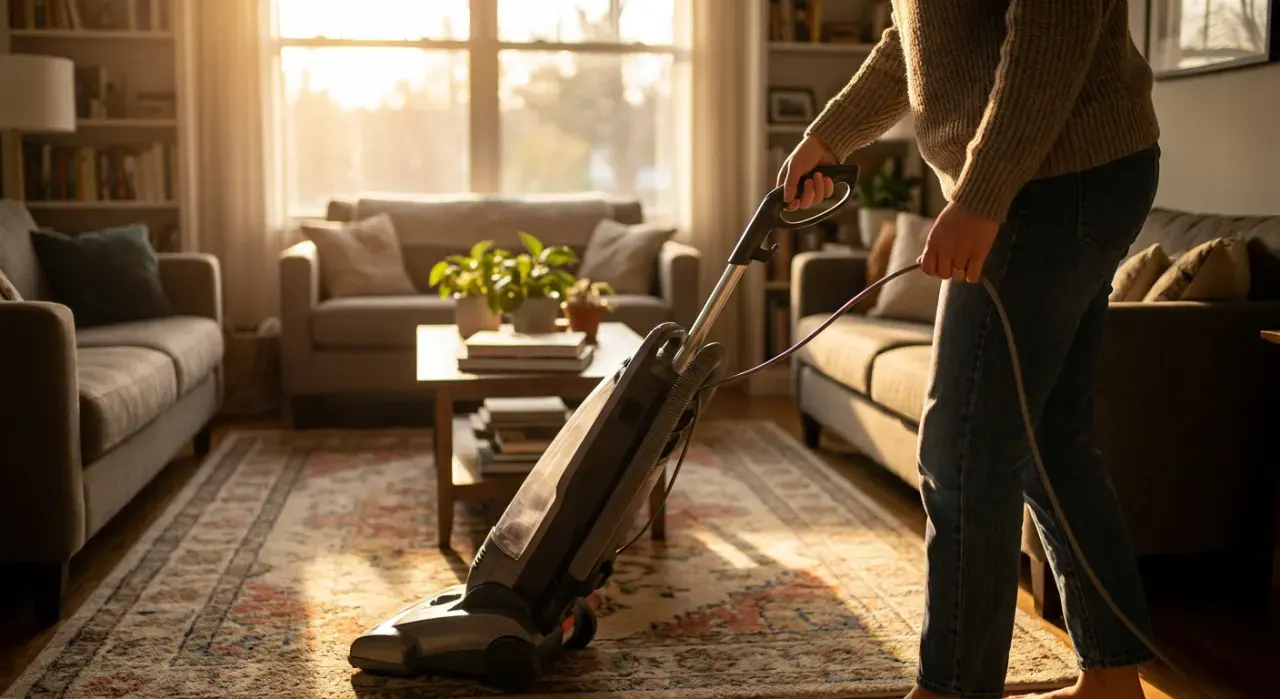
If anyone in the home has allergies or asthma, vacuum more often and with the right machine. Carpet holds dust mites, pollen, mold spores, and pet dander, and normal foot traffic stirs those fine particles back into the air you breathe. Vacuuming three times a week or more removes that reservoir before it builds up.
Two details matter more than raw frequency here. First, use a vacuum with sealed HEPA filtration — an unsealed machine leaks fine allergens out of gaps and blows them straight back into the room, undoing the point of vacuuming. Second, vacuum slowly. Allergens sit deep in the pile, and only slow, deliberate passes give the airflow time to draw them out. Emptying the bin or changing the bag outdoors, or at least away from the person affected, keeps the captured dust from escaping again.
High-traffic vs low-traffic zones
Dirt does not arrive evenly, so your carpet should not be vacuumed evenly. Map your home into two mental zones and treat them differently.
High-traffic zones are the entry areas, hallways, stairs, the path from the door to the kitchen, and the strip of living-room carpet in front of the couch. These collect the majority of tracked-in grit and need vacuuming several times a week, sometimes daily. They are also where carpet wears out first, so keeping grit out of them directly extends the carpet's life.
Low-traffic zones are guest rooms, formal sitting areas, under furniture that rarely moves, and the edges of rooms. These can go one to two weeks between vacuums without any real downside. Spending less time here frees you to hit the high-traffic paths more often, which is where the payoff actually is.
| Zone | Examples | Suggested frequency |
|---|---|---|
| High traffic | Entryways, hallways, stairs, in front of the sofa | 2-3x per week to daily |
| Medium traffic | Main bedrooms, general living area | Weekly |
| Low traffic | Guest rooms, formal rooms, room edges | Every 1-2 weeks |
Technique: how you vacuum matters as much as how often
Frequency does little good if each pass only skims the surface. The most common mistake is moving the vacuum too fast. The brush roll and airflow need a moment to agitate the pile and pull debris up out of it, and a quick back-and-forth stroke simply does not give them that time.
- Go slowly — use deliberate, overlapping passes, roughly one slow stroke every few seconds, far slower than feels natural.
- Overlap each pass — cover about half the previous stroke's width so you do not leave uncleaned stripes.
- Work in two directions — a first set of passes one way, then a second set across it, so the brush reaches dirt hidden by the lean of the pile.
- Go over high-traffic spots twice — the second pass consistently lifts debris the first one left behind.
- Finish in one direction — your last passes in a single direction leave the pile lying uniformly for that even, groomed look.
Set the vacuum height correctly for your carpet: lower for low-pile carpet, higher for plush or high-pile so the brush roll skims rather than digs. A machine set too low labors, pushes instead of glides, and can fuzz delicate fibers over time.
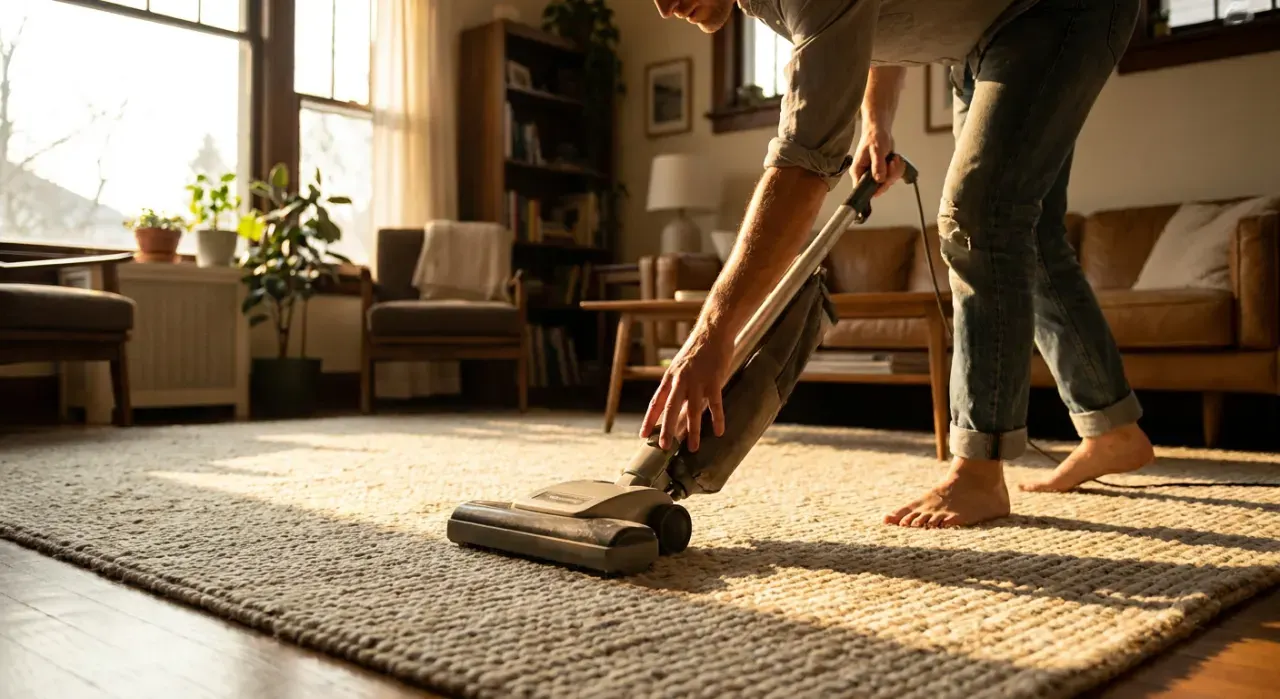
Pile direction and why the second pass works
Carpet fibers lean in a direction, and dirt tucks into the base of the lean where a single pass cannot reach it. Vacuuming against the lean stands the fibers up and exposes that trapped grit; vacuuming across it catches what both the with-the-grain and against-the-grain passes miss. This is the whole reason a two-direction, cross-hatched pattern cleans measurably better than running the machine back and forth along one line. It is also why the final direction you choose shows as visible tracks — a purely cosmetic effect, but a reliable sign you covered the whole area methodically.
Signs you should vacuum more often
Rather than counting days, watch the carpet itself. Any of these means your current schedule is too light for your household:
- Visible crumbs, grit, or hair on the surface between cleanings.
- A gritty, sandy feel underfoot, especially in bare feet.
- Traffic paths that look darker or flattened compared with the surrounding carpet.
- Allergy symptoms that flare indoors, or a stale, musty smell from the pile.
- Pet hair that reappears within a day of cleaning.
If you are seeing these, add a mid-week pass over the high-traffic zones before you commit to buying a more powerful machine — technique and frequency fix most of these before hardware does.
It also helps to think about seasons. Foot traffic and tracked-in debris climb in wet weather and in fall when leaves and grit come in on shoes, and in pollen-heavy spring the allergen load in carpet rises even if visible dirt does not. Many households sensibly run a lighter schedule in the settled parts of the year and step up frequency during those messier stretches rather than holding one fixed number all year. A doormat at every entrance and a no-shoes-indoors habit both cut the incoming grit dramatically, which is the cheapest way to reduce how often you need to vacuum in the first place.
Putting it together
Start from the weekly whole-house baseline, add two-to-three-times-a-week passes over high-traffic paths, and go daily in the rooms your pets, kids, or allergies make demanding. Vacuum slowly, work in two directions, and set the height for your pile. That schedule keeps abrasive grit out of the fibers, lowers the allergen load in the air, and makes the carpet last longer, all at once.
Related: the Vacuums & Floor Care hub compares machines by how owners rate them on carpet, and how we rank explains our research-only method. Browse more guides on the resources index.