 Garden

Affiliate Disclosure
Some links on this page are affiliate links. As an Amazon Associate, we earn from qualifying purchases — at no extra cost to you. We do not buy, test, or physically handle the products we cover; our rankings come from aggregated owner reviews, ratings and expert consensus. Commissions never change our verdicts. How we rank · full disclosure.
To get pet hair out of carpet, loosen it before you vacuum. Drag a rubber squeegee or a stiff rubber-bristled brush across the pile to lift embedded hair into clumps, or mist the area with diluted fabric softener to break the static grip, then vacuum slowly in several directions with a clean filter and an empty bin. The reason a normal vacuum pass fails is that pet hair burrows down and wraps around the fibers — surface suction never reaches it. Break that grip first and it comes right out.
Pet hair is uniquely stubborn in carpet because it is fine, slightly barbed, and highly static-prone, so it clings to synthetic fibers rather than sitting loose on top like ordinary dust. That is why you can vacuum a room, look down, and still see fur woven into the pile. The fix is a two-step approach — loosen, then lift — plus a few habits that stop the buildup in the first place. Here is the full method.
Why your vacuum misses embedded pet hair
Before the fixes, it helps to know why the problem exists, because most of the solutions target one of these causes.
- Hair migrates down and wraps. Foot traffic drives loose hair deep into the pile where it twists around individual fibers. Suction pulls up rather than sideways, so wrapped hair holds on.
- Static holds it in place. Pet hair carries a charge and bonds to synthetic carpet electrostatically, especially in dry winter air. That bond is stronger than light suction.
- Your vacuum is working against itself. A full bin, a clogged filter, or a brush roll choked with wound-on hair all cut airflow and pickup dramatically. A vacuum that struggles with pet hair is often just overdue for cleaning.
Address the loosening and the machine and the job gets easy. Ignore them and you will vacuum the same room three times and still find fur.
Method 1: the rubber squeegee (the cheapest, best trick)
A basic rubber squeegee — the kind sold for windows and showers — is the most effective pet-hair tool most people already own. Rubber generates static as it drags, and that charge pulls embedded hair up out of the pile.
- Vacuum once first to clear the loose surface layer.
- Drag the squeegee firmly across the carpet in short strokes, always pulling toward you and working in one direction across a section.
- Watch the hair gather into rolls and clumps at the edge of the rubber blade.
- Collect the clumps by hand or with a final vacuum pass.
- Change direction and repeat — go across the section a second time at 90 degrees to catch hair oriented the other way.
A rubber-bristled pet brush or a pumice-style carpet rake works the same way and is easier on the wrists for large areas. This method takes real effort per square foot, so use it on the worst spots — the couch-side rug, the pet bed area, the base of the stairs — rather than the whole house.
Method 2: fabric softener spray to break the static
If static is doing the gripping, neutralize it. A diluted fabric-softener mist relaxes the electrostatic bond so hair releases from the fibers.
- Mix one part liquid fabric softener with three parts water in a spray bottle.
- Test an inconspicuous corner first to make sure it does not leave a residue or affect the carpet dye.
- Mist the carpet lightly — a fine even coat, never soaked.
- Let it dry completely, which also reduces static going forward.
- Vacuum thoroughly, and the loosened hair lifts out far more easily.
An anti-static spray does the same job without any softening residue if you prefer. Either way, the point is chemistry, not moisture, so keep the carpet barely damp.
Method 3: the right vacuum and the right technique
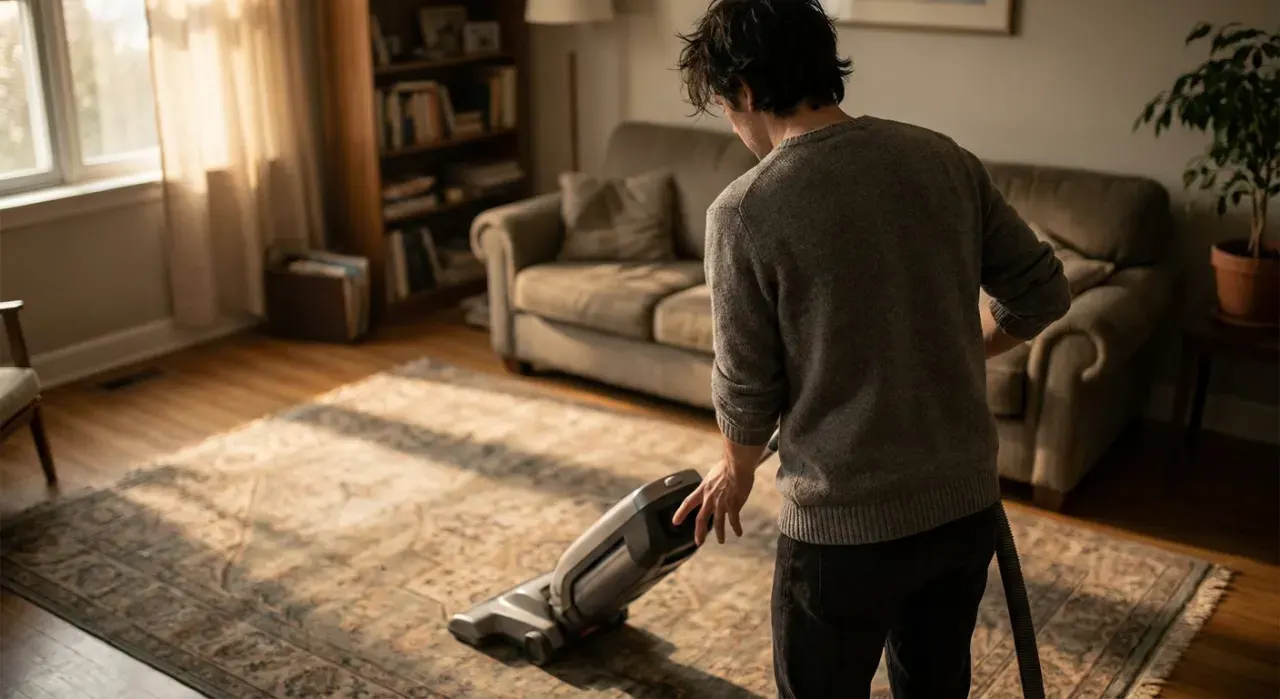
For whole-floor maintenance, a vacuum built for pet hair does most of the work — but only if you use it correctly.
- Empty the bin and clean the filter before a pet-hair session. A HEPA filter half-full of fur strangles airflow; see how to clean a vacuum filter.
- Clear the brush roll. Wound-on hair stops the brush agitating the pile. A tangle-free or anti-wrap brush roll is the biggest hardware upgrade for pet homes.
- Slow down. Push forward, then pull back slowly over the same strip. The slow return stroke, with the airflow working with gravity, is when most embedded hair actually comes up.
- Cross-hatch the carpet. Vacuum north-south, then east-west. Hair lies in a direction, and a single pass only catches one orientation.
- Use the right suction and head. Strong, consistent suction and an agitating brush roll are what separate a good pet vacuum from a poor one.
Choosing the machine matters as much as the technique — our best vacuum for pet hair on carpet and broader best vacuum for pet hair roundups rank the field, and every ranking is explained in how we rank.
Tackling the worst embedded patches
Some areas — where a dog sleeps, where a cat kneads a favorite corner — build up hair packed so deep no single method clears it. Combine tools in sequence.
| Step | Tool | What it does |
|---|---|---|
| 1. Loosen | Rubber squeegee or carpet rake | Lifts deeply wrapped hair up out of the pile |
| 2. De-static | Diluted fabric softener mist | Breaks the electrostatic grip on the fibers |
| 3. Deodorize | Baking soda, 10 to 15 minutes | Neutralizes odor and loosens debris |
| 4. Lift | Pet-hair vacuum, cross-hatched slowly | Removes the freed hair and baking soda |
| 5. Finish | Damp rubber glove or lint roller | Catches the last surface strands |
A slightly dampened rubber glove, wiped across the carpet, is a surprisingly good finishing tool for the final visible strands — the hair balls up and rolls straight off. Keep the glove barely damp so you are not wetting the carpet.
Dealing with the odor that comes with the hair
Pet hair rarely travels alone; it carries dander and odor. Baking soda is the low-cost workhorse here: sprinkle it lightly over the carpet, leave it 10 to 15 minutes to absorb odors, then vacuum it up along with loosened hair and debris. Use it dry only — damp baking soda cakes into the pile and can clog a vacuum.
For set-in odors, an enzyme-based pet cleaner breaks down the proteins that cause the smell rather than masking it, which matters for accidents as well as general pet funk. For a broader schedule of when to bring in deeper cleaning, see how often should carpets be deep cleaned.
Preventing the buildup in the first place
Every method above is easier if there is less hair to remove. Prevention is where pet owners win the war.
- Vacuum on a schedule. Pet homes need vacuuming two to three times a week in traffic and pet-favorite areas. Our guide on how often to vacuum a house with pets covers the cadence.
- Brush your pet regularly. Hair caught on a grooming brush is hair that never reaches the carpet. Regular brushing during shedding season makes a dramatic difference.
- Use washable mats and throws in your pet's favorite spots. A throw over the sofa corner or a mat by the bed catches the bulk of the shedding and goes straight in the wash.
- Control humidity. Moderate indoor humidity reduces the static that binds hair to fibers, so hair stays loose and vacuums up more easily. A humidifier in dry winter months helps.
Put the routine together — brush the pet, vacuum a couple of times a week, hit the problem patches with the squeegee-and-softener combo now and then — and embedded pet hair stops being a battle and becomes a quick weekly habit.
For choosing the machine that makes all of this easier, start with our best vacuum for pet hair on carpet picks and, for deep pile specifically, best vacuum for deep pile carpet. How we rank every product is explained in how we rank, and the full library sits at the vacuums and floor care hub.