 Garden

Affiliate Disclosure
Some links on this page are affiliate links. As an Amazon Associate, we earn from qualifying purchases — at no extra cost to you. We do not buy, test, or physically handle the products we cover; our rankings come from aggregated owner reviews, ratings and expert consensus. Commissions never change our verdicts. How we rank · full disclosure.
The short answer: a soaker hose does not strictly require a pressure regulator, but one is strongly recommended, because most soaker hoses work best at only 10 to 25 psi while typical home water pressure runs 40 to 80 psi. At that full pressure a soaker hose tends to spray unevenly, leak from weak spots, split its seams, or blow off its end cap, and it dumps most of its water near the faucet. A small inline pressure regulator brings the supply down into the hose's ideal low-pressure range so it seeps slowly and evenly along its whole length.
Whether you need one comes down to your home's pressure and the length of the run. We do not test hoses on a bench; our irrigation rankings come from aggregated owner reviews and expert consensus, described in how we rank. The full picture is at the watering and irrigation hub.
What pressure do soaker hoses want?
Soaker hoses are low-pressure devices by design. Compare their target to typical house pressure and the gap is obvious.
| Source | Typical pressure |
|---|---|
| Soaker hose ideal | 10 to 25 psi |
| Drip emitter ideal | 15 to 30 psi |
| Typical home water pressure | 40 to 80 psi |
| Common inline regulator ratings | 25 psi (soaker), 25 to 30 psi (drip) |
Home pressure is usually two to four times what a soaker hose is built for, which is exactly why high pressure causes trouble. If you do not know your home's pressure, an inexpensive gauge that screws onto a hose bib reads it in seconds.
When do you need a regulator?
You benefit most from a regulator in these situations:
- High household pressure — anything above roughly 40 to 50 psi at the spigot pushes a soaker hose past its comfort zone.
- Long runs — the longer the hose, the more uneven the watering becomes without controlled pressure, seeping fast at the faucet and barely at the end.
- Multiple hoses linked together, which compounds the uneven-flow problem.
- Any drip system, where a regulator is standard rather than optional — covered in how to set up drip irrigation.
If you run a single short soaker hose off a spigot with modest pressure, you may get by without one — but adding a cheap regulator still makes watering more even and extends the hose's life.
What goes wrong at high pressure?
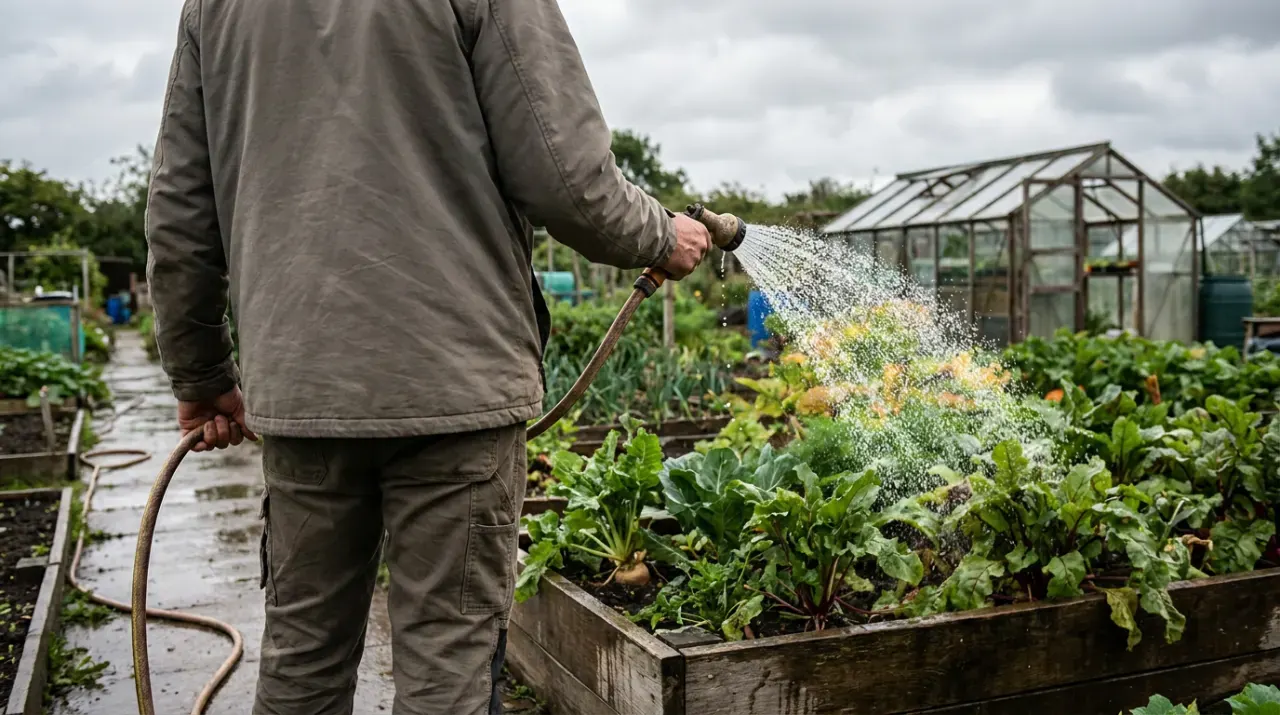
Running a soaker hose at full house pressure causes a cluster of familiar problems. The hose weeps hard near the faucet and delivers little at the far end, so plants get watered unevenly. Weak spots and seams spray or leak, and in the worst case the seam splits or the end cap blows off entirely. High pressure also shortens the hose's working life, since the material is not made to hold that force day after day. Dropping the pressure fixes all of it, giving the slow, uniform seep the hose is designed for. This is the same low-pressure principle that governs how much water a soaker hose puts out, covered in how much water a soaker hose uses per hour.
How do you set one up?
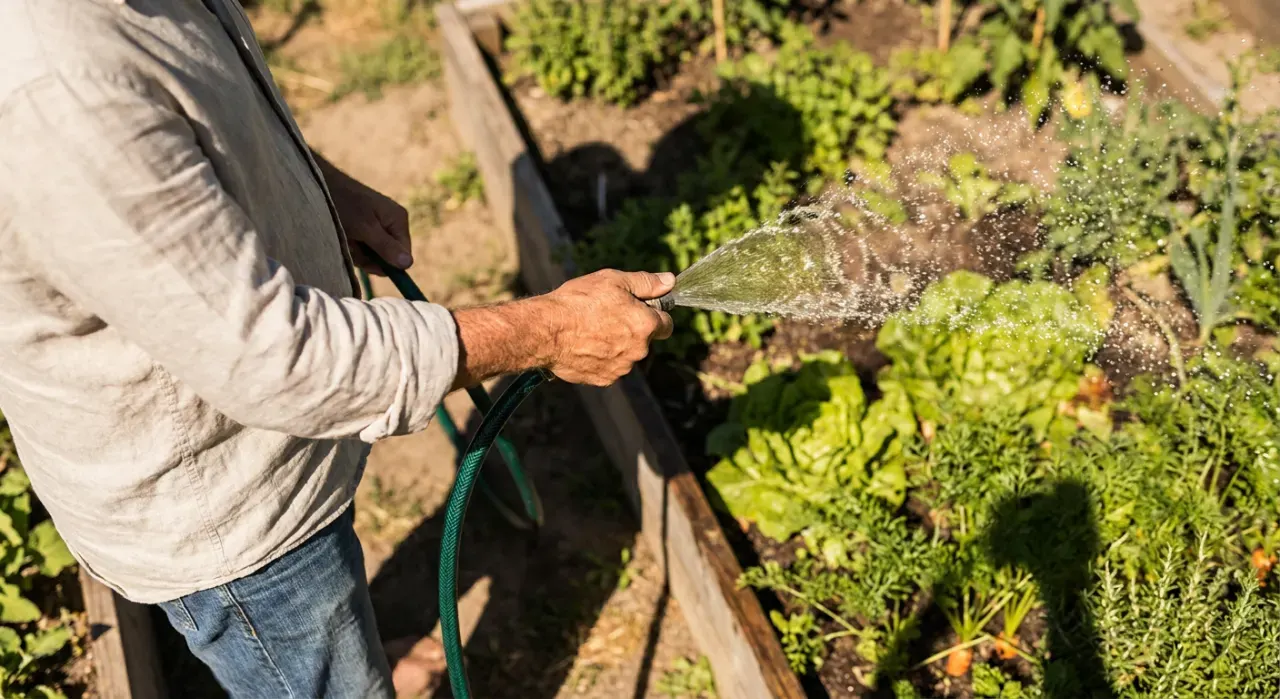
A soaker or drip setup at the hose bib usually stacks a few small parts in order: a backflow preventer to protect your drinking water, a filter to keep sediment from clogging the hose, a pressure regulator to drop the pressure, and often a timer for automatic watering. Screw the regulator on after the filter and before the hose. As a no-cost alternative for a single hose, you can simply open the faucet only a quarter to a third of the way, which throttles the flow — less precise than a regulator but often good enough for a short run. For scheduling and the rest of the gear, see best hose timers and the comparison in drip vs soaker hose.
Bottom line: soaker hoses run best at low pressure, and a cheap regulator delivers it consistently, preventing bursts and uneven watering. Related questions: soaker hose water use per hour, why a hose leaks at the spigot, and how to winterize an irrigation system.