 Garden

Affiliate Disclosure
Some links on this page are affiliate links. As an Amazon Associate, we earn from qualifying purchases — at no extra cost to you. We do not buy, test, or physically handle the products we cover; our rankings come from aggregated owner reviews, ratings and expert consensus. Commissions never change our verdicts. How we rank · full disclosure.
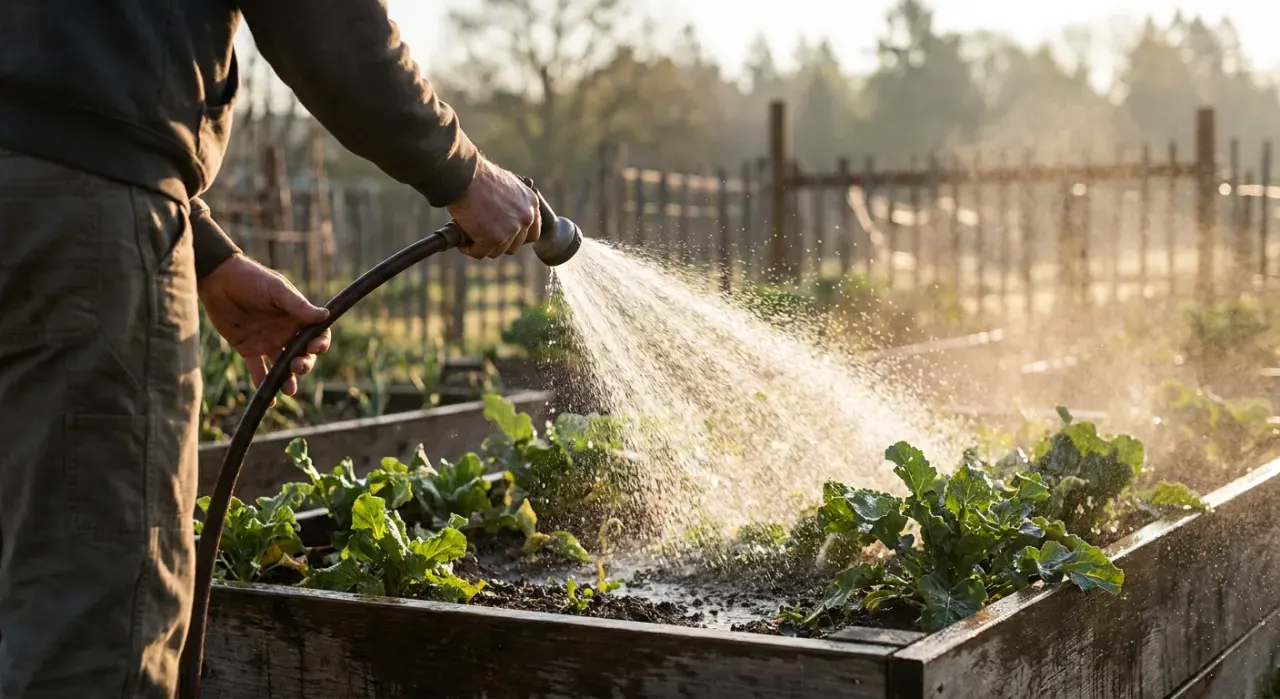
Yes, evening watering is fine as long as you finish two to three hours before sunset when watering overhead. Early evening, roughly 4pm to 6pm, gives foliage enough daylight and air movement to dry before dew forms, and it wastes far less water to evaporation than a midday run. Soil-level watering with drip line or a soaker hose carries no timing restriction at all. Early morning is still the ideal window, but evening is a genuinely good second choice — and for containers in summer heat it is often necessary.
Why is early evening acceptable when night is not?
Because the leaves still get a chance to dry. The concern with late watering is leaf wetness duration: fungal spores need a film of water on the leaf surface for a stretch of hours to germinate, and once the sun is down and dew forms, nothing dries. Water at 5pm on a July evening and there is still warmth, light and air movement for two or three hours, which is usually enough. Water at 9pm and the foliage stays damp until mid-morning. The clock time matters less than the gap between watering and sunset, which shifts substantially between June and September.
| Window | Overhead watering | Drip or soaker |
|---|---|---|
| 4am–9am | Best | Excellent |
| 3pm–6pm | Good if 2–3 hr before sunset | Excellent |
| 6pm–sunset | Acceptable, watch disease-prone plants | Excellent |
| After sunset | Avoid where you can | Fine |
When is evening actually better than morning?
Three situations, and they are common. First, containers and hanging baskets in high summer: a pot that was watered at 7am can be bone dry by 4pm, and a second evening drink prevents the wilt-and-recover cycle that stunts growth and causes blossom end rot in tomatoes. Second, new transplants and freshly seeded areas during a heat wave, which need moisture available through the night rather than a single dawn application. Third, anyone whose schedule simply does not allow morning watering — an evening routine you actually follow beats a dawn routine you skip, and consistency matters more to plants than an hour on either side.
How should you water in the evening?
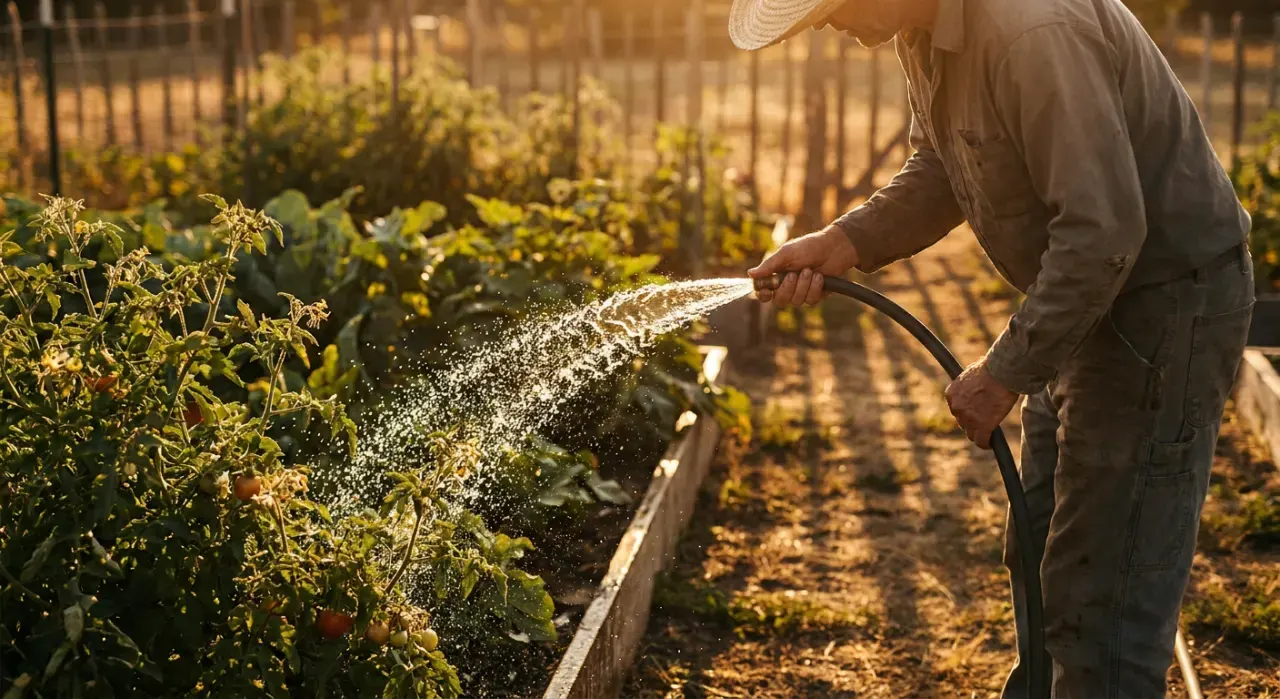
- Aim at the soil, not the canopy. A watering wand with a shut-off, a soaker hose or drip line keeps foliage dry and removes the disease question entirely.
- Water deeply, not often. Most established beds want roughly one inch of water per week delivered in one or two soakings, which encourages deep rooting.
- Check before you water. Push a finger or a moisture probe three to four inches down; the surface dries hours before the root zone does.
- Mulch. Two to three inches of mulch cuts surface evaporation substantially and keeps the root zone moisture steadier between waterings.
- Skip the lawn. Cool-season turf is the one area where evening irrigation is genuinely discouraged in humid summer weather.
What about lawns specifically?
Lawns are the exception worth taking seriously. Turf programs at several land-grant universities advise against late-day and overnight irrigation for cool-season grasses, because brown patch, dollar spot and pythium all thrive on extended leaf wetness in warm, humid conditions — precisely what an evening sprinkler run creates in July. Warm-season grasses such as bermuda and zoysia in dry climates are far more tolerant. If your only automatic window is late, set the controller so the cycle ends close to sunrise rather than starting in the evening, which cuts leaf wetness by most of the night. Run times are covered in how long to run a lawn sprinkler.
Where to go next
The overnight case is covered separately in is it bad to water plants at night, and the full daily picture in the best time of day to water and the best time of day to water potted plants. For automating the right window, see our ranked best hose timers. Everything sits under the watering and irrigation hub.
We never buy or physically handle the products we rank — our recommendations come from aggregated owner reviews and expert consensus, and the method is on how we rank.