 Garden
Affiliate Disclosure
Some links on this page are affiliate links. As an Amazon Associate, we earn from qualifying purchases — at no extra cost to you. We do not buy, test, or physically handle the products we cover; our rankings come from aggregated owner reviews, ratings and expert consensus. Commissions never change our verdicts. How we rank · full disclosure.
Watering at night is not ideal, but the risk depends entirely on whether the leaves get wet. Overhead sprinklers after dark leave foliage damp for ten hours or more through the coolest, most humid part of the night, which is the condition fungal diseases need to establish. Watering at soil level with drip line or a soaker hose at night carries very little risk and wastes almost no water to evaporation. Early morning, roughly 4am to 9am, remains the best time. Night is second best if it is delivered to the soil.
Why is night watering discouraged?
Because of leaf wetness duration, not because of the darkness. Fungal spores of the pathogens that cause powdery mildew, downy mildew, black spot, early blight and brown patch need a film of free water or very high humidity on the leaf surface for a period of hours to germinate. Overnight, temperatures fall, dew forms, and air movement drops, so foliage wetted at 9pm can stay wet until mid-morning. Watering at dawn instead means the sun and rising air movement dry the leaves within an hour or two. Cooperative extension programs across the US consistently give the same guidance for this reason.
| Time | Evaporation loss | Leaf wetness | Verdict |
|---|---|---|---|
| 4am–9am | Low | 1–2 hours | Best |
| 9am–3pm | High (20–30%) | Minutes | Wasteful but safe for foliage |
| 3pm–7pm | Moderate | 2–5 hours | Acceptable at soil level |
| After dark, overhead | Very low | 10+ hours | Highest disease risk |
| After dark, drip/soaker | Very low | None | Fine for most gardens |
Which plants actually mind?
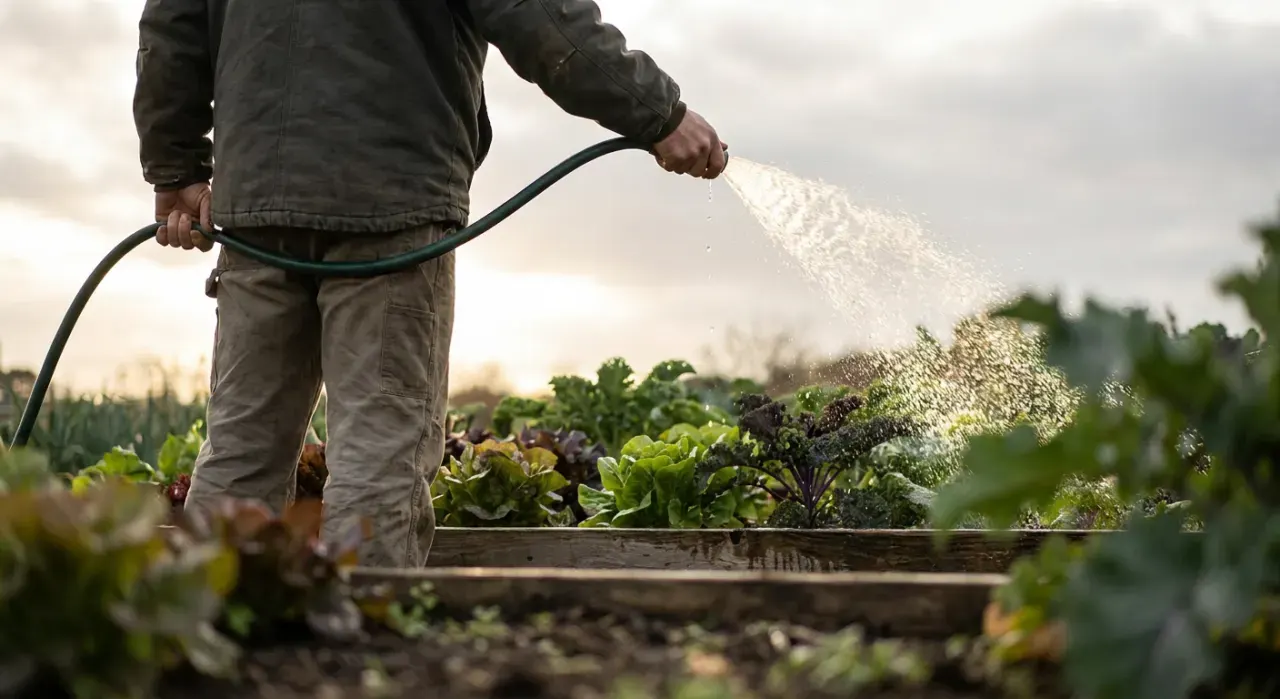
The disease-prone ones, and they are easy to name. Tomatoes are the classic case — early blight, septoria leaf spot and late blight all move faster on wet foliage. Squash, cucumbers and melons pick up powdery and downy mildew. Roses get black spot. Phlox, bee balm, zinnias and lilacs mildew readily. Cool-season lawn grasses, especially tall fescue and Kentucky bluegrass, are prone to brown patch and dollar spot in warm humid weather. By contrast, established shrubs, trees, succulents, ornamental grasses and most native perennials in an open position are largely indifferent to when the water arrives.
Does drip irrigation change the answer?
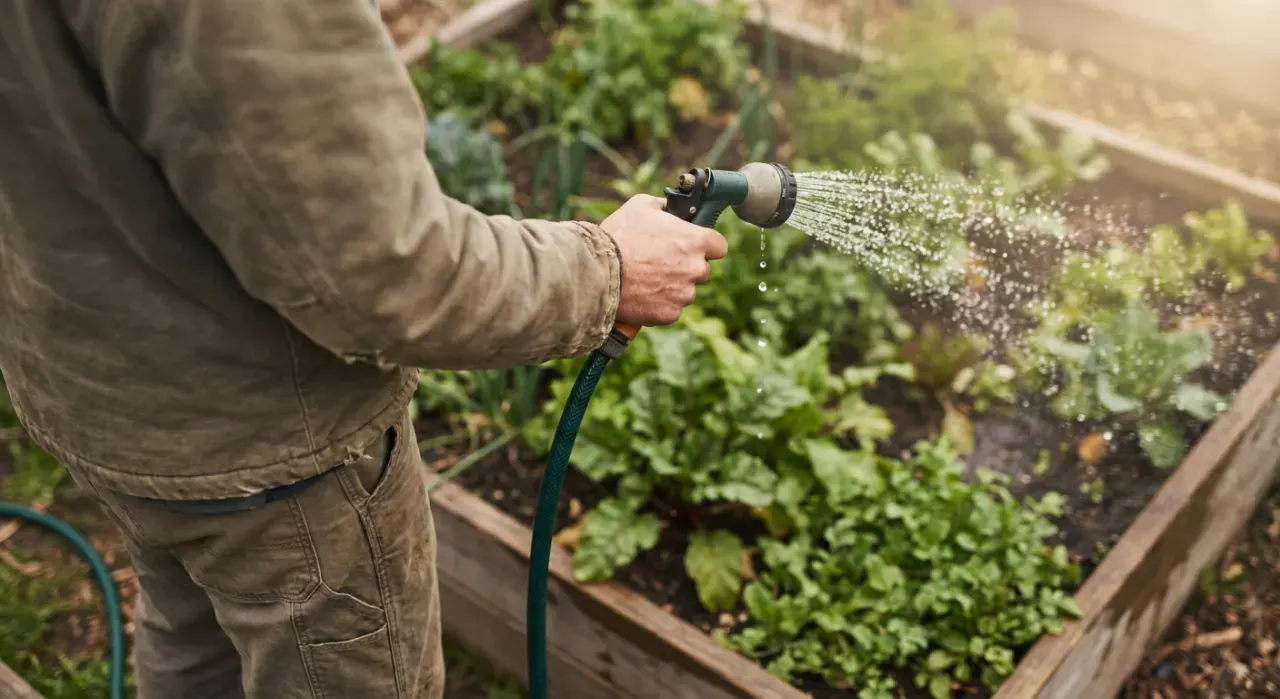
Completely. Drip line, soaker hose and drip emitters put water at the soil surface under the canopy, so no foliage gets wet and the leaf wetness argument disappears. That makes overnight the ideal window for an automated drip system: water pressure is usually highest, evaporation is at its lowest, and nothing is competing for the hose. This is the single most common reason experienced gardeners run their timers at odd hours. If you are setting a system up, our guides to setting up drip irrigation and how a hose timer works cover the scheduling side, and our picks for the best drip irrigation kits rank current systems on aggregated owner ratings.
When is night watering the right call?
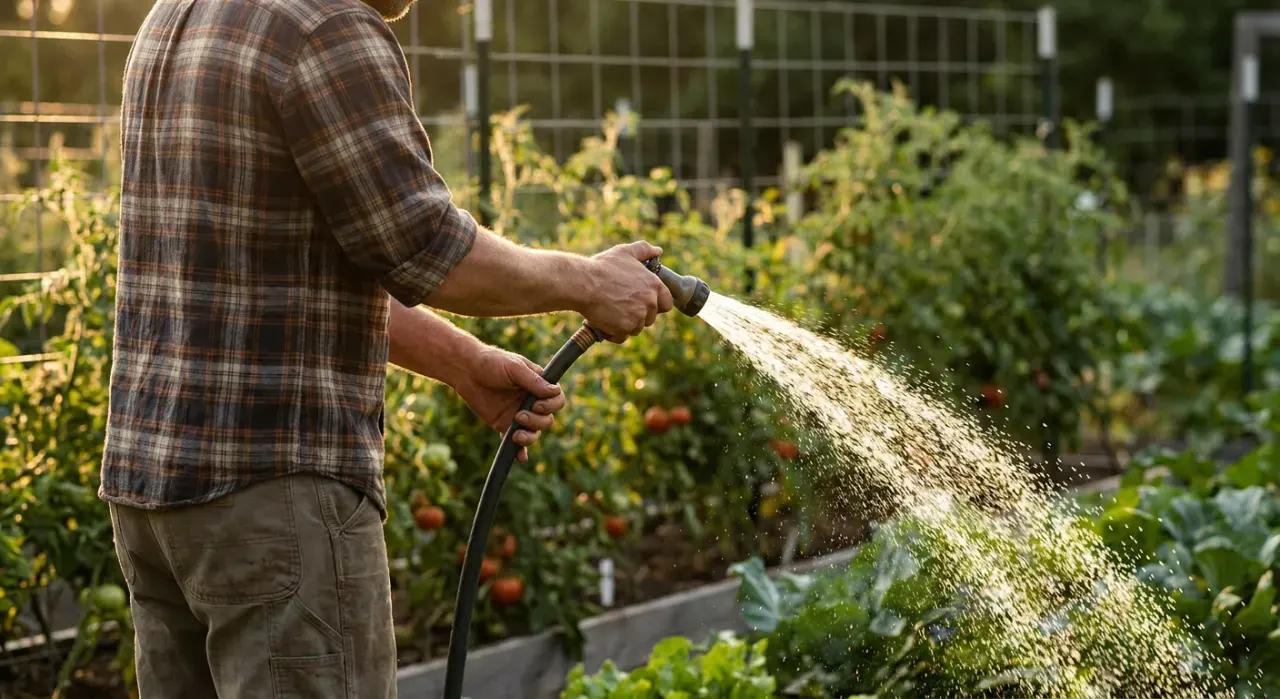
When the alternative is not watering at all. A wilting new transplant at 9pm should be watered at 9pm — drought stress is a certain problem, and disease is a possibility. Night watering is also sensible during a heat wave, when many municipalities restrict daytime irrigation outright, and in arid climates where humidity is low enough that foliage dries quickly even after dark. Container plants often need an evening drink in summer simply because they dry out faster than the ground. Water the soil rather than the leaves and the trade-off largely disappears. The related question of dusk and early evening watering is covered in is it okay to water plants in the evening.
Where to go next
Our page on the best time of day to water covers the full daily picture, and how much to water a garden covers volume and depth. For automating a dawn schedule, see our ranked best hose timers. Everything sits under the watering and irrigation hub.
We never buy or physically handle the products we rank — our recommendations come from aggregated owner reviews and expert consensus, and the method is on how we rank.