 Garden

Affiliate Disclosure
Some links on this page are affiliate links. As an Amazon Associate, we earn from qualifying purchases — at no extra cost to you. We do not buy, test, or physically handle the products we cover; our rankings come from aggregated owner reviews, ratings and expert consensus. Commissions never change our verdicts. How we rank · full disclosure.
Water your lawn between about 4am and 9am. Early morning wins on three counts at once: evaporation losses are at their lowest, the air is usually calmest so less spray drifts away, and — the reason that actually matters for the health of the turf — grass blades dry quickly once the sun comes up, which denies fungal diseases the long period of leaf wetness they need. Evening and overnight watering is the timing turf specialists most consistently advise against. Midday is merely wasteful; evening is what costs you grass.
Why early morning is the right window
Three separate effects line up in the same few hours.
Evaporation is lowest. Air temperature is at its daily minimum around dawn and relative humidity at its highest, so less of what leaves the nozzle turns to vapor before it lands. The gap between a 6am and a 2pm session is not trivial on a hot day.
Wind is calmest. This is the bigger loss and the one people underestimate. Water that evaporates is at least partly replaced by higher humidity around the turf; water that drifts onto the driveway is simply gone. Afternoon breezes routinely pull the outer third of a spray pattern off target.
Water pressure is best. Household and neighborhood demand has not started at 5am, so static pressure is at its daily high and steadiest. Sprinklers throw their design radius rather than falling short, which matters for the head-to-head overlap the system was laid out for.
EPA WaterSense makes the same point from the water-conservation side, advising against watering in the middle of the day when the sun evaporates much of the water before it reaches the plants. Residential outdoor water use in the US runs to nearly 8 billion gallons a day by the EPA's estimate, and timing is one of the few levers that costs nothing.
The real argument: leaf wetness and turf disease
The conservation case for morning watering is worth a modest percentage. The disease case is worth your lawn.
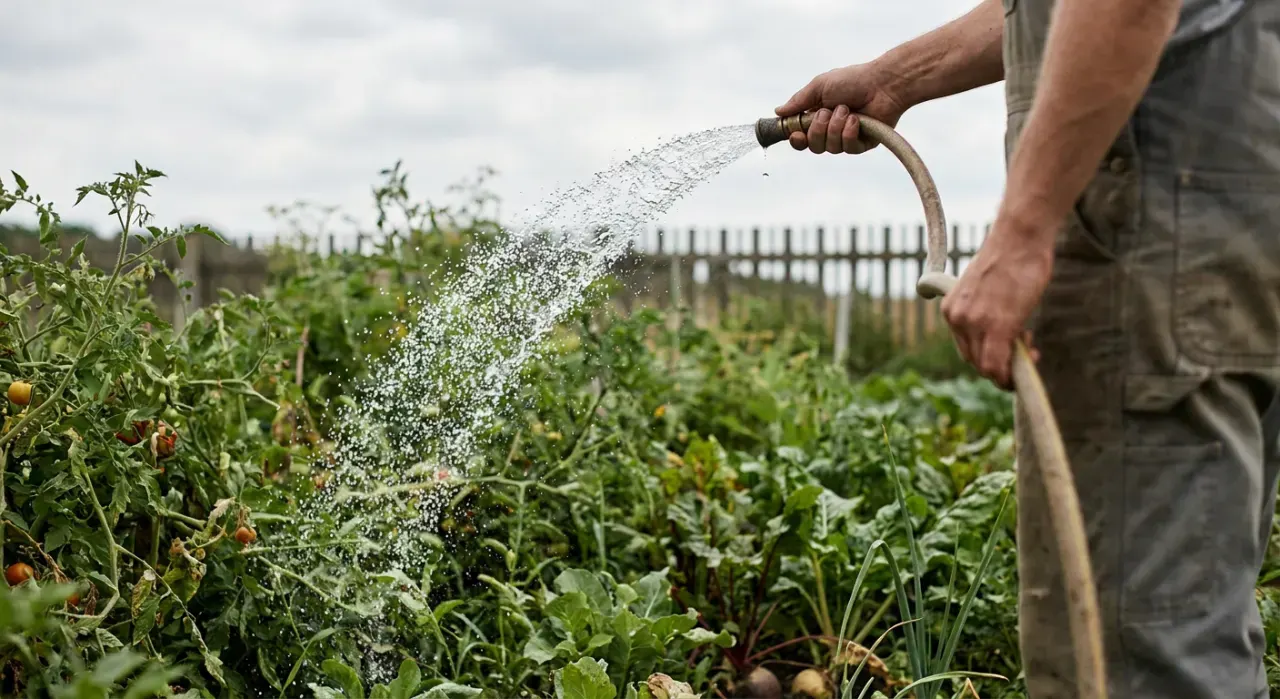
Turf fungal pathogens need free water on the leaf surface to germinate and infect, and how long the blades stay wet is the controlling variable. In nature grass is wet from dew formation in the small hours until the sun burns it off mid-morning — a natural wet period of perhaps six to ten hours. Irrigating at 5am overlaps that existing window and adds almost nothing to it. Irrigating at 8pm starts the wet period five or six hours early and can push total continuous leaf wetness past twelve hours, night after night.
Clemson's extension guidance recommends watering early in the morning specifically because grass blades dry off quickly, reducing the probability of fungus spores germinating and infecting the leaf tissues. The diseases in question are the ordinary ones every American lawn meets: brown patch in warm humid weather, dollar spot on nitrogen-hungry turf, pythium blight in hot muggy spells. All three are leaf-wetness driven.
The hour-by-hour picture
| Time | Evaporation and drift | Disease risk | Verdict |
|---|---|---|---|
| 4am–9am | Lowest | Lowest — dries with the sun | Ideal |
| 9am–noon | Rising | Low | Acceptable |
| Noon–4pm | Highest | Low | Wasteful but not harmful |
| 4pm–7pm | Moderate | Moderate — depends on drying time | Tolerable if blades dry before dark |
| After dark | Low | Highest | Avoid |
The one nuance worth adding: if your lawn is already wet with dew at 8pm and stays wet all night regardless, an evening session adds less risk than it would in a dry climate where the turf would otherwise have dried out. In the arid West, evening watering is a smaller sin than it is in the humid Southeast and Midwest.
The midday myth, and what is actually true
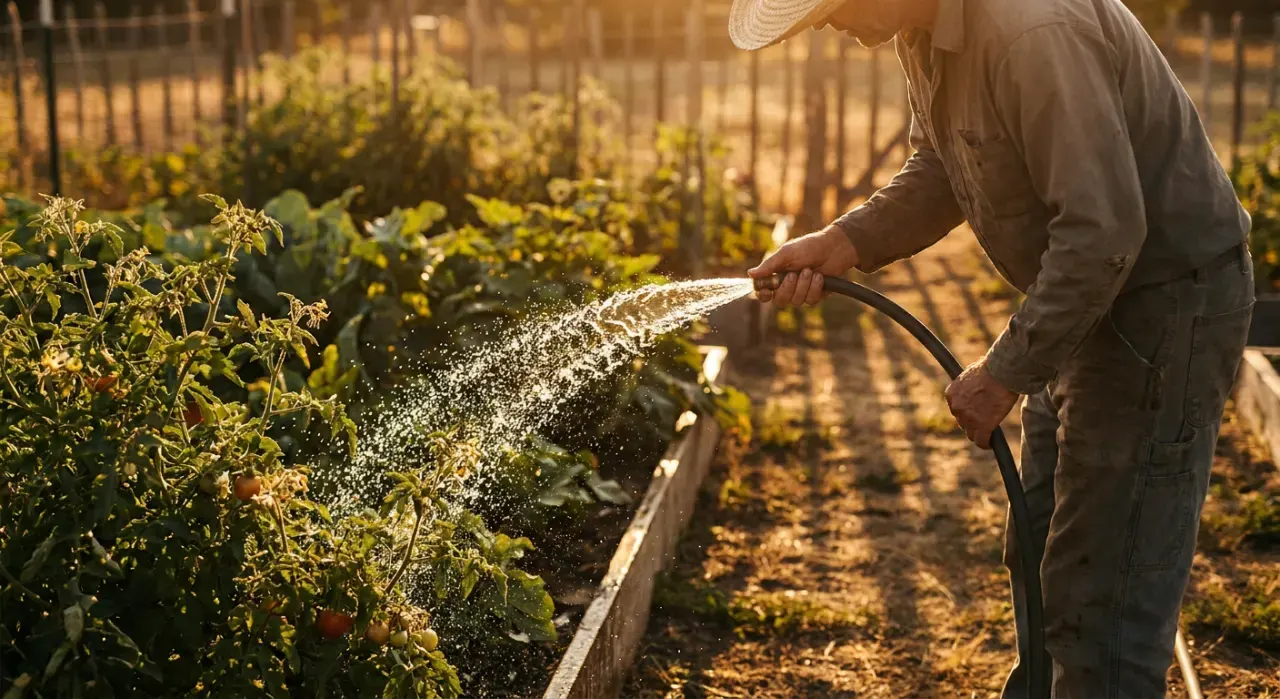
You have been told that watering in bright sun scorches grass because droplets focus light like lenses. It is not true for turf. A droplet on a grass blade does not form a tight enough focus to burn the tissue underneath, and the blade is being actively cooled by the water sitting on it. The idea persists because midday watering is a bad habit — just for the mundane reason that a meaningful share of the water never reaches the root zone.
Where midday watering genuinely helps: syringing. During an extreme heat event, a very short cycle of a few minutes in the early afternoon wets the canopy and cools the turf through evaporation without soaking the profile. That is a heat-stress intervention, not irrigation, and it is not a substitute for a proper morning soaking.
If evening is genuinely your only option
Plenty of households cannot water at 5am — no timer, restricted hours, well recovery limits. Make it as safe as you can:
- Finish at least two hours before sunset so the canopy dries before temperatures drop and dew begins forming.
- Water less often and more deeply. One long evening session a week exposes the turf to far fewer wet nights than four short ones.
- Cut nitrogen fertilizer in humid periods. Lush, soft growth is the most susceptible to brown patch.
- Improve airflow. Thinning dense shrubs at the lawn's edge shortens the drying time more than most people expect.
- Buy a timer. An inexpensive hose timer removes the problem entirely — see the best hose timers and how a hose timer works.
Container plants and vegetable beds follow slightly different logic, covered in the best time of day to water potted plants and is it OK to water plants in the evening.
The situations where the rule bends
Early morning is right for established lawn. Three cases genuinely differ.
New seed. Germinating seed needs the top inch of soil kept damp, which in hot weather means two or three short cycles spread through the day — typically early morning, late morning and mid-afternoon. Disease risk is low on bare soil, and the seed drying out for an afternoon can cost you the whole sowing. Once the grass is up and mowed twice, switch to the established schedule.
New sod. Same logic for the first week: keep the soil under the sod moist, even if that means a second session in the afternoon. Lift a corner to check rather than judging by the surface.
Extreme heat events. During a genuine heat emergency, a two- to four-minute midday cycle wets the canopy and cools the turf by evaporation. Turf managers call this syringing. It is a heat-stress intervention that puts almost no water into the soil, and it does not replace the morning soaking — it supplements it.
Why 5am also waters better, not just more efficiently
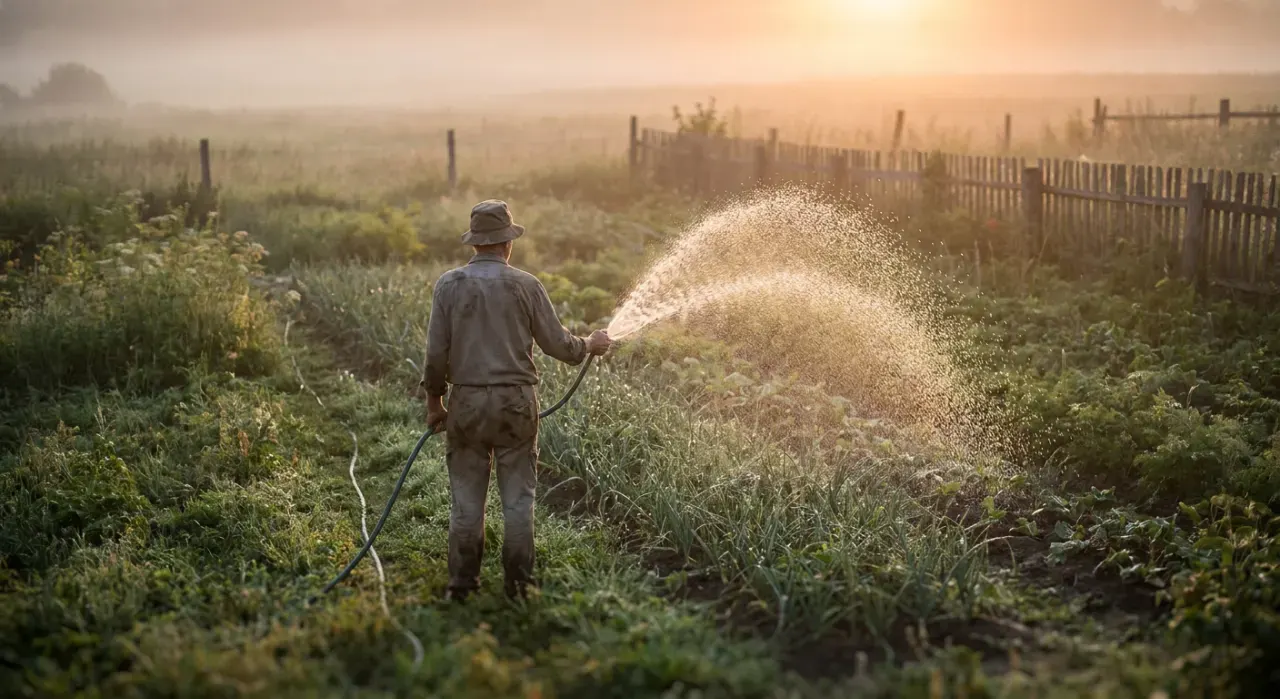
There is a mechanical reason the early window works beyond evaporation. Household and neighborhood water demand is at its daily minimum before dawn, so static pressure at your service is at its highest and steadiest. Sprinklers are designed around a pressure band — gear-drive rotors around 40 to 55 psi, spray nozzles around 30 — and when supply pressure sags during the morning rush, heads throw short and the head-to-head overlap the system was laid out for stops closing.
The practical symptom is a lawn with faint dry rings between heads that appear only in certain months or at certain hours. If you water at 7am on a weekday and the pattern looks weaker than the same zone run at 5am on a Sunday, pressure is the variable, not the heads. Measure it with a hose-bibb gauge at both times before adjusting anything — the method for adjusting heads once you know is in how to adjust sprinkler heads.
Check your local watering hours before you set the controller
Many US municipalities and water districts restrict outdoor irrigation to specific days and hours, frequently banning it between mid-morning and early evening precisely to reduce evaporation. Those windows are legally binding and often carry fines, and in some districts they are tied to an odd/even address rotation. Look up your utility's current rules before you program a schedule; a controller set to a prohibited hour is an expensive way to be right about agronomy.
Where to go next
Timing is half the answer; frequency and depth are the other half — see how often to water your lawn and how long to run a lawn sprinkler. To dial in the schedule, use the sprinkler run time calculator and the irrigation water cost calculator. For hardware, our ranked best oscillating sprinklers and best sprinkler system compare current options. Everything sits under the watering and irrigation hub.
We never buy or physically handle the products we rank — recommendations come from aggregated owner reviews and expert consensus. Full method: how we rank.