 Garden
Affiliate Disclosure
Some links on this page are affiliate links. As an Amazon Associate, we earn from qualifying purchases — at no extra cost to you. We do not buy, test, or physically handle the products we cover; our rankings come from aggregated owner reviews, ratings and expert consensus. Commissions never change our verdicts. How we rank · full disclosure.
To keep plants alive while you are away, match the method to your trip length: for a weekend, water deeply and group plants in shade; for one to two weeks, use self-watering wicks, globes, or a water tray indoors and a hose timer on a drip or soaker system outdoors; for longer, rely on automated drip irrigation with a timer or a trusted person. Grouping plants together, moving them out of direct sun, and mulching heavily slow water loss and stretch any method further.
The right approach depends on whether plants are indoors or out, how thirsty they are, and how long you will be gone. Below are the methods that work, ranked by trip length, plus the simple steps that make every method last longer. Our recommendations reflect aggregated gardener experience and product owner reviews rather than first-hand trials, as described in how we rank.
Match the method to your trip length
The single most useful way to plan is by how long you will be gone, since a weekend and a month call for completely different solutions.
| Away for | Indoor plants | Outdoor plants |
|---|---|---|
| 2 to 4 days | Deep water, group, move from sun | Deep soak, mulch, move pots to shade |
| 5 to 14 days | Wicking, globes/spikes, water tray, self-watering pots | Hose timer on drip or soaker system; mulch |
| 2+ weeks | Automated wicking plus a plant sitter for large plants | Automated drip with timer; trusted helper as backup |
The general rule: the longer the trip, the more you should lean on automation rather than one-off measures. A weekend can be handled with a watering can and some rearranging; a two-week absence in summer really needs a timer or a person.
Prep steps that help every method
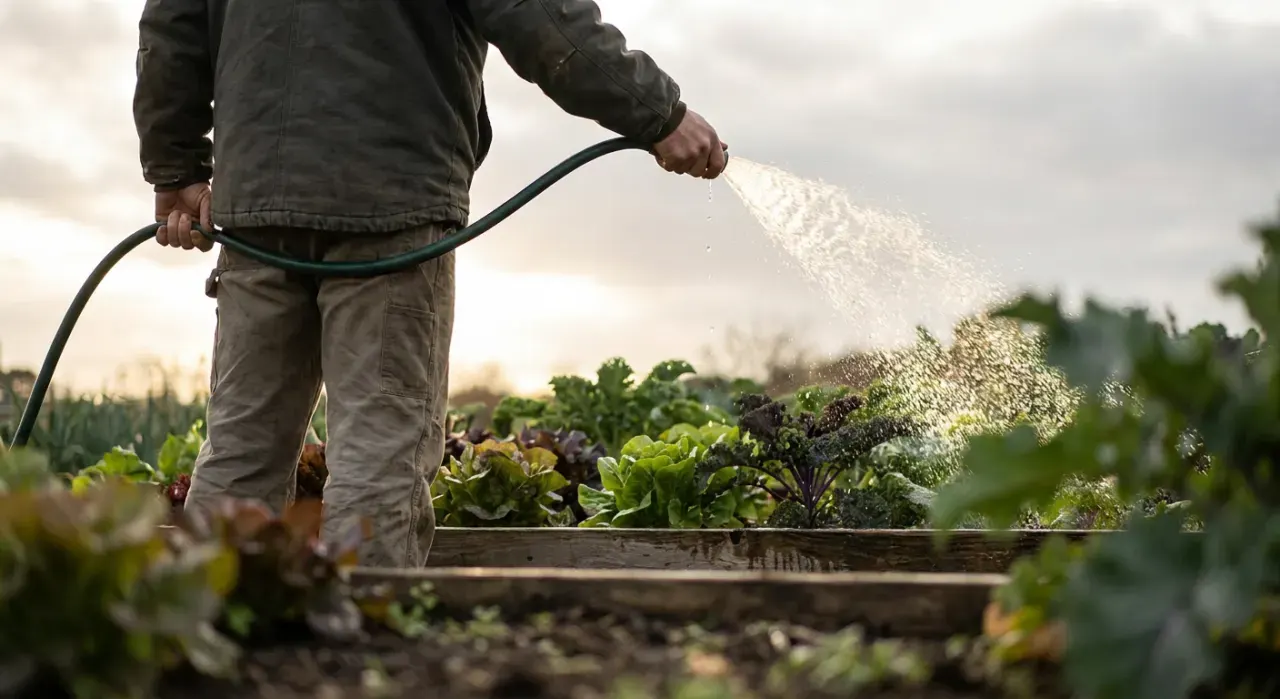
Before deploying any watering system, a few free steps meaningfully reduce how much water plants need in the first place.
- Water thoroughly right before you leave, soaking the whole root zone so plants start with full reserves.
- Group plants together. Clustered plants raise the local humidity and shade each other, slowing drying — the bathroom or a shaded porch works well.
- Move plants out of direct sun. A pot in full sun dries far faster than one in bright shade; relocating cuts water loss sharply.
- Mulch outdoor beds and containers with 2 to 3 inches of bark or straw to slow evaporation.
- Deadhead and remove any flowers or fruit you can spare, since blooming and fruiting drive up water demand.
These steps alone can turn a plant that would wilt in three days into one that coasts for a week.
Indoor methods to water plants while away
For houseplants over a one-to-two-week absence, several passive methods keep soil moist without power or plumbing.
- Wicking system: run a strip of cotton or nylon rope from a water reservoir (a jug or bucket) into the pot's soil. Capillary action draws water up as the soil dries. Test it for a day first to confirm the wick flows.
- Water tray (capillary matting): set pots with drainage holes on a tray or towel kept wet, or on a capillary mat with one end in a water reservoir, so soil pulls moisture up from below.
- Watering globes and spikes: insert a filled globe or a terracotta spike connected to a bottle; it releases water gradually as the soil dries. Best for small to medium plants.
- Self-watering pots: if plants already live in self-watering containers, simply fill the reservoir before leaving; see how self-watering planters work.
- Mini greenhouse: for a longer trip, loosely enclosing a well-watered plant in a clear plastic bag creates a humid microclimate that recycles moisture. Keep it out of direct sun to avoid cooking the plant.
Whatever you choose, test it several days before departure so you know the real emptying rate rather than discovering it too late.
Outdoor automatic watering while you are away
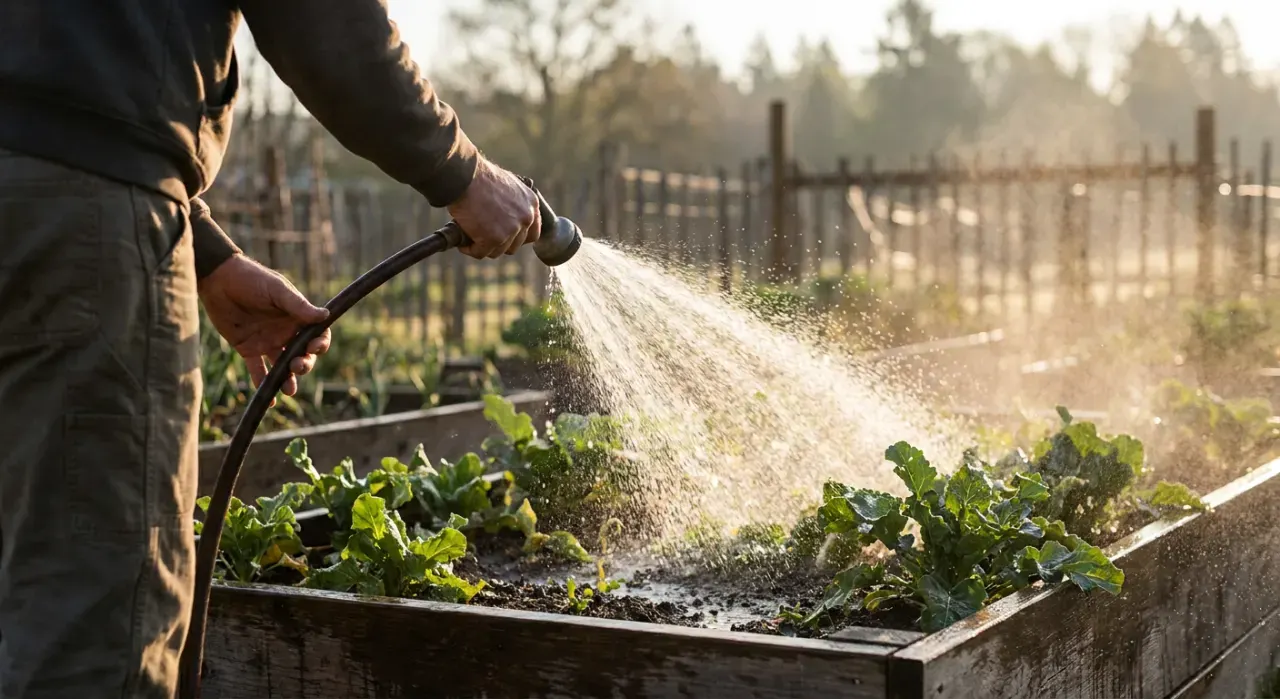
For gardens and outdoor containers, the dependable answer is automation: a hose timer that runs a drip or soaker system on schedule while you are gone.
- Hose timer (tap timer): screws onto the faucet and runs your irrigation on a set schedule with no one present. This is the core of any vacation setup; see best hose timer and how a hose timer works.
- Drip irrigation kit: delivers water to each plant's roots efficiently, ideal for beds and containers; see best drip irrigation kit and how to set up drip irrigation.
- Soaker hoses: a simpler option that weeps water along its length through a bed, run off the same timer.
Program the timer to water in the early morning, the most efficient time, and set it before you leave so you can watch a cycle run and confirm every emitter flows. For the timing rationale, see the best time of day to water plants.
Test the system before you leave
The most common cause of a dead plant on return is a system that seemed fine but failed — a wick that did not draw, a globe that emptied in a day, a timer set wrong, or a drip line that clogged. A short trial run prevents this.
- Set up your chosen method three to five days early and watch how it behaves.
- Check soil moisture daily during the trial to gauge whether it is keeping up or drying out.
- Run the timer through a full cycle and confirm water reaches every plant and every emitter flows.
- Adjust reservoir size, wick count, or timer duration based on what you observe, then leave it running.
A day of testing is far cheaper than replacing a collection of plants.
When to ask a person instead
For long absences, valuable plants, or complex gardens, a trusted neighbor, friend, or hired plant sitter is the most reliable option — a person adapts to weather, spots problems, and can hand-water thirsty plants automation might miss.
- Leave clear written instructions — which plants, how much, how often, and which to prioritize if time is short.
- Group plants and label them so the helper is not guessing.
- Combine with automation: a timer handles the routine watering while the helper simply checks weekly that everything is working.
Even the best automated system benefits from a human backstop for trips beyond a couple of weeks.
Common mistakes when watering plants while away
A few errors account for most vacation plant losses.
- Not testing the method first. Untested wicks, globes, and timers fail silently; always trial-run before leaving.
- Leaving plants in full sun. Sun dramatically accelerates drying; move pots to shade.
- Overwatering as insurance. Waterlogging roots before a trip can rot them; see signs of overwatering plants.
- Skipping mulch outdoors. Bare soil dries far faster; mulch is a cheap, big win.
- Relying on one method for a long trip. For extended absences, back up automation with a person.
For how much water plants actually need so you can size any system, see how much to water a garden. Everything else is at the watering and irrigation hub.