 Garden

Affiliate Disclosure
Some links on this page are affiliate links. As an Amazon Associate, we earn from qualifying purchases — at no extra cost to you. We do not buy, test, or physically handle the products we cover; our rankings come from aggregated owner reviews, ratings and expert consensus. Commissions never change our verdicts. How we rank · full disclosure.
The short answer: dethatching helps only when the thatch layer is thicker than half an inch. Thatch is the spongy mat of dead roots and stems between the green grass and the soil. A thin layer under half an inch is normal and beneficial, insulating roots and cushioning traffic. Above about half an inch it starts blocking water, air and fertilizer from reaching the soil, and that is when removing it pays off. Below that threshold, dethatching a healthy lawn does more harm than good by tearing out living grass.
So measure before you rent a machine. We do not run dethatchers across test plots; our tool and mower rankings come from aggregated owner reviews and expert consensus, described in how we rank. The full seasonal picture is at the lawn care hub, and the head-to-head comparison is in dethatching vs aerating.
How thick does thatch have to be before it matters?
Slice out a small plug of turf with a trowel and look at the cross-section: the brown, fibrous layer sitting on top of the soil is the thatch. University of Minnesota and Clemson Extension turf programs use a consistent threshold, so measure it against these bands rather than guessing.
| Thatch thickness | What it means | Action |
|---|---|---|
| Under 1/2 in | Healthy, protective | Leave it; do not dethatch |
| 1/2 to 3/4 in | Starting to block water and air | Dethatch or aerate during growth |
| Over 3/4 in | Water beads, roots grow in thatch not soil | Dethatch, then address the cause |
Thick thatch is a symptom, not just a nuisance. It builds fastest under overfeeding with nitrogen, overwatering, and on compacted soils where the microbes that would decompose the layer are starved of oxygen. Grasses that spread by runners, like Bermuda and Kentucky bluegrass, build thatch faster than bunch grasses like tall fescue, which rarely needs dethatching at all.
Do grass clippings cause thatch?
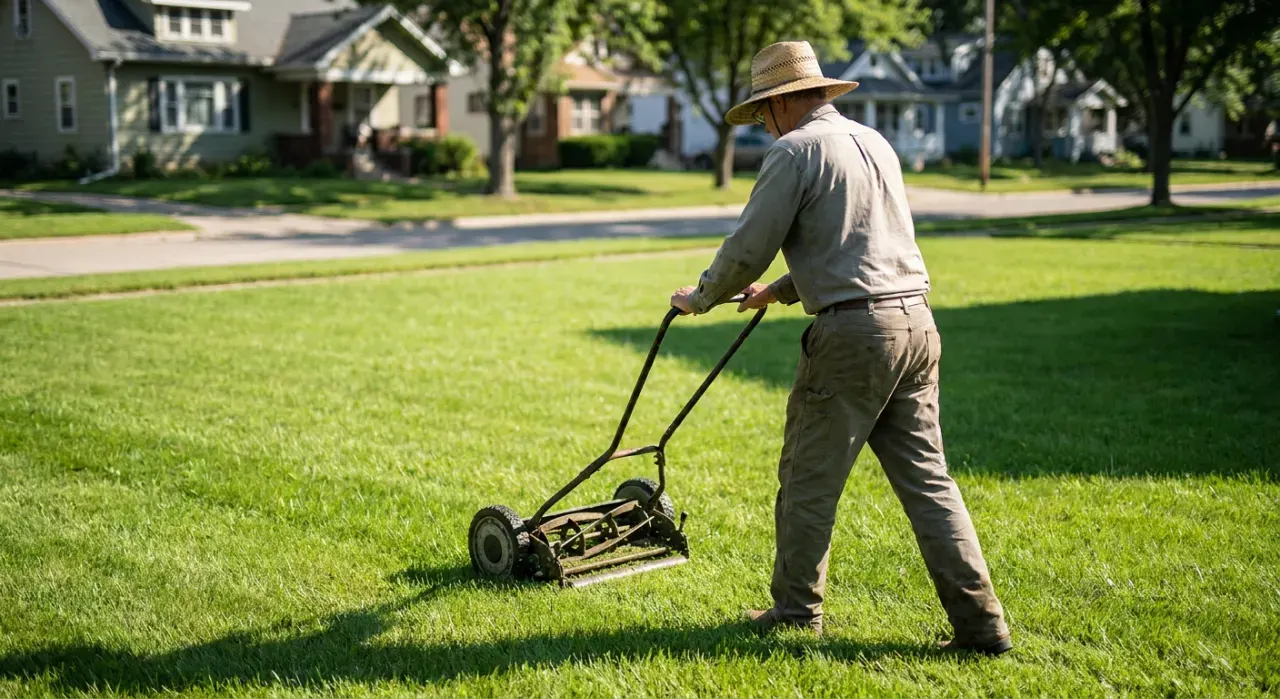
No, and this is the most persistent lawn myth. Thatch is made of lignin-rich roots, crowns and stems that resist decay; grass clippings are about 80 percent water and break down within a couple of weeks, returning nitrogen to the lawn. Mulching clippings does not add to thatch and is worth doing routinely. If your lawn is spongy, the cause is overfeeding, overwatering or compaction, not the mower, as covered in whether to leave clippings on the lawn.
When should you dethatch?
Dethatch only when the grass is growing hard enough to heal the wound within a few weeks. For cool-season lawns that is early fall, ideally paired with overseeding; early spring is a workable second choice. For warm-season lawns it is late spring into early summer, well after green-up. The wrong times are summer heat for cool-season grass, any dormant or drought-stressed lawn, and freshly seeded turf. Tearing a lawn open when it cannot regrow simply invites crabgrass into the gaps.
- Cool-season (fescue, rye, bluegrass): early fall is best; spring is acceptable.
- Warm-season (Bermuda, zoysia): late spring to early summer.
- Never: midsummer heat, drought dormancy, or the first season after seeding.
Would aeration be better for my lawn?
Often, yes. Dethatching attacks the surface layer; core aeration pulls small plugs of soil to relieve the compaction underneath, which is the more common reason a lawn sheds water and thins out. If your lawn is hard rather than spongy, water runs off after rain, or it takes heavy foot traffic, aeration usually helps more than dethatching, and it also speeds thatch breakdown by feeding the soil microbes oxygen. Many lawns do best with annual aeration and rare dethatching. Frequency is covered in how often to aerate a lawn.
After you dethatch, rake up the debris, overseed the thinned areas, and fix the underlying cause so the thatch does not rebuild: ease off nitrogen, water deeply but less often, and aerate compacted ground. If a thin lawn is the real complaint, the answer is usually overseeding and better mowing, not a dethatcher, and our seed picks are in best grass seed. Related: how often to aerate and leaving clippings on the lawn.