 Garden

Affiliate Disclosure
Some links on this page are affiliate links. As an Amazon Associate, we earn from qualifying purchases — at no extra cost to you. We do not buy, test, or physically handle the products we cover; our rankings come from aggregated owner reviews, ratings and expert consensus. Commissions never change our verdicts. How we rank · full disclosure.
The short answer: yes — leaving grass clippings on the lawn, called grasscycling, is good practice and recommended by university extension turf programs. Clippings are roughly 4 percent nitrogen by dry weight and, returned to the lawn, supply about a quarter of its annual nitrogen need, the rough equivalent of one fertilizer application per season. They do not cause thatch, they decompose within a couple of weeks, and they save you the work of bagging. The only times to collect them are diseased turf, smothering clumps, or when you want them for compost.
So the default should be to leave them. We do not run test plots; our mower and fertilizer rankings come from aggregated owner reviews and expert consensus, described in how we rank. The full routine is at the lawn care hub.
Why is leaving clippings good for the lawn?
Clippings are free fertilizer and free soil conditioner. As they break down they release nutrients back to the roots and add organic matter that improves soil structure and moisture retention. Extension studies put the nitrogen return at about 25 percent of what the lawn needs for the year, which is why grasscycled lawns often need one fewer feeding.
| Benefit | What it does |
|---|---|
| Returns nitrogen | About 25% of annual need, roughly one feeding |
| Adds organic matter | Improves soil structure and water retention |
| Retains moisture | Light clipping layer shades soil, slows evaporation |
| Saves labor and waste | No bagging, no yard-waste bags to the curb |
Grasscycling also keeps clippings out of the waste stream; yard trimmings are a large share of what fills landfills seasonally, and the EPA encourages leaving clippings on the lawn as a simple way to cut that.
Do clippings really not cause thatch?
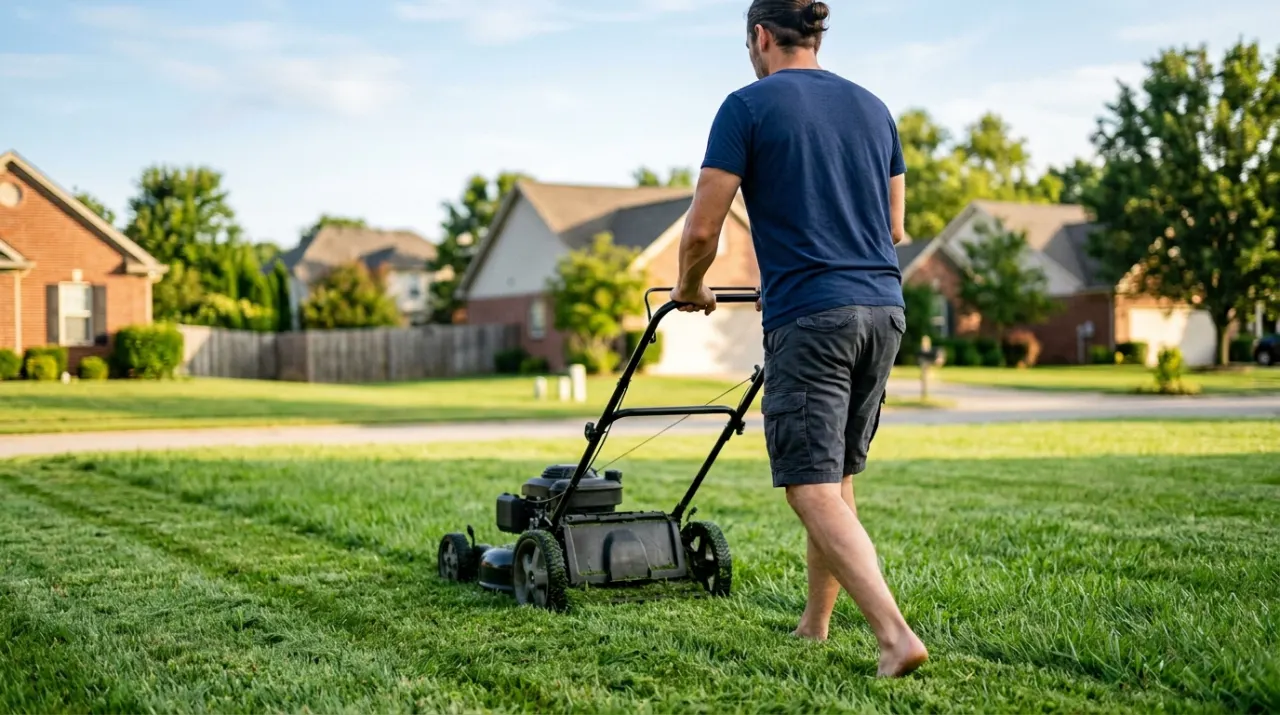
Correct — and this is worth stating plainly because the myth is so common. Thatch is the spongy mat of dead roots, crowns and stems between the green grass and the soil, and it resists decomposition. Grass clippings are mostly water and soft leaf tissue that soil microbes break down in one to two weeks, so they never accumulate into thatch. When a lawn does have a thatch problem, the causes are overfeeding with nitrogen, overwatering and compacted soil, as detailed in whether dethatching really helps. Bagging clippings will not fix or prevent thatch.
How do you grasscycle properly?
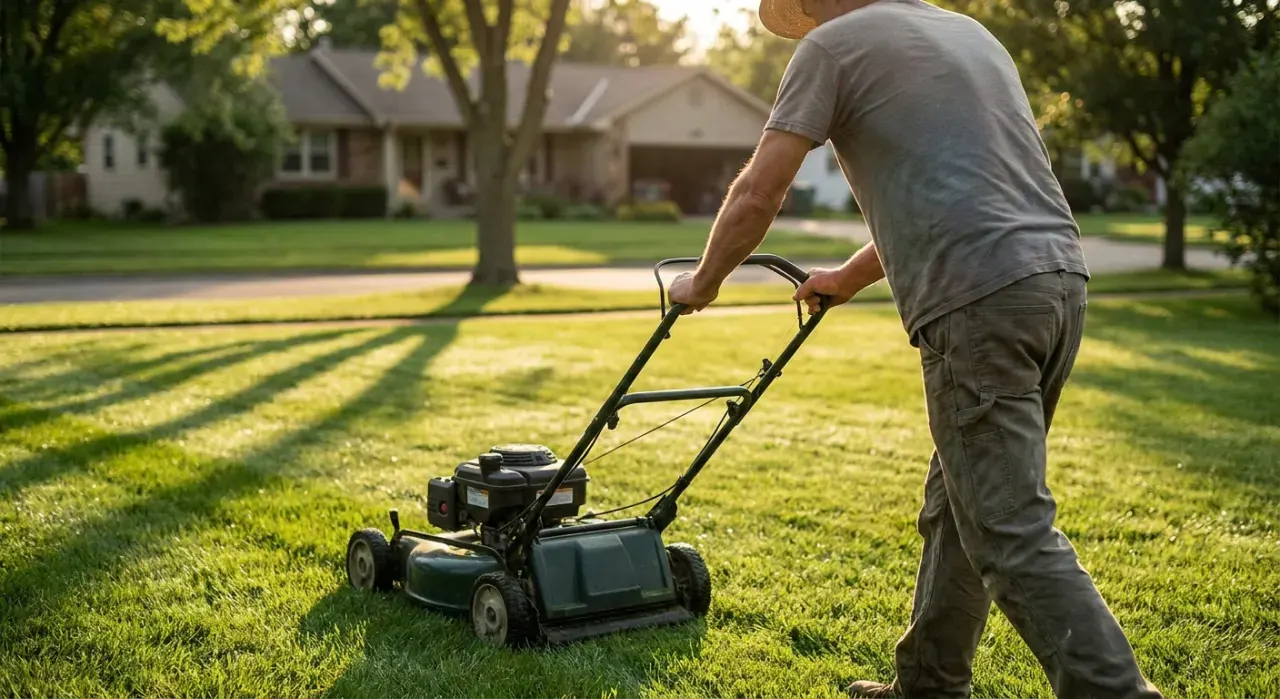
Grasscycling works best when the clippings are short enough to filter down and disappear, which comes down to how you mow.
- Mow by the one-third rule. Removing only the top third means short clippings that vanish between the blades — see how often to mow your lawn.
- Keep the blade sharp so clippings are cut fine, not shredded into clumps: how often to sharpen mower blades.
- Mow when dry. Wet clippings clump and mat; dry ones scatter — see can you mow wet grass?
- Use a mulching blade or plug if your mower has one, to cut clippings smaller for faster breakdown.
When should you bag clippings instead?
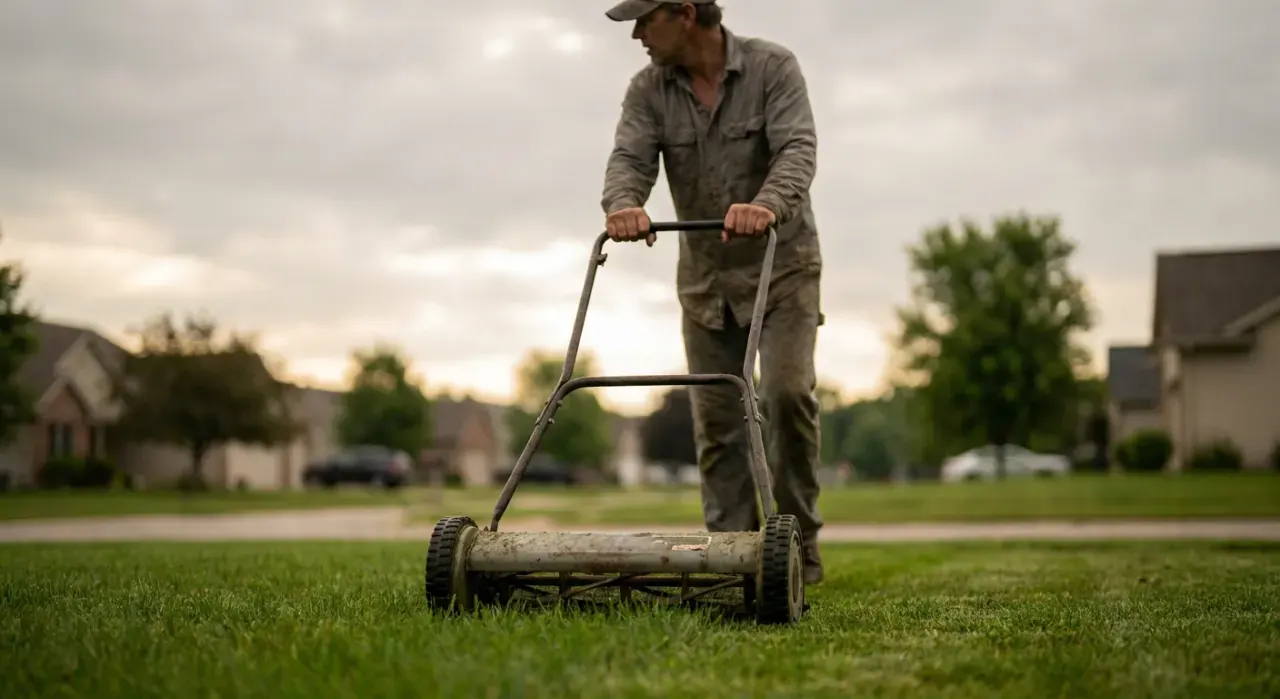
There are three good reasons to collect. First, when the lawn has an active fungal disease, since bagging removes infected tissue rather than spreading it. Second, when the grass got long — after a vacation or a rainy stretch — and clippings fall in thick clumps that would smother the turf; rake or bag those, or mow twice to chop them finer. Third, when you want the clippings for the compost pile, where fresh clippings are one of the best nitrogen-rich green materials available. Otherwise, leave them where they fall.
Grasscycling is the rare lawn tip that is easier and better: less work, free fertilizer, no downside for a healthy lawn. Related questions: does dethatching really help?, how long fertilizer takes to work, and the mower field in best lawn mowers.