 Garden

Affiliate Disclosure
Some links on this page are affiliate links. As an Amazon Associate, we earn from qualifying purchases — at no extra cost to you. We do not buy, test, or physically handle the products we cover; our rankings come from aggregated owner reviews, ratings and expert consensus. Commissions never change our verdicts. How we rank · full disclosure.
The short answer: sharpen mower blades every 20 to 25 hours of mowing, which for an average yard works out to about twice a season — once at spring startup and once mid-summer. Mow more ground, or cut tough, sandy or debris-strewn grass, and you will need it more often, closer to every month during peak growth. The real trigger is the cut: the moment the grass tips look torn and white a day after mowing, the blade is dull regardless of the hour count.
A sharp blade slices cleanly; a dull one tears, and torn grass heals slower and looks worse. We do not run mowers across test plots; our mower and blade rankings come from aggregated owner reviews and expert consensus, described in how we rank. The full maintenance picture is at the lawn care hub.
How many hours between sharpenings?
The industry and extension rule of thumb is 20 to 25 hours of cutting per sharpening. Translating that into a schedule depends on how much lawn you mow and how rough it is on steel.
| Use | Sharpen |
|---|---|
| Small to average yard, clean grass | Twice a season (about every 20 to 25 hrs) |
| Large lawn, weekly mowing all season | Every 4 to 6 weeks |
| Sandy soil, gravel edges, sticks and debris | Monthly or after hard hits |
| After striking a rock or root | Inspect and sharpen right away |
Sand is the hidden blade-killer: grit dulls a cutting edge far faster than grass alone, so lawns near beaches, sandy soils or bare, dusty patches need sharpening more often. Keeping two blades on hand lets you swap a sharp one in and sharpen the dull one at your leisure.
What does a dull blade do to the grass?
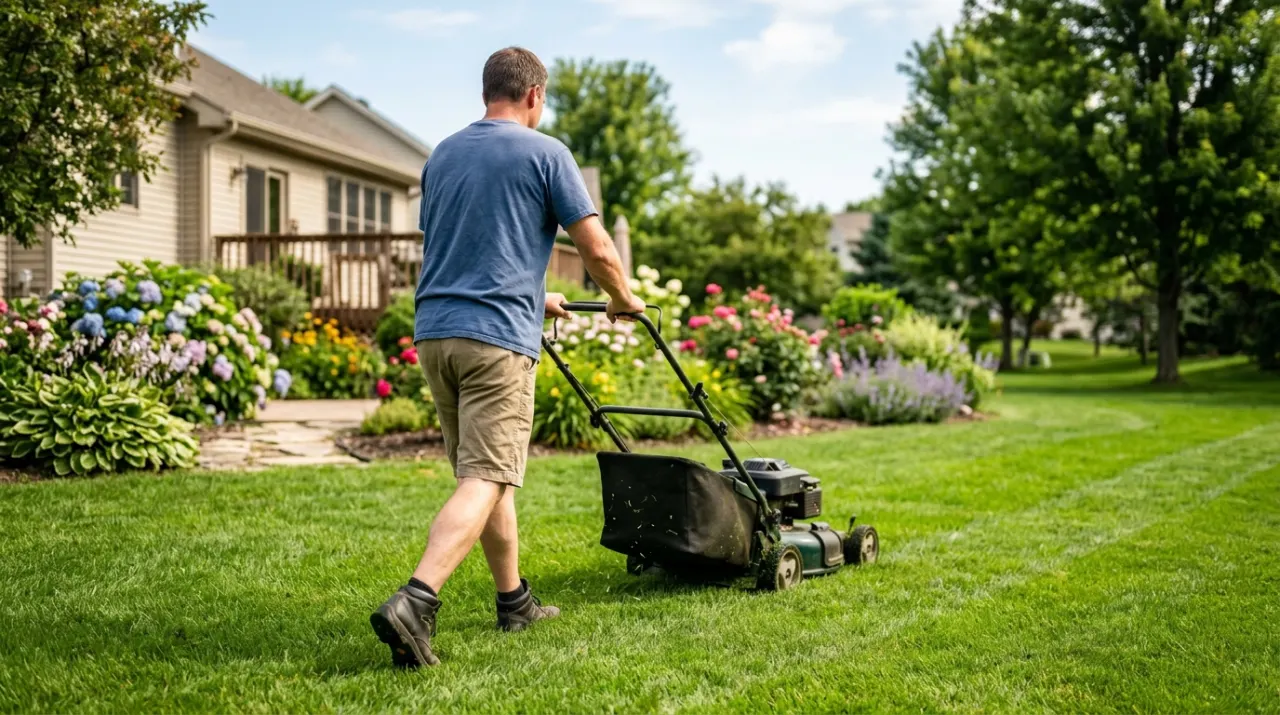
A dull blade beats and tears the grass instead of cutting it. The torn tips lose moisture and turn white or straw-colored within a day, which is why a freshly mowed lawn sometimes looks hazy and pale rather than crisp green. Those ragged wounds also close more slowly, giving lawn diseases like dollar spot and leaf spot an easier entry, especially in humid weather. The extra drag of a dull blade bogs a gas engine and drains a battery mower faster, so a poor cut and short runtime often trace back to the same tired blade.
How do you sharpen a mower blade at home?
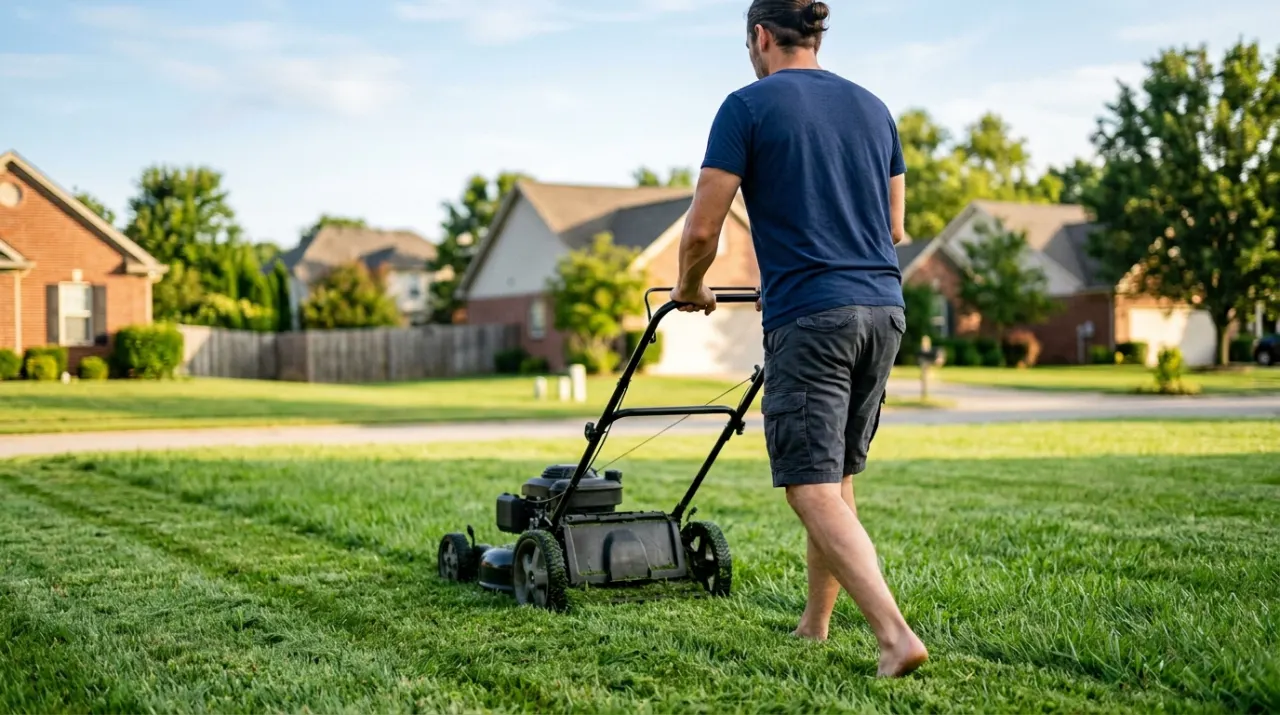
You can sharpen most walk-behind blades with a metal file or a bench grinder in about 15 minutes.
- Disconnect the spark plug (or pull the battery) before touching the blade — this is the single most important safety step.
- Tip the mower with the air filter and carburetor side up so oil does not flood the engine, and mark the blade so you reinstall it the same way.
- Sharpen only the top bevel of the cutting edge, following the existing angle, roughly 30 to 45 degrees. You want it sharp like a butter knife, not a razor.
- Balance the blade on a nail or blade balancer; if one side drops, grind a little off that end. An unbalanced blade vibrates and wears the spindle bearings.
When should you replace the blade instead?
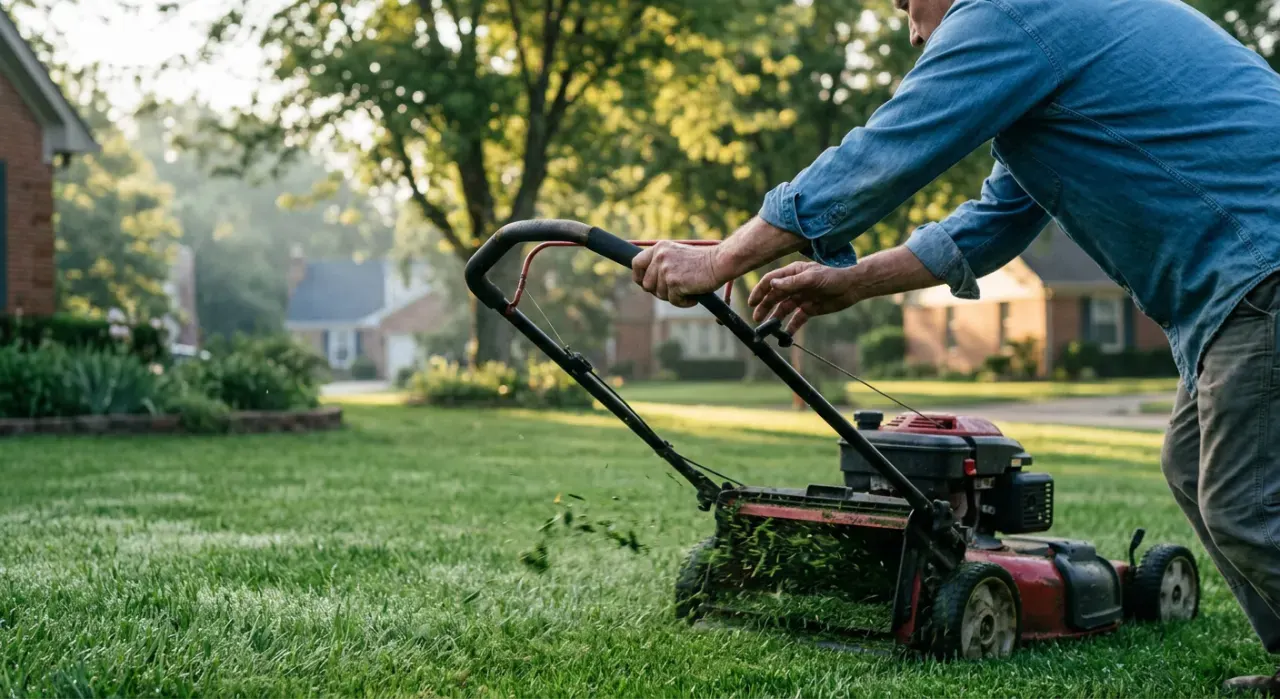
Sharpening restores an edge, but it cannot fix a damaged blade. Replace it when the blade is bent, cracked, deeply gouged from a rock strike, worn thin along the cutting edge, or when the raised sail at the back is worn down. That sail creates the airflow that lifts grass for a clean cut and pushes clippings into the bag, so a worn sail means a poor cut and bad bagging no matter how sharp the edge. Replacement walk-behind blades are cheap, and reviewers repeatedly mention a mower they had written off as underpowered cutting like new after a fresh blade.
Blade care is the cheapest upgrade in lawn care: a sharp, balanced blade transforms the cut, the recovery and the mower's own lifespan. If the machine itself is the limit, the ranked field is in best lawn mowers. Related questions: can you mow wet grass?, mower fuel use per hour, and the routine at the lawn care hub.