 Garden

Affiliate Disclosure
Some links on this page are affiliate links. As an Amazon Associate, we earn from qualifying purchases — at no extra cost to you. We do not buy, test, or physically handle the products we cover; our rankings come from aggregated owner reviews, ratings and expert consensus. Commissions never change our verdicts. How we rank · full disclosure.
The short version: there is no single best weed killer, because the category splits into jobs that need opposite products. For driveways, gravel and clearing ground, our #1 pick is Roundup Ready-to-Use III with the Comfort Wand — systemic, so perennials die at the root. For weeds inside a lawn you need a selective product, and Spectracide Weed Stop For Lawns is the reliable, widely stocked answer. Below, all six ranked, with the honest limitations of each.
We do not buy, spray, or physically handle any of these products. These rankings come from aggregated owner reviews, star ratings, review volume and expert consensus — the method is on how we rank. Always read and follow the product label; the EPA makes it a violation of federal law to use a product in a manner inconsistent with its labeling, and the label overrides anything on this page.
Top Picks at a Glance
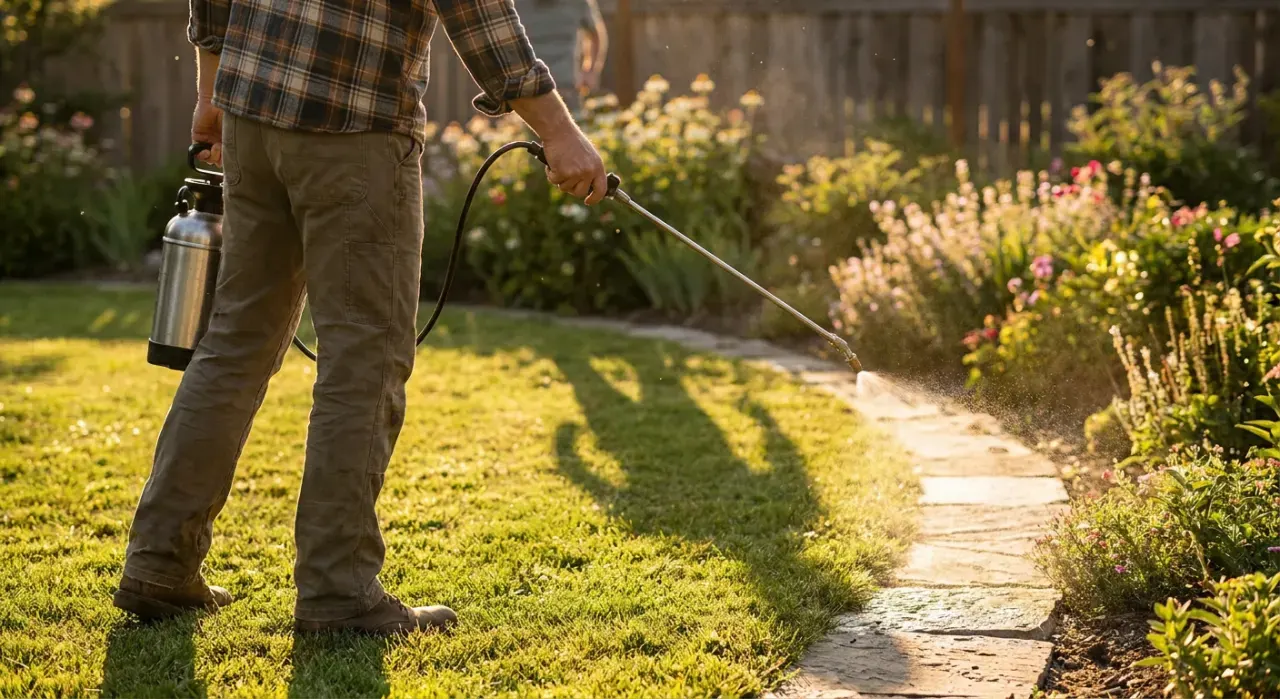
Our #1 Pick: Roundup Ready-to-Use III with Comfort Wand
For the job most people actually have — weeds coming up through a driveway, along a fence, in gravel or in a bed being cleared — this is the product the owner-review record backs most heavily. The reason is systemic action. Contact killers scorch the visible leaves and leave the root intact, which is why cheap burn-down products feel effective for ten days and then disappoint. A systemic glyphosate formula is drawn down into the root system, so dandelion, bindweed and bramble die rather than pause.
The Comfort Wand version is the one owners keep singling out. There is no pumping, no mixing and no trigger to squeeze for twenty minutes, which matters a great deal when you are walking a long fence line. It is rainproof in roughly ten minutes, and visible wilting typically starts the same day with the full kill landing over one to two weeks.
The cons are equally consistent in reviews. It is non-selective — it will kill grass, perennials and anything else it lands on, so it must never go on a lawn. Drift on a breezy day is the single biggest source of one-star reviews. The wand mechanism is the failure point, with a minority of owners reporting leaks or a wand that stops flowing partway through a bottle. And it is not cheap per gallon compared with mixing your own concentrate.
Consensus Score ██████████░░ 9.0 — from 9,329 owner ratings
Check price on Amazon → (paid link)
The Ranked Field

Best for driveways, gravel, fence lines and clearing beds
- No mixing — battery-free wand sprays without pumping
- Rainproof in about 10 minutes
- Visible wilting within hours, full kill in 1–2 weeks
- Systemic: travels to the root of perennials
Why buy it: the non-selective owners reach for when they want a weed gone for good rather than burned back for a fortnight.

Best for dandelion, clover, chickweed and crabgrass in turf
- Selective — kills listed weeds, not the grass
- Covers 470+ listed weed types including yellow nutsedge
- Ready-to-use trigger applicator
- Rainproof in about 3 hours
Why buy it: the cheap, widely stocked way to clear a weedy lawn without killing the lawn with it.

Best for large areas, fence lines and anyone who owns a sprayer
- Mixes up to roughly 85 gallons of spray
- Treats around 25,000 sq ft at general rate
- Same active ingredient as name-brand glyphosate
- Rainproof in about 2 hours
Why buy it: by far the lowest cost per gallon sprayed — the reason it has one of the largest review bases in the category.

Best for gravel drives, patio cracks and areas you want to stay bare
- Kills existing weeds and prevents regrowth up to a year
- Covers roughly 4,435 sq ft per gallon of concentrate
- Visible results in hours
- Soil residual — bare ground, not just dead tops
Why buy it: one application on a gravel drive instead of five — with the caveat that nothing will grow there for a long time.

Best for patio cracks, paths and gardeners avoiding synthetic herbicides
- 20% acetic acid — four times household vinegar strength
- Glyphosate free, derived from corn
- Visible burn-down in a few hours on a warm day
- OMRI listed for organic production
Why buy it: genuinely fast top-kill without glyphosate — as long as you accept that perennial roots survive.
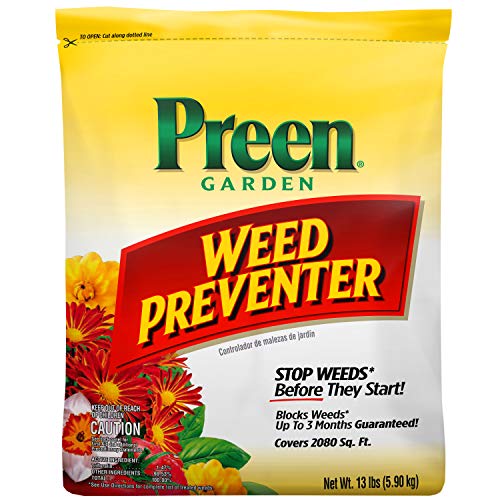
Best for flower and shrub beds you would rather not weed at all
- Stops weed seeds germinating for up to 3 months
- Covers about 2,080 sq ft
- Safe around 200+ listed established plants
- Shaker-top bag — no sprayer needed
Why buy it: the product that stops next month’s weeding rather than dealing with this month’s.
Quick Comparison
| Product | Best for | Rating | Price | Buy |
|---|---|---|---|---|
| Roundup Ready-to-Use Weed & Grass Killer III with Comfort Wand (1.33 gal) | Best Overall | — | Check (paid link) | |
| Spectracide Weed Stop For Lawns Plus Crabgrass Killer (1 gal RTU) | Best for Lawns | — | Check (paid link) | |
| Compare-N-Save 41% Glyphosate Concentrate (1 gal) | Best Value Concentrate | — | Check (paid link) | |
| Ortho GroundClear Year Long Vegetation Killer Concentrate (1 gal) | Best for Driveways & Gravel | — | Check (paid link) | |
| Green Gobbler 20% Vinegar Weed & Grass Killer (1 gal) | Best Glyphosate-Free | — | Check (paid link) | |
| Preen Garden Weed Preventer (13 lb) | Best Pre-Emergent | — | Check (paid link) |
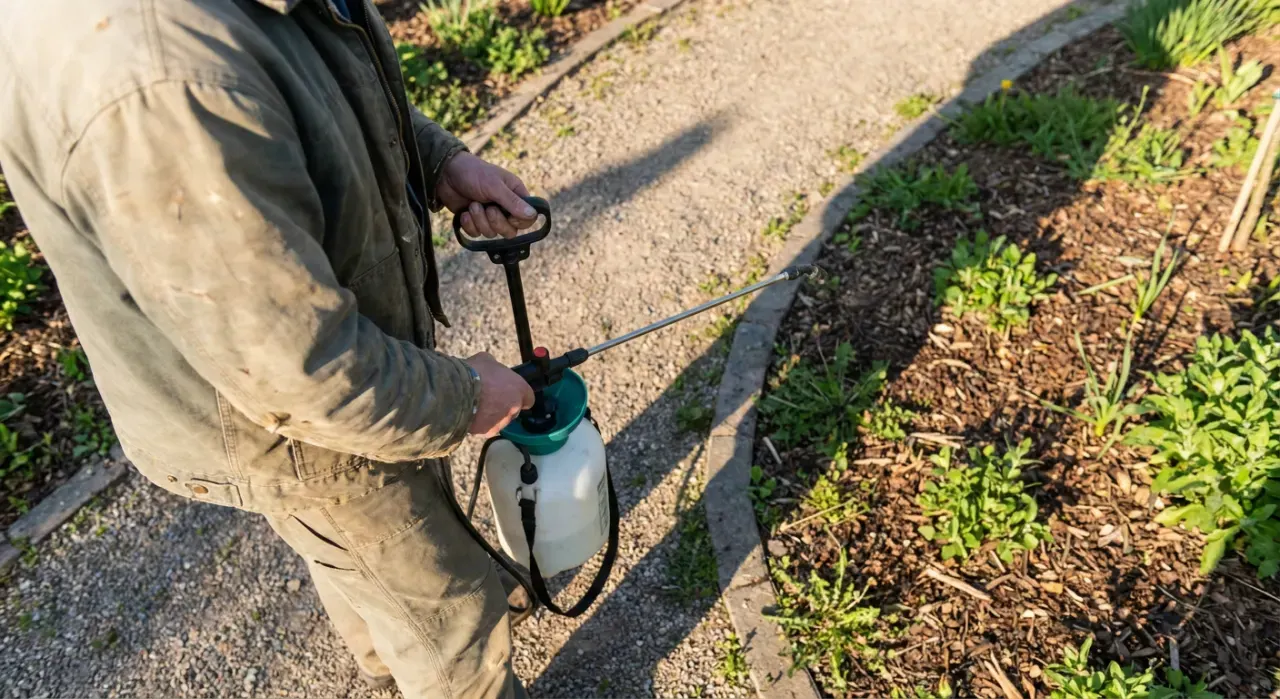
How We Rank Weed Killers
We never buy or physically handle the products on this site. We read the review record at scale and weigh four things. Does it kill the root or only the top? Reviews written two to four weeks after application separate systemic products from burn-down products far better than any first-day impression. Selectivity and drift damage — how often owners report collateral damage to lawn or ornamentals, which is as much about applicator design as chemistry. Cost per treated area, calculated from label coverage rather than bottle price, because a cheap ready-to-use bottle is often far more expensive per square foot than a concentrate. Applicator reliability, which on ready-to-use products is the most common single-point failure in negative reviews.
Ratings, review counts and prices were current at the time of writing and shift constantly. The complaint patterns barely move, and that is what we weight hardest.
Consensus Scores
Each score is our weighted read of the owner-review record for that product — never a lab figure, and always labeled with the review base behind it.
- Roundup RTU III Comfort Wand ██████████░░ 9.0 — from 9,329 owner ratings
- Spectracide Weed Stop For Lawns ████████░░░░ 8.0 — from 9,329 owner ratings
- Compare-N-Save 41% Concentrate █████████░░░ 8.8 — from 9,329 owner ratings
- Ortho GroundClear Year Long ████████░░░░ 8.1 — from 9,329 owner ratings
- Green Gobbler 20% Vinegar ███████░░░░░ 7.6 — from 9,329 owner ratings
- Preen Garden Weed Preventer █████████░░░ 8.5 — from 9,329 owner ratings
The Weed Killers, Reviewed
1. Roundup Ready-to-Use III with Comfort Wand — Best Overall
Covered above. Owners praise: kills perennials at the root, no mixing, the wand makes long runs painless, fast visible results. Owners complain about: non-selective so drift kills lawn and plants, occasional wand leaks or clogs, higher cost per gallon than concentrate, and it needs a repeat pass on tough woody weeds.
2. Spectracide Weed Stop For Lawns Plus Crabgrass Killer — Best for Lawns
The selective category is where most home lawns actually need help, and this is the product most widely available and most widely reviewed at a sensible price. It targets a long list of broadleaf weeds plus crabgrass and yellow nutsedge while leaving common turf grasses standing. Owners praise: cheap, easy trigger bottle, visibly curls dandelion and clover within a couple of days, does not brown the lawn when used at label rate. Owners complain about: it needs a second application on established perennials, the trigger sprayer tires the hand over a large lawn, results are slow in cool weather, and — the recurring one — it can yellow St. Augustine and other sensitive southern grasses, so check the label against your grass type first.
3. Compare-N-Save 41% Glyphosate Concentrate — Best Value Concentrate
One of the largest review bases in the entire weed-killer category, and it is a pure economics story: a single gallon of concentrate mixes into roughly 85 gallons of spray, which is an order of magnitude cheaper per treated square foot than ready-to-use bottles. Owners with acreage, long fence lines or gravel yards buy this and nothing else. Owners praise: enormous coverage for the money, same active ingredient as premium brands, reliable systemic kill. Owners complain about: you must own and maintain a sprayer, mixing accurately matters and people who eyeball it get poor results, there is no surfactant included so some owners add their own, and it is non-selective with all the drift risk that implies.
4. Ortho GroundClear Year Long Vegetation Killer — Best for Driveways & Gravel
This is a different tool from everything else here: it adds a soil residual, so treated ground stays bare for up to a year rather than regrowing in six weeks. On a gravel driveway, a paved yard or a fence line that is a nuisance to reach, that turns five applications a season into one. Owners praise: genuinely long-lasting bare ground, fast initial knockdown, good coverage per gallon of concentrate. Owners complain about: the residual is exactly as permanent as advertised, so it must never be used where you might later plant, near tree or shrub roots, or on any slope that drains into a bed — several negative reviews are from people who learned that after the fact. It is also more expensive up front and takes longer to fully clear woody growth.
5. Green Gobbler 20% Vinegar — Best Glyphosate-Free
The most-reviewed of the organic burn-down products, and it does what it claims within its limits. On a hot day, young annual weeds in patio cracks visibly collapse within hours, which is more dramatic than glyphosate ever looks. Owners praise: very fast visible results, no glyphosate, OMRI listed, no unpleasant chemical odor beyond strong vinegar. Owners complain about: perennials regrow from the root within one to three weeks and need repeat treatment; it is non-selective and burns grass and ornamentals on contact; coverage is poor compared with a systemic because you must thoroughly wet the foliage; and at 20% acidity it stings skin and eyes, so gloves and eye protection are genuinely necessary.
6. Preen Garden Weed Preventer — Best Pre-Emergent
The only product here that prevents rather than treats, and the one experienced gardeners tend to rate highest over a full season. Shaken over bed soil and watered in, it creates a barrier that stops weed seeds establishing for around three months, which turns weekly bed weeding into occasional spot work. Owners praise: dramatic reduction in bed weeding, easy shaker application with no sprayer, safe around a long list of established ornamentals. Owners complain about: it does absolutely nothing to weeds already growing, so you must clear the bed first; it will also stop your own flower and vegetable seeds germinating, so it cannot go on a seeded area; and the barrier breaks if you disturb the soil, so it needs reapplying after planting or heavy raking.
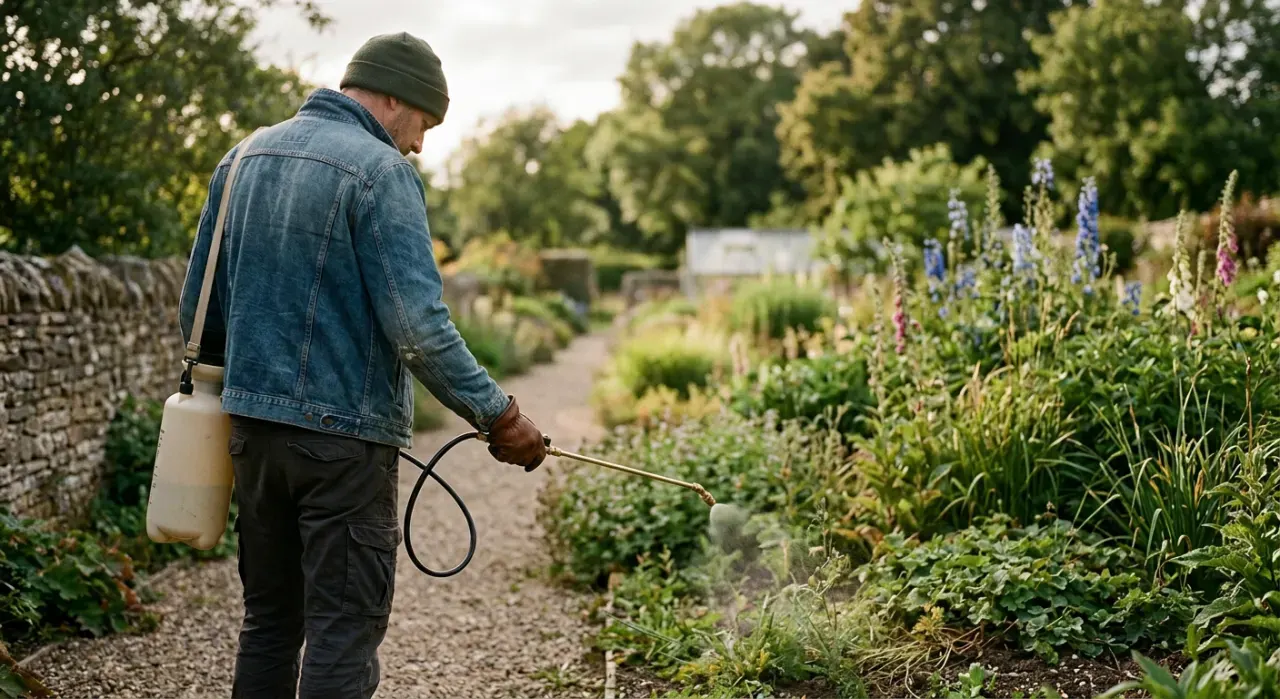
What Owners Actually Complain About
The negative reviews across this category cluster into five recurring themes. Killing the lawn by accident leads by a wide margin — buying a non-selective product for a lawn weed problem. Regrowth in two weeks is second, and it almost always means a contact killer was used on a perennial weed that needed a systemic. Sprayer and wand failures come third: leaking wands, clogged trigger heads and pumps that lose pressure account for a striking share of one-star reviews on ready-to-use products. Rain within the rainproof window washing the product off before it worked is fourth, and it is a forecast problem rather than a product problem. And drift damage to prized plants is fifth — spraying on a breezy day, or with the nozzle set to a fine mist rather than a coarse stream.
How to Choose a Weed Killer
Answer one question first: what is growing where you are about to spray? Penn State Extension frames the same decision as selective versus non-selective and pre- versus post-emergence. Weeds inside a lawn need a selective product — Spectracide Weed Stop, and check the label against your grass type if you have St. Augustine, centipede or floratam. Weeds in gravel, cracks and driveways want a non-selective, and if you never want anything to grow there, a residual total killer like GroundClear. Clearing a bed for replanting needs a non-selective without a soil residual — glyphosate breaks down in soil, GroundClear Year Long deliberately does not. Large areas favor concentrate plus a sprayer for the cost saving. Avoiding synthetic herbicide means accepting repeat applications with vinegar, or better, using mulch and cardboard as described in our no-chemical guide. Beds you would rather not weed at all want Preen applied after clearing.
One extra habit improves every product on this list: spray weeds that are actively growing and not drought-stressed. Watering a dry area a couple of days before treatment measurably improves systemic uptake, which is why the same product produces glowing reviews in spring and disappointed ones in August. For perennial broadleaf weeds, University of Minnesota Extension rates fall the best window of all.
The Verdict
For the general clearing job most yards need, Roundup Ready-to-Use III with the Comfort Wand is the product the owner-review record supports most strongly — systemic, convenient and fast. Lawn weeds need Spectracide Weed Stop For Lawns instead, anyone with real acreage should be buying Compare-N-Save concentrate and a sprayer, and the smartest long-term buy on this page is arguably Preen, because it stops the work happening at all.
Next: work out what you are dealing with in common lawn weeds identified, get the timing right with pre-emergent herbicides, or head back to the pest and weed control hub. Thickening the turf itself is covered in our lawn care hub, and Penn State Extension puts that cultural control ahead of any spray.