 Garden

Affiliate Disclosure
Some links on this page are affiliate links. As an Amazon Associate, we earn from qualifying purchases — at no extra cost to you. We do not buy, test, or physically handle the products we cover; our rankings come from aggregated owner reviews, ratings and expert consensus. Commissions never change our verdicts. How we rank · full disclosure.
The short version: pre-emergent is the only weed control where the calendar matters more than the product. Applied at the right moment it prevents a summer of crabgrass; applied three weeks late it does almost nothing, and the bag gets blamed. After weighing six of the most-used pre-emergents in the US on aggregated ratings, active ingredient, residual length and owner reports, our #1 pick is Scotts Halts — granular, forgiving, and hard to get wrong.
If you have a big lawn and a sprayer, Quali-Pro prodiamine is what professionals use and it costs a fraction as much per thousand square feet. For mulched beds rather than turf, Preen is the right tool. And if the weeds are already up, this is the wrong page — you need a post-emergent, and best weed killer for lawns covers the selective products that kill weeds without killing turf.
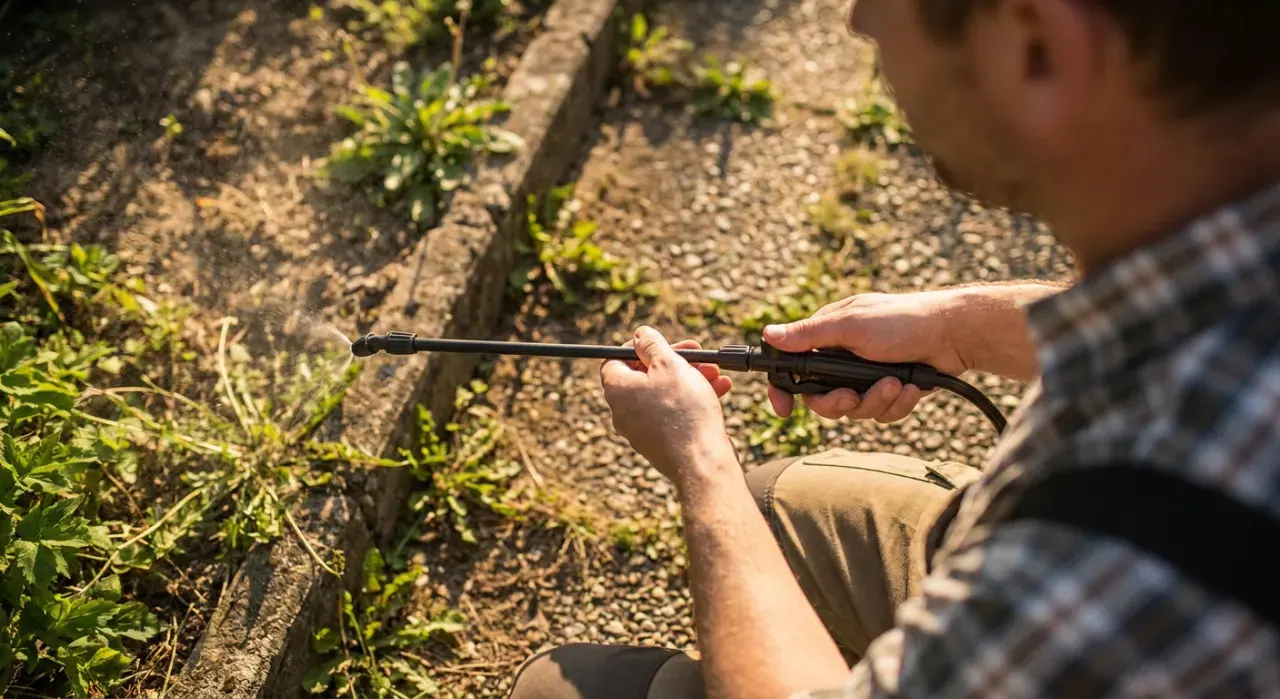
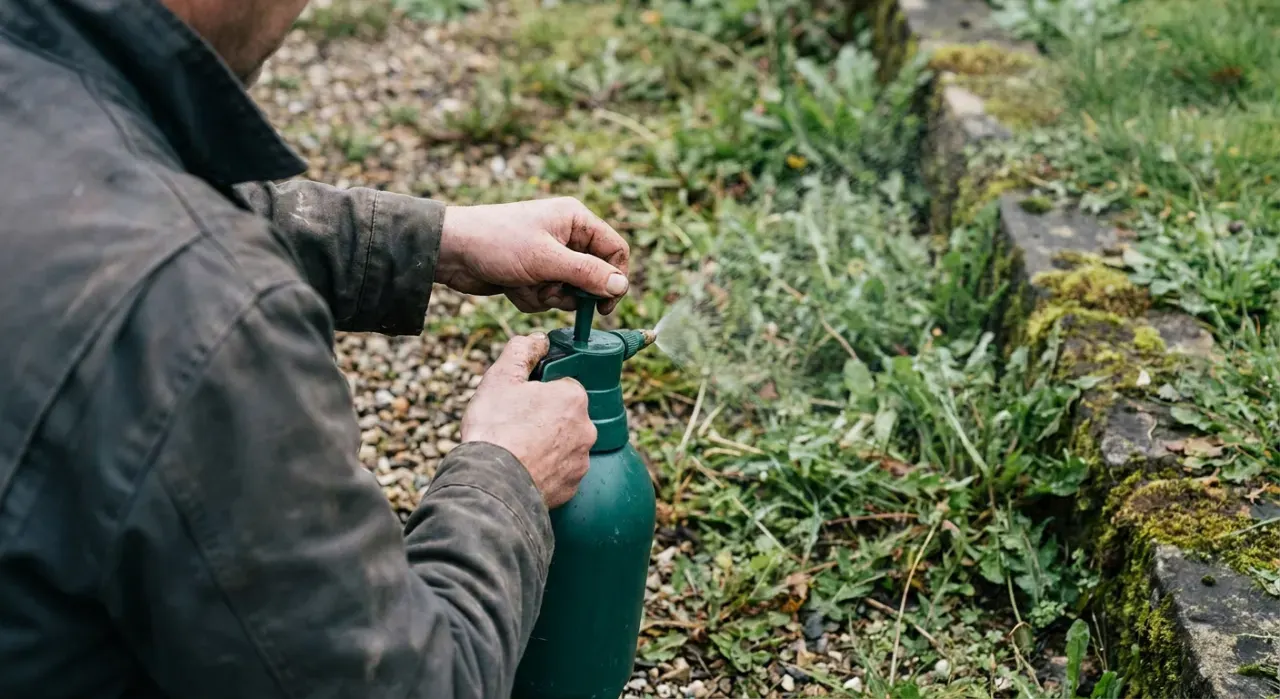
Crabgrass — a summer annual, as University of Minnesota Extension sets out — is the weed almost everyone is actually buying for, and understanding why it is an annual explains the whole category. Every crabgrass plant you will fight this summer is currently a seed sitting in the top half inch of your soil, waiting for warmth. A pre-emergent does not kill anything — it puts a chemical barrier in that top layer that stops the seedling's root system developing as it germinates. Get it down before germination and you have prevented the entire season's problem for a few dollars. Get it down after and you have wasted the bag.
Top Picks at a Glance
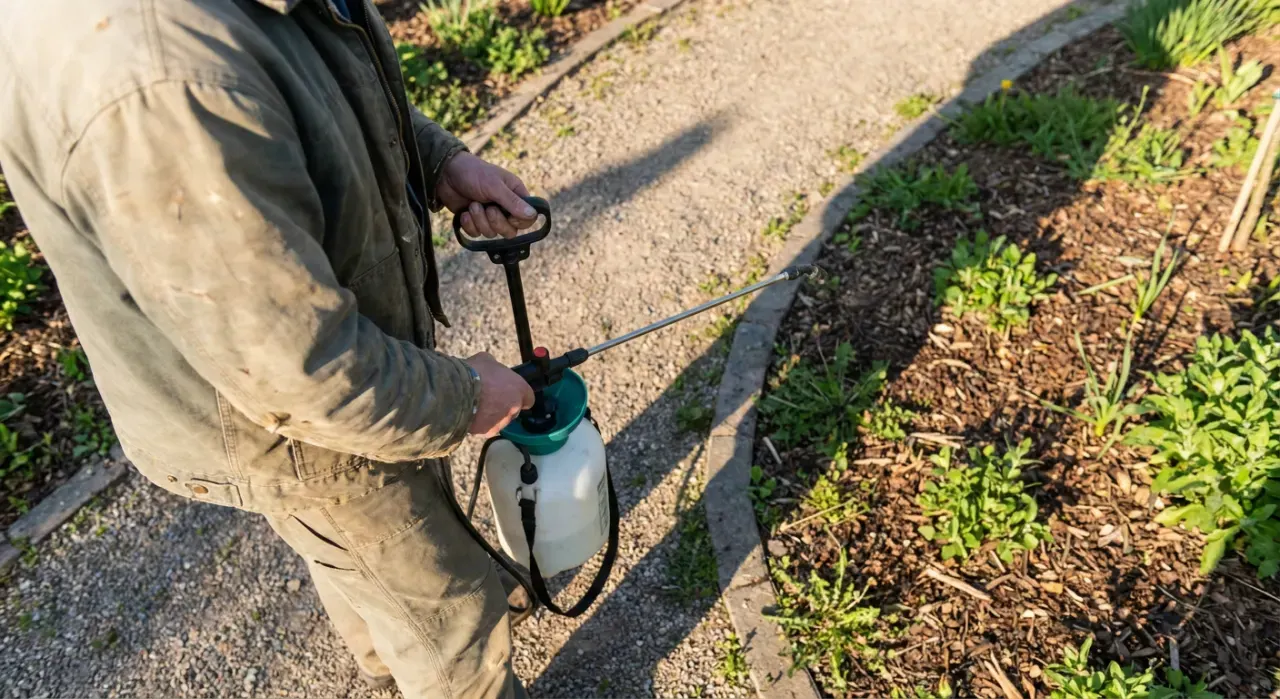
Our #1 Pick: Scotts Halts Crabgrass & Grassy Weed Preventer
Halts wins on the practicalities rather than the chemistry. It is a granular product, so it goes into a broadcast or drop spreader that most homeowners already own, and there is no mixing, no measuring into a tank and no sprayer to calibrate. Owners consistently report that the application window is forgiving too: it can go down on a dry lawn in early spring, and rain, snow or a late freeze afterwards does not undo the work.
The honest limitations are the ones every pre-emergent shares. It prevents rather than kills, so anything already growing needs a different product. It blocks grass seed as well as weed seed, so a spring application rules out spring overseeding. And it needs watering in — roughly half an inch within a few days — to move the active into the soil and form the barrier. Owners who skipped that step account for a meaningful share of the disappointed reviews.
Check price on Amazon → (paid link)
The Ranked Field

Best for the straightforward spring application on a cool-season lawn
- Granular, spreads with any broadcast or drop spreader
- Prevents crabgrass, foxtail, spurge and barnyardgrass
- Rain or snow after application does not reduce performance
- Covers roughly 5,000 sq ft per bag
Why buy it: the easiest pre-emergent to get right — no mixing, no sprayer calibration, and a forgiving application window.
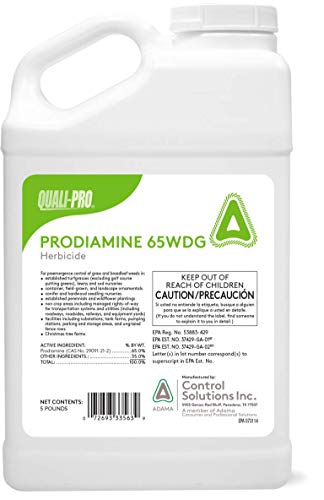
Best for anyone treating a big lawn twice a year
- Water-dispersible granule, mixes into a sprayer
- The generic equivalent of Barricade
- Longest residual of the common pre-emergents
- One 5 lb jug treats many acres
Why buy it: the professional standard, and by a wide margin the cheapest way to cover a large lawn per season.
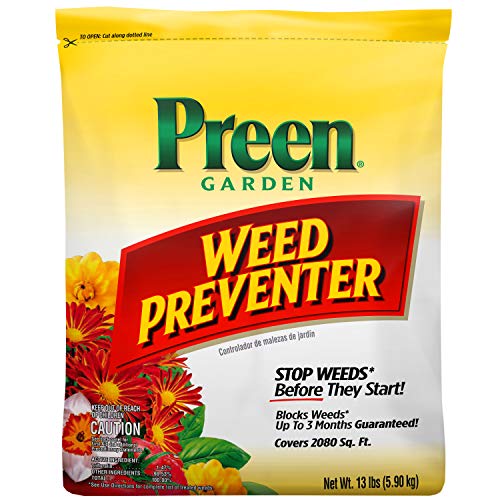
Best for mulched beds, borders and around established shrubs
- Shaker-top granules, no spreader needed
- Labeled for use around hundreds of established ornamentals
- Roughly three months of control per application
- Covers about 2,080 sq ft
Why buy it: the only product here designed to go directly on mulch around plants you want to keep, which is a different job from lawn care.

Best for households avoiding synthetic herbicides entirely
- 100% corn gluten meal, a cornstarch by-product
- Feeds the lawn while suppressing seedling roots
- Approved for organic gardening
- Covers roughly 1,250 sq ft per bag
Why buy it: genuinely non-synthetic and it fertilizes at the same time — accept a lower suppression rate and you get both jobs done.

Best for the single spring pass that feeds and prevents at once
- Pre-emergent plus a spring fertilizer in one granule
- Standard broadcast spreader application
- Prevents crabgrass all season from one pass
- Covers roughly 5,000 sq ft
Why buy it: one trip around the lawn instead of two, at the exact time of year when the lawn wants feeding anyway.
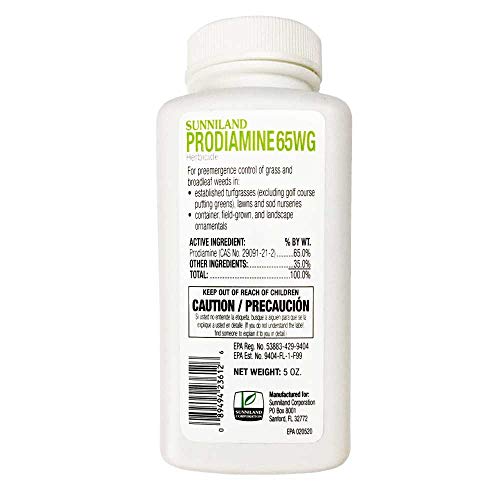
Best for a suburban lot that does not need five pounds of concentrate
- Same prodiamine active as the 5 lb professional jug
- Small bottle sized for a typical home lawn
- Water-dispersible granule for pump sprayers
- Controls crabgrass, annual bluegrass and more
Why buy it: professional-grade prodiamine in a quantity a homeowner will actually use up before it sits in the garage for a decade.
Quick Comparison
| Product | Best for | Rating | Price | Buy |
|---|---|---|---|---|
| Scotts Halts Crabgrass & Grassy Weed Preventer, 5,000 sq ft | Best Overall | — | Check (paid link) | |
| Quali-Pro Prodiamine 65 WDG Pre-Emergent Herbicide, 5 lb | Best Value Concentrate | — | Check (paid link) | |
| Preen Garden Weed Preventer, 13 lb | Best for Garden Beds | — | Check (paid link) | |
| Espoma Organic Weed Preventer Plus Lawn Food, 25 lb | Best Organic | — | Check (paid link) | |
| Scotts Turf Builder Halts Crabgrass Preventer with Lawn Food, 5,000 sq ft | Best Combined With Feed | — | Check (paid link) | |
| Yard Mastery Prodiamine 65 WDG Pre-Emergent, 5 oz Bottle | Best Small-Yard Option | — | Check (paid link) |
Specifications Side by Side
| Product | Active | Form | Where it goes | Typical duration | Blocks new seed? |
|---|---|---|---|---|---|
| Scotts Halts | Pendimethalin | Granular | Lawns | 2–4 months | Yes |
| Quali-Pro Prodiamine 65 WDG | Prodiamine 65% | Sprayable granule | Lawns, ornamental beds | 3–6 months | Yes |
| Preen Garden Weed Preventer | Trifluralin | Granular, shaker top | Mulched beds, borders | About 3 months | Yes |
| Espoma Corn Gluten | Corn gluten meal | Granular | Lawns | Weeks, partial control | Yes, partially |
| Scotts Turf Builder Halts | Pendimethalin plus fertilizer | Granular | Lawns | 2–4 months | Yes |
| Yard Mastery Prodiamine | Prodiamine 65% | Sprayable granule | Lawns, ornamental beds | 3–6 months | Yes |
Timing: The Only Thing That Really Matters
Crabgrass germinates when soil temperature holds around 55°F for several consecutive days — UW-Madison Extension puts it at 55 to 58°F in the upper inch of soil at daybreak for four to five days — and it continues germinating in flushes as the soil warms further. The barrier has to be in the ground and watered in before that happens. Practically:
| Region | Typical first application | Split follow-up |
|---|---|---|
| Gulf South, central Florida, south Texas | Early to mid February | Mid to late April |
| Mid-South, Carolinas, Oklahoma | Late February to mid March | Early to mid May |
| Mid-Atlantic, lower Midwest | Mid to late March | Late May |
| Northeast, upper Midwest, Mountain West | Early to mid April | Mid June |
| Pacific Northwest | Mid March to early April | Late May to June |
Treat those as starting points and check the actual soil. Most state extension services publish live soil temperature maps, and the traditional garden signal — forsythia in full bloom, before the flowers drop — has held up well as a proxy for decades; Penn State Extension uses the same forsythia marker and asks for the material to go down roughly 10 to 14 days before germination is expected. Our companion guides go deeper: when to apply pre-emergent herbicide, what temperature to apply it at, and how long it lasts.
How We Rank
We do not buy, spread or spray these products, and we would rather say that plainly than pretend to a test plot. The ranking is built from aggregated owner ratings across the six products here, weighted toward reviews written at the end of a season rather than on delivery, because a pre-emergent can only be judged in July. Four factors carry the weight. Active ingredient and published residual, since prodiamine, pendimethalin, dithiopyr and corn gluten behave very differently. Ease of correct application, because the most common failure is user error rather than product failure. Rating strength against review volume. And fit for the site — a lawn product and a mulched-bed product are not interchangeable, and we have ranked each for the job it is labeled for. Prices were checked at the time of writing. Full method: how we rank.
The Pre-Emergents, Reviewed
1. Scotts Halts — Best Overall
Covered above. Owners praise: simple spreader application, reliable crabgrass prevention when timed correctly, and tolerance of weather after application. Owners gripe about: no effect on weeds already growing, blocking overseeding, needing to be watered in, and coverage that runs out faster than the bag suggests on a thick lawn. Check price (paid link).
2. Quali-Pro Prodiamine 65 WDG — Best Value Concentrate
Prodiamine is what lawn care companies put down, and this is the generic version of Barricade. It has the longest residual of the common pre-emergent actives, which is why a single well-timed spring application can carry a lawn most of the way through summer, and a 5 lb jug covers a startling number of thousand-square-foot units. The consensus among serious lawn hobbyists is unusually strong.
The cost is complexity. You need a sprayer, an accurate measurement of your lawn area, and a rate calculated from the label for your grass type and the length of control you want. Owners who guessed the rate are the ones reporting either no control or turf damage.
Owners praise: long residual, professional results, extraordinary value per treated area, and flexibility across spring and fall. Owners gripe about: needing careful rate calculation, requiring a sprayer and agitation to stay in suspension, and a jug size far larger than a small lawn needs. Check price (paid link).
3. Preen Garden Weed Preventer — Best for Garden Beds
Lawn pre-emergents and bed pre-emergents are not the same product, and using the wrong one is how people damage perennials. Preen is labeled for use around a long list of established ornamentals, comes in a shaker container so no spreader is needed, and is designed to sit on top of mulch where most weed seed germinates. Owners consistently report roughly three months of control per application, which lines up with the label. There is a full Preen review if you want the detail.
Two cautions the reviews make clear. It will stop flower and vegetable seed from germinating just as effectively as weed seed, so it goes around established plants only. And it does nothing to weeds already growing — those need pulling first.
Owners praise: a dramatic reduction in bed weeding, easy shaker application, and safety around established shrubs and perennials. Owners gripe about: needing reapplication every few months, no effect on existing weeds, and preventing self-seeding flowers people wanted to keep. Check price (paid link).
4. Espoma Organic Weed Preventer — Best Organic
Corn gluten meal is a genuine pre-emergent, just a weaker one. It inhibits root development in germinating seedlings, and because it is roughly 9% nitrogen by weight it also feeds the lawn. For households that will not put synthetic herbicide on a yard where children and dogs play, that combination is worth accepting a lower suppression rate for.
Owners praise: being genuinely organic, the fertilizer effect greening the lawn, and no re-entry concerns for pets and children. Owners gripe about: weaker weed suppression than synthetic pre-emergents, a heavy application rate that covers little ground per bag, needing repeat applications, and attracting animals to the corn smell. Check price (paid link).
5. Scotts Turf Builder Halts with Lawn Food — Best Combined With Feed
Early spring is when a cool-season lawn wants feeding and when crabgrass prevention has to go down, so combining the two into one granule is sensible rather than a gimmick. One pass with a spreader does both jobs at the moment both are needed. Owners consistently report it as the low-effort way to run a spring lawn program.
The trade is control. A combined product locks the fertilizer rate to the herbicide rate, so you cannot adjust one without the other, and lawns that do not need feeding get fed anyway. Anyone following a considered fertilizer schedule is better off applying the two separately.
Owners praise: one application instead of two, a visible green-up alongside crabgrass control, and simple spreader use. Owners gripe about: no flexibility on rates, more product to spread per thousand square feet, and the same overseeding restriction as any pre-emergent. Check price (paid link).
6. Yard Mastery Prodiamine, 5 oz — Best Small-Yard Option
This is the answer to the main objection to the professional jug: a typical suburban lot will not use five pounds of prodiamine in a decade, and herbicide sitting in a hot garage for ten years is not a bargain. The small bottle holds the same active in a quantity sized for a home lawn, with the same long residual and the same requirement to calculate the rate properly.
Owners praise: professional-grade active in a realistic quantity, excellent results when correctly measured, and a low entry price. Owners gripe about: still needing a sprayer and careful math, and running out fast on a large property where the 5 lb jug would be better value. Check price (paid link).
What Owners Actually Complain About
Timing is the source of most one-star reviews, and it is almost never the product. Someone applies in mid-May, crabgrass comes up in June, and the review says the product does nothing — but the seeds had already germinated, and a pre-emergent cannot reach an established seedling, as whether pre-emergent kills existing weeds explains. A soil thermometer costs very little; the traditional forsythia-in-bloom marker works nearly as well.
Not watering it in is second. A pre-emergent that stays on the surface is doing nothing. Most labels call for roughly half an inch of irrigation or rainfall within a few days of application, and skipping that step is the difference between a barrier and a bag of granules sitting in the thatch.
Breaking the barrier undoes the work invisibly. Core aeration, dethatching, digging a new bed or heavy raking all open channels in the treated layer, and weed seed finds them within days. Do the aggressive lawn work first, then apply — not the other way around.
Overseeding conflicts generate a lot of frustration. A pre-emergent cannot distinguish between crabgrass seed and fescue seed. Plan the year: pre-emergent in early spring, overseed in early fall, or use mesotrione if both have to happen together. The full seasonal sequence is in how to get rid of crabgrass.
How to Choose a Pre-Emergent
Start with the site. Lawn products go on turf; bed products like Preen go on mulch around established ornamentals. They are not interchangeable, and using a lawn pre-emergent in a vegetable garden is both ineffective and outside the label.
Then choose granular or sprayable. Granular is easier and more forgiving, and it is the right answer for most homeowners. Sprayable prodiamine is cheaper per treated area and lasts longer, but it requires a sprayer, a measured lawn and label math. If you enjoy lawn care, spray; if you want the job done in twenty minutes, spread.
Then plan two applications, not one. Most pre-emergents run out of protection after roughly eight to twelve weeks. A split program — a spring application followed by a second about eight weeks later — is what separates a lawn that stays clean through August from one that fills with crabgrass in July. A fall application also suppresses annual bluegrass, which is the winter weed most people ignore until spring — Texas A&M AgriLife Extension’s bermudagrass calendar schedules a spring and a fall pre-emergent for exactly that reason.
Then measure your lawn once. Not estimated — measured. Every rate on every label is per thousand square feet, and an accurate number turns all of this from guesswork into arithmetic. It takes ten minutes and pays off every year afterward. And plan for the weeds that get through: no barrier is perfect, and a handful of crabgrass plants in August is normal rather than a failure. Spot-treat those with a post-emergent rather than blanket-spraying the yard, and read pre-emergent vs post-emergent if you are still unsure which job you are doing.
Finally, read the label for your grass type and follow it exactly. Rates differ between cool-season and warm-season turf, some products are not labeled for certain grasses, and re-entry intervals for children and pets are stated on the container. If you are unsure whether a yard treatment is safe around animals, are weed killers safe for pets covers what the label language actually means.
The Verdict
Scotts Halts is the pre-emergent we would recommend to most homeowners: granular, forgiving, widely available and hard to get wrong. If you have a large lawn, a sprayer and the patience to calculate a rate, Quali-Pro prodiamine gives a longer residual for a fraction of the cost — and the Yard Mastery 5 oz bottle is the same active in a size a normal yard will actually use. For mulched beds, Preen is the correct product, and households avoiding synthetics should take the Espoma corn gluten with realistic expectations. Check price on Amazon → (paid link)
More from this hub: pest & weed control · best weed killers · best weed killer for lawns · how to get rid of crabgrass · how we rank.