 Garden

Affiliate Disclosure
Some links on this page are affiliate links. As an Amazon Associate, we earn from qualifying purchases — at no extra cost to you. We do not buy, test, or physically handle the products we cover; our rankings come from aggregated owner reviews, ratings and expert consensus. Commissions never change our verdicts. How we rank · full disclosure.
The short answer: the best time to plant grass seed is early fall for cool-season grasses (fescue, ryegrass, Kentucky bluegrass) — roughly late August through October, in line with Penn State Extension's guidance not to seed cool-season grass later than mid-October — and late spring into early summer for warm-season grasses (Bermuda, Zoysia), matching the NC State Extension window of March 1 through July 1 for seeding warm-season grasses. The reason is soil temperature: cool-season seed germinates best at 50 to 65°F, warm-season seed at 65 to 70°F and up. Fall wins for most US lawns because new grass gets two cool seasons to establish before summer, with far less weed competition. Whichever season fits your grass, feed the new seed with a starter fertilizer like Scotts Turf Builder Starter Food to root it fast.
This is a timing question, so the products below are the seed and starter feed matched to each window, not a random roundup. For choosing the grass itself see our best grass seed roundup, and the lawn care hub connects seeding to feeding and mowing.
Seed & Starter Feed by Season

Our #1 Pick: Jonathan Green Black Beauty Ultra
For the majority of US lawns — cool-season grass seeded in fall — Black Beauty Ultra is the seed we point people to first. It is a premium tall-fescue-based blend with deep roots, a naturally dark green color and a waxy leaf coating that helps it shrug off heat and drought once established. Those traits are exactly what pays off from a fall sowing, because the young grass roots deeply through the cool autumn, sits dormant over winter, and comes back thick the following spring with a root system ready for summer.
Sow it as the soil settles into the 50 to 65°F range — late summer into fall across most of the North — and keep the seedbed consistently moist through germination. It germinates and fills in reliably, and the resulting lawn is denser and more resilient than the bargain contractor mixes. It is the seed that makes the case for fall seeding on its own.
Consensus Score ████████░░ 8.7 — built from an average of 4.3 stars across 5,825 verified owner ratings.
The honest weaknesses: it is a cool-season blend, so it is the wrong seed for a Southern warm-season lawn, and it costs more than a basic mix. For a Bermuda or Zoysia lawn, jump to the warm-season pick and its late-spring timing.
Check price on Amazon → (paid link)
The Ranked Field

Best for a premium fall or early-fall seeding in the North
- Deep-rooting tall fescue blend
- Naturally dark green with waxy coating
- Drought and heat tolerant
- Sow at soil temps 50–65°F
Why buy it: a top-tier cool-season blend that establishes best in early fall, when warm soil and cool air give new grass its ideal start.

Best for a versatile fall or spring seeding across mixed light
- Thrives in full sun to dense shade
- Coated seed holds moisture
- Cool-season blend
- Sow when soil is 50–65°F
Why buy it: the most forgiving cool-season mix for a typical yard, and its moisture-holding coating helps it establish in a fall or early-spring sowing.
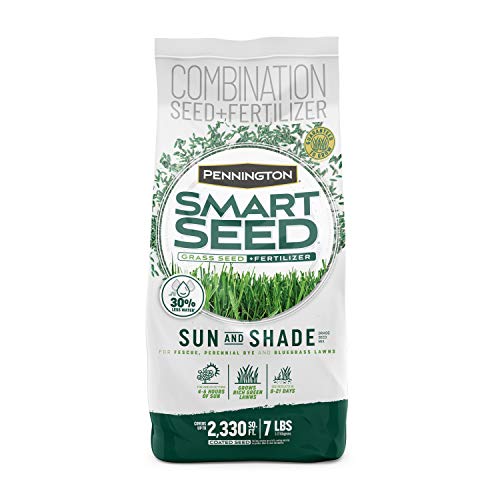
Best for a fall seeding that needs less water once established
- Uses up to 30% less water once established
- Fertilizer-coated for fast start
- Cool-season sun and shade blend
- Best sown in early fall
Why buy it: once rooted it needs noticeably less water, which pays off when you seed in fall and the lawn faces the next summer with a deeper root system.

Best for a late-spring or early-summer seeding in the South
- Heat- and drought-tough Bermuda
- Coated seed for moisture retention
- For warm-season lawns
- Sow when soil is 65–70°F+
Why buy it: warm-season grass flips the calendar — it wants late-spring warmth, and this establishes a dense Bermuda lawn when the soil is genuinely warm.
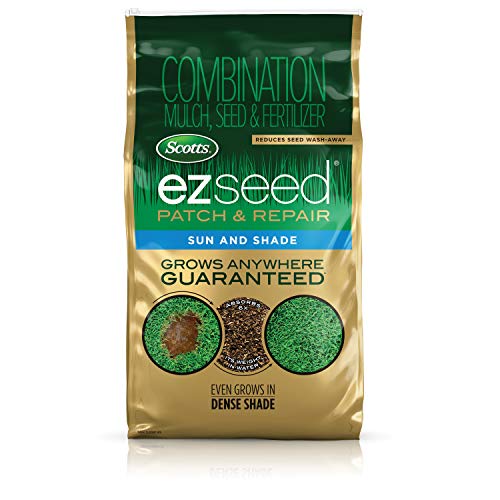
Best for filling bare spots any time the temperatures are right
- Seed, mulch and fertilizer in one
- Mulch holds moisture and swells when watered
- Sun and shade blend
- Great for small bare patches
Why buy it: the all-in-one mulch keeps seed damp through the tricky germination window, so spot repairs succeed in spring or fall without babysitting.

Best for feeding new seed at planting for faster establishment
- High-phosphorus starter formula
- Feeds roots of new grass
- Covers about 5,000 sq ft
- Apply at seeding, any season
Why buy it: new grass roots faster with a starter feed at sowing, so whatever season you seed, this gets the young lawn established before stress hits.
Quick Comparison
| Product | Best for | Rating | Price | Buy |
|---|---|---|---|---|
| Jonathan Green Black Beauty Ultra Cool-Season Grass Seed | Best Cool-Season Seed | — | Check (paid link) | |
| Scotts Turf Builder Grass Seed Sun & Shade Mix | Best Sun & Shade Mix | — | Check (paid link) | |
| Pennington Smart Seed Sun & Shade Mix (North) | Best Eco / Low-Water | — | Check (paid link) | |
| Scotts Turf Builder Grass Seed Bermudagrass | Best Warm-Season Seed | — | Check (paid link) | |
| Scotts EZ Seed Patch & Repair Sun and Shade | Best Patch Repair | — | Check (paid link) | |
| Scotts Turf Builder Starter Food for New Grass, 15 lb | Best Starter Fertilizer | — | Check (paid link) |
How We Rank
We do not buy, test or physically handle these products. We rank on aggregated owner ratings weighted by review volume, germination and establishment success reported by owners, fit for the intended season and grass type, and recurring complaints such as poor germination, weed content and filler. Prices were current at the time of writing. Full method on how we rank.
The Seed & Starter Picks, Reviewed
1. Jonathan Green Black Beauty Ultra — Best Cool-Season Seed
Covered above. What owners praise: deep roots, dark color, strong establishment from a fall sowing, and drought tolerance. What owners complain about: the price and that it is cool-season only. The premium fall-seeding choice.
2. Scotts Turf Builder Sun & Shade Mix — Best Sun & Shade Mix
The most forgiving cool-season mix for a typical yard, handling everything from full sun to dense shade, with a coating that holds moisture during germination. What owners praise: the versatility across light conditions and reliable fill-in. What owners complain about: the coating means fewer seeds per pound. The safe all-purpose fall or early-spring seed.
3. Pennington Smart Seed Sun & Shade — Best Eco / Low-Water
Once established it uses up to 30% less water, which pays off from a fall sowing that faces the next summer with deeper roots. What owners praise: the water savings, the fertilizer coating, and even establishment. What owners complain about: a slower start than uncoated seed. A smart pick where summer water is precious.
4. Scotts Turf Builder Bermudagrass — Best Warm-Season Seed
Warm-season grass flips the calendar: this Bermuda wants late-spring warmth and establishes a dense, heat-tough lawn when the soil hits 65 to 70°F. What owners praise: the heat and drought toughness and thick coverage. What owners complain about: it needs genuinely warm soil and full sun, and it goes dormant brown in winter. The right seed for a Southern late-spring sowing.
5. Scotts EZ Seed Patch & Repair — Best Patch Repair
The all-in-one seed, mulch and fertilizer keeps spot repairs damp through germination, so bare patches fill in during spring or fall without constant watering. What owners praise: the moisture-holding mulch and high success on small areas. What owners complain about: it is expensive per square foot for large jobs. Ideal for fixing bare spots in season.
6. Scotts Turf Builder Starter Food — Best Starter Fertilizer
New grass roots faster with a high-phosphorus starter feed at sowing, so whatever season you seed, the young lawn establishes before stress arrives. What owners praise: visibly faster, thicker establishment. What owners complain about: phosphorus is restricted in some states, so check local rules. Pair it with any seeding, any season.

Timing by Region and Grass Type
The single fact that decides everything is which grass you have. Cool-season grasses — tall fescue, fine fescue, perennial ryegrass, Kentucky bluegrass — dominate the northern half of the country and germinate best at 50 to 65°F soil. Their prime window is early fall, with early spring as a workable second choice. Warm-season grasses — Bermuda, Zoysia, St. Augustine, centipede — rule the South and need soil at 65 to 70°F and rising, so they are seeded in late spring into early summer. In the transition zone across the middle of the country you may grow either, so identify your lawn first; our guide on fescue versus Bermuda grass helps. A cheap soil thermometer beats guessing the date.
Getting New Seed to Take
Timing gets the seed to germinate; watering gets it to survive. Keep the seedbed consistently moist — light watering once or twice a day — until every seed has come up, because a seedbed that dries out during germination kills the sprouts. Do not mow until the new grass reaches about 3 to 3.5 inches, and never remove more than a third of the blade on that first cut — the same one-third rule extension programs recommend for every mow after. Hold off on weed killers, which harm young grass, until it has been mowed a few times. And feed at sowing with a starter fertilizer so the roots establish quickly. Germination timelines by species are in how long grass seed takes to germinate, and thickening an existing lawn is covered in how to overseed a lawn.
The Verdict
Plant grass seed in early fall for cool-season grass and late spring for warm-season grass, timing it to soil temperature rather than the calendar. For a northern lawn, Jonathan Green Black Beauty Ultra sown in fall is our top choice; go with Scotts Bermudagrass in late spring for the South, and feed any seeding with Scotts Turf Builder Starter Food. Keep the seedbed moist until it is up, and you will get a far thicker lawn than a mistimed sowing ever produces. Check price on Amazon → (paid link)