 Garden

Affiliate Disclosure
Some links on this page are affiliate links. As an Amazon Associate, we earn from qualifying purchases — at no extra cost to you. We do not buy, test, or physically handle the products we cover; our rankings come from aggregated owner reviews, ratings and expert consensus. Commissions never change our verdicts. How we rank · full disclosure.
The short answer: wait until the new grass reaches 3 to 4 inches tall before the first mow, which usually means about 3 to 4 weeks for fast cool-season grasses and up to 6 to 8 weeks for slower types like Kentucky bluegrass or in cool weather. Mow by height, not by the calendar, because seed germinates unevenly and a date can arrive before the lawn is ready. When you do cut, use a sharp blade, mow when the grass is dry, and remove only the top third, taking it to roughly 2.5 to 3 inches.
The first mow is a milestone that actually helps the lawn thicken — done at the right time. We do not test mowers on plots; our mower rankings come from aggregated owner reviews and expert consensus, described in how we rank. The full establishment routine is at the lawn care hub.
How long to wait by grass type?
The wait tracks how fast each grass grows, which is the same trait that governs germination speed. Fast grasses reach mowing height in about three weeks; slow ones take twice as long.
| Grass type | Typical wait to first mow |
|---|---|
| Perennial ryegrass | 3 weeks |
| Tall fescue | 3 to 4 weeks |
| Fine fescue | 3 to 4 weeks |
| Bermuda | 4 to 6 weeks |
| Kentucky bluegrass | 6 to 8 weeks |
Cool soil stretches every one of these, so seed sown late in fall or early in a cold spring may sit longer before it is ready. The underlying germination timing is in how long grass seed takes to germinate. If your seed was a blend, wait for the slower species to catch up rather than mowing as soon as the ryegrass is tall.
Why wait for new grass to reach 3 inches?
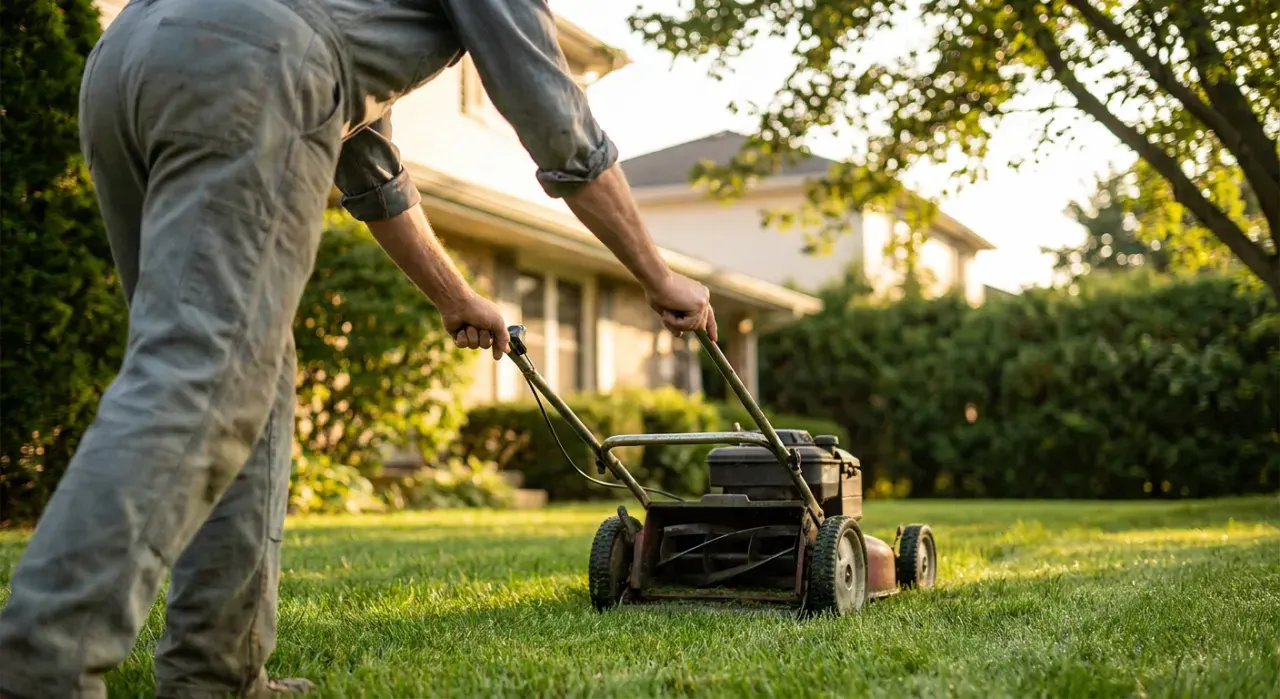
Young seedlings have shallow, weak roots for the first few weeks. Mow too early and the mower's suction and wheels pull the tender plants out of the ground rather than cutting them, thinning the very stand you are trying to grow. Letting the grass reach 3 to 4 inches gives the roots time to anchor, so the plant stays put when the blade passes. Reaching that height also signals the seedling is photosynthesizing enough to survive losing some leaf. This is why the one-third rule matters even more on a new lawn, a principle laid out in how often to mow your lawn.
How do you do the first mow on new grass?
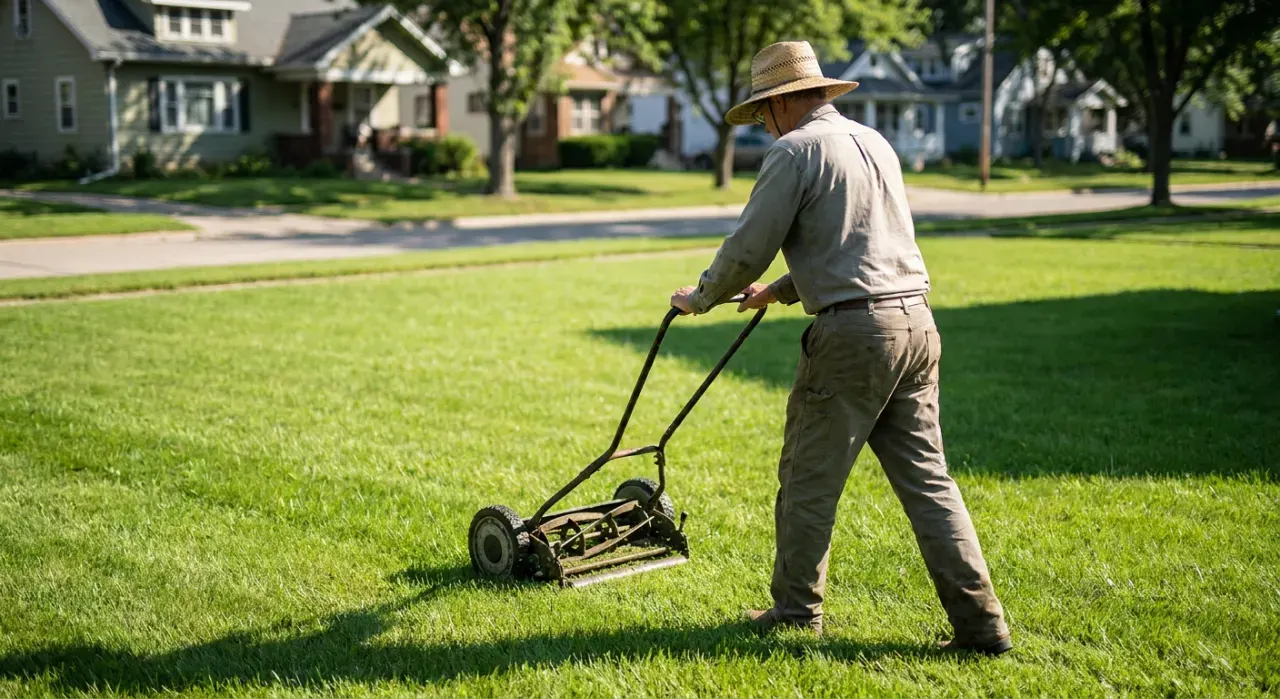
- Wait for dry grass and firm soil. Mowing wet, soft ground ruts the surface and uproots seedlings; let it dry, as covered in can you mow wet grass?
- Use a sharp blade. A dull blade tears young grass out instead of slicing it — see how often to sharpen mower blades.
- Set the deck high and take only the top third, cutting to about 2.5 to 3 inches on the first pass.
- Bag or side-discharge the first cut so clippings do not smother thin new turf.
- Ease off water beforehand a day or two so the soil is firm, then resume normal watering after.
When can you use the lawn and apply weed killer?
Hold traffic off the new lawn until it has been mowed once or twice, roughly four to six weeks, since footsteps compact soil and crush seedlings. Weed control waits longer: keep broadleaf herbicides off until the grass has been mowed two to three times, generally six to eight weeks, and always follow the label's stated seeding interval. Pre-emergent herbicides prevent seeds from sprouting, so never apply them to newly seeded ground — save them for the following season. If weeds are crowding the new grass, mowing at the right height often suppresses them enough while the turf fills in.
Patience through the first month pays off in a denser lawn: wait for height, cut high with a sharp blade, and keep off it until it roots. Related questions: grass seed germination time, why new sod turns brown, and the seed field in best grass seed.