 Garden
Affiliate Disclosure
Some links on this page are affiliate links. As an Amazon Associate, we earn from qualifying purchases — at no extra cost to you. We do not buy, test, or physically handle the products we cover; our rankings come from aggregated owner reviews, ratings and expert consensus. Commissions never change our verdicts. How we rank · full disclosure.
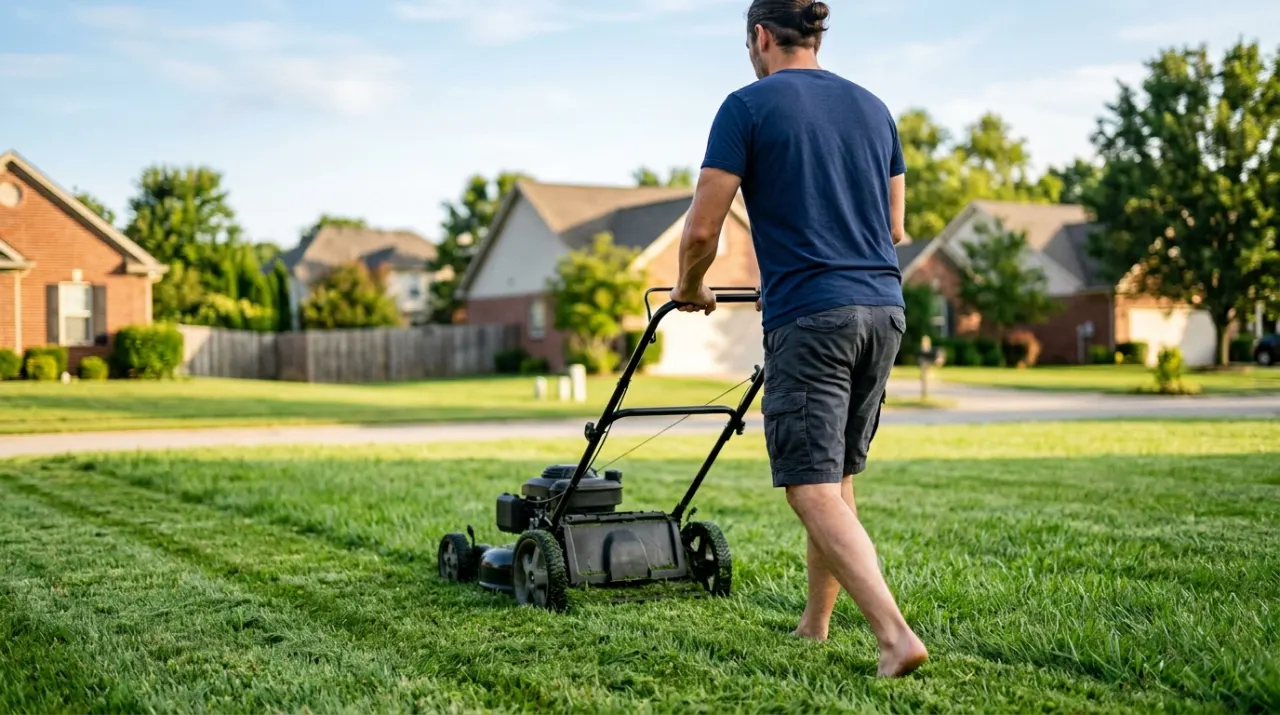
The short answer: a maintained gas walk-behind mower lasts 8 to 10 years, or roughly 400 to 500 engine hours. A riding mower or lawn tractor lasts 10 to 15 years, or 1,000 to 1,500 hours, and commercial zero-turns reach 2,000 to 3,000 hours. Battery mowers match gas at 8 to 10 years for the machine itself, but the battery pack typically needs replacing after 3 to 5 years or 500 to 1,000 charge cycles. Because a typical home lawn takes well under an hour to cut, most homeowners never reach the engine hour limit; the machine dies of rust, neglected oil or stale fuel first.
Lifespan is far more sensitive to maintenance than to brand. Our mower rankings come from aggregated owner reviews and long-term reliability reports rather than first-hand testing, as set out in how we rank. More maintenance guidance sits at the lawn care hub.
How long does each type of mower last?
Engine class matters more than the badge. A premium overhead-valve engine with a cast-iron cylinder sleeve lasts several times as long as a budget engine with an aluminum bore, and that difference shows up in the second half of the machine's life rather than in year one.
| Mower type | Expected life | Engine hours | First part to fail |
|---|---|---|---|
| Gas push (budget) | 5 to 8 years | 300 to 400 | Carburetor, recoil starter |
| Gas self-propelled | 8 to 10 years | 400 to 500 | Drive cable, transmission |
| Battery push | 8 to 10 years | Motor rarely limiting | Battery pack (3 to 5 yr) |
| Corded electric | 10+ years | Motor rarely limiting | Cord strain relief, wheels |
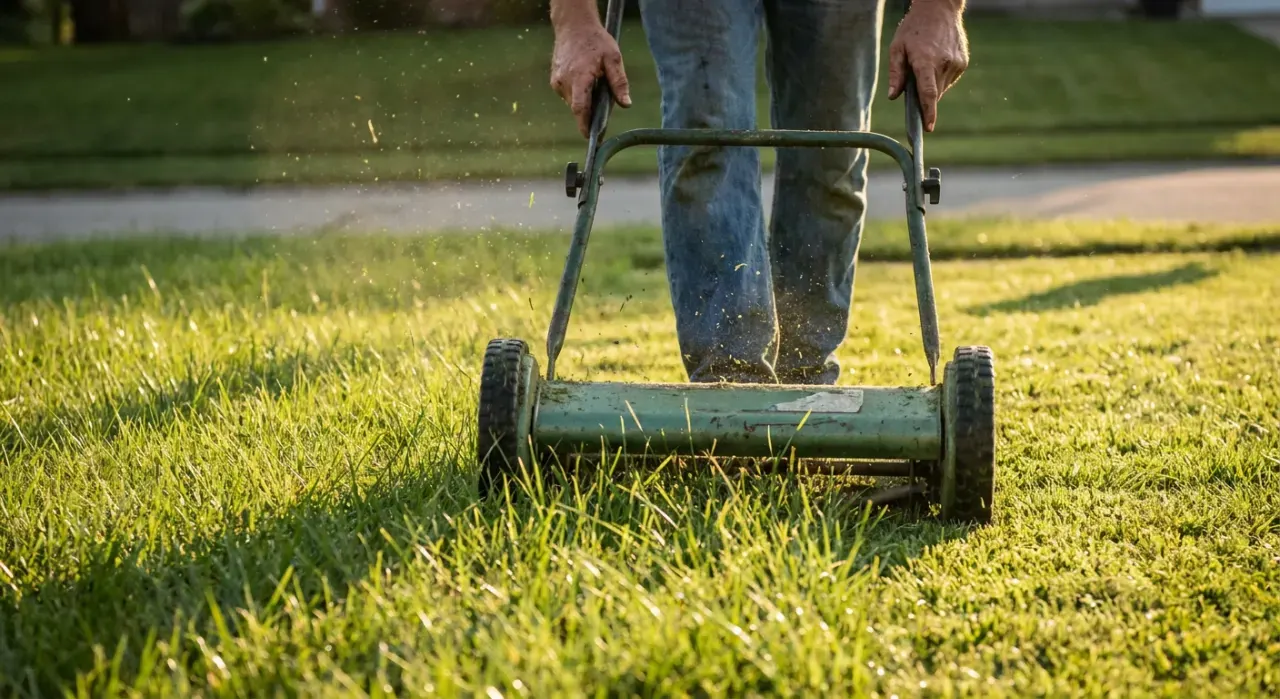
| Reel (manual) | 15 to 25 years | None | Blade sharpness, bearings |
| Riding / lawn tractor | 10 to 15 years | 1,000 to 1,500 | Transmission, deck spindles |
| Zero-turn (residential) | 10 to 15 years | 1,500 to 2,000 | Hydrostatic pumps |
At about 30 hours of use a season, a 500-hour walk-behind engine has a theoretical 16-year life. Very few reach it, which tells you most mowers are lost to maintenance, storage and corrosion rather than wear.
What kills a lawn mower early?
Four things account for most premature deaths, and three of them are free to avoid. Stale fuel tops every list of owner complaints, because ethanol-blended gasoline oxidizes within about 30 days and leaves varnish that blocks carburetor jets. The rest follow a familiar pattern:
- Stale or untreated fuel left over winter, gumming the carburetor and corroding the tank.
- Skipped oil changes. Small engines have no oil filter on most walk-behinds, so contaminated oil circulates until it is drained.
- Running with a clogged air filter, which lets grit into the cylinder and accelerates bore wear more than anything else on the list.
- Striking rocks and roots, which bends the crankshaft. A bent crankshaft on a consumer mower is effectively a write-off.
- Outdoor storage, which rusts the deck from underneath and lets water into the fuel system.

How do you make a lawn mower last longer?
The highest-return habits cost under $30 a year in total. Change the oil at the interval in your manual, typically every 25 to 50 hours or once a season. Replace the air filter yearly and the spark plug yearly. Add fuel stabilizer at every fill, or run the tank dry before storage. Sharpen the blade two or three times a season, since a dull blade tears grass and puts extra load on the engine, and clean grass build-up off the underside of the deck after cutting because packed clippings hold moisture against the steel and rust it from the inside.

When should you replace rather than repair a mower?
Replace when the repair exceeds roughly half the cost of a comparable new machine, or when the failure is structural. Specifically: a cracked or rust-perforated deck, a bent crankshaft, a seized engine, or a failed hydrostatic transmission on a low-end rider. Repair almost anything else. Carburetor kits run $10 to $25, a blade $15 to $30, a recoil starter $20 to $40, and a drive cable $15 to $35, all of which are worth doing on a machine with a sound deck and a healthy engine. If your mower simply will not start, work through why my lawn mower will not start before assuming the worst.
If it is genuinely time to replace, decide on power source first with gas vs battery mower and on drive type with push vs self-propelled, then see current picks in best lawn mower. Keeping the machine you have healthy starts with how often to change mower oil and how often to sharpen mower blades.