 Garden

Affiliate Disclosure
Some links on this page are affiliate links. As an Amazon Associate, we earn from qualifying purchases — at no extra cost to you. We do not buy, test, or physically handle the products we cover; our rankings come from aggregated owner reviews, ratings and expert consensus. Commissions never change our verdicts. How we rank · full disclosure.
The short answer: in the large majority of cases the problem is fuel, not the engine. Gasoline older than about 30 days oxidizes and leaves varnish that blocks the carburetor jet, which is the single most common no-start cause reported by owners. Work through the causes in this order: stale fuel, clogged carburetor, fouled or loose spark plug, dirty air filter, disconnected safety bail or key, then overfilled oil. Each of the first four takes under ten minutes to check with basic tools, and together they account for the vast majority of walk-behind mowers that crank but will not fire.
Diagnosis is easier if you remember an engine needs only three things: fuel, spark and air, in the right proportions and at the right time. Our mower rankings come from aggregated owner reviews and reliability reports rather than first-hand testing, as set out in how we rank. More maintenance guides live at the lawn care hub.
What should you check first when a mower will not start?
Start with fuel because it is the most likely and the easiest to rule out. Open the cap and look and smell: fresh gasoline is clear with a sharp solvent smell, while stale fuel is darker, sometimes slightly yellow, and smells sour or like varnish. If the fuel is old, drain it rather than trying to run it out. This diagnostic order moves from cheapest and most likely to least.
| Order | Check | Symptom | Typical fix cost |
|---|---|---|---|
| 1 | Fuel age and level | Cranks, no fire; sour smell | Cost of fresh fuel |
| 2 | Carburetor bowl and jet | Starts on primer then dies | $10 to $25 rebuild kit |
| 3 | Spark plug | No pop at all; wet or black tip | $4 to $10 |
| 4 | Air filter | Hard start, black smoke, low power | $8 to $15 |
| 5 | Safety bail, key, brake cable | Nothing happens on pull | $0 to $20 |
| 6 | Oil level | White smoke, very hard pull | $0 |
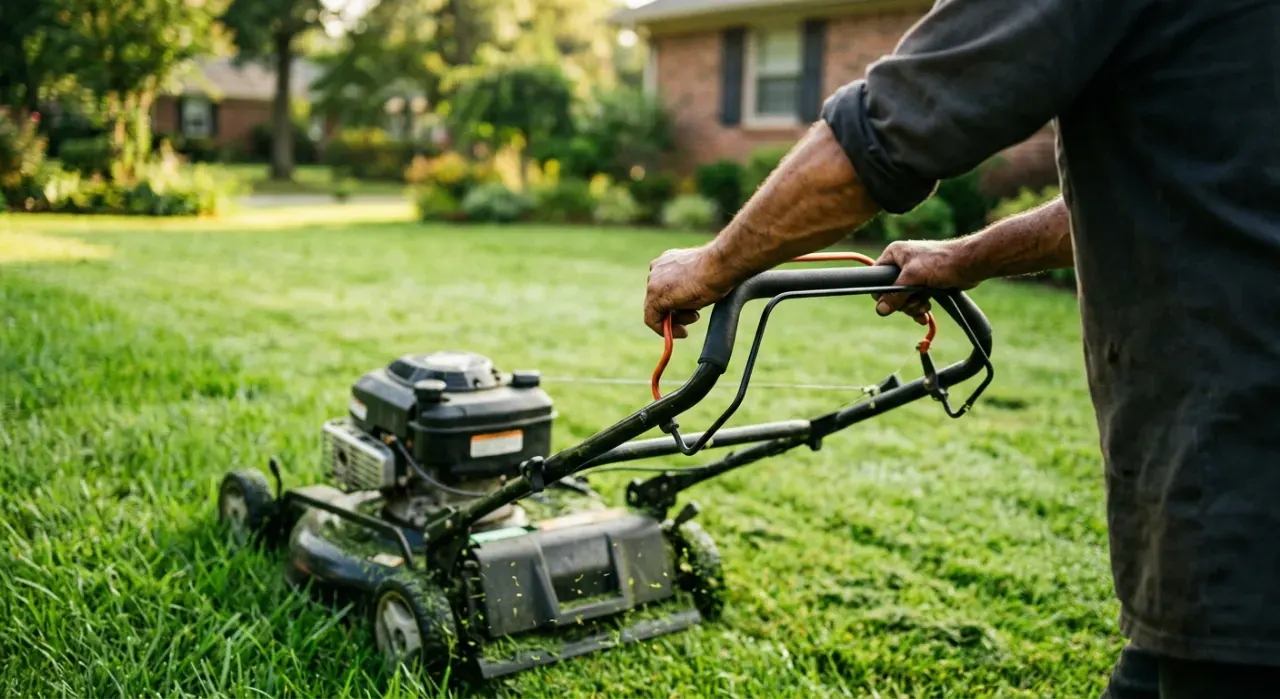
How do you fix a mower with stale fuel?
Drain the tank completely, then clear the carburetor bowl. Fuel left over winter separates and leaves a sticky residue on the jet, and ethanol-blended pump gas absorbs moisture from the air, which is why the US Department of Energy and most small-engine manufacturers advise against storing E10 for long periods without stabilizer. Siphon or drain the tank into an approved container, close the fuel valve if fitted, remove the carburetor bowl nut, and clean the bowl and the tiny hole through the nut with carburetor cleaner and a strand of wire. Refill with fresh gasoline of 87 octane or higher, with no more than 10 percent ethanol.
- Prevent it: add fuel stabilizer at every fill, or run the tank dry before storage.
- Never use E15 or E85 in a small engine. Manufacturers void warranties over it and the CPSC notes fuel-related damage as a common small-engine failure.
- Store gasoline no longer than 30 days untreated, or up to about 12 months treated.
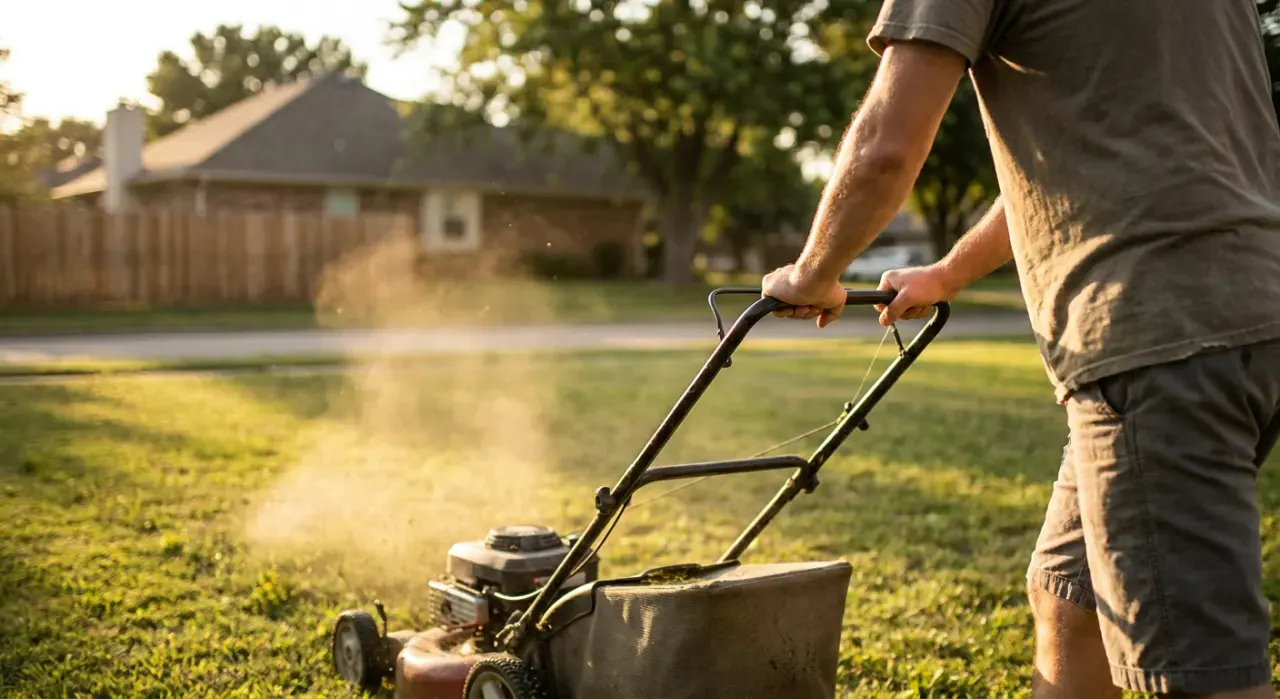
How do you check for spark?
Remove the plug with a socket wrench, reconnect the boot, ground the plug body against a bare metal part of the engine, and pull the cord. You should see a crisp blue spark. A weak orange spark or none at all means the plug, the boot, or the ignition coil. Before condemning the coil, confirm the safety bail is held against the handle and any key or blade-brake lever is engaged, because those switches ground the ignition deliberately. Always disconnect the plug wire before working near the blade.
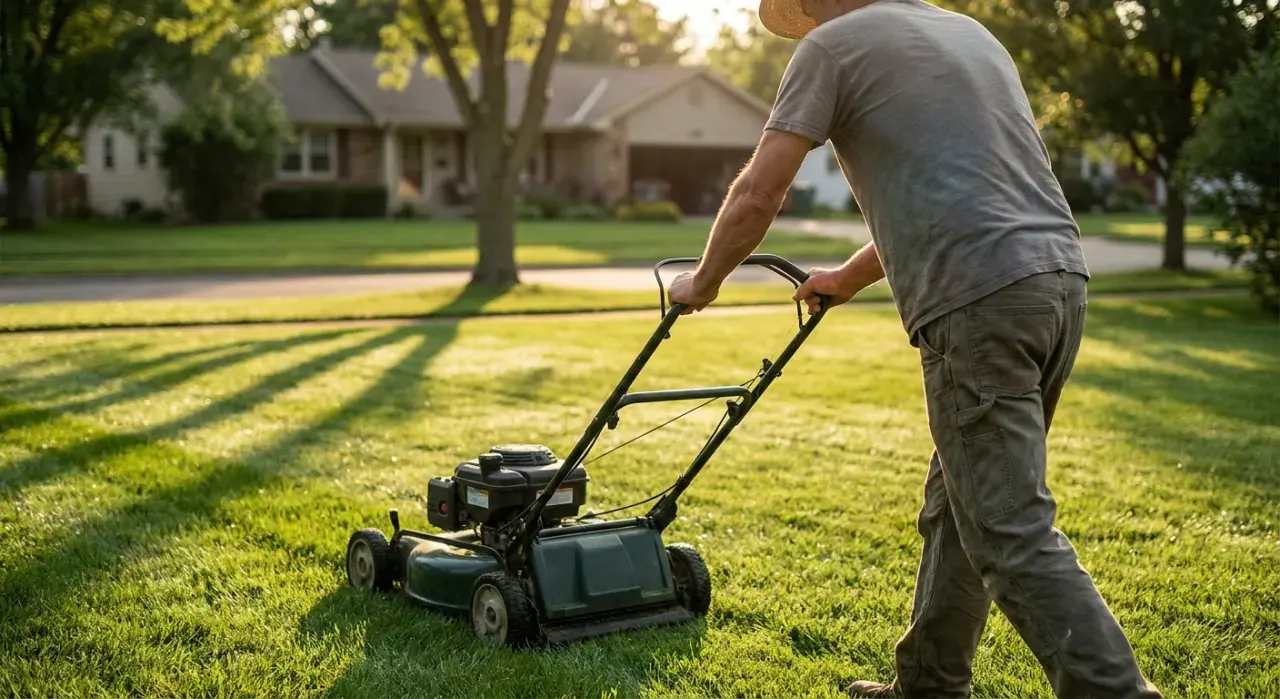
What do you do with a flooded mower?
Wait 15 to 20 minutes, then start with the choke fully off and the throttle high. Flooding usually comes from over-priming, and the primer bulb should normally be pressed only two or three times, or from repeated pulls with the choke closed. If the plug is visibly wet with fuel, remove it, wipe it dry, pull the cord several times with the plug out to clear the cylinder, then reinstall and try again. Persistent flooding on a mower that once ran fine often points to a stuck carburetor float or a leaking float needle.
What if it starts but runs badly or keeps stalling?
A mower that fires but will not stay running is usually starved rather than dead. The three checks that resolve most of these are the fuel-cap vent, the air filter, and the carburetor jet. A clogged vent creates a vacuum in the tank that stops fuel flow after a couple of minutes, which is why the classic symptom is a mower that runs for exactly the same short interval every time. That whole pattern is worked through in why my lawn mower keeps dying.
Regular maintenance prevents most of this. Change the oil on schedule per how often to change lawn mower oil, replace the plug annually per how often to change a mower spark plug, and know when the machine has simply reached the end via how long lawn mowers last. If it is time to replace, our picks are in best lawn mower.