 Garden
Affiliate Disclosure
Some links on this page are affiliate links. As an Amazon Associate, we earn from qualifying purchases — at no extra cost to you. We do not buy, test, or physically handle the products we cover; our rankings come from aggregated owner reviews, ratings and expert consensus. Commissions never change our verdicts. How we rank · full disclosure.
The short answer: the best fertilizer for St. Augustine grass is Scotts Turf Builder Southern Lawn Food — formulated for southern grasses, feeding for up to three months, and safe on Floratam. It suits routine spring and summer feeding across the Gulf South. For applications in genuine summer heat, switch to Milorganite, whose slow-release organic nitrogen carries almost no burn risk. If dollarweed or clover is your actual problem, Bonus S Southern Weed and Feed2 is one of the few broadleaf products safely labeled for St. Augustine.
We do not buy, apply, or physically handle any product. These rankings come from aggregated owner reviews, star ratings, review volume and expert consensus — see how we rank. For the general field, see best lawn fertilizer, and for warm-season siblings see best fertilizer for Bermuda grass.
Top Picks at a Glance
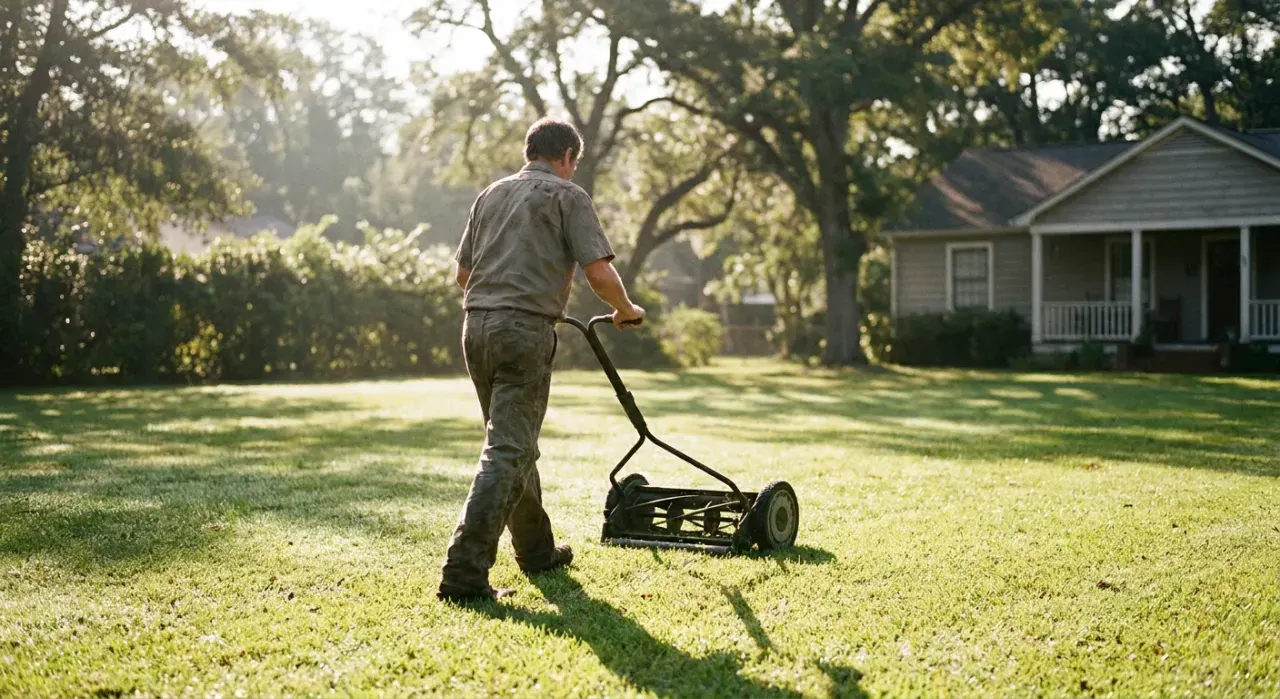
Our #1 Pick: Scotts Turf Builder Southern Lawn Food
St. Augustine is not a grass you can feed with a generic northern product, and that is the whole reason this category exists. Southern formulations differ in three ways that matter: the nutrient balance is tuned for grasses growing in heat rather than cool-season grasses building roots in fall, the release curve is slower to suit a long growing season, and the herbicide chemistry in southern weed-and-feed blends is chosen not to damage St. Augustine.
The Southern Lawn Food gets the routine right. One bag covers 10,000 sq ft, it feeds for up to three months, and the owner-review record consistently reports a deep green response within one to two weeks with no scorch when watered in properly. It is explicitly safe on Floratam, which matters because Floratam is both the most planted St. Augustine cultivar in Florida and the most sensitive to the wrong chemistry.
The complaints are worth knowing. Granule size varies and coarse particles spread less evenly than fine ones, which is where owners report striping — a slower spreader walk and a crossing pattern at half rate fixes most of it. It must be watered in; reviewers who spread it and waited for rain that did not come report burn on hot days. And it is a phosphorus-containing product, so in Florida counties with phosphorus ordinances you need to check local rules or choose a zero-P option like Milorganite instead. That is a legal question, not a horticultural one, and it varies by jurisdiction.
Consensus Score █████████░░░ 8.6
Check price on Amazon → (paid link)
The Ranked Field
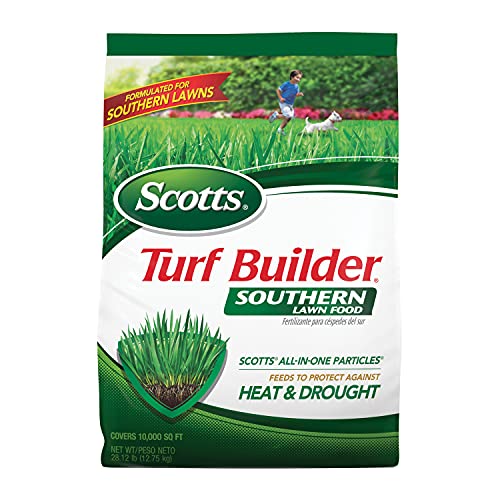
Best for routine spring and summer feeding of St. Augustine across the South
- Formulated for southern grasses including St. Augustine
- Covers 10,000 sq ft per bag
- Feeds for up to three months
- Safe on Floratam when used as directed
Why buy it: the default southern feed for a reason — long-lasting, widely available, and formulated for grasses that will not tolerate a northern blend.

Best for Florida yards where phosphorus rules and heat stress both apply
- Built for Florida grass types and soils
- Feeds up to three months
- Covers 5,000 sq ft
- Suits St. Augustine, Bahia and Zoysia
Why buy it: Florida sand leaches nutrients fast and many counties restrict phosphorus — this is formulated around both realities.
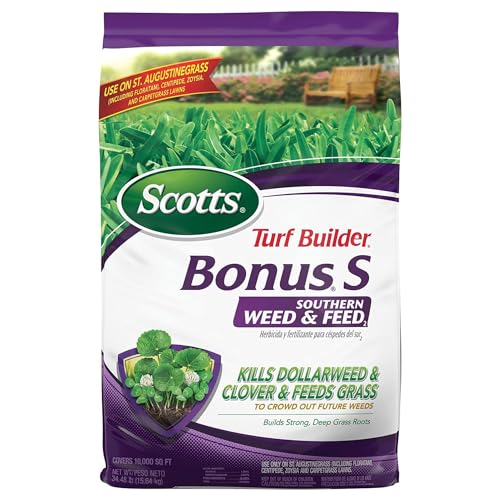
Best for St. Augustine lawns with dollarweed, clover or chickweed
- Safe on St. Augustine including Floratam
- Also labeled for Centipede, Zoysia and Carpetgrass
- Kills broadleaf weeds while feeding
- Covers 10,000 sq ft
Why buy it: the one weed and feed that is genuinely safe on Floratam — most northern broadleaf products will damage St. Augustine.

Best for summer feeding without burn risk, and lawns on sandy soil
- Slow-release organic nitrogen — very low burn risk
- Contains 2.5% non-staining iron for color
- Zero phosphorus, so compliant where P is restricted
- Safe to apply in peak summer heat
Why buy it: the one product you can apply in August heat on St. Augustine without worrying about scorching it.

Best for fast green-up between granular applications
- 16-4-8 NPK with seaweed and fish nutrients
- Hose-end sprayer, no spreader needed
- Labelled for St. Augustine among all grass types
- Visible response within days rather than weeks
Why buy it: foliar feeding gets nitrogen into the plant in days, which is why it is the standard fix for a lawn that looks tired in July.

Best for owners chasing color and soil improvement together
- 16-4-8 NPK with 7% Humic DG
- Small particle size for even coverage
- High iron content for deep color
- Covers 5,000 sq ft
Why buy it: the small-particle DG technology spreads far more evenly than coarse granules, which is what removes streaking.
Quick Comparison
| Product | Best for | Rating | Price | Buy |
|---|---|---|---|---|
| Scotts Turf Builder Southern Lawn Food (10,000 sq ft) | Best Overall | — | Check (paid link) | |
| Scotts Turf Builder Florida Lawn Fertilizer (5,000 sq ft) | Best for Florida Lawns | — | Check (paid link) | |
| Scotts Turf Builder Bonus S Southern Weed and Feed2 (10,000 sq ft) | Best Weed and Feed | — | Check (paid link) | |
| Milorganite 6-4-0 Slow-Release Nitrogen Fertilizer (32 lb) | Best Organic Choice | — | Check (paid link) | |
| Simple Lawn Solutions Advanced 16-4-8 Liquid Lawn Food (32 oz) | Best Liquid Feed | — | Check (paid link) | |
| The Andersons PGF Complete 16-4-8 with Humic DG (5,000 sq ft) | Best Premium Granular | — | Check (paid link) |
A St. Augustine Feeding Calendar
Timing matters more than product choice for this grass. Feeding dormant St. Augustine is wasted money and can encourage disease; feeding it in the depth of summer heat with a fast-release product risks burn. The EPA recommends applying fertilizer as close as possible to the period of maximum growth, which for warm climates falls in early and late summer. This is the shape most Gulf South extension guidance follows.
| Timing | What to apply | Why |
|---|---|---|
| Mid-spring, after two mowings | Balanced granular such as Southern Lawn Food | Grass is actively growing and can use the nitrogen |
| Late spring, if weeds present | Bonus S Southern Weed and Feed2, below 85°F | Broadleaf weeds are actively growing and take up herbicide |
| Early to mid summer | Milorganite or another slow-release organic | Very low burn risk in heat, adds iron for color |
| Mid summer, if color fades | Liquid 16-4-8 as a foliar feed | Fast response without a heavy salt load on the soil |
| Early fall, ~6 weeks before first frost | Balanced granular | Builds reserves before dormancy |
| Winter | Nothing | Dormant grass cannot use it; nitrogen feeds weeds instead |
In south Florida and coastal Texas where St. Augustine barely goes dormant, spread the same total nitrogen across four lighter applications rather than three heavier ones.
The Fertilizers, Reviewed
1. Scotts Turf Builder Southern Lawn Food — Best Overall
Covered above. Owners praise: reliable green-up, three-month feed duration, wide availability, Floratam safety, and coverage that matches the bag claim. Owners complain about: granule size variation causing streaking, the need to water in promptly, phosphorus content where ordinances restrict it, and price creep over recent seasons.
2. Scotts Turf Builder Florida Lawn Fertilizer — Best for Florida Lawns
Florida is its own lawn-care jurisdiction. Sandy soils leach nutrients quickly, rain is intense and seasonal, and many counties restrict phosphorus application in the summer wet season. This formulation is built around those conditions and covers the three grasses that dominate Florida yards — St. Augustine, Bahia and Zoysia. Owners praise: suitability for sand, three-month feeding, visible color response, and being the product Florida garden centers actually recommend. Owners complain about: smaller coverage per bag than the 10,000 sq ft option, the same watering-in requirement, and confusion over which of several similarly named Scotts products applies to their county.
3. Bonus S Southern Weed and Feed2 — Best Weed and Feed
The reason this product matters is narrow and important: most weed and feed sold nationally will damage St. Augustine. Bonus S is labeled for St. Augustine including Floratam, as well as Centipede, Zoysia and Carpetgrass, and it targets the broadleaf weeds that actually appear in southern lawns — dollarweed, clover, chickweed. Owners praise: effective control of dollarweed, safety on Floratam when applied per label, and combining two jobs in one pass. Owners complain about: a strict temperature ceiling that shortens the usable window, needing to be applied to damp grass so the granules stick, and damage reports from owners who applied it in heat or to stressed turf. Read the label properly on this one.
4. Milorganite 6-4-0 — Best Organic Choice
Milorganite occupies a specific and valuable slot: it is the product you can apply in August without lying awake about it. The nitrogen is slow-release organic, the burn risk is close to zero even unwatered, and the 2.5% iron gives color without the surge growth that heavy nitrogen produces. Zero phosphorus also makes it compliant in counties with P restrictions. Owners praise: summer safety, color from iron, no burn, and suitability for sandy soil where fast-release products leach. Owners complain about: the smell for a day or two after application, a granule that some spreaders handle poorly, dust in the bag, and a slower visible response than synthetic products.
5. Simple Lawn Solutions 16-4-8 Liquid — Best Liquid Feed
Liquid feeding is a different tool rather than a replacement for granular. Nutrients go in through the leaf as well as the root, so the response arrives in days instead of weeks, which is exactly what a lawn that looks tired in mid-July needs. The 16-4-8 ratio is the standard southern balance. Owners praise: speed of green-up, the hose-end sprayer needing no spreader, ease of covering awkward areas, and no granules on the driveway. Owners complain about: short duration requiring re-application every few weeks, coverage claims that assume a light rate, and the sprayer connector leaking on some units.
6. The Andersons PGF Complete 16-4-8 — Best Premium Granular
The lawn-enthusiast pick. DG technology makes the granules unusually small, which means far more particles per square foot and dramatically more even coverage — this is the product for anyone who has been frustrated by striping. The 7% humic content is a genuine soil amendment rather than a marketing line. Owners praise: even spreading, deep color from the iron content, humic soil benefits, and no burn at label rates. Owners complain about: price per square foot well above Scotts, smaller coverage per bag, and fine particles that require a properly calibrated spreader to avoid over-application.
What Owners Actually Complain About
Fertilizer reviews concentrate on five recurring problems, and four of them are application errors rather than product faults. Striping tops the list — visible dark and light bands where the spreader pattern overlapped unevenly. The fix is to halve the rate and make two passes at right angles. Burn is second, and it is nearly always fast-release nitrogen applied in heat or not watered in. Coverage falling short of the bag is third, usually because the spreader setting was too open. Weed and feed damage on St. Augustine is the one that produces the angriest reviews, and it is almost always a product not labeled for the grass, or one applied above the temperature ceiling. And the Milorganite smell is a genuine, if temporary, complaint that surprises first-time users.
How to Choose and Apply
Three decisions. Check your local phosphorus rules first — several Florida counties restrict phosphorus application during the summer wet season, part of a wider pattern the EPA documents in states and localities such as Minnesota, Michigan and the Chesapeake Bay region, and a zero-P product removes the question. Match release speed to the season: fast-release granular in spring and fall, slow-release organic in summer heat, liquid when you need a fast fix. Match the herbicide to the cultivar if you buy a combined product, because Floratam is genuinely sensitive.
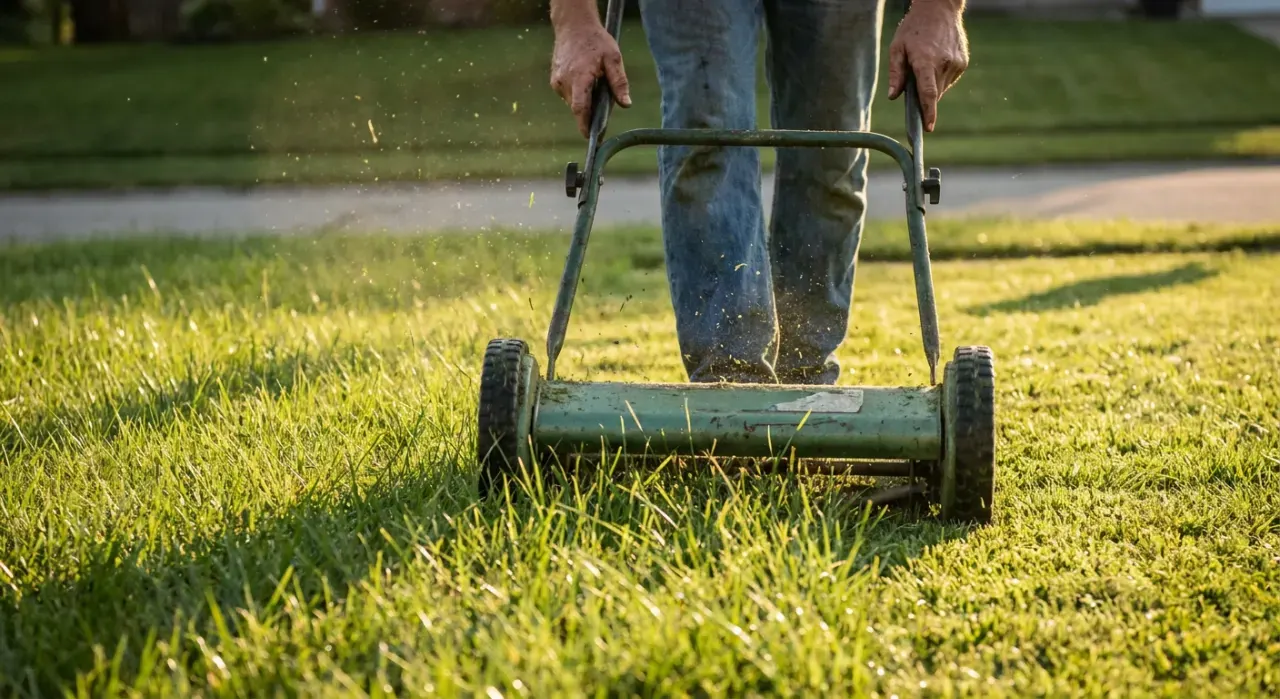
Then apply properly, which matters more than which bag you bought. Calibrate the spreader, walk at a steady pace, apply at half rate in two crossing passes to eliminate striping, and water in with about a quarter-inch unless the label says otherwise. A good broadcast spreader makes the difference — see best broadcast spreader. And do not overfeed: excess nitrogen on St. Augustine produces soft growth that chinch bugs and gray leaf spot both prefer.
How We Rank Fertilizers
We never buy or physically handle the products on this site. We read the owner-review record at scale, weighting four things. Label suitability for the actual grass, which in St. Augustine is a safety issue rather than a preference. Burn reports, weighted heavily because a scorched lawn takes a season to recover. Spreading behavior, since granule consistency drives the striping complaints that dominate this category. And duration versus claim, taken from reviews written weeks after application rather than on the day. Prices and ratings move; the complaint pattern does not.
The Verdict
Scotts Turf Builder Southern Lawn Food is the fertilizer the owner-review record supports most strongly for routine St. Augustine feeding. Switch to Milorganite for the summer application, because burn risk in Gulf heat is real and this removes it. Use Bonus S Southern Weed and Feed2 only if you actually have broadleaf weeds, only below 85°F, and only after reading the label against your cultivar.
Next: get the timing right with when to apply lawn fertilizer, compare formats in liquid vs granular fertilizer, or spread it evenly with the best broadcast spreader.