 Garden

Affiliate Disclosure
Some links on this page are affiliate links. As an Amazon Associate, we earn from qualifying purchases — at no extra cost to you. We do not buy, test, or physically handle the products we cover; our rankings come from aggregated owner reviews, ratings and expert consensus. Commissions never change our verdicts. How we rank · full disclosure.
The short version: after weighing six of the most-reviewed self-propelled mowers on the US market against owner ratings, review volume, published specifications and the failures that recur in season three and beyond, the EGO POWER+ LM2135SP is the one we would put in most garages with a slope in the yard. It has a variable-speed rear-wheel drive that owners report still working smoothly years in, an hour of cutting on a charge, and none of the gas maintenance. Below is the full ranked field, the consensus score behind each placement, and the complaints owners genuinely file.
This page is about the drive system specifically. If you are still deciding whether you need one at all, or you want the whole field of push, reel, corded and battery mowers ranked together, start with best lawn mowers — a self-propelled drive adds cost, weight and the most failure-prone assembly on the machine, and on a small flat lot it earns none of that back.
Top Picks at a Glance

Our #1 Pick: EGO POWER+ LM2135SP
Self-propelled mowers live or die on the drive, and EGO’s is the one with the best long-tenure record in the owner reviews. It is a variable-speed rear-wheel system controlled by a dial and a bail bar, so you set a walking pace and the mower holds it up a bank as readily as across the flat. Rear-wheel drive matters here: on a climb, the machine’s weight shifts backward onto the driven wheels, so traction increases exactly when you are asking most of it. Front-wheel systems lose grip on the same slope.
The rest of the machine is unusually well sorted. The Select Cut system stacks two blades so you can swap the lower one for a mulching or bagging blade depending on the job, and the mulch it produces is noticeably finer than a single-blade deck. A 7.5Ah 56V pack gives most owners around an hour of cutting, which covers a quarter acre comfortably. It folds flat and stands upright against a garage wall, which is the storage problem gas mowers never solve.
What the aggregated picture shows most clearly is durability of the drive rather than raw power. Reviews written three and four seasons in describe the self-propel still engaging smoothly — the single most common failure across this entire category, and the one that turns a $500 mower into a very heavy push mower.
Consensus Score █████████░░░ 9.0 — from the aggregated owner-review consensus
Check price on Amazon → (paid link)
The Ranked Field

Best for a quarter-acre yard with slopes, without gas or pull cords
- Variable-speed rear-wheel drive to 3.1 mph
- 56V 7.5Ah battery, roughly 60 minutes of cutting
- Two stacked blades for a finer mulch
- Folds upright for vertical storage
Why buy it: the drive system owners report still working smoothly in season four, on the most established battery platform in outdoor power.

Best for a half-acre where the extra voltage buys runtime
- 80V brushless motor, 21-inch steel deck
- 3-in-1 mulch, bag and side discharge
- 4.0Ah battery with 60-minute rapid charger
- Single-lever height adjustment
Why buy it: the cheapest way into a genuinely capable self-propelled battery mower, with a charger that turns a lunch break into a full tank.
Best for genuinely steep ground and tall, wet grass
- 209cc four-stroke OHV engine
- Rear-wheel drive for traction on slopes
- 3-in-1 mulch, bag and side discharge
- Five-position height adjustment
Why buy it: the biggest engine here paired with rear-wheel drive, which is the combination that actually climbs a bank without stalling.
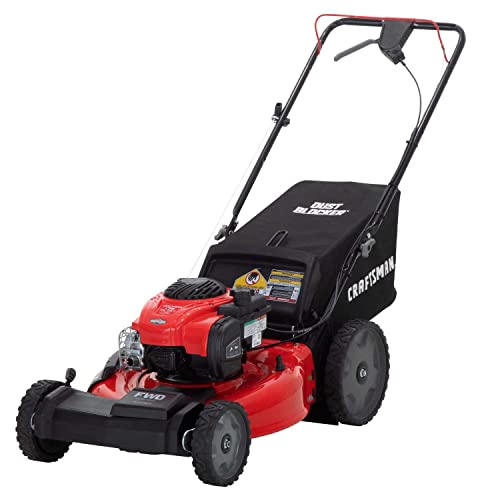
Best for a flat-to-rolling yard where gas is still the simplest answer
- 140cc OHV engine, 21-inch deck
- Front-wheel drive with high rear wheels
- 3-in-1 mulching, bagging and discharge
- Six height positions
Why buy it: a mainstream brand with a service network, at a price the battery mowers cannot approach.

Best for people who want Personal Pace and a wider cut
- 22-inch deck — widest here
- Personal Pace drive matches your walking speed
- 60V Flex-Force battery platform
- SmartStow folding for upright storage
Why buy it: Personal Pace removes the speed dial entirely — you walk, and the mower matches you, which is the least tiring drive system made.
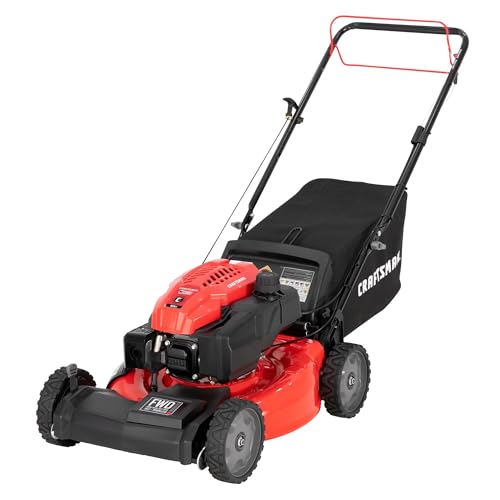
Best for flat yards with a lot of trees, beds and turns
- 163cc engine, front-wheel drive
- 21-inch deck, 3-in-1 cutting
- Tilt the handle to disengage drive on turns
- Six-position height adjustment
Why buy it: front-wheel drive is the easiest system to maneuver around obstacles, which matters more than climbing power on a flat lot.
Quick Comparison
| Product | Best for | Rating | Price | Buy |
|---|---|---|---|---|
| EGO POWER+ LM2135SP 21″ Select Cut Self-Propelled Mower | Best Overall | — | Check (paid link) | |
| Greenworks 80V 21″ Brushless Self-Propelled Mower (MO80L410) | Best Value Battery | — | Check (paid link) | |
| PowerSmart 21″ 209cc Rear-Wheel-Drive Self-Propelled Gas Mower | Best for Hills | — | Check (paid link) | |
| CRAFTSMAN M215 21″ Self-Propelled Gas Mower, 140cc | Best Gas Value | — | Check (paid link) | |
| Toro Recycler 21466 22″ 60V Self-Propelled Mower | Best Premium | — | Check (paid link) | |
| CRAFTSMAN M220C 21″ Self-Propelled Gas Mower, 163cc | Best Front-Wheel Drive | — | Check (paid link) |

How We Rank
We never buy, test or physically handle the products we rank. Instead we aggregate what the owner base already knows: star ratings weighted by review volume, the shape of the one- and two-star distribution, published specifications, and the consensus of trade and outdoor-power publications. For self-propelled mowers we weight four things — drive layout, because front, rear and all-wheel drive suit genuinely different yards, slope performance as described by owners with real hills rather than by spec sheets, drive-system durability in reviews written three or more seasons after purchase, which is where this category separates, and weight and maneuverability, since a self-propelled mower you cannot turn around a flower bed is a chore of a different kind. Prices move constantly and were accurate at the time of writing. The full method is on our how we rank page.
Front, Rear or All-Wheel Drive
Rear-wheel drive is the default recommendation for any yard with a grade. As the mower climbs, weight shifts to the rear axle and loads the driven wheels; the steeper it gets, the better it grips. It also holds traction better with a full bag of clippings hanging off the back, which is precisely when a front-wheel mower starts spinning. The trade-off is that turning requires either disengaging the drive or muscling the machine around.
Front-wheel drive is the better system on a flat lot with obstacles. Push down on the handle, the front wheels lift clear, and you pivot on the rear wheels without touching the drive control — around a tree, along a bed edge, back the other way. On a slope, though, that same weight transfer works against you and the drive wheels break traction on the climb. Wet grass makes it worse.
All-wheel drive exists for severe terrain — steep banks, ditch edges, uneven ground — and costs a premium. Very few suburban yards need it, and the extra drivetrain is extra weight and another thing to fail.
The other decision that rides alongside this one is deck width. Twenty-one inches is the American standard and fits through a standard gate; twenty-two, like the Toro here, cuts about five percent fewer passes but is harder to store and heavier to turn. Neither matters as much as the drive layout.
The Mowers, Reviewed
1. EGO POWER+ LM2135SP — Best Overall
Covered above. Consensus Score █████████░░░ 9.0. What owners like: the smooth variable-speed rear-wheel drive, the hour of runtime, vertical storage and the size of the EGO tool range the battery also fits. What owners complain about: it is heavy — noticeably so if the drive ever fails or the battery dies mid-lawn; the price is roughly double a comparable gas mower; the bag fills quickly and is awkward to empty; and runtime drops sharply in tall or wet grass, with owners on a third of an acre describing a second battery as effectively mandatory. A minority report the height-adjustment lever stiffening over time. Check price (paid link).
2. Greenworks 80V 21″ Self-Propelled — Best Value Battery
Eighty volts, a brushless motor and a steel deck at a price meaningfully under the EGO. The 60-minute rapid charger is the underrated feature: if the yard needs more than one pack’s worth, you can charge while you take a break rather than waiting half a day. Three-in-one cutting and a single-lever height adjustment cover the basics well. Consensus Score ████████░░░░ 8.6. Complaints: the drive is less refined than EGO’s and owners describe it as more on-off than progressive; the 4.0Ah battery gives less real cutting time than the EGO’s 7.5Ah, so half-acre owners are buying a second pack; the Greenworks 80V tool range is narrower than EGO’s; and long-tenure reviews report drive-cable and wheel-gear wear more often than on the top pick. Check price (paid link).
3. PowerSmart 21″ 209cc Rear-Wheel Drive — Best for Hills
If the yard has a genuine bank on it, this is the machine in the ranking with the most brute capability for the money: a 209cc engine, which is large for a walk-behind, paired with rear-wheel drive. Tall grass, wet grass and a full bag all load the engine and the drive, and displacement is what stops it bogging. Three-in-one cutting and five height positions cover normal use. Consensus Score ████████░░░░ 8.4. Complaints: build quality is a clear step below the mainstream brands — owners report control cables, wheels and the bag frame as weak points; dealer service and parts support are far thinner than CRAFTSMAN, Toro or Honda; assembly instructions draw consistent criticism; and it is heavy, loud and needs the full gas-engine maintenance routine of oil changes, air filters and off-season fuel stabilizer. Check price (paid link).
4. CRAFTSMAN M215 21″ 140cc — Best Gas Value
A mainstream gas self-propelled from a brand with a real service network, at a price the battery mowers cannot get close to. High rear wheels help it roll over uneven ground, three-in-one cutting covers mulching, bagging and side discharge, and six height positions give proper control over cutting height. For a flat-to-rolling yard where the mower lives in a shed and gets used weekly, it is a sensible, unexciting purchase. Consensus Score ████████░░░░ 8.3. Complaints: at 140cc it is the smallest engine here and owners report it bogging in tall or wet grass; front-wheel drive loses traction on slopes and with a full bag; the drive cable and wheel gears are the components most often reported failing in season two or three; and it requires the whole gas routine including winter fuel treatment. Check price (paid link).
5. Toro Recycler 21466 22″ 60V — Best Premium
Personal Pace is the reason to consider this one. Instead of setting a speed dial, you simply walk — push a little harder on the handle and the mower speeds up, ease off and it slows. On a yard with a lot of stops and starts, that is the least tiring drive system anyone makes, and Toro has been refining it for two decades. The 22-inch deck is the widest here, and SmartStow folds it upright for storage. Consensus Score ████████░░░░ 8.7. Complaints: it is the most expensive machine in the ranking; Personal Pace divides opinion sharply — owners who want a fixed speed find it twitchy, particularly on slopes; the 22-inch deck will not fit through some standard gates; and the 60V Flex-Force tool range, while good, is smaller than EGO’s. Some listings are sold without a battery, which catches buyers out. Check price (paid link).
6. CRAFTSMAN M220C 21″ 163cc — Best Front-Wheel Drive
A larger 163cc engine than the M215 in a front-wheel-drive layout, which is the right combination for a flat lot with a lot of trees, beds and turns. Tip the handle, the front wheels lift, you pivot, you carry on — no drive lever, no wrestling. Three-in-one cutting and six height positions are standard CRAFTSMAN. Consensus Score ███████░░░░░ 8.2. Complaints: front-wheel drive is the wrong system for hills and owners with slopes say so plainly; the wheel-drive gears are the recurring long-term failure on this layout; it is a newer listing with a smaller owner base than the M215, so the long-tenure evidence is thinner; and, like all gas mowers here, it needs oil changes, an air filter and off-season fuel management. Check price (paid link).

What Owners Actually Complain About
Across all six, four themes dominate the negative reviews.
The drive stops driving. The defining complaint of this category. A stretched or snapped drive cable, worn plastic wheel gears, or a glazed transmission belt — all of them turn a self-propelled mower into a heavy push mower. Front-wheel systems generate this complaint more often than rear-wheel ones. Cables are cheap and usually adjustable; wheel gears are a replaceable part on most models and worth knowing about before you need them.
Weight. Every self-propelled mower is heavier than the equivalent push mower, and battery models add another 10 to 15 pounds of pack. That weight is invisible while the drive is working and very obvious when it is not, or when you are lifting the machine onto a trailer.
Runtime, on battery models. Manufacturer runtime figures are measured on short, dry grass with the drive doing little work. Owners cutting long grass on a slope consistently report substantially less. If your lawn is over about a third of an acre, budget for a second battery from the start.
Bagging. Bags fill fast, they are awkward to remove and reattach, and clippings pack into the chute when the grass is damp. The standing advice — mulch rather than bag whenever you can, and follow the one-third rule so you never take off more than a third of the blade at once — solves most of it, and is covered in how often should you mow.
How to Choose Between Them
If your yard has slopes and you want done with gas, the EGO LM2135SP is the answer, and the drive record behind it is the reason. If you want a battery mower for less, the Greenworks 80V does the same job with a rougher drive and a smaller pack. If the ground is genuinely steep, or the grass gets long and wet, a big rear-wheel-drive gas engine still wins outright, and the PowerSmart 209cc is the cheapest route to one. If you want a mainstream gas mower with dealer support, the CRAFTSMAN M215 is the sensible pick on flat-to-rolling ground. If your yard is flat and full of obstacles, front-wheel drive genuinely is easier — the M220C. If you want the least tiring machine here and the budget allows, Toro Personal Pace.
Then look after the drive, because it is what will fail. Wash or scrape the deck underside after wet mowing, disengage the drive before dragging the mower backward, and check the drive cable tension at the start of each season. And whatever you buy, mow high and often — Penn State Extension puts most lawns at 2 inches or above — because the mower matters less to how the lawn looks than the height you set it at and how often you use it, which is why the height by grass type guide is worth five minutes, alongside a proper feeding schedule from our ranked lawn fertilizers.
The Verdict
The EGO POWER+ LM2135SP wins because it gets right the thing this category most often gets wrong: a rear-wheel drive that is still smooth several seasons in, on a battery platform with the runtime to finish a quarter-acre yard. The Greenworks 80V is the value alternative, the PowerSmart 209cc the answer for a genuinely steep bank, and the Toro Personal Pace the most comfortable machine here if the budget stretches. On a small flat lot, though, the honest answer is that you may not need self-propel at all — start with our full lawn mower rankings and the rest of the hub at lawn care and mowers. Check price on Amazon → (paid link)