 Garden
Affiliate Disclosure
Some links on this page are affiliate links. As an Amazon Associate, we earn from qualifying purchases — at no extra cost to you. We do not buy, test, or physically handle the products we cover; our rankings come from aggregated owner reviews, ratings and expert consensus. Commissions never change our verdicts. How we rank · full disclosure.
The short answer: the best grass seed for shade is Jonathan Green Black Beauty Shady Nooks — the most shade-tolerant mixture in the range, built heavily around fine fescues, which are the only cool-season grasses that genuinely handle deep shade. It suits areas under mature trees and on the north side of a house. If your shaded lawn is also dry, which is usually the case under a tree, Pennington Smart Seed Dense Shade manages on 2 to 6 hours of sun and up to 30 percent less water.
We do not buy, plant, or physically handle any seed. These rankings come from aggregated owner reviews, star ratings, review volume and expert consensus — see how we rank. For the wider field, see best grass seed, and for the opposite problem, best grass seed for full sun.
Top Picks at a Glance
The Honest Part: How Much Shade Is Too Much
Before spending money on seed, measure the light. Shade grass seed extends the range of conditions grass will grow in; it does not remove the requirement for light entirely, and a great many disappointed reviews in this category are from people whose site was never going to work.
| Direct sun per day | What will grow |
|---|---|
| 6+ hours | Any lawn grass. Not a shade problem |
| 4–6 hours | Tall fescue, fine fescue, shade mixes work well |
| 3–4 hours | Fine fescue only, and it will be thin. Shade seed is essential |
| Under 3 hours | No grass will hold long term. Consider groundcover, mulch or canopy thinning |
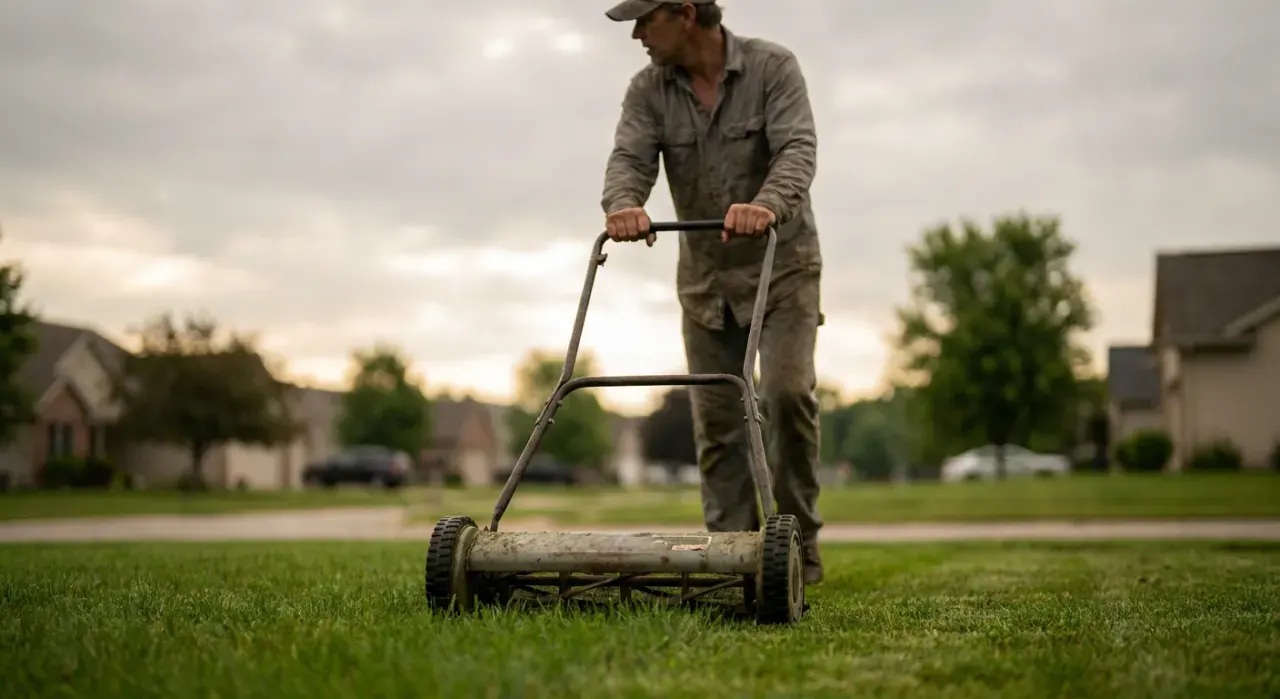
Dappled light through a high canopy is far better than the same total hours of solid shade, so a tree limbed up to 12 feet can transform what is possible underneath it. Thinning a canopy is often cheaper and more effective than reseeding the same patch every spring.
Our #1 Pick: Jonathan Green Black Beauty Shady Nooks
The reason this mix wins is species composition, not marketing. Shade tolerance in cool-season grass is dominated by one group: the fine fescues — creeping red, chewings and hard fescue. They have narrow leaves, low light compensation points and modest nitrogen demands, which is exactly the profile needed under a tree — Penn State Extension notes that fine fescues as a group tolerate low fertility, droughty soils and shaded conditions. Shady Nooks is the most fine-fescue-weighted mixture Jonathan Green makes, blended with tall fescues for durability and perennial rye for fast establishment.
Jonathan Green is a smaller, older company than the mass-market brands, and the review record reflects a particular pattern: buyers who have already tried a supermarket shade mix and been disappointed, then found this worked. That is the most useful kind of review in a category where site conditions dominate results.
The complaints are consistent and worth respecting. Fine fescue does not tolerate traffic. It is a delicate grass, and a shaded area that also gets walked on or played on will thin regardless of seed quality — this is the single biggest limitation. It is slower to establish than a rye-heavy mix, so it needs a longer watering commitment. Price per pound is above mass-market seed, though coverage is honest and the seed analysis is clean. And the fundamental one: it still needs about three hours of sun. Under solid dense canopy nothing in this guide will hold.
Consensus Score █████████░░░ 8.5
Check price on Amazon → (paid link)
The Ranked Field

Best for genuinely shaded areas under mature trees and on the north side of a house
- The most shade-tolerant mixture Jonathan Green makes
- Tall fescues, perennial rye and fine fescues blended
- Fine fescues survive on as little as 3 hours of sun
- Covers around 1,750 sq ft when overseeding
Why buy it: fine fescue is the only cool-season grass that genuinely tolerates deep shade, and this mix leans on it heavily.
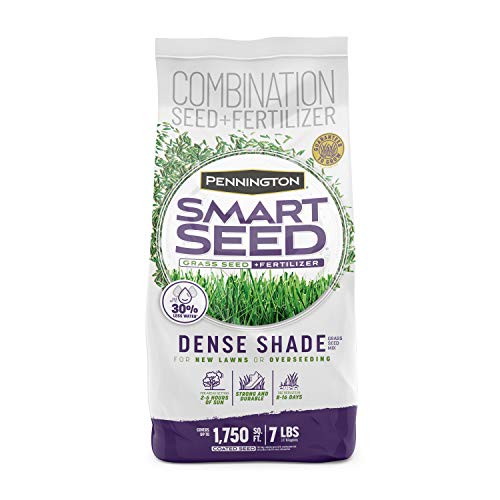
Best for shaded lawns where irrigation is limited
- Needs only 2 to 6 hours of sunlight
- Tall fescue and fine fescue blend
- Uses up to 30% less water once established
- Fertilizer included in the mix
Why buy it: shade and drought usually arrive together under a tree, where roots take the water before the grass sees it.

Best for small patches under dense canopy where nothing else has worked
- Four families of cool-season turfgrass in one blend
- Turf-type tall fescue, Kentucky bluegrass, rye and fine fescues
- Bred for medium to densely shaded areas
- Small pack for targeted repair
Why buy it: blending four grass families means whichever one suits your specific shade conditions is present and will take over.

Best for lawns that are partly shaded and partly sunny
- Tolerates dense shade and scorching sun in one mix
- WaterSmart PLUS coating holds moisture around the seed
- Aggressively spreading to fill bare spots
- Covers up to 2,800 sq ft
Why buy it: most yards are not uniformly shaded, and one mix that works across both conditions is simpler than seeding two products.
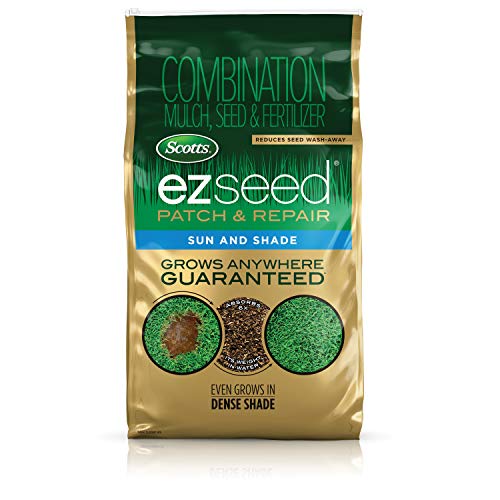
Best for bare patches under trees where seed usually dries out and fails
- Combination mulch, seed and fertilizer
- Expanding mulch holds moisture around the seed
- Sun and shade tolerant blend
- Covers around 225 sq ft of bare repair
Why buy it: under a tree the soil is dry and root-filled, and the water-holding mulch is what gets seed through germination there.
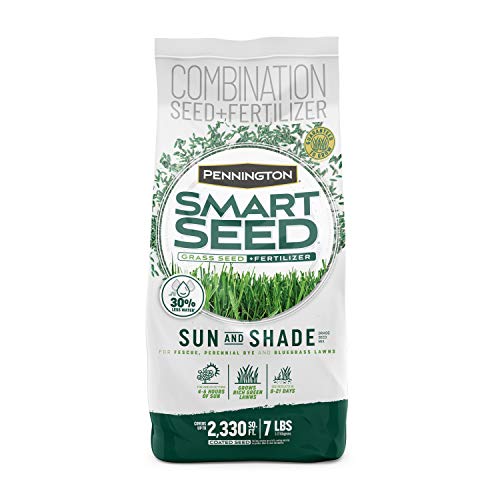
Best for northern-tier lawns with mixed light through the day
- Kentucky bluegrass, tall fescue and perennial rye
- Formulated for northern climates
- Smart Seed drought tolerance once established
- Fertilizer included
Why buy it: a northern-specific blend handles cold winters better than a national mix, which matters more than shade tolerance alone.
Quick Comparison
| Product | Best for | Rating | Price | Buy |
|---|---|---|---|---|
| Jonathan Green Black Beauty Shady Nooks Grass Seed (7 lb) | Best Overall | — | Check (paid link) | |
| Pennington Smart Seed Dense Shade Mix (7 lb) | Best Water-Saving Pick | — | Check (paid link) | |
| Jonathan Green Black Beauty Dense Shade Grass Seed (1 lb) | Best for Deep Shade | — | Check (paid link) | |
| Scotts Turf Builder Grass Seed Sun and Shade Mix (7 lb) | Best All-Round Mix | — | Check (paid link) | |
| Scotts EZ Seed Patch and Repair Sun and Shade (10 lb) | Best Bare-Patch Repair | — | Check (paid link) | |
| Pennington Smart Sun and Shade Grass Seed Mix North (7 lb) | Best Northern Blend | — | Check (paid link) |
The Seeds, Reviewed
1. Jonathan Green Black Beauty Shady Nooks — Best Overall
Covered above. Owners praise: genuine performance in shade where mass-market mixes failed, clean seed analysis, dark color, and good density once established. Owners complain about: poor traffic tolerance from the fine fescue content, slower establishment than rye-heavy mixes, price per pound, and results in deep shade that no seed can fix.
2. Pennington Smart Seed Dense Shade Mix — Best Water-Saving Pick
This targets the real problem under a tree, which is not just shade but competition for water. A mature maple takes a startling volume of moisture from the top foot of soil, and grass roots are competing directly with it. The Smart Seed line needs up to 30 percent less water once established, and the tall and fine fescue blend handles 2 to 6 hours of sun. Fertilizer is included. Owners praise: survival in dry shade, reduced watering demand, included starter feed, and coverage matching the bag. Owners complain about: a slow first season, price, and germination that varies with how well the seedbed was cleared of leaf litter.
3. Jonathan Green Black Beauty Dense Shade (1 lb) — Best for Deep Shade
The four-family blend is the interesting part: turf-type tall fescue, Kentucky bluegrass, perennial rye and fine fescues in one bag. In a shaded site, light conditions vary enormously across a few feet, and a blend means whichever species suits a given spot dominates there naturally. Buying a 1 lb pack also makes sense for shade work, because shaded patches are usually small. Owners praise: results in genuinely dark areas, sensible pack size for a patch, and the blend adapting to varied conditions. Owners complain about: limited coverage per pack, cost per square foot, and slow establishment under canopy.
4. Scotts Turf Builder Sun and Shade Mix — Best All-Round Mix
Most yards are not uniformly shaded. There is a dark strip on the north side, a bright patch by the driveway and dappled light in between, and seeding three products is more trouble than it is worth. This is Scotts' most versatile mix, with a WaterSmart PLUS coating that holds moisture around the seed. Owners praise: versatility across mixed conditions, reliable germination from the coating, aggressive spreading into bare spots, and availability everywhere. Owners complain about: being a compromise that is not as shade-tolerant as a dedicated dense-shade mix, coating weight reducing seed per pound, and thinning under genuinely dark canopy.
5. Scotts EZ Seed Patch and Repair — Best Bare-Patch Repair
Under a tree you often face bare, root-filled, dry soil — the hardest possible seedbed. The expanding mulch in EZ Seed holds water around the seed through the day, which is what gets germination over the line where plain seed dries out and dies. It also visibly changes color when it needs watering, which reviewers find genuinely useful. Owners praise: results on bare ground where seed alone failed, the moisture indicator, and simplicity. Owners complain about: very high cost per square foot, optimistic coverage claims, and complete failure if allowed to dry out once during germination.
6. Pennington Smart Sun and Shade Mix North — Best Northern Blend
Regionally specific seed matters more than people expect. A northern-tier lawn has to survive hard winters and short springs as well as shade, and a blend built for that combination — Kentucky bluegrass for winter hardiness and recovery, tall fescue for durability, perennial rye for fast cover — performs better than a national mix. Owners praise: winter survival, spring recovery, included fertilizer, and color. Owners complain about: less shade tolerance than a dedicated dense-shade mix, the bluegrass component needing more light than fine fescue, and slow establishment of the bluegrass fraction.
What Owners Actually Complain About
Shade grass seed has the most site-dependent review record in lawn care, and the complaints reflect it. It did not grow at all dominates, and the majority of these describe conditions below three hours of sun, where no seed will work — the product is being blamed for a site problem. Thinning after the first year is second, and it usually means light was marginal to begin with, or that the area gets foot traffic that fine fescue cannot tolerate. Fungal disease is third and is a genuine shade characteristic: dense canopy keeps dew on the leaf until midday, which favors leaf spot and dollar spot. Leaf smothering is fourth — autumn leaves left on a shaded lawn will kill seedlings within two weeks. And slow establishment is fifth, which is inherent to fine fescue and not a defect.
How to Make a Shade Lawn Work
Seed choice is one of five factors, and the other four matter as much.
- Thin the canopy if you can. Limbing a tree up to 10 or 12 feet and removing crossing branches transforms the light beneath it. This does more than any seed.
- Mow higher in shade. Set the deck an inch above your sunny-lawn height, above the 2 inches or above Penn State Extension recommends for most lawns — more leaf area means more photosynthesis, which is exactly what a light-starved plant needs. See mowing height by grass type.
- Feed less, not more. Shaded grass grows slowly and cannot use heavy nitrogen; over-feeding produces soft growth that gets disease. Roughly half the rate you use in sun.
- Water deeply but less often. Shaded soil dries slower at the surface but tree roots take moisture at depth, so infrequent deep watering beats frequent light watering.
- Rake leaves promptly in fall. Two weeks under a wet leaf mat kills shade grass, and it is the most common reason a successful autumn seeding disappears by spring.
If after all that the area still fails, accept it. A mulch ring, a shade-tolerant groundcover or a flagstone path is a better outcome than reseeding the same patch every April.
How We Rank Grass Seed
We never buy or physically handle the products on this site. We read the owner-review record at scale, weighting four things. Species composition against published shade tolerance, since fine fescue content is the strongest predictor of success in shade. Germination consistency as owners report it. Performance at 12 months rather than at eight weeks, because shade lawns commonly germinate well and then thin — which is the outcome that actually matters. And seed analysis quality, including weed seed and inert content. Prices and star ratings move; the complaint pattern does not.
The Verdict
Jonathan Green Black Beauty Shady Nooks is the shade grass seed the owner-review record supports most strongly, because it is built around the species that actually tolerates low light. If your shaded area is also dry — the normal situation under a mature tree — Pennington Smart Seed Dense Shade is the better fit. For a yard with mixed conditions, Scotts Sun and Shade Mix saves you seeding two products, and for bare ground under a canopy, EZ Seed is what gets germination over the line.
Next: pick the season with the best time of year to plant grass seed, do the job properly with how to overseed a lawn, or feed new seedlings with the best fertilizer for new grass.