 Garden
Affiliate Disclosure
Some links on this page are affiliate links. As an Amazon Associate, we earn from qualifying purchases — at no extra cost to you. We do not buy, test, or physically handle the products we cover; our rankings come from aggregated owner reviews, ratings and expert consensus. Commissions never change our verdicts. How we rank · full disclosure.
The short answer: the best Bermuda grass seed for most southern lawns is Scotts Turf Builder Grass Seed Bermudagrass — seed, fertilizer and soil improver in one bag, with a moisture-holding coating that keeps seed viable on soil that bakes dry by midday. It suits full-sun lawns being seeded or overseeded. In the transition zone, Pennington Smart Seed Bermudagrass is the better choice because its improved cold tolerance survives winters that thin out common Bermuda. For a full lawn, buy the 15 lb Scotts bag.
We do not buy, plant, or physically handle any seed. These rankings come from aggregated owner reviews, star ratings, review volume and expert consensus — see how we rank. For the wider field see best grass seed, and to compare with the cool-season option, read fescue vs Bermuda grass.
Top Picks at a Glance
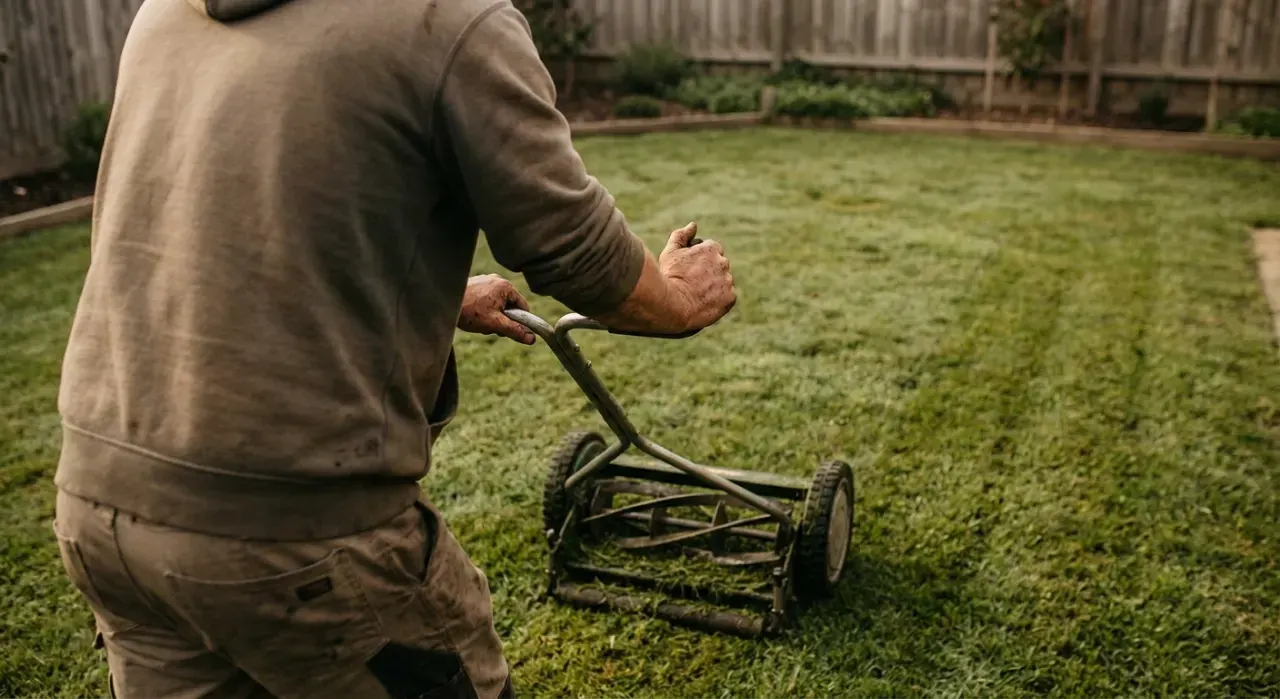
Our #1 Pick: Scotts Turf Builder Grass Seed Bermudagrass
Bermuda seeding fails for one reason far more often than any other: the seedbed dries out. Bermuda germinates in hot weather, on southern soils, at a time of year when bare ground can go from damp to dust in a single afternoon. Seed that dries after imbibing water dies, and no amount of watering afterwards brings it back.
That is what the WaterSmart coating on this seed addresses. Each seed carries a hydrophilic coating that absorbs and holds water, keeping moisture against the seed between waterings rather than letting it evaporate off bare soil. Owner reviews reflect it — the germination reports on coated seed are noticeably more consistent than on uncoated, particularly from people who could only water twice a day rather than three or four times.
The product also includes fertilizer and a soil improver, which removes the second most common failure: seeding without starter feed. And a 4 lb bag covers around 4,000 sq ft when overseeding, which suits a typical suburban repair or thickening job.
The complaints are real. Coated seed means less actual seed per pound — the coating is weight you are paying for, and buyers comparing price per pound against pure seed find this frustrating once they read the seed analysis. Slow establishment is a recurring theme, but that is Bermuda rather than the product: 60 to 90 days to full coverage is normal because Bermuda spreads by runners, not by seed density. And a persistent complaint that is genuinely a user issue: seeding too early. Bermuda seed needs soil above 65°F. Sown in April in the transition zone it simply sits there, and reviewers blame the seed for what is a calendar problem.
Consensus Score ████████░░░░ 8.1
Check price on Amazon → (paid link)
The Ranked Field

Best for seeding or overseeding a full-sun southern lawn
- Seed, fertilizer and soil improver in one product
- WaterSmart coating holds moisture around the seed
- High drought and heat tolerance once established
- Covers about 4,000 sq ft when overseeding
Why buy it: the coating is the difference between germination and failure on hot southern soil that dries out by midday.
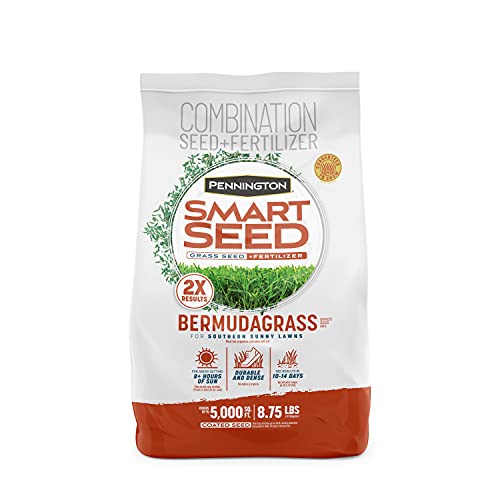
Best for larger areas and lawns where irrigation is limited or expensive
- Requires up to 30% less water once established
- Includes fertilizer in the mix
- Improved cold tolerance over common Bermuda
- Exceptional heat, drought and traffic tolerance
Why buy it: improved cold tolerance is what lets Bermuda work in the transition zone where common varieties thin out over winter.

Best for buyers who want seed without added filler or fertilizer
- Straight Bermudagrass seed
- Suitable for new lawns and overseeding
- Heat, drought and traffic tolerant
- Establishes a dense spreading turf
Why buy it: coated and blended products carry a lot of non-seed weight, and buying pure seed gives you far more actual coverage per pound.

Best for seeding a full lawn or a large sunny area from scratch
- 15 lb bag for large-area seeding
- Seed coating retains moisture
- Full-sun southern formulation
- Spreads aggressively to fill in bare ground
Why buy it: seeding a full lawn in 4 lb bags is expensive and tedious — this is the size the job actually needs.

Best for small bare patches and testing before committing to a big bag
- 1 lb pack for patch repair
- Same Bermuda genetics as the larger bags
- Covers a small repair area
- Easy to store without waste
Why buy it: grass seed loses viability in storage, so buying only what you need beats leaving half a bag in the garage until next year.
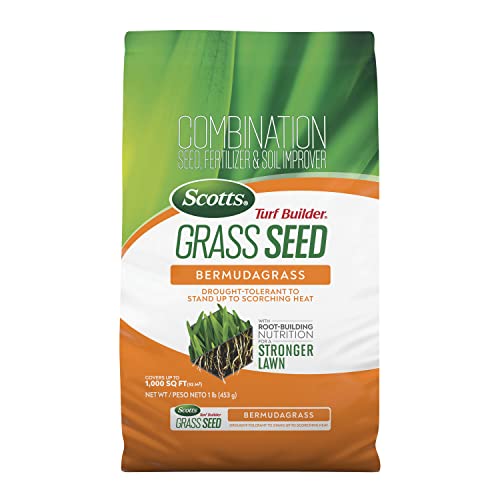
Best for small patches where you do not want to buy fertilizer separately
- Seed, fertilizer and soil improver combined
- Drought tolerant once established
- Covers about 1,000 sq ft overseeding
- Small pack size for repairs
Why buy it: one bag with seed and starter feed removes the most common patching mistake, which is skipping the fertilizer.
Quick Comparison
| Product | Best for | Rating | Price | Buy |
|---|---|---|---|---|
| Scotts Turf Builder Grass Seed Bermudagrass (4 lb) | Best Overall | — | Check (paid link) | |
| Pennington Smart Seed Bermudagrass Mix (8.75 lb) | Best Water-Saving Pick | — | Check (paid link) | |
| Pennington Bermudagrass Grass Seed (5 lb) | Best Pure Seed | — | Check (paid link) | |
| Scotts 18258 Turf Builder Bermuda Grass Seed Mix (15 lb) | Best Large-Area Value | — | Check (paid link) | |
| Pennington Seed 1 lb Bermuda Grass Seed | Best Small Repair Pack | — | Check (paid link) | |
| Scotts Turf Builder Bermudagrass with Fertilizer and Soil Improver (1 lb) | Best Fertilizer-Included Option | — | Check (paid link) |
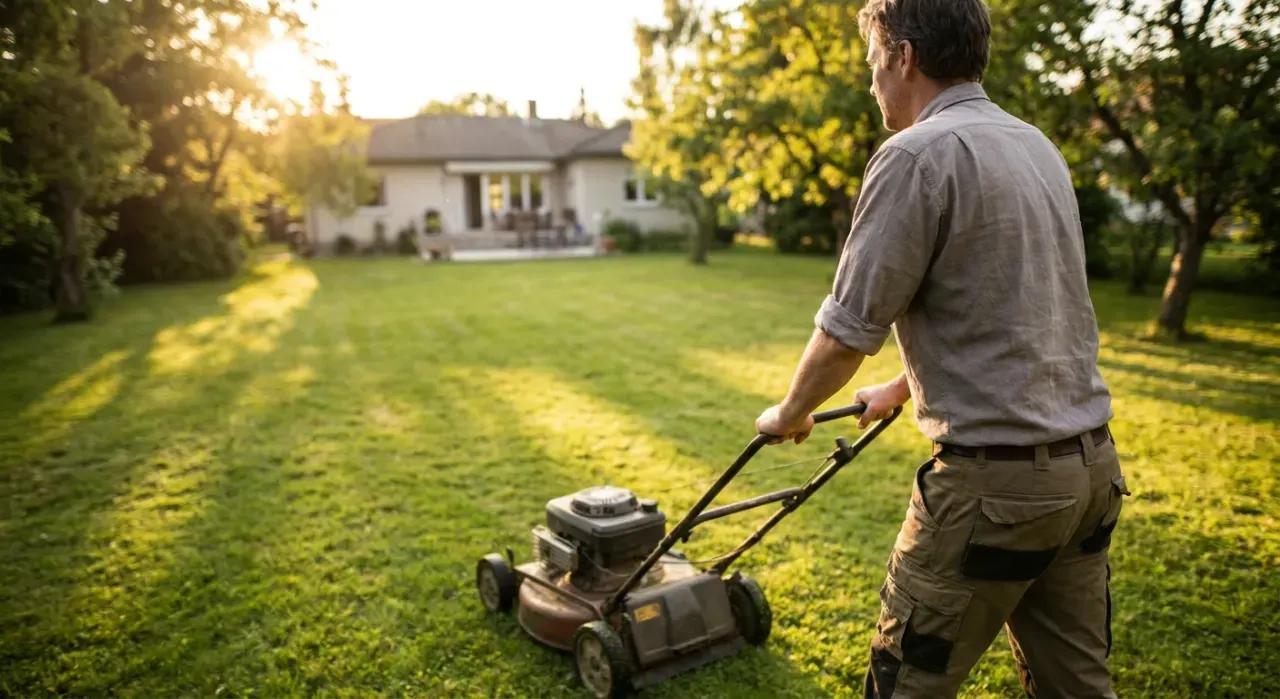
Getting Bermuda Seed to Germinate
Bermuda is unforgiving about conditions and forgiving about everything else. Hit these numbers — which sit inside the March-to-July window NC State Extension's turf handbook gives for seeding warm-season grasses — and it works; miss them and no brand of seed will save you.
| Factor | Requirement |
|---|---|
| Soil temperature at 2 in | Consistently above 65°F, ideally 70–80°F |
| Night air temperature | Above 65°F |
| Sunlight | Full sun — at least 7 hours. Bermuda fails in shade |
| Seeding rate, new lawn | 1–2 lb pure live seed per 1,000 sq ft |
| Seeding rate, overseeding | 0.5–1 lb per 1,000 sq ft |
| Seed depth | ¼ inch maximum — barely covered |
| Germination | 7–21 days |
| Full coverage | 60–90 days |
| Growing season needed | At least 90 days before first frost |
The rate that surprises people is the seeding rate. Bermuda seed is tiny — roughly 1.8 million seeds per pound — so 2 lb across 1,000 sq ft is a genuinely heavy sowing by the same lb-per-1,000-sq-ft benchmark NC State Extension uses for seeding rates. Over-seeding Bermuda wastes money and produces overcrowded seedlings that compete with each other.
The Seeds, Reviewed
1. Scotts Turf Builder Bermudagrass — Best Overall
Covered above. Owners praise: reliable germination thanks to the coating, seed and fertilizer in one bag, drought tolerance once established, and availability everywhere. Owners complain about: coating weight reducing actual seed per pound, slow fill-in, price per pound, and failures traced to seeding before the soil warmed.
2. Pennington Smart Seed Bermudagrass Mix — Best Water-Saving Pick
Two features distinguish it. The Smart Seed line is bred for reduced water use — up to 30 percent less once established, which is a genuine operating saving in a Texas or Oklahoma summer. And this mix has improved cold tolerance over ordinary Bermuda, which is the specific problem that ruins Bermuda lawns in the transition zone, where common varieties thin badly after a hard winter. Fertilizer is included. Owners praise: winter survival in the transition zone, reduced irrigation need, good density once established, and a bag size that suits a real lawn. Owners complain about: price, slower initial germination than Scotts coated seed, and results that vary noticeably with how well the seedbed was prepared.
3. Pennington Bermudagrass Grass Seed (5 lb) — Best Pure Seed
Straight seed with no coating, no filler and no fertilizer. That means substantially more actual seed per pound, which is the right choice if you are buying a spreader-load and already have starter fertilizer. It is also the honest way to compare cost between products — a pound of pure seed covers far more ground than a pound of coated blend. Owners praise: value per pound of real seed, straightforward product, good germination when watered properly, and suitability for both new lawns and overseeding. Owners complain about: needing more diligent watering than coated seed because there is nothing holding moisture at the seed, no included fertilizer, and the usual slow Bermuda fill-in.
4. Scotts 18258 Bermuda Grass Seed Mix (15 lb) — Best Large-Area Value
The size the job actually needs when you are seeding a lawn rather than patching one. Fifteen pounds covers a substantial area at Bermuda seeding rates, and the cost per thousand square feet drops sharply against 1 and 4 lb packs. Same coated, full-sun southern formulation. Owners praise: value on large areas, coverage that matches the claim, aggressive spread once established, and drought tolerance. Owners complain about: a large bag that must be used within a season or two before viability drops, slow establishment, and the need for a broadcast spreader to apply it evenly.
5. Pennington 1 lb Bermuda Grass Seed — Best Small Repair Pack
Sometimes the right answer is a small bag. Grass seed loses viability in storage — roughly 10 to 20 percent germination loss per year in a hot garage — so buying 5 lb to fix a 200 sq ft patch means most of it is dead by the time you need it again. Owners praise: the right size for repairs, same genetics as the larger bags, no storage waste, and low cost to try Bermuda before committing. Owners complain about: a poor cost per square foot if you need any real area, limited coverage, and no fertilizer included.
6. Scotts Turf Builder Bermudagrass with Fertilizer (1 lb) — Best Fertilizer-Included Option
The patch-repair version of our top pick, with seed, fertilizer and soil improver in a size that suits fixing a worn strip by a gate or a dead patch where something was parked. Owners praise: convenience of one product, results on small areas, and the coating helping germination on bare soil. Owners complain about: a very high cost per square foot, small coverage, and the general Bermuda requirement for full sun that no product can work around.
What Owners Actually Complain About
Bermuda seed reviews follow a strikingly consistent pattern, and the majority of the negative ones are about conditions rather than the seed. Poor germination is the headline complaint, and the two causes are seeding before soil reached 65°F, and letting the seedbed dry out during the germination window. Slow fill-in is second, and it is a Bermuda characteristic rather than a defect — 60 to 90 days to coverage is normal because Bermuda spreads by stolons. Coating weight is a legitimate value complaint on the Scotts products. Failure in shade is fourth and is unfixable: Bermuda needs seven hours of direct sun and will thin to bare soil under trees regardless of brand. And weed seed in cheap products appears occasionally — checking the seed analysis label for the weed seed percentage is worth doing on any bag.
How to Choose and Sow Bermuda Seed
Three decisions. Coated or pure seed? Coated if you cannot water three times a day, pure if you can and want maximum seed per dollar. Common or improved variety? Improved cold-tolerant varieties are worth the premium anywhere north of the Deep South. Bag size? Buy what you will use this season, because storage kills viability.
Then sow it properly. Mow the existing lawn short and remove clippings so seed reaches soil. Rake or scarify to expose bare soil — Bermuda seed sitting on thatch never germinates. Spread at the correct rate with a broadcast spreader (see best broadcast spreader), then rake very lightly; a quarter-inch is the maximum depth. Apply starter fertilizer if it is not already in the bag — see best fertilizer for new grass. Water lightly two to three times daily until germination, then less often and more deeply. And do not apply any pre-emergent weed control for at least 90 days, because it prevents grass seed germinating exactly as it prevents weed seed.
How We Rank Grass Seed
We never buy or physically handle the products on this site. We read the owner-review record at scale, weighting four things. Germination consistency as owners report it, which is the single most predictive factor for satisfaction. Actual seed content, since coating and filler substantially change what a pound of product delivers. Suitability for the stated conditions, checked against extension guidance rather than packaging. And results at 60 and 90 days rather than at two weeks, because a seed product is judged by coverage rather than sprouting. Prices and star ratings move; the complaint pattern does not.
The Verdict
Scotts Turf Builder Grass Seed Bermudagrass is the Bermuda seed the owner-review record supports most strongly, mainly because the moisture-holding coating addresses the exact way Bermuda seeding usually fails. In the transition zone, pay the premium for Pennington Smart Seed Bermudagrass and its improved cold tolerance. If you can water diligently and want the most seed per dollar, buy pure Pennington Bermudagrass and add your own starter fertilizer.
Next: feed it correctly with the best fertilizer for Bermuda grass, get the timing right with the best time of year to plant grass seed, or work out quantities with how much grass seed per square foot.