 Garden

Affiliate Disclosure
Some links on this page are affiliate links. As an Amazon Associate, we earn from qualifying purchases — at no extra cost to you. We do not buy, test, or physically handle the products we cover; our rankings come from aggregated owner reviews, ratings and expert consensus. Commissions never change our verdicts. How we rank · full disclosure.
The short answer: stop mowing when the grass stops growing, which happens once daytime highs stay below about 50°F and soil temperature drops under 45°F. For most of the northern US that falls in late October to mid-November; in the transition zone it is often late November, and in the deep South warm-season lawns go dormant after the first hard frost. Do not mow to a date. Keep cutting as long as the grass is putting on height, and make the final one or two cuts slightly shorter, around 2 to 2.5 inches for cool-season grass.
The trigger is growth, not the calendar, and a mild fall genuinely extends the season by weeks. Our lawn guidance draws on published extension turf recommendations and aggregated owner experience rather than plot trials, as explained in how we rank. The full season plan sits at the lawn care hub.
What tells you the season is over?
Three signals together mean it is time to put the mower away. Individually, none is conclusive: a single frosty morning in early October does not end the season, and a warm spell in November can restart growth for another cut.
- Soil temperature below 45°F at 2 inches, sustained across several days. This is the reliable one.
- Highs consistently below 50°F, meaning the grass is no longer photosynthesizing enough to add height.
- Two to three weeks with no measurable growth, judged by whether the lawn actually needs cutting rather than by the calendar.
When does mowing stop in each region?
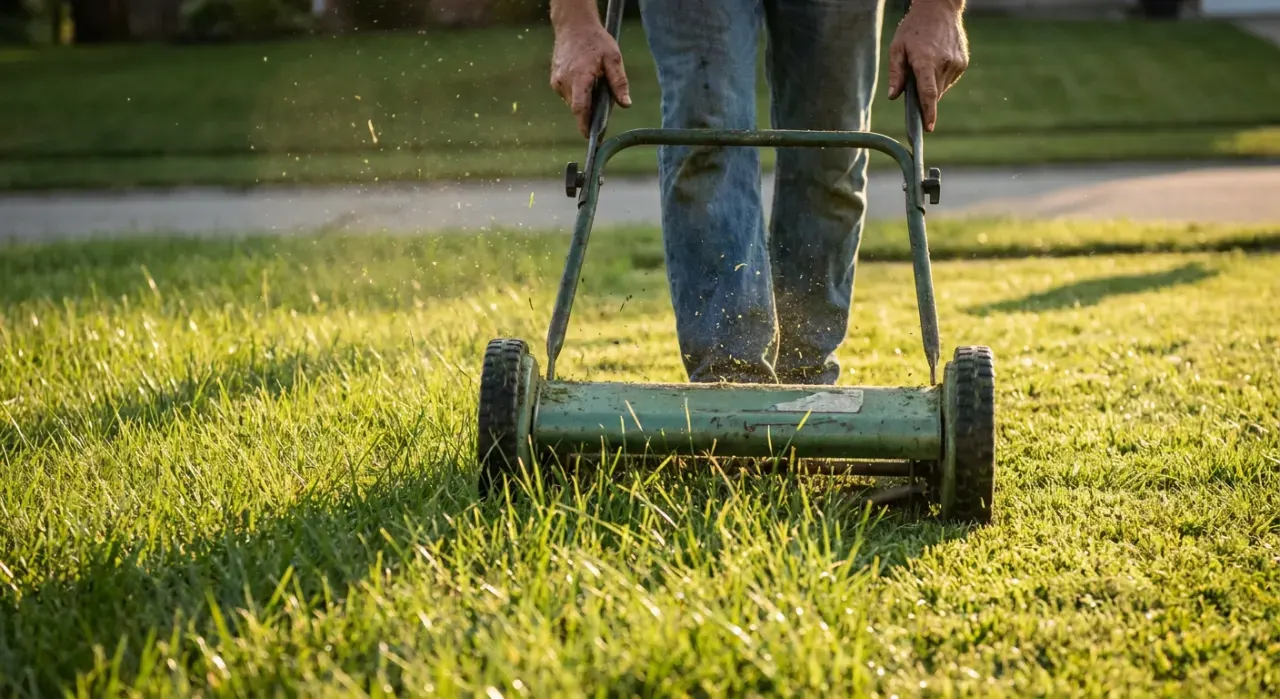
Regional timing varies by roughly six weeks across the country. Use these as a starting point and adjust for elevation and a given year's weather.
| Region | Typical last mow | Grass type | Final height |
|---|---|---|---|
| Upper Midwest / New England | Mid to late October | Cool-season | 2 to 2.5 in. |
| Great Lakes / Northern Plains | Late October | Cool-season | 2 to 2.5 in. |
| Mid-Atlantic | Early to mid November | Cool-season | 2.5 in. |
| Transition zone (KY, TN, MO) | Mid to late November | Mixed | 2 to 2.5 in. |
| Southeast | After first hard frost, Nov to Dec | Warm-season | 1.5 to 2 in. |
| Gulf Coast / South Texas / Florida | Occasional cuts all winter | Warm-season | Normal height |
| Pacific Northwest | Occasional cuts into December | Cool-season | 2.5 in. |
Warm-season lawns behave differently: Bermuda, zoysia and centipede go fully dormant and brown after the first hard frost, and mowing dormant turf serves no purpose beyond tidying leaves.
How short should the last cut be?
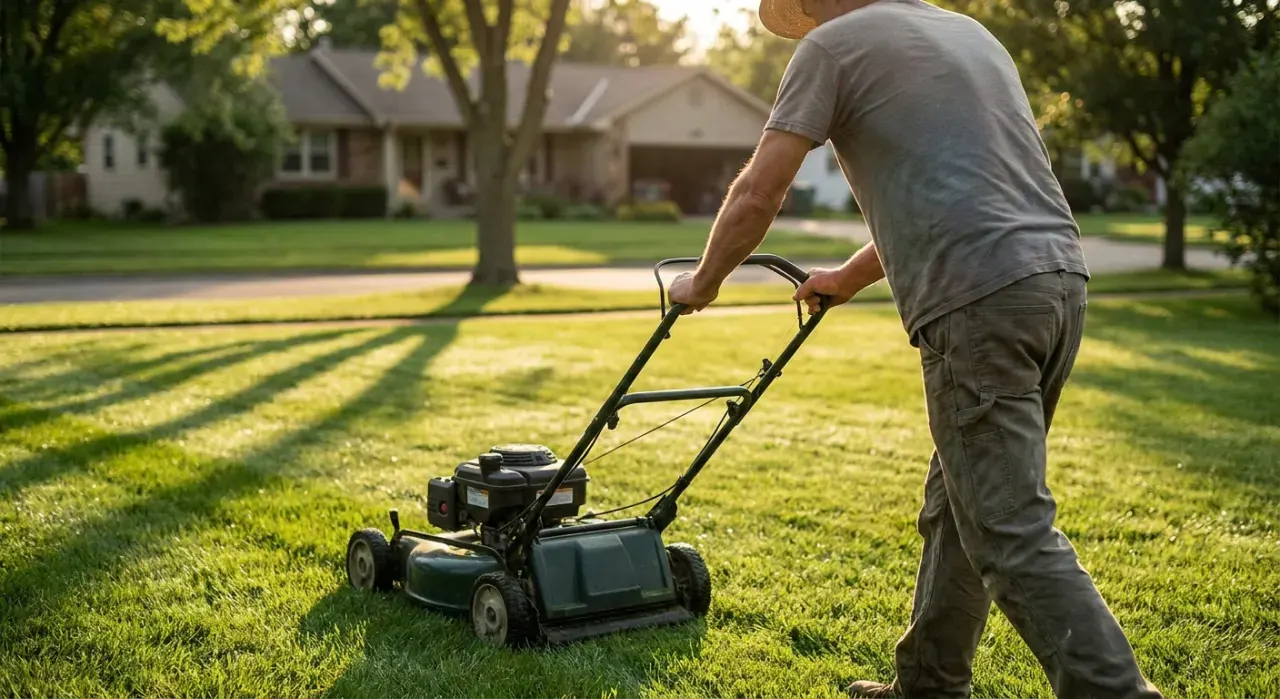
Lower the height gradually over the final two or three cuts to about 2 to 2.5 inches for cool-season grass and 1.5 to 2 inches for warm-season grass. The reason is snow mold: long grass mats down under snow and wet leaves, trapping moisture against the crowns and creating the exact conditions pink and gray snow mold need. But scalping is worse than leaving it long. Removing more than a third of the blade in one pass stresses the plant, and grass below 2 inches has less leaf area to store carbohydrates for spring. Drop one notch per cut rather than going straight to the bottom setting. Height by grass type is detailed in mowing height by grass type.
What about leaves at the end of the season?
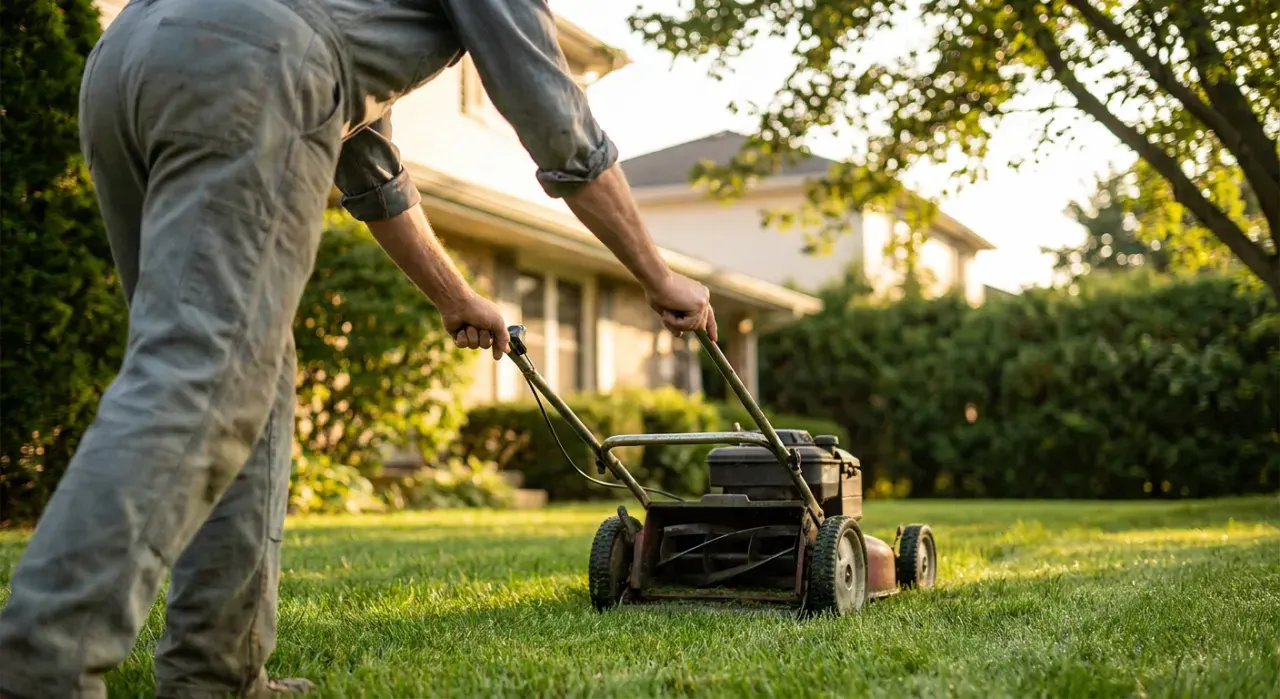
Keep mowing over light leaf fall rather than waiting to rake once. A mulching mower chops leaves into fragments that break down over winter and add organic matter, and research from several university turf programs has found mulched leaves at moderate volumes do not harm turf and can suppress some weed germination. The limit is coverage: if you cannot see grass through the shredded layer, bag the excess. A thick wet mat of whole leaves left all winter smothers grass and leaves bare patches in spring.
What should you do with the mower afterward?
Winter storage is where most mowers are damaged. Either run the tank dry or add fuel stabilizer, because gasoline oxidizes within about 30 days and ethanol blends also absorb moisture, which together produce the varnished carburetor behind most spring no-starts. Change the oil while the engine is still warm from the last cut, clean the caked grass off the underside of the deck, sharpen or replace the blade, and store the machine dry and under cover. Doing this in November takes 40 minutes and removes the most common April frustration, described in why my lawn mower will not start.
Related fall jobs: the last fertilizer application, timed per when to apply lawn fertilizer, and the whole-year schedule in the lawn care calendar. For blade upkeep before storage see how often to sharpen mower blades, and current machine picks are in best lawn mower.